
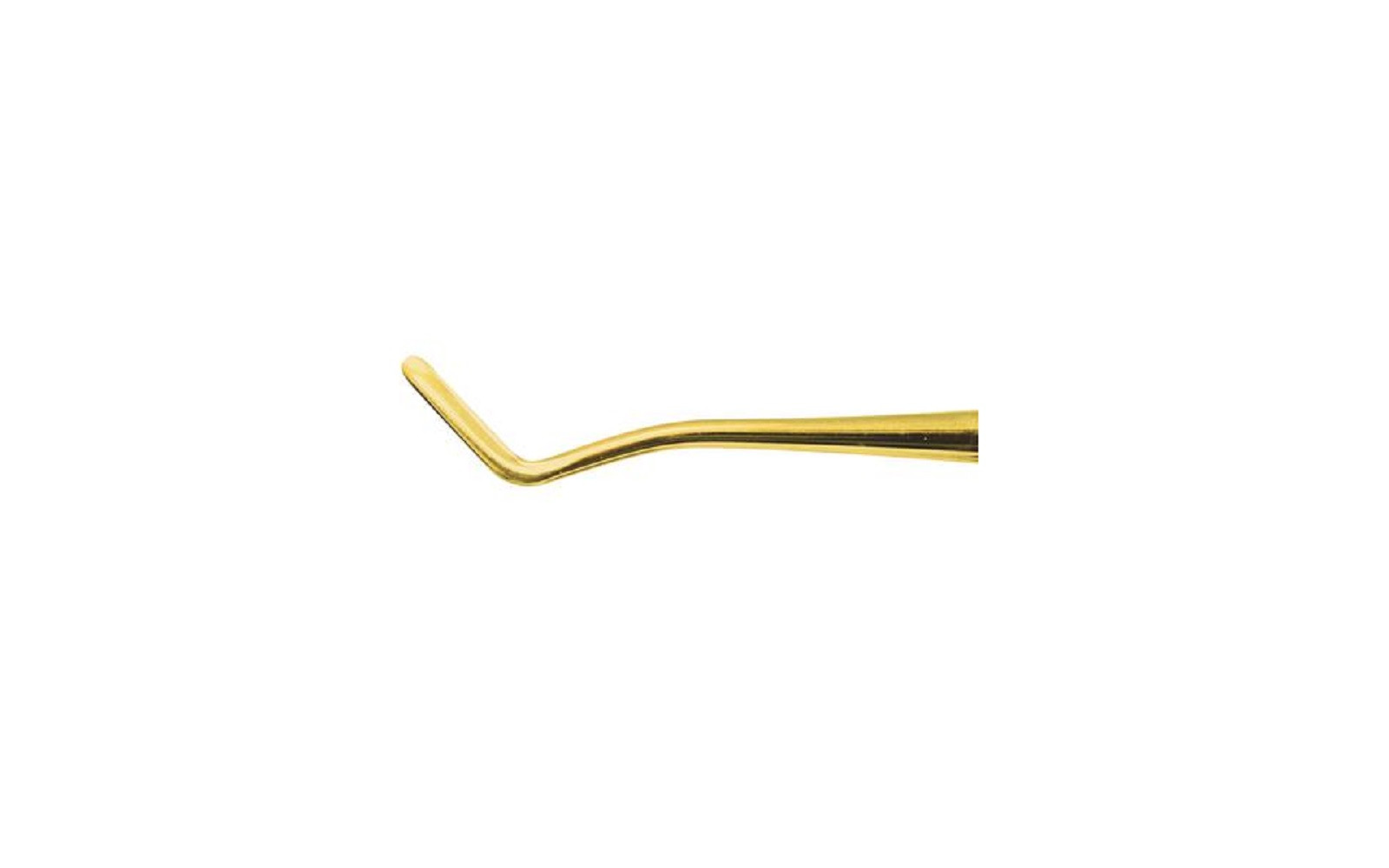
Top 10 Composite & Plastic Filling Instruments.
Composite instruments by tip and stick: XTS contact formers, Goldstein, LM-Arte, and XP pluggers.

Reviewed by Dr. Sean Myran, DMDDoctor of Dental Medicine, University of Pennsylvania
How to Choose a Composite Placement Instrument
These ten instruments do not do one job. A contact former, a thin anterior blade, an aluminum non-stick paddle, a carving instrument, and a classic plastic-filling instrument all show up under “composite instrument” on a catalog. Composite sticks to anything that is rough, warm, and dragged across it. A coating or a polish reduces that. It does not stop you from lifting a contact if the instrument is the wrong shape.
Start with the restoration, then the tip. Posterior Class II contacts want a contact former (the Hu-Friedy XTS on this list) or a plugger/paddle that fits the box (American Eagle XP #7). Anterior layering wants a thin blade (Goldstein Flexi-Thin, Goldfogel), not a posterior spatula. Aluminum tips (Mini Goldstein, Patterson #6) are the older non-stick answer and they scratch. Coated steel (XTS, XP) is the answer that stays smooth longer. Almore’s blue Microfil is a carver, not a plugger.
Buying criteria that actually change the filling
- Tip shape — plugger to pack, paddle or blade to shape, contact former to push a matrix out, carver to draw anatomy. A double-ended instrument only helps if the two ends are the two steps you actually do.
- Stick — highly polished or coated stainless (Hu-Friedy XTS, American Eagle XP) releases composite better than a worn aluminum tip or a standard steel plastic-filling instrument. Wipe with alcohol between increments anyway. A “non-stick” tip still drags if the composite is slumping and you are scraping.
- Aluminum versus steel — anodized aluminum (Mini Goldstein #3, Patterson #6) was used because composite lets go of it. It also turns gray, bends, and grooves. Once it is grooved it sticks worse than new steel.
- Where it reaches — mini and thin blades (PDT G3, Flexi-Thin, Goldfogel) are for facial and anterior surfaces. A medium/large posterior contact former does not belong on a veneer.
- Handle — a larger round handle (#41 on the Flexi-Thin, 1/4 inch on the XP #7) is control. A thin handle is feel. Neither one changes the tip chemistry.
| Instrument | Maker | Tip | Job on this SKU | Watch-out |
|---|---|---|---|---|
| XTS Satin Steel, posterior | Hu-Friedy | Coated stainless, contact-forming, double end | Medium/large posterior contacts | A contact former is not an anterior blade. XTS is Hu-Friedy’s non-stick coating, not a different composite. |
| Thin mini #G3 | PDT | Thin mini, double end; metal not stated on the SKU | Facial contouring | Do not assume an XTS-style coating. The catalog left the tip alloy blank. |
| Mini Goldstein #3 | Hu-Friedy | Anodized aluminum | Smaller Goldstein composite placement | Aluminum grooves and discolors. Replace it when it sticks, do not “sharpen” it. |
| Goldfogel #3 | Hu-Friedy | Stainless, #10 round handle | Cosmetic contouring | Bare stainless sticks more than XTS. It is not the aluminum Goldstein. |
| XP #7 paddle/plugger | American Eagle | XP-coated, 1/4 in handle | Pack and shape with two ends | XP is the non-stick claim. A worn gold or dark coating is no longer non-stick. |
| LM-Arte Solo Posterior | LM-Arte, catalogued under Planmeca | Double end; rounded and straight spatulas on this listing | Posterior modeling with one instrument | This is not the full LM-Arte anterior set. “Solo” means this posterior instrument. |
| Goldstein Flexi-Thin #1 | Hu-Friedy | Thin flexible blade, #41 handle | Anterior layering and contour | Flex is the feature. It is a poor plugger, and it still sticks if you drag a soft increment. |
| #4 plastic filling instrument | Not named on this SKU | Standard double-ended PFI | General placement, including older plastic and glass ionomer | Uncoated steel sticks to composite. Do not buy it as an XTS substitute. |
| Microfil, blue | Almore | Carver, replaceable tips, blue code | Carving composite, not packing it | Blue means “carver” inside Almore’s set, not a non-stick coating. |
| Patterson #6 | Patterson | Anodized aluminum, double end | House-brand aluminum placement instrument | Same aluminum wear as Mini Goldstein. Not a coated XTS. |
Related placement tools: composite instrument kits · carvers · flowable composites
1. Hu-Friedy Satin Steel XTS — Posterior Contact Former

This Hu-Friedy SKU is the medium/large XTS instrument for posterior composite, double-ended, built as a contact former. XTS is Hu-Friedy’s non-stick coating on the working end (their aluminum-titanium-nitride line), with a satin steel handle. The shape is the reason to buy this one instead of a generic XTS paddle: it is for pushing composite and a matrix into a proximal contact on a Class II, not for drawing a facial lobe.
Non-stick helps you leave the contact where you packed it. It does not create a contact if the matrix is loose, the wedge is wrong, or the increment is too soft to hold. Wipe the tip between increments. A coated instrument still picks up a skin of composite if you drag it.
Who it is for: Dentists placing posterior composites who want Hu-Friedy’s coated contact former rather than a standard steel plugger.
Tradeoff: The coating wears off high spots and then sticks exactly where you use it most. Recoating is not a chairside procedure; replace the instrument. Do not take this medium/large posterior end to a veneer. That job on this list is the Flexi-Thin or the Goldfogel.
2. PDT Thin Mini #G3

PDT’s #G3 is a thin, mini, double-ended instrument aimed at contouring on broad facial surfaces. Mini is the access. Thin is the amount of composite you can move without blunting a line angle. The catalog listing does not name the tip alloy, so this page will not pretend it is XTS-coated or aluminum.
Use it where a posterior contact former is too wide: facial surfaces, large anterior lobes, places a standard paddle leaves a step. If the tip is bare steel, expect more stick than with the American Eagle XP or the Hu-Friedy XTS, and wipe more often.
Who it is for: Restorative setups that already use PDT and want a small double-ended contouring instrument for facial composite.
Tradeoff: Unknown tip metal is a reason to look at the instrument you received, not a reason to invent a coating. A thin mini is easy to bend if you start using it as a plugger in a deep box. Pack with the XP #7 or the XTS, then refine with the G3.
3. Hu-Friedy Mini Goldstein #3, Anodized Aluminum

Hu-Friedy’s Mini Goldstein #3 is the smaller aluminum version of the Goldstein composite instrument: anodized aluminum tips, gray anodized aluminum handle, double-ended. Aluminum became a composite tip because fresh composite lets go of it more readily than of rough steel. Mini is for a smaller surface than the full-size Goldstein.
That advantage ends when the anodizing wears. Grooved aluminum grabs composite, leaves gray marks, and bends. Hu-Friedy’s later answer on this same list is the XTS coating, not a second aluminum instrument.
Who it is for: Clinicians who already place composite with a Goldstein #3 and want the mini aluminum, knowing they will replace it when it sticks.
Tradeoff: Do not sharpen aluminum. You will remove the anodizing and make it stickier. Do not confuse it with the Flexi-Thin #1, which is a steel blade and a larger #41 handle, or with the Goldfogel, which is a different instrument entirely.
4. Hu-Friedy Goldfogel #3

Goldfogel #3 is Hu-Friedy’s cosmetic contouring instrument: stainless steel, double-ended, #10 round handle. It is not a Goldstein, even though the names sit next to each other in a catalog. Goldstein on this page is the aluminum composite placer. Goldfogel is a contouring blade for cosmetic work.
Stainless will stick to composite more than XTS or a fresh aluminum tip. The reason to use it is the shape — a contouring end for anterior cosmetic surfaces — and then to wipe it, not to expect a non-stick coating the SKU does not claim.
Who it is for: Anterior cosmetic contouring in a Hu-Friedy set, when the blade shape matters more than a coated tip.
Tradeoff: If stick is the problem you are trying to solve, this is the wrong row. Move to XTS or the XP paddle. If you need a flexible blade rather than a standard stainless contouring end, that is the Flexi-Thin #1 below.
5. American Eagle XP #7 Paddle/Plugger

American Eagle’s XP #7 is a double-ended paddle and plugger with their XP non-stick coating and a 1/4-inch handle. One end packs the box. The other shapes. That pairing is why it is a more general instrument than the Hu-Friedy contact former at the top, and a more composite-specific instrument than a plain #4 plastic filling instrument.
XP is a coating, usually seen as a gold or dark titanium-nitride surface. While it is intact, composite releases. The thicker handle is control, not a claim about the tip. A 1/4-inch handle in a small hand can feel clumsy; the tip is still what touches the resin.
Who it is for: Dentists who want one coated instrument to pack and to paddle, and who are not trying to form a posterior contact with a dedicated contact former.
Tradeoff: When the XP coating flakes at the plugger tip, the instrument becomes ordinary steel that sticks. Replace it. Do not use the paddle end to burnish a matrix contact and call it equivalent to the XTS contact former — the shapes are different.
6. LM-Arte™ Solo Posterior

LM-Arte Solo Posterior is one modeling instrument for posterior composite, double-ended. LM-Arte is the modeling line (the sets many clinicians know from the Style Italiano technique). “Solo” on this SKU means you are buying the posterior instrument, not the anterior kit. The catalog lists Planmeca as the supplier and describes rounded and straight spatula ends.
Use it to pack and to draw posterior anatomy with those two ends, then stop. It is not a contact former unless the end in your hand is actually shaped to push the matrix, and it is not a thin anterior Flexi-Thin.
Who it is for: Offices that want the LM-Arte posterior instrument by itself and already understand it is a modeling spatula pair.
Tradeoff: A full LM-Arte cassette has several shapes for a reason. One solo posterior instrument will not cut the anterior lobes the Flexi-Thin or Goldfogel is for. Confirm the handle you receive — LM has shipped these with ergonomic silicone handles in other kits — and do not assume this listing’s round-handle description matches every Planmeca box.
7. Goldstein Flexi-Thin #1

Hu-Friedy’s Goldstein Flexi-Thin #1 is a double-ended thin blade on a larger #41 round handle. Flex is the point: the blade bends enough to lay and contour composite on an anterior surface without the thick paddle of a posterior instrument. The big handle is so you can control a flexible tip instead of bending it by accident.
It is still a Goldstein-family instrument, and it is not the anodized aluminum Mini #3. A thin steel blade sticks if you drag unset composite across a dry surface. Pat and wipe. Do not pack a deep box with it; it will flex and underfill.
Who it is for: Anterior layering and cosmetic contour where a stiff plugger keeps leaving steps.
Tradeoff: Flexible tips fatigue and stay bent. A bent Flexi-Thin is no longer the instrument you bought. It also will not form a Class II contact. Keep the XTS contact former for that, and keep this #1 for the facial surface.
8. Plastic Filling Instrument #4

The #4 PFI is the classic double-ended plastic filling instrument: a standard handle and the usual paddle/plugger pair that predates coated composite tips. The maker is not on this heading. It places composite, glass ionomer, and other plastic restoratives, and it does that with bare steel.
That is a useful instrument and a bad non-stick instrument. Composite clings to it, pulls out of the box, and leaves drags on the surface. Many operatories already own a #4 and keep using it out of habit next to an XTS they bought to replace it.
Who it is for: A general cassette that needs a #4 for glass ionomer and temporary materials, not as the primary composite shaper.
Tradeoff: If the goal is less stick, this row is the one to stop using for composite. Move increments with the XP #7 or the XTS. Keep the #4 for materials that do not string off a steel blade.
9. Almore Microfil, Blue Carver

Almore’s blue Microfil is a double-ended carver with replaceable tips. In their color set, blue means carving. It is for drawing anatomy and refining a composite surface, not for packing the first increment. Replaceable tips are the longevity story: you change the end instead of throwing away the handle.
A carver wants composite that has enough body to cut, or a brief cure so the surface will hold a groove. Using it as a plugger wastes the shape and loads the replaceable tip sideways.
Who it is for: Restorative drawers that already use Almore’s color-coded Microfil set and need the carving instrument, not another paddle.
Tradeoff: Blue is not a non-stick coating and it is not a shade guide. Tips have to be seated or they loosen in the autoclave. For packing, go back to the XP plugger or the XTS. Other carvers, if you want a dedicated cutting instrument that is not this composite set, are on the carver list.
10. Patterson® #6, Anodized Aluminum

Patterson’s #6 is a house-brand double-ended composite instrument in anodized aluminum. Same material logic as the Hu-Friedy Mini Goldstein: aluminum lets go of fresh composite, then wears out. Design 6 is a specific end pattern, not a smaller Goldstein and not an XTS coating.
It belongs in a Patterson cassette as the aluminum placer you will replace on a schedule. It does not become a coated instrument because the handle says composite.
Who it is for: Offices that want an aluminum #6 without buying the Hu-Friedy Goldstein, and that will retire it when the tips groove.
Tradeoff: Worn aluminum sticks and marks the restoration gray. Do not sharpen it. If you are ready to leave aluminum, the upgrade on this page is XTS or XP, not a second Patterson aluminum instrument in a different number.
Frequently Asked Questions
Why does composite still stick to a non-stick instrument?
Coatings and polishes reduce stick. They do not repeal a soft, warm increment being dragged across a dry tip. Wipe with alcohol, pat the composite into place, and replace the instrument when the coating at the tip is gone.
Are Goldstein and Goldfogel the same instrument?
No. On this page the Mini Goldstein #3 is anodized aluminum and the Flexi-Thin is a flexible Goldstein blade. Goldfogel #3 is a separate stainless cosmetic contouring instrument from Hu-Friedy.
Can one instrument pack and shape every composite?
A paddle/plugger such as the XP #7 covers a lot of direct placements. Posterior contacts are easier with a contact former. Anterior lobes are easier with a thin blade. A carver is for after the composite has body, not for the first increment.
Do these instruments place flowable composite?
Flowable is usually placed from the syringe tip, not from a paddle. These instruments shape packable composite. Flowable material choices are a different list.
Read next
Stay on direct restorative instruments and the composites they place:
Related articles
Keep exploring related topics from Dental Country.
Top 10 Dental Flasks & Presses for Labs
Compare denture flasks, hydraulic presses, and pressure pots — Atlas 44 bronze, Handler Big Boy, and Lang Aquapres.
Read article
Top 10 Periotomes in Dentistry
Compare anterior and posterior periotomes from Premier, Hu-Friedy, Directa Luxator, TBS, and Nordent for atraumatic extractions.
Read article
Top 10 Bottle Cleaners for Dentists
Compare the best Bottle Cleaners for Dentists — our researched Top 10 ranking of the leading brands and options to help you choose the right fit for your practice.
Read article
7 Dental Websites to be Inspired by
Compare the best 7 Dental Websites to be Inspired by, ranked on performance, features, and value to help you choose the right fit for your practice.
Read article