
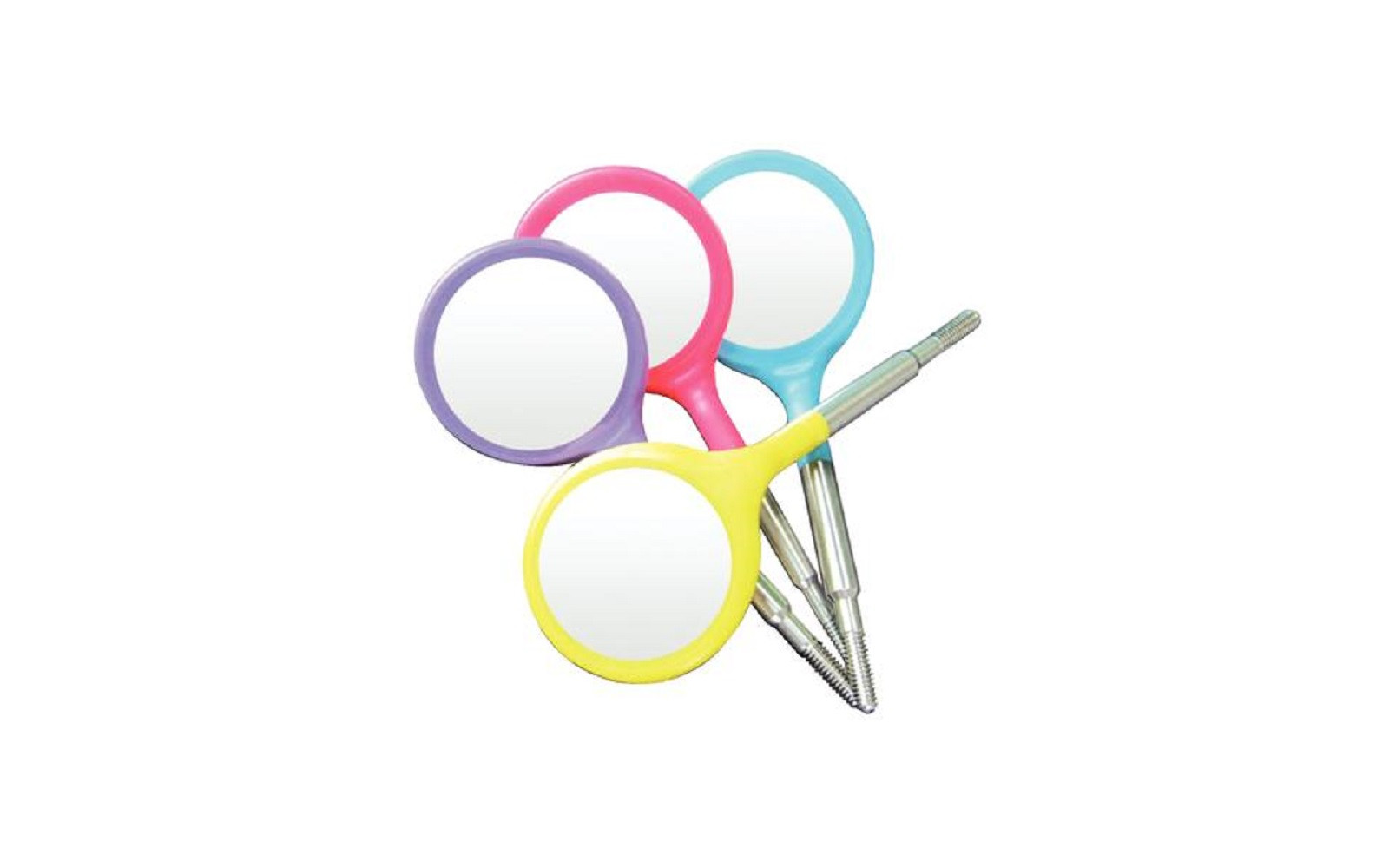
Top 10 Mouth Mirror Heads.
Mouth mirror heads by socket, size, and coating: rhodium, black-line, magnifying, and Crystal HD.

Reviewed by Dr. Sean Myran, DMDDoctor of Dental Medicine, University of Pennsylvania
How to Choose a Mouth Mirror Head
A mouth mirror head is a consumable optic on a handle, not a magnifying loupe. The ten heads below fail in different ways: the wrong socket will not stay on the handle, a rear-surface glass mirror doubles the image, a #4 head disappears on a full-arch exam, and a magnifying concave mirror is a poor retractor. Connection first, then size, then coating.
Most of this list is a cone-socket head, the push-on standard on U.S. handles. The last Crystal HD row is the screw-on stainless version, which will not snap onto a cone-socket handle. Double-sided heads reflect from both faces so you stop flipping the mirror; they are thicker, and both coatings wear. Front-surface rhodium is the ordinary metal mirror. Plastic Crystal HD heads are Zirc’s brighter, flush-lens alternative and the ones they say will not give a galvanic shock at a metal rim.
Buying criteria that actually change what you see
- Socket — cone socket for the handles already in the cassette. Screw-on only if the handle is threaded. A “better” head on the wrong handle is a head on the bracket table.
- Size — #5 (about 24–25 mm, depending on the maker) is the general exam head. #4 is the one that fits a posterior embrasure and a small mouth. This list mixes both; the Crystal HD double-sided pack is a #4, not a #5.
- Front surface — the reflective coating has to be on the face you look at. A back-surface mirror shows two images. Rhodium is the usual metal coating. It scratches, and once it does you replace the head, not the handle.
- Single versus double — single-sided is thinner and cheaper to replace. Double-sided saves a flip during retraction and gives you a second coated face to wear out.
- Glare, magnification, plastic — a black or diamond-like carbon rim cuts the flash off the metal. A concave magnifying head (the Patterson / Miltex row) enlarges a spot and bends the field around it. Plastic Crystal HD heads are for brightness and a flush edge, and they are a different replacement cycle from stainless.
| Head | Maker | Socket | This SKU | Watch-out |
|---|---|---|---|---|
| Crystal HD plastic | Zirc | Cone | #5, single-sided, black, 12/pkg | Zirc’s “40% brighter than rhodium” line is their claim. Confirm the autoclave limit on the current insert (older copy said 136°C / 275°F). |
| American Eagle | American Eagle | Cone | #5, 25 mm, single-sided rhodium on stainless | A standard front-surface metal head. It doubles nothing until the rhodium scratches. |
| Hu-Friedy HD | Hu-Friedy | Cone | #4, single-sided, 12/pkg | Smaller head. The coating is not named on this SKU the way the black-line head’s is. |
| Patterson Premium | Patterson | Cone | #5, stainless, rhodium | House-brand version of the ordinary metal #5. Do not expect a carbon rim or magnification. |
| HD Black Line | Hu-Friedy | Cone | #5, single-sided, diamond-like carbon | Brightness percentages in old distributor copy (including a “113% reflection” line) are marketing figures. |
| Hu-Friedy double-sided | Hu-Friedy | Cone | #5, 24 mm, rhodium, 3/pkg | Both faces wear. The small pack is a different reorder math from a 12-pack. |
| Magnifying | Miltex by Integra, sold as Patterson | Cone | #5 concave, single-sided, 12/pkg | Magnifies one zone and distorts the rest. The power is not printed on this listing. |
| Crystal HD double-sided | Zirc | Cone | #4, both faces, assorted colors, 4/pkg | It is a #4. Ordering it as “the same as the #5 plastic” buys the wrong diameter. |
| C-Mor | Essential Dental Systems | Cone | #5 stainless, 4/pkg | A metal high-reflectance head. No carbon coating and no magnification are specified. |
| Crystal HD stainless, screw-on | Zirc | Screw-on | Stainless screw-on head | Will not push onto a cone-socket handle. Match the thread before you autoclave a drawer of them. |
The handle is a separate purchase: mouth mirror handles.
1. Crystal HD® Plastic Mirror Heads — Zirc

Zirc’s Crystal HD plastic head, in the #5 black single-sided pack, is the rhodium alternative they market as about 40% brighter. The lens sits flush with the frame so corrosion has less of a lip to collect in, and Zirc says the plastic rim avoids the galvanic shock a metal edge can give. Autoclave temperature in older product copy is 136°C / 275°F; confirm the current insert before you raise the sterilizer.
This is the everyday exam head in plastic: size 5, one face, cone socket, sold 12 to a package. It is not the double-sided #4 farther down the list, and it is not the screw-on stainless Crystal HD.
Who it is for: Offices that replace scratched rhodium heads often and want a brighter plastic #5 on the cone-socket handles they already own.
Tradeoff: Plastic still scratches and clouds. “Brighter than rhodium” is Zirc’s comparison, not a guarantee that a worn plastic head beats a new metal one. Antimicrobial claims on the old listing are also Zirc’s; they do not replace a cleaning and sterilization cycle.
2. American Eagle Mouth Mirrors

American Eagle’s #5 is the reference metal head: front-surface rhodium on stainless, cone socket, listed at 25 mm. One face. No magnification, no black rim, no plastic. The image is one image until the rhodium is scratched through, and then it is time to throw the head away.
Buy it when the cassette standard is “size 5 cone socket” and you do not want a coating story. It retracts, it reflects the operating light, and it matches every other cone-socket handle in a typical U.S. setup.
Who it is for: Practices standardizing on one stainless #5 and replacing heads when the coating fails, not when a brochure promises more brightness.
Tradeoff: A bright metal rim throws light back at you. If glare is the complaint, the Hu-Friedy black-line head is the one built for that, not another rhodium #5. A 25 mm head is also the one that bumps a posterior cheek; keep a #4 in the same cassette.
3. Hu-Friedy High Definition Cone Socket, Size 4

This Hu-Friedy row is a size 4, single-sided, cone-socket head in a 12-pack. Size is the point. A #4 sits in a distal box, a tight vestibule, and a child’s mouth where a 25 mm #5 becomes a cheek retractor you cannot see around.
The listing calls it high definition and does not name the coating the way the black-line head names diamond-like carbon. Treat it as Hu-Friedy’s smaller front-surface head, not as a second black-line mirror and not as a magnifier.
Who it is for: Operatories that already like Hu-Friedy #5 heads and keep losing the posterior view because the head is too wide.
Tradeoff: A #4 shows less of the arch per glance. Using only #4s for a full-mouth exam is slower, not sharper. Replace the head when the surface scratches; “HD” on the label does not make a worn mirror reflective again.
4. Patterson® Premium Mouth Mirrors

Patterson Premium, size 5, cone socket, is the house-brand stainless rhodium head. Twelve to a package. It occupies the same job as the American Eagle #5: one face, no magnification, no carbon rim.
The reason it is on a buying list is reorder convenience, not an optical category of its own. If the practice already buys Patterson mirrors and the handles are cone socket, this is the #5 refill. If the complaint is glare or a doubled image, a private-label rhodium head will not fix either one.
Who it is for: Offices stocking Patterson cone-socket handles and a plain #5 head.
Tradeoff: Private label means the coating lot can change even when the catalog name does not. Look at a new head under the operating light before you put twelve of them into circulation. It is not the Miltex magnifying mirror sold one row below under a Patterson name.
5. Hu-Friedy HD Black Line, Size 5

Hu-Friedy’s black-line #5 is the anti-glare metal head. The coating on this SKU is diamond-like carbon, single-sided, cone socket. The black rim and the darker face are there so the mirror stops flashing the operating light back into your eyes while you retract.
Distributor copy has quoted large brightness gains against rhodium, including a reflection figure over 100%. Those are sales numbers. What you can use is the design intent: less glare than a bright stainless rim, same #5 cone-socket job as the plain Hu-Friedy or American Eagle head.
Who it is for: Clinicians who like a #5 metal mirror and are squinting from rim flash, not from a lack of magnification.
Tradeoff: Carbon coatings wear too. A black head with a scratched face is just a dark, dull mirror. It is still single-sided, so you flip it like any other one-face head. It is not a loupe and it does not focus light the way a concave magnifying mirror does.
6. Hu-Friedy Double-Sided Mouth Mirrors

This Hu-Friedy #5 is rhodium on both faces, listed at 24 mm, cone socket, three to a package. Double-sided means the back of the head is also a mirror, so retraction and indirect vision do not require a flip when you change which way the face points.
The head is thicker than a single-sided #5, and you are paying to coat two surfaces that both see autoclave steam and both see instruments. The 3-pack is easy to under-order if the rest of the drawer is 12-packs.
Who it is for: Dentists who already work with a double-sided mirror and want a rhodium #5 rather than Zirc’s plastic double-sided #4.
Tradeoff: When one face scratches, the other is not a new mirror; it is the next face you will scratch. Diameter is 24 mm here and 25 mm on the American Eagle #5. Close enough to call both size 5, not close enough to mix them in a photo protocol that cares about the millimetre.
7. Patterson Magnifying Mirrors (Miltex)

This row is easy to mis-file as another Patterson rhodium #5. The manufacturer on the SKU is Miltex by Integra. The head is concave, size 5, single-sided, stainless, cone socket, 12 per package. Concave is what produces the magnification. A flat rhodium head does not.
Use it when you want a larger view of a small field — a crack line, a margin, a lingual pit — and you can accept that the rest of the mirror’s image is bent. It still retracts cheek and tongue. It is a bad mirror for showing a patient the whole arch, because the magnification is not uniform.
Who it is for: Exams and refinement checks where a concave #5 is already how you look at detail, on a cone-socket handle.
Tradeoff: The listing never states the power. Do not invent a “2×” and do not put this head in every cassette as the standard mirror. A magnified, distorted indirect view is how margins get misread if it is the only mirror you use.
8. Crystal HD™ Double-Sided Heads — Zirc

Zirc’s double-sided Crystal HD pack is a #4, not a #5, in assorted colors, four to a package. Both faces are the plastic HD lens. Zirc’s brightness claim against rhodium is the same family as the single-sided head (their “40%” line), and the flush lens is the same anti-corrosion, anti-shock story. Color is for telling sets apart on the tray, not for optics.
The useful combination is specific: a smaller head, two faces, plastic. That is a posterior mirror you do not flip, in a 4-pack that will not refill a 12-pack habit.
Who it is for: Practices that already like Crystal HD plastic and want both faces on a #4.
Tradeoff: Ordering “double-sided Crystal HD” without reading the size buys a #4. Autoclave limits and antimicrobial language belong to Zirc’s insert. A double-sided plastic head still clouds; you just cloud it twice as fast if both faces hit the tooth.
9. C-Mor Mirror Heads — Essential Dental Systems

C-Mor is Essential Dental Systems’ stainless #5, cone socket, four to a package. The catalog describes a high-reflectance front surface and does not claim diamond-like carbon, a concave magnifying curve, or a plastic lens. It is a metal exam head in a small pack.
Put it next to American Eagle and Patterson Premium, not next to the black-line or Crystal HD rows. The difference you can actually buy is the supplier and the 4-count, not a documented coating chemistry.
Who it is for: Offices adding a stainless #5 from Essential Dental Systems and replacing heads a few at a time.
Tradeoff: “High definition” on a thin catalog row is not a measured reflectance. If the head you receive is a standard rhodium face, judge it the way you judge any other rhodium #5: one image, replace when scratched. Four-packs run out faster than 12-packs.
10. Crystal HD™ Stainless Screw-On Heads — Zirc

This last Zirc row is the screw-on stainless Crystal HD, not the cone-socket plastic heads at the top of the list. The thread is the product. A screw-on head tightens onto a threaded handle; it does not snap onto the cone socket that fits items 1 through 9.
Stainless changes the replacement story too. You are back to a metal head that can flash and that can shock if the rim is bare metal, which is the problem Zirc’s plastic flush lens was meant to avoid. Do not mix the two Crystal HD families in one handle standard.
Who it is for: Practices whose mirror handles are already screw-on and who want a Zirc stainless head for those handles only.
Tradeoff: Buying these “because the plastic Crystal HD was bright” and then discovering they will not mount is an expensive autoclave load. Confirm thread and size on the handle end before the box is opened into the clean drawer.
Frequently Asked Questions
Are these the same as dental loupes?
No. A mirror head is an intraoral reflector on a handle. Loupes are worn magnification. A concave #5 magnifies a small field inside the mouth and still depends on your loupes or your naked eye for the rest.
What does “cone socket” mean when I reorder?
The head pushes onto a tapered post on the handle. It is the usual U.S. connection. Simple-stem and screw-on handles need different heads. Item 10 on this page is screw-on. The other nine are cone socket.
Size 4 or size 5?
Size 5 (roughly 24–25 mm) for routine exams. Size 4 when the #5 blocks the field. Exact millimetres differ by brand, so a mixed cassette of “size 5” heads is not one diameter.
Why replace the head instead of polishing it?
Front-surface coatings are thin. Polishing a scratched rhodium or carbon face removes what is left of the coating and brings back the double image a front-surface mirror was bought to avoid.
Read next
Stay on diagnostic mirrors and the handles they mount to:
Related articles
Keep exploring related topics from Dental Country.
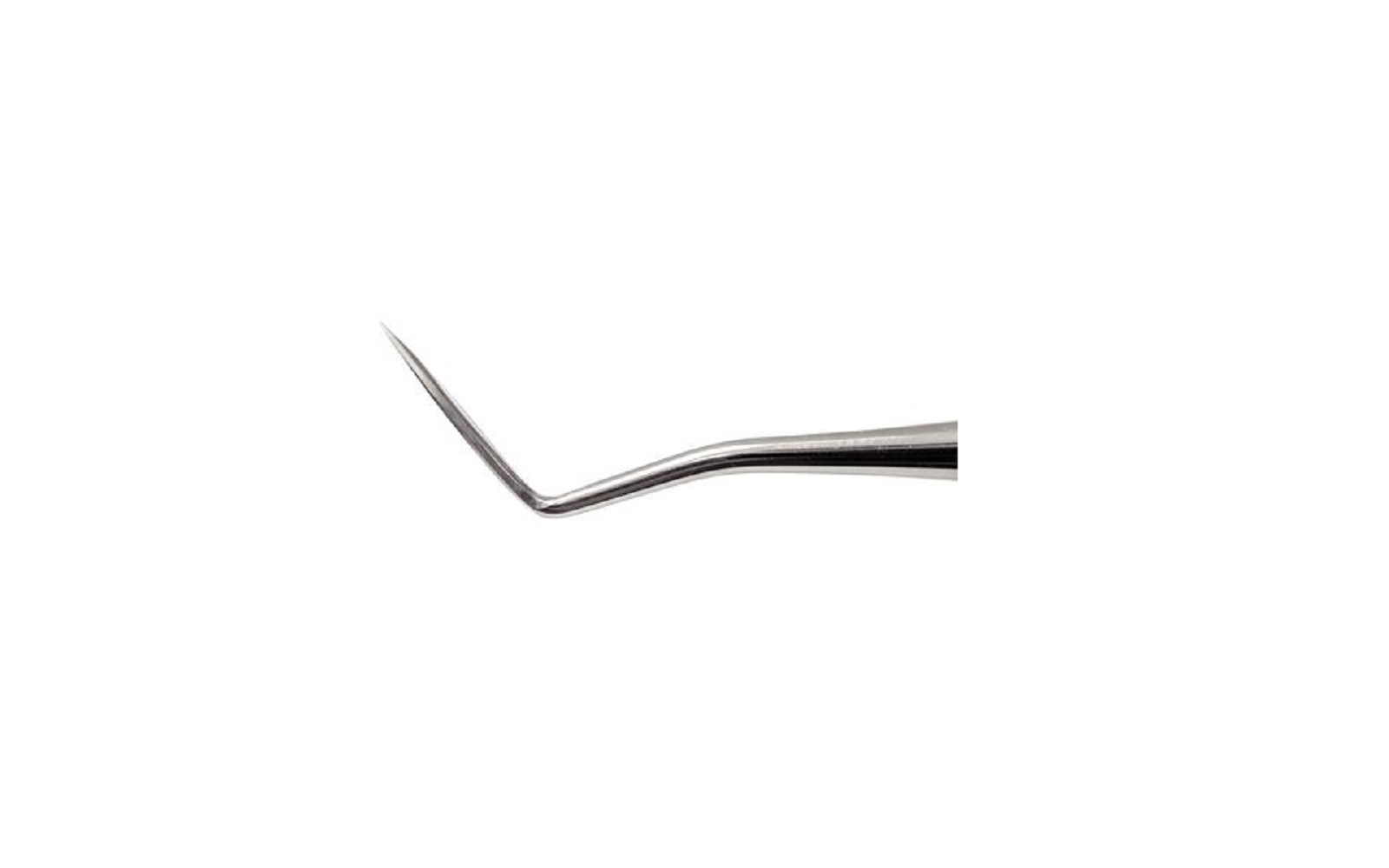
Top 10 Amalgam Carvers for Dentists
Dental carvers by tip: Ward, Hollenback, discoid-cleoid, and IPC, plus the PFI and Bliss that are for composite.
Read article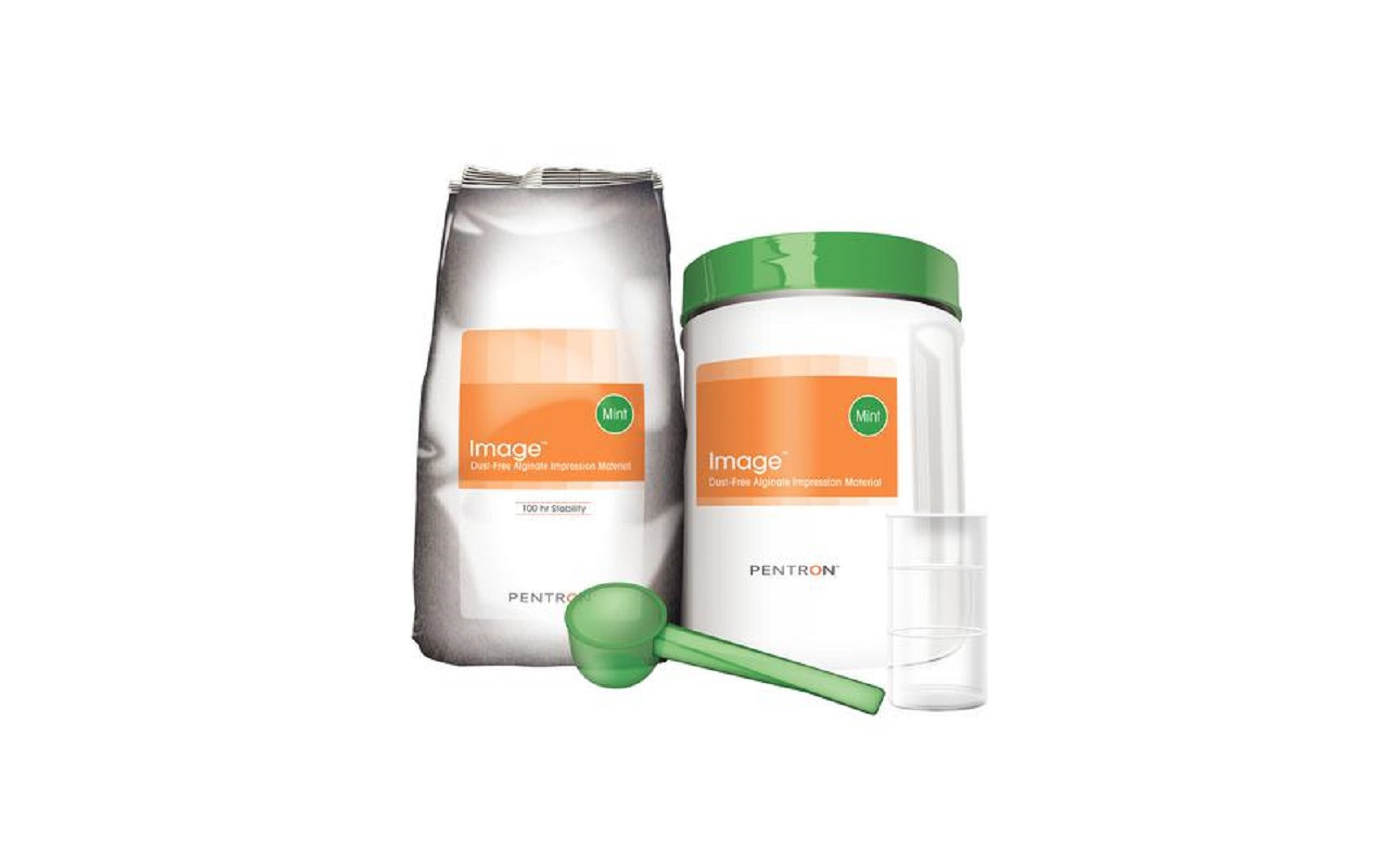
Top 10 Alginate Impression Material for Dentists
Alginate compared by cue: chromatic phases, Jeltrate Plus antimicrobial, AccuDent XD’s two viscosities, Hydrogum 5’s five-day stability.
Read article
Top 10 Bottle Cleaners for Dentists
Compare the best Bottle Cleaners for Dentists — our researched Top 10 ranking of the leading brands and options to help you choose the right fit for your practice.
Read article
7 Dental Websites to be Inspired by
Compare the best 7 Dental Websites to be Inspired by, ranked on performance, features, and value to help you choose the right fit for your practice.
Read article