
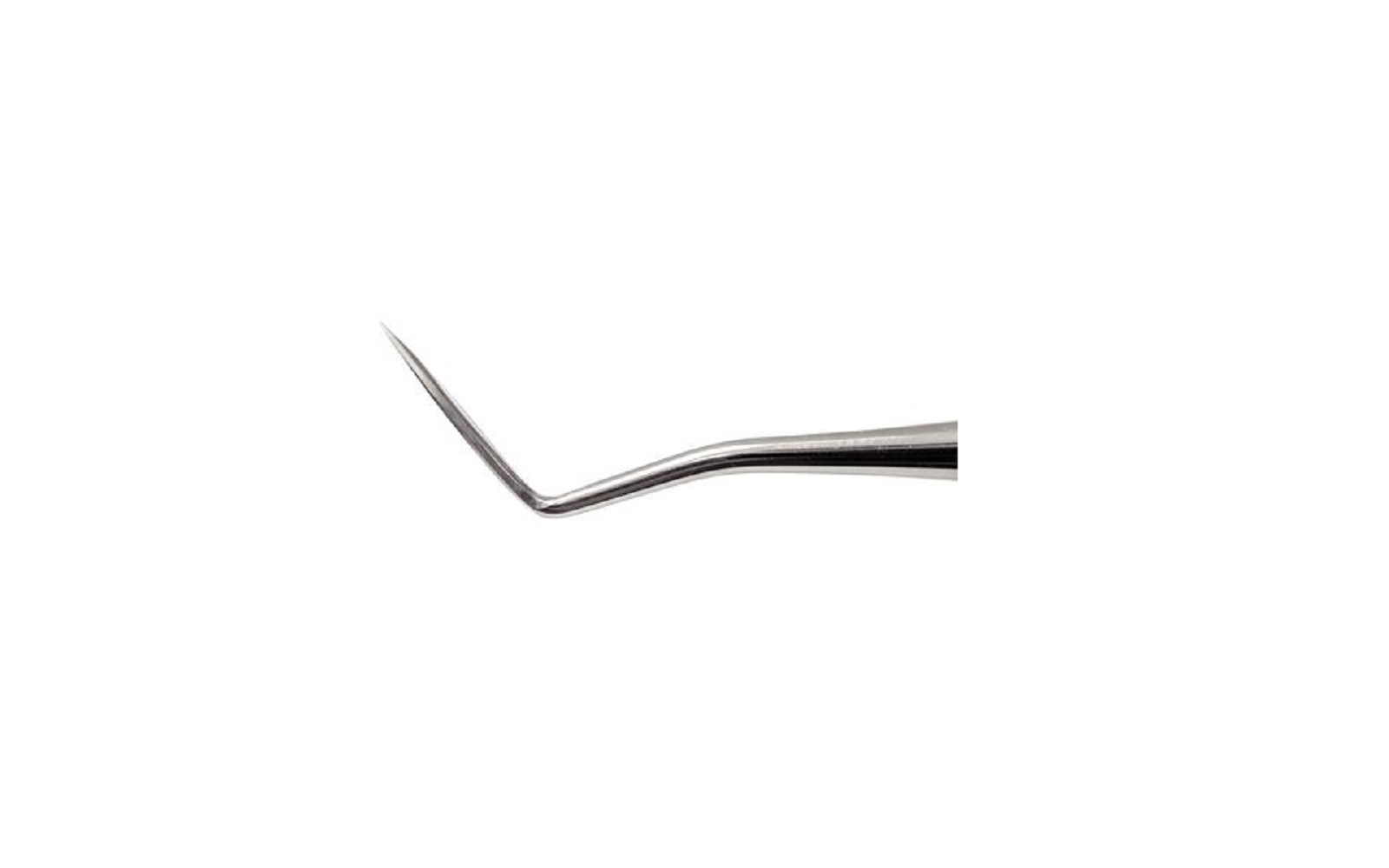
Top 10 Amalgam Carvers for Dentists.
Dental carvers by tip: Ward, Hollenback, discoid-cleoid, and IPC, plus the PFI and Bliss that are for composite.

Reviewed by Dr. Sean Myran, DMDDoctor of Dental Medicine, University of Pennsylvania
How to Choose a Dental Carver
Carvers are tip geometry, not a brand ladder. A Hollenback is a thin blade for the proximal box and the gingival embrasure. A discoid-cleoid (and the Tufts #2, which pairs those two tips) carves occlusal anatomy. A Ward is a narrow knife for grooves and flash. An IPC is thinner still, for the contact without opening it. A PFI #13 and the Bliss 3S are composite placement instruments that landed on a carver list — useful, and not amalgam carvers.
Handle and size are the other half. A standard octagonal handle is the traditional pen grasp. Hu-Friedy’s Wall carver here is a round handle. PDT’s Hollenback is a lightweight alabaster-gray resin handle. Bliss uses silicone. The #3S Hollenback (Nordent, and Patterson’s house version) is a smaller proximal blade than PDT’s #1/2 and #3. Buying three “3S” instruments without reading the tip is how a composite cone ends up in the amalgam cassette.
Buying criteria that actually change the outcome
- Proximal vs occlusal — Hollenback and IPC for contacts and margins. Discoid-cleoid, Ward, and Tufts for occlusal grooves, fossae, and flash.
- Amalgam vs composite — thin steel carvers shape amalgam as it sets. Polished PFI blades and the Bliss silicone-handle probe/cone place and sculpt composite before you cure it. The materials do not stick and carve the same way.
- Size of the Hollenback — 3S is the small blade. #1/2 and #3 are larger. A small blade in a tight embrasure beats a large blade that binds the contact.
- Handle fatigue — resin and silicone grips are lighter. Standard stainless handles are what most cassettes already balance. Pick one the operator will actually hold for a 45-minute restorative session.
- Edge, not logo — a dull Hollenback burnishes flash into the margin. Replace or sharpen; a second brand of the same dull shape does not fix it.
| Instrument | Maker | Tip | Handle | Best use | Watch-out |
|---|---|---|---|---|---|
| Ward #1 | American Eagle | Narrow Ward blade, double end | Standard | Occlusal grooves and proximal flash | Not a proximal Hollenback |
| Hollenback 3S | Nordent | Small Hollenback, double end | Standard | Tight proximal amalgam carving | Too small for broad occlusal planing |
| Wall #41 | Hu-Friedy | Wall carver, double end | Round | Proximal and occlusal carving with a larger grip | Round handle feels different from the rest of a standard cassette |
| Tufts #2 | Nordent | Cleoid plus elongated discoid | Standard | Occlusal amalgam anatomy | Poor choice in a tight box |
| Hollenback 1/2 and 3 | PDT | Larger Hollenback pair | Alabaster-gray resin | Occlusal and proximal contour with a light handle | Bigger than a 3S; resin grip is a different balance |
| Discoid-cleoid 89/92 | Premier | Discoid and cleoid | Standard | Classic occlusal amalgam carving | Will not pass a contact the way an IPC will |
| IPC | American Eagle | Very thin interproximal blades | Standard | Contacts and margins, amalgam or composite | Too delicate for heavy occlusal carving |
| PFI #13 | American Eagle | Plastic-filling paddle, double end | Standard stainless | Placing and shaping composite | Not an amalgam carver |
| Hollenback 3S | Patterson | Small Hollenback, double end | Standard | Same small proximal blade, house brand | Not a different design from the Nordent 3S |
| Bliss 3S | Bliss | 4.0 mm probe and 5.6 mm cone | Silicone | Sculpting composite before cure | The 3S label is not a Hollenback 3S |
The rest of the amalgam setup: amalgam carriers · burnishers
1. Ward Carver #1 — American Eagle

The American Eagle Ward #1 is a double-ended carver on a standard handle. Ward blades are narrow and knife-like. You use them to define occlusal grooves and to peel flash off a proximal margin after the amalgam is condensed, when a wider discoid would erase the anatomy you just carved.
#1 is the smaller Ward. It is a finishing instrument, not a condenser and not a Hollenback. If the embrasure is the problem — a contact that is bulky, a gingival margin you cannot see — put this down and pick up the Nordent or Patterson 3S. If the occlusal is a flat plateau and you need pits and grooves, the Ward earns its place.
Who it is for: Restorative cassettes that still carve amalgam and want a small standard-handle knife for grooves and flash.
Tradeoff: A thin blade on a soft amalgam tears rather than carves if you are early, and burnishes if you are late and dull. American Eagle’s standard handle will not feel like Hu-Friedy’s round Wall or PDT’s resin grip. Do not buy it as a composite non-stick instrument; that is the PFI and the Bliss.
2. Hollenback Carver #3S — Nordent

Nordent’s #3S Hollenback is a double-ended, standard-handle carver with the small Hollenback blade. Hollenback tips are thin and spear-shaped so they can carve the proximal contour and the gingival embrasure without destroying the contact. 3S is the size you want when the box is narrow. The larger #1/2 and #3 (the PDT instrument below) are a different scale.
This is an amalgam proximal carver. The blade is sharp on purpose. It is the wrong tip for placing unset composite, which wants a polished paddle that lets go of the resin, and it is a clumsy occlusal carver compared with a discoid-cleoid. Nordent’s version is the name-brand small Hollenback; Patterson’s #3S later on this list is the house-brand version of the same idea.
Who it is for: Operators carving proximal amalgam in tight embrasures who want a small Hollenback on a traditional handle.
Tradeoff: Too small for broad occlusal surfaces, and easy to lose in a cassette full of larger carvers. A dull 3S is worse than no 3S because it burnishes flash against the margin. It is not the Bliss 3S, which shares a number and nothing else.
3. Wall Carver #41 — Hu-Friedy

This Hu-Friedy listing is a double-ended Wall carver on a round handle (the #41 / Wall identity in the product photo). Wall carvers are used on both the proximal and the occlusal of an amalgam: one end clears the box, the other refines the occlusal. The round handle is the buying decision. It is a larger, smoother grip than the octagonal standard handles on the American Eagle and Nordent carvers in the same cassette.
Hu-Friedy sells some carvers with carbide inserts that hold an edge longer than plain steel. This page’s older description called the tips carbide; confirm that on the current Hu-Friedy SKU before you pay a carbide price, and do not assume every round-handle Wall is carbide. The geometry is what changes the carving. The metallurgy of the tip changes how often you replace it.
Who it is for: Clinicians who want a Wall carver and prefer a round handle to a standard octagonal one, especially for longer restorative appointments.
Tradeoff: A round handle in a cassette of standard handles is easy to love and easy to fumble if you are not the person who ordered it. Carbide tips chip when dropped and are not a sharpen-at-the-chair item. This is still an amalgam-style carver, not a composite PFI.
4. Tufts Carver #2 — Nordent

Nordent’s Tufts #2 is a double-ended standard-handle carver with a cleoid on one end and an elongated discoid on the other. That pair is for occlusal amalgam: the cleoid cuts grooves and triangular ridges, the discoid shapes fossae and clears occlusal flash. It is the anatomy instrument, not the proximal instrument.
Use it after condensation, when the amalgam is carvable and not yet set hard. An elongated discoid reaches a bit differently from the rounder 89/92 discoid (Premier, below). Neither replaces a Hollenback in the embrasure. If your practice has abandoned amalgam, a Tufts #2 will sit unused next to the composite instruments; do not keep reordering it out of habit.
Who it is for: Amalgam restorations where occlusal anatomy is the goal and the cassette already has a separate proximal carver.
Tradeoff: Useless in a tight box, and harsh on composite if you try to “carve” set resin with it. Elongated discoids also gouge a fresh amalgam if the material is still too soft. Standard handle only — no resin grip on this listing.
5. Hollenback #1/2 and #3 — PDT

PDT’s double-ended Hollenback in alabaster gray carries the larger #1/2 and #3 blades, not the small 3S. The tips are stainless Hollenbacks for occlusal and interproximal contour of amalgam and, in PDT’s positioning, composite as well. The handle is lightweight resin. That is the difference you feel after the tenth restoration: less metal in the hand, a color you can find in a gray cassette.
Rounded Hollenback tips contour more than they knife. Compared with Nordent’s sharp small 3S, this is a broader carver for larger surfaces and a lighter grip. It still is not a discoid-cleoid, and it still is not a non-stick composite placer. Resin handles survive the autoclave only if they are the dental-grade ones PDT sells; they are not immortal, and a cracked grip is a replacement, not a sharpening.
Who it is for: Operators who want a larger Hollenback pair and a light, color-coded resin handle for both amalgam and composite contouring.
Tradeoff: The blades are bigger than a 3S and will bind in a very tight embrasure. Resin flex feels different from a solid stainless handle; some clinicians read that as lost tactility. Alabaster gray is an identification color, not a clinical feature. Confirm you are ordering #1/2–3 and not a 3S with a similar photo.
6. Discoid-Cleoid #89/92 — Premier

Premier’s #89/92 is the classic double-ended discoid-cleoid on a standard handle. The discoid is the round spoon for fossae and occlusal margins. The cleoid is the claw for grooves. Together they are the occlusal amalgam carver most dentists learned first. #89/92 is a specific size of that pair — large enough for molar occlusals, clumsy in a mandibular incisor box.
It overlaps the Tufts #2 (also a cleoid and a discoid, with a longer discoid) and does not overlap the Hollenback. If the cassette has both a Tufts and an 89/92, you are duplicating occlusal carving and you may still be missing an IPC for the contact. Premier is the maker on this listing; the 89/92 pattern is also sold by other instrument companies, so match the handle you already like.
Who it is for: Amalgam occlusal carving on molars and premolars, in a cassette that already has a proximal carver.
Tradeoff: Will not sneak through a contact. A dull cleoid smears anatomy instead of defining it. Standard handle, amalgam-first. Composite wants the polished PFI or the Bliss, not this claw dragged through sticky resin.
7. IPC Interproximal Carver — American Eagle

American Eagle’s IPC is a double-ended interproximal carver on a standard handle, with very thin blades ground to pass between teeth. You use it on the contact and the proximal margin of amalgam and of composite, where a Hollenback is already too thick and a discoid has no chance. The point is access, not occlusal anatomy.
Thin blades bend and nick if you pry with them. They are finishing instruments. On composite they can refine a margin and a contact before or just after cure, depending on the material, without the stick of an unpolished carver. On amalgam they shave interproximal excess the embrasure instrument could not reach. They do not replace a Ward on the occlusal.
Who it is for: Restorative setups that need a dedicated thin interproximal blade for contacts, in both amalgam and composite.
Tradeoff: Fragile. A bent IPC is done. It is a poor heavy carver and a poor condenser. American Eagle’s standard handle matches the Ward and the PFI from the same maker, which is a reason to keep those three as a set rather than mixing grips.
8. PFI #13 — American Eagle

The #13 PFI is a plastic filling instrument, not a carver of set amalgam. American Eagle’s double-ended stainless version has polished blades so composite releases instead of pulling. You place, adapt, and contour resin before you cure. The “carver” heading in older catalogs is a grouping habit. The instrument does a different job from every Hollenback on this page.
#13 is a small size, which is what you want at a cervical margin or a small occlusal. A large PFI overfills and drags. Because the surface is polished and not an edge, it will not cut a groove in amalgam and it should not be sharpened like a cleoid — sharpening a PFI is how you ruin the non-stick face.
Who it is for: Composite placement in offices that want a small, polished, double-ended stainless PFI on a standard handle.
Tradeoff: It will not carve amalgam anatomy. Sticky composite means the surface is scratched or the material is too warm, not that you need a sharper PFI. If you wanted a silicone grip and a cone tip, that is the Bliss, not this #13.
9. Hollenback #3S — Patterson

Patterson’s #3S Hollenback is the house-brand small proximal carver: double-ended, standard handle, same size idea as the Nordent 3S above. You buy it when the dealer is Patterson and you need another small Hollenback, not because the blade is a new geometry.
House-brand instruments vary in steel and edge retention more than they vary in the number stamped on the handle. The clinical test is whether the blade stays sharp through the sterilization cycle and whether the shank flexes the way you expect. If it does, the savings are real. If it arrives dull, you did not save anything versus the Nordent.
Who it is for: Patterson accounts that want a small Hollenback 3S in the amalgam cassette without a separate instrument vendor.
Tradeoff: It is not a different carver from item 2. Owning both is a spare, not a system. It is also not the Bliss 3S. Do not pay carbide or resin-handle prices for a standard stainless 3S unless the Patterson listing actually says that — this one is the standard-handle Hollenback.
10. Bliss Carver #3S — probe and cone

The Bliss #3S in this listing is a double-ended composite instrument: a 4.0 mm probe and a 5.6 mm cone on a silicone handle. Those sizes are part of the product name, not a guess. You sculpt composite — grooves, fossae, cuspal slopes — before you light-cure. The silicone grip is the ergonomic difference from every standard-handle carver above.
The “3S” is the trap. It does not mean Hollenback 3S. A probe and a cone will not carve a proximal amalgam box, and a Hollenback will not do what this cone does in soft composite. Treat Bliss as its own composite-sculpting set. Non-stick behavior depends on the tip staying smooth and the composite staying unset.
Who it is for: Composite restorations where you want a silicone-handle probe and cone to shape anatomy before cure.
Tradeoff: Wrong instrument for carving set amalgam. Silicone handles are a different autoclave wear item from stainless. The cone is 5.6 mm — too wide for a narrow fissure you meant to cut with a Ward or a cleoid. If the office still does both materials, label the Bliss so it does not live in the amalgam roll.
Frequently Asked Questions
Which carver do I use on the proximal box?
A Hollenback. The Nordent and Patterson #3S are the small blades for tight embrasures. PDT’s #1/2 and #3 are larger. An IPC is thinner still when the contact itself is the problem. Discoid-cleoid and Tufts instruments are for the occlusal, not the box.
What is the difference between a Hollenback 3S and a Bliss 3S?
The number is a coincidence. A Hollenback 3S is a small amalgam proximal carver. The Bliss 3S on this list is a silicone-handle composite instrument with a 4.0 mm probe and a 5.6 mm cone. They do not substitute for each other.
Is a PFI a carver?
It is a plastic filling instrument for placing and contouring composite. The #13 is polished so resin releases. It does not carve set amalgam, and it should not be sharpened like a cleoid.
Do I need both a Ward and a discoid-cleoid?
If you carve amalgam anatomy, yes, they do different strokes. The Ward #1 is a narrow knife for grooves and flash. The #89/92 discoid-cleoid is the round-and-claw pair for fossae and ridges. A cassette with only one of them will leave half the occlusal unfinished.
Read next
Stay on restorative hand instruments:
Related articles
Keep exploring related topics from Dental Country.

The Top 15 Dental Chairs in the World
Compare 15 dental chair brands for 2026 — A-dec, Planmeca, Midmark, and more — by ergonomics, service, and cost.
Read article
Top 10 Resin-Based Dental Cements
Adhesive vs self-adhesive resin cements: Variolink, RelyX, PANAVIA, and NX3 by bonding steps, cure, and cleanup.
Read article
Top 10 Bottle Cleaners for Dentists
Compare the best Bottle Cleaners for Dentists — our researched Top 10 ranking of the leading brands and options to help you choose the right fit for your practice.
Read article
7 Dental Websites to be Inspired by
Compare the best 7 Dental Websites to be Inspired by, ranked on performance, features, and value to help you choose the right fit for your practice.
Read article