
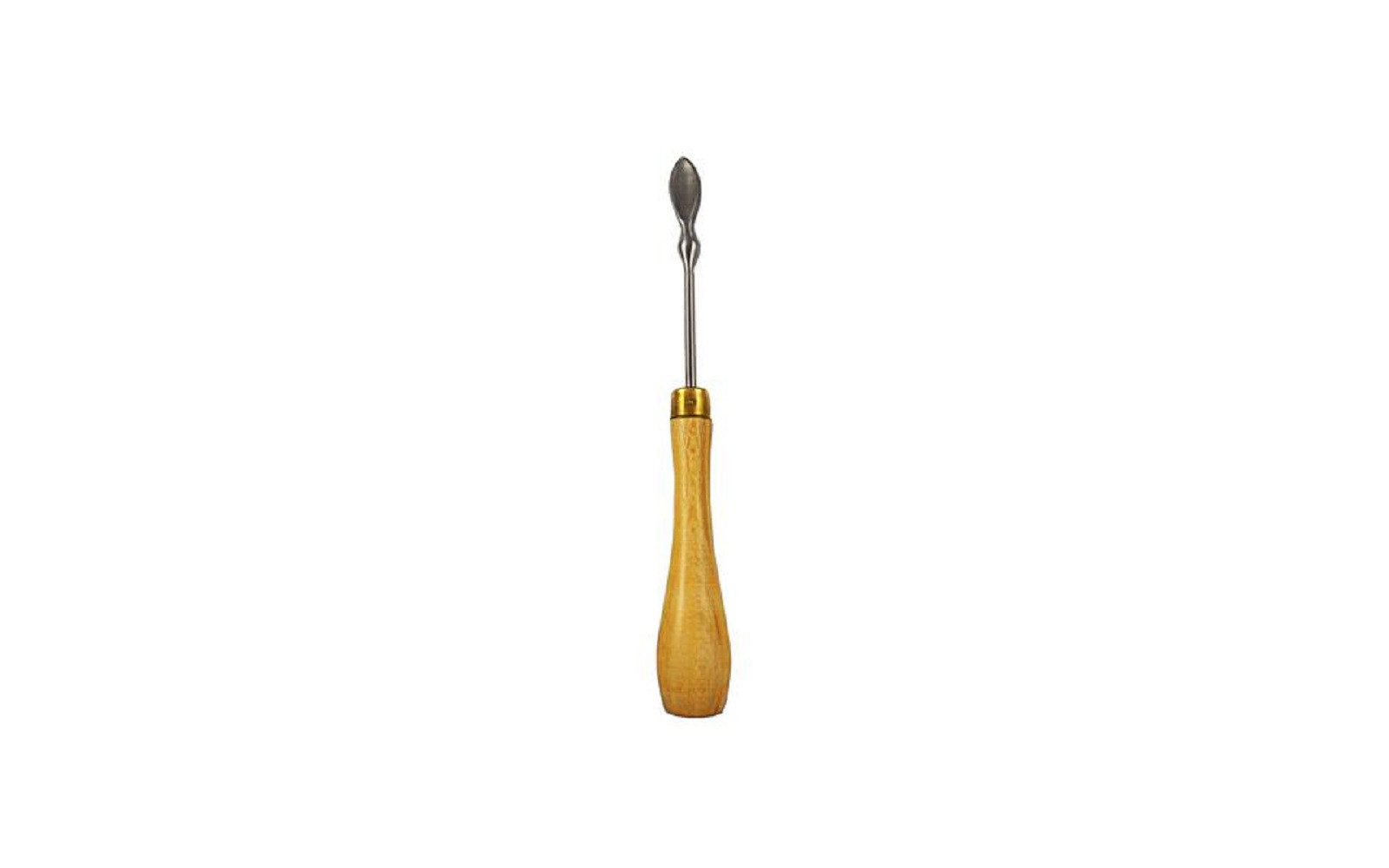
Top 10 Hand Waxing Instruments in Dentistry.
Compare PK Thomas, LeCron, Roach, Akers, and TiN wax carvers for crown, partial, and denture wax-ups.
How to Choose Hand Waxing Instruments
Hand waxing instruments are the small steel (or plastic-handled) tips you use to add, wipe, and carve modeling wax before a crown, bridge, or partial ever sees the furnace. The pattern on the tip matters more than the brand on the handle. A P.K. Thomas #1 adds and shapes cusp wax; a LeCron 5 knifes surplus and finishes a ridge; a Roach festooning carver is a triangular-and-scoop tool, not a PKT substitute. Buying “ten waxing instruments” that are all the same knife is how a wax-up stays a blob.
Three families cover most benches. P.K. Thomas (PKT 1–5) is the cusp-anatomy set — graduated tips for placing and refining occlusal wax. LeCron / Lecron 5 is the general carver: a large knife on one end and a small flat-round blade on the other. Named clasp and festoon carvers (Akers, Roach) exist because removable partial wax-ups are not crown wax-ups. Color-handled Almore Thomas instruments and titanium-nitride (TiN) coatings are the two comfort upgrades: plastic handles stay cooler next to a flame, and TiN is a hard, slick coating so wax releases instead of smearing.
Handle diameter is not fashion. Hu-Friedy’s #41 round is a thin steel handle; DuraLite-style and plastic color handles are thicker and lighter. If you wax eight hours, the thicker non-conductive handle wins. If you want the instrument to disappear in a cassette next to a PKT set, #41 steel is the standard.
Buying criteria that change the wax-up
- Tip pattern vs job — PKT for adding cusps; LeCron for general carve and wipe; Roach (triangle + bulb scoop) for festooning; Akers (point + spoon) for clasp and fine pick-up; chisel/margin TiN for finish lines.
- Add vs cut — burnishers and PKT #1-style tips place wax. Knives and chisels remove it. A tray of only knives produces thin, torn patterns.
- Coating — bare stainless holds a sharper feel and is easy to resharpen. TiN (Kerr and others) reduces wax stick and wear appearance; you give up some “bite” on hard wax.
- Heat — plastic color handles (Almore Thomas) do not dump flame heat into your fingers. Steel #41 handles do. Do not leave plastic in an open flame.
- One pattern, two makers — Hu-Friedy, Dixon, Premier, and Patterson all sell LeCron 5 and PKT shapes. Buy the handle you like; do not buy three identical LeCrons and call it a set.
Instrument comparison
| Instrument | Maker | Tip pattern | Handle | Coating | Primary job |
|---|---|---|---|---|---|
| LeCron 5 | Hu-Friedy | Large knife + small flat-round | #41 round stainless | Uncoated steel | Everyday carve, wipe, and ridge finish |
| Waxing instrument 5 | Hu-Friedy | Carver #5 | #41 round | Uncoated | General wax-up companion to PKT |
| Thomas Color 4 Red | Almore | PKT-style / waxing #4 | Plastic, color-coded | Steel tips, uncoated | Long waxing sessions near a flame |
| TiN 1.5 mm chisel | Kerr | 1.5 mm chisel (LeCron family) | Double-end | Titanium nitride | Fine cut-back, less wax stick |
| PKT DE1 | Premier | P.K. Thomas #1 | Standard double-end | Uncoated | Adding and shaping cusp wax — start of a PKT set |
| LeCron 5, 6½" | Dixon | LeCron 5 | Longer steel | Uncoated | Same pattern, different reach / price |
| Akers carver | Patterson | Pointed blade + spoon | Complete double-end | Uncoated | Clasp wax and fine pick-up |
| Roach carver | Hu-Friedy | Triangular carver + bulb scoop | Round stainless | Uncoated | Festooning and denture/partial wax |
| TiN margin carver | Kerr | Large scoop / margin | Double-end | Titanium nitride | Finish lines and concave wipes |
| Waxing instrument 3 | Hu-Friedy | Pointed burnisher | #41 round | Uncoated | Placing and smoothing wax, not carving surplus |
Lab waxing instruments · Wax and plastic patterns
1. LeCron 5 Wax Carver — Hu-Friedy

The LeCron (also spelled Lecron) 5 is the default double-ended wax carver: a large knife blade and a small flat-round blade on a #41 round stainless handle. That pairing is why it shows up in every lab catalog. The knife planes surplus wax off a ridge or a sprue button; the small end refines a groove without the PKT set coming out of the drawer.
Hu-Friedy’s version is uncoated Immunity/Satin-family steel — sharp, resharpenable, cassette-native. It is not a cusp-adding instrument. If your wax-up problem is “I cannot place a triangular ridge,” you need a PKT, not a second LeCron.
Who it is for: every crown-and-bridge bench as the first steel carver, and dentists who still wax provisionals or diagnostic wax-ups chairside.
Tradeoff: steel conducts heat. If you work inches from a Bunsen, Almore’s plastic handle or a TiN Kerr will be kinder. Two LeCron 5s from two makers (see Dixon below) is redundancy, not a kit.
2. Waxing Instruments — Hu-Friedy #5

Hu-Friedy’s “Waxing Instrument 5” is a double-ended carver in the same #41 round family, sold as a general waxing pattern rather than the named LeCron knife pair. Catalogs list it as a carver for waxing procedures — the instrument you pick up when the LeCron knife is too aggressive and you are not yet on a PKT cusp tip.
Treat it as a mid-flex carver in a Hu-Friedy-only tray. Number 5 next to a LeCron 5 is confusing in a wet ultrasonic; etch or color-sleeve one of them so students do not grab the knife when they meant the waxing 5.
Who it is for: labs standardizing on Hu-Friedy steel that want a second general carver besides LeCron and Roach.
Tradeoff: generic naming. If you are building a teaching kit, labeled PKT 1–5 plus one LeCron is easier to inventory than “waxing instrument 5” and “waxing instrument 3.”
3. Thomas Color Instrument 4 Red — Almore

Almore’s Thomas Color instruments put stainless waxing tips on a lightweight plastic handle, color-coded by design number. Red #4 is one of the hotter-selling colors in that set. The plastic is the feature: it does not conduct flame heat the way a #41 steel handle does, and the color survives a messy bench better than an engraved 4.
Tips are still steel and uncoated — this is not a TiN instrument. You get PKT-style / waxing geometry with a handle you can hold after the tip has been in the flame. Do not put the plastic in the flame. Autoclave only if Almore’s current IFU allows that handle; many color instruments are wipe-disinfected, not bagged with surgical steel.
Who it is for: full-time waxers and students who blister their fingers on steel handles.
Tradeoff: plastic handles are thicker and look out of place in a surgical cassette. They can also roll. If the lab already owns a full steel PKT set, buy the color handle only for the numbers you heat constantly.
4. Titanium Nitride Wax Carver — 1.5 mm Chisel (Kerr)

Kerr’s TiN double-end carver in a 1.5 mm chisel / LeCron-family tip is a coated fine cutter. Titanium nitride is harder and slicker than bare stainless: wax releases, the gold-colored coating shows wear, and you spend less time wiping a gummy tip on a cloth.
1.5 mm is a finishing chisel, not a bulk knife. Use it to plane a small surplus, define a groove, or cut back a contact. It will not replace a PKT #1 for adding a cusp. Patterson lists the tip type as Lecron and the coating as titanium — that is the whole spec sheet, and it is enough.
Who it is for: techs who hate wax sticking to steel and already own a knife and a PKT set.
Tradeoff: coated tips are awkward to stone. When the TiN wears through at the edge, you are on substrate steel. Do not chase a new bevel the way you would on a Hu-Friedy LeCron or you will be done with the coating in a week.
5. PK Thomas Wax Instruments — Premier DE1

P.K. Thomas instruments are the cusp-anatomy series. Premier’s DE1 is the #1 double-end — the tip people use to add and shape wax on a cusp, not to carve it off. A full PKT tray is five graduated geometries (1–5). Buying only DE1 is how you start a set, not how you finish one.
If the lab’s wax-ups look flat, this is the instrument family that was missing. LeCron cannot place a triangular ridge the way a PKT can. Teach the set as a sequence: add with 1, refine with later numbers, then knife surplus with a LeCron.
Who it is for: crown-and-bridge waxers and anyone teaching functional wax-up.
Tradeoff: one Premier DE1 is not “the PKT set.” Budget for 2–5 or a labeled five-piece kit. Premier’s handle will not match Hu-Friedy #41; pick one handle family if students share instruments.
6. LeCron 5 Wax Carver — Dixon, 6½"

Dixon’s LeCron 5 is the same knife + small-blade pattern as Hu-Friedy’s, in a 6½-inch stainless double-end. You buy it when you want the LeCron geometry at a different price or a slightly longer reach, not because it is a new clinical idea.
Steel quality and edge retention vary by maker more than the catalog drawing does. If the Dixon edge rolls sooner, it is still a useful student or spare-bench knife. Do not mix it unlabeled with the Hu-Friedy LeCron in one cup or someone will “compare” them mid-case and waste time.
Who it is for: extra benches, teaching labs, and offices that want a LeCron without another Hu-Friedy line item.
Tradeoff: if you already own the Hu-Friedy LeCron 5, this is a duplicate unless you need a designated dirty/sprue knife. Spend the second slot on a PKT or a Roach.
7. Patterson® Akers Wax Carver Complete

An Akers carver is a pointed blade paired with a spoon. That geometry is for clasp wax, fine pick-up, and the tight work around an RPD framework — not for knocking a full-contour crown into shape. Patterson’s “complete” double-end is the house-brand version of a pattern every removable department already knows.
The point places and defines; the spoon gathers and adapts wax in a concave. Used on a crown wax-up it is a fiddly substitute for a PKT. Used on a clasp, it is the right tool.
Who it is for: removable labs and GP labs that still wax Akers clasps and need a dedicated carver next to the Roach.
Tradeoff: wrong first purchase for a crown-only bench. If you do not wax partials, buy PKT + LeCron and skip this SKU.
8. Roach Wax Carver — Hu-Friedy

Hu-Friedy’s Roach carver is double-ended stainless with a triangular carver and a bulb scoop — the festooning pair. Dealer descriptions are short because the shape is the spec: triangle for grooves and interproximal wax, scoop for concave gingival festooning on dentures and partials.
This is the instrument that makes a denture look like gingiva instead of a wax brick. It is a poor PKT. Keep it in the removable / complete-denture cup, not in the crown-and-bridge PKT tray, or it will get used as a clumsy cusp carver.
Who it is for: denture and RPD wax-ups, and schools that still teach festooning by hand.
Tradeoff: little use on a full-contour zirconia prescription that never sees wax. If the lab has gone model-design / mill, the Roach becomes occasional (try-in wax, custom tray) rather than daily.
9. Titan Nitride-Coated Margin Carver — Kerr

Kerr’s TiN margin carver (large scoop / margin, double-end) is the coated sibling of the 1.5 mm chisel, aimed at finish lines and concave wipes. The scoop adapts wax to a shoulder; the coating keeps the wax from smearing back onto a margin you just cleaned.
Margin wax is unforgiving. A sticky steel scoop lifts the wax you just placed. TiN helps. It does not fix a poorly blocked die or a wax that is too cold. Warm the wax, do not press harder.
Who it is for: crown-and-bridge techs who already like Kerr’s 1.5 mm TiN chisel and want the same coating on a scoop.
Tradeoff: two Kerr TiN instruments still do not replace a PKT set. Coatings wear at the working edge. Same resharpening caution as the chisel.
10. Waxing Instruments — Hu-Friedy #3 (Pointed Burnisher)

Hu-Friedy’s waxing instrument 3 is listed as a pointed burnisher on a #41 round double-end. Burnishers place and smooth wax. They do not carve surplus the way a LeCron knife does. That distinction is why this SKU belongs on the list: a tray without a burnisher is a tray of people using the back of a knife as a burnisher.
Use it to adapt a cusp after a PKT add, to close a wrinkle, or to seat wax into a groove. If the wax is tearing, the wax is cold or the tip is too sharp from someone who thought it was a carver and stoned it like one.
Who it is for: the same Hu-Friedy tray as the LeCron 5 and waxing 5 — the “add/smooth” complement to the knives.
Tradeoff: a pointed burnisher will not festoon a denture (Roach) or place a PKT triangular ridge. Label it in teaching kits so it does not get sharpened into a fake explorer.
Frequently Asked Questions
What is the difference between a LeCron and a PK Thomas instrument?
A LeCron 5 is a general carver — large knife plus a small flat-round blade — for removing and refining wax. P.K. Thomas instruments (typically a 1–5 set) are shaped to add and sculpt cusp anatomy. Most benches need both. A LeCron cannot replace a PKT set for functional wax-up.
Does titanium nitride coating help on wax carvers?
TiN is a hard, slick coating used on Kerr chisels and margin carvers so wax releases instead of smearing. It is a handling upgrade, not a new tip pattern. Bare stainless is easier to resharpen. When the gold color wears off the edge, the coating’s advantage is gone.
Why buy a plastic color handle instead of steel?
Almore Thomas Color handles stay cooler next to a flame and the color IDs the design number. Steel #41 handles match surgical cassettes and last forever. Do not flame the plastic. Choose based on how close you work to the burner, not on a ranking number.
Which carver is for denture festooning or clasps?
Use a Roach (triangle + bulb scoop) for festooning and an Akers (point + spoon) for clasp wax. Those are the wrong first tools for a full-contour crown — start with PKT plus a LeCron for that job.
Read next
Related articles
Keep exploring related topics from Dental Country.
Top 10 Amalgamators & Parts for Dentistry
Compare capsule mixers and parts — Silamat S6, RotoMix, Ultramat 2, GC CM-II — by timer, motion, and use.
Read article
The Top 15 Dental Chairs in the World
Compare 15 dental chair brands for 2026 — A-dec, Planmeca, Midmark, and more — by ergonomics, service, and cost.
Read article
Top 10 Bottle Cleaners for Dentists
Compare the best Bottle Cleaners for Dentists — our researched Top 10 ranking of the leading brands and options to help you choose the right fit for your practice.
Read article
7 Dental Websites to be Inspired by
Compare the best 7 Dental Websites to be Inspired by, ranked on performance, features, and value to help you choose the right fit for your practice.
Read article