
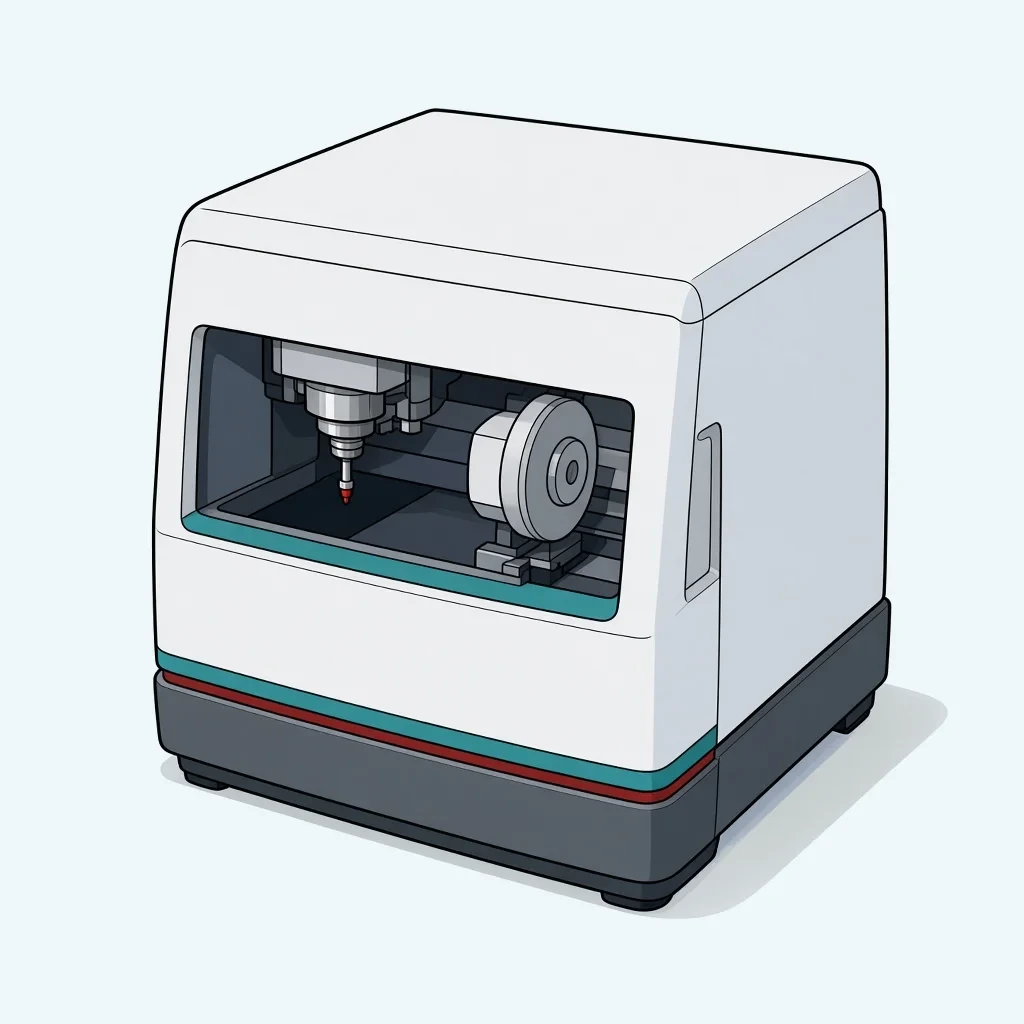
Dental Milling Machines: Primemill, PlanMill, PrograMill
Chairside blocks versus lab discs, and how the CEREC, PlanMill, PrograMill, Ceramill, and Roland milling machines differ.

Reviewed by Dr. Sean Myran, DMDDoctor of Dental Medicine, University of Pennsylvania
How we rank explains how these product lists are ordered.
A dental milling machine cuts a crown, bridge, or other restoration from a block or a disc. It does not take the impression. The intraoral scanner guide is that step. A mill also does not print a model. The 3D printer guide is the other machine offices confuse with it.
How to choose a dental milling machine
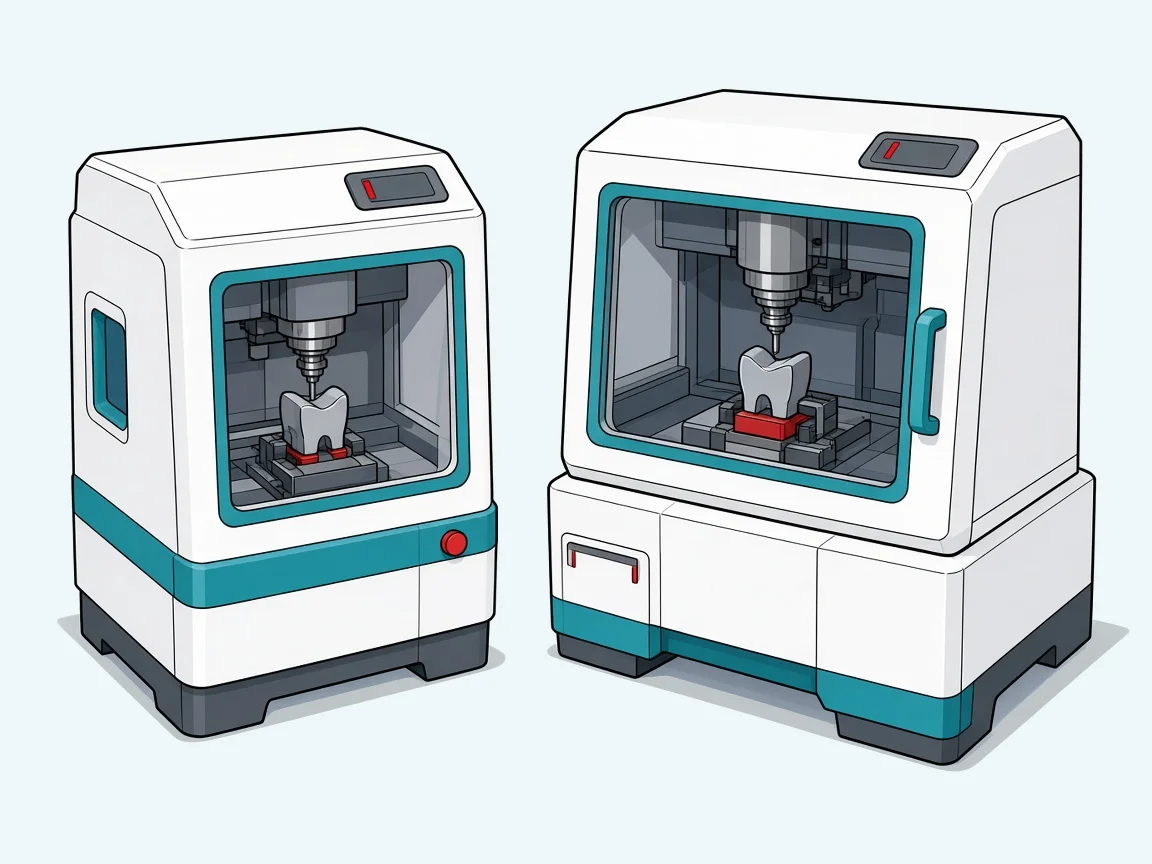
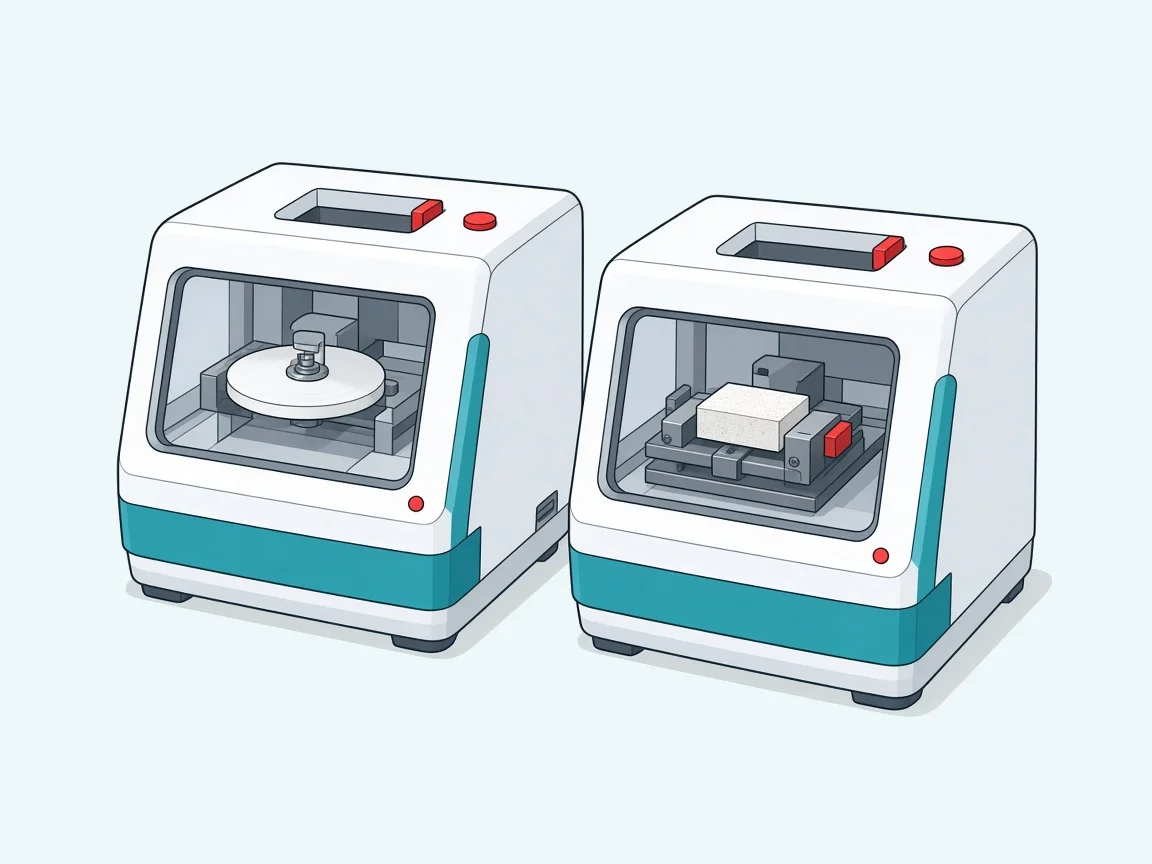
- Blocks or discs. A chairside mill usually cuts a ceramic block for one or a few units while the patient is there. A lab mill cuts discs and a wider set of materials, and the restoration comes back later. Buy the one that matches the work you will actually finish in the office.
- Wet, dry, or both. Glass ceramic is commonly milled wet. Zirconia is commonly milled dry and then sintered. A mill that does only one of those cannot be talked into the other with a different bur.
- Whose software sends the job. Some mills only accept cases from their own scanner and design software. Some accept an open file. The scanner you already own decides which mill is a second step and which mill is a locked set.
- Burs, blanks, and who changes them. The mill is down when the burs are dull or the blank you need is not on the shelf. The quote should say which materials it is cleared to cut and who stocks those blanks.
- Chairside time versus a lab bill. A chairside mill pays off when the office finishes enough units in one visit to cover the burs, the blanks, and the time. A mill that sits idle is a more expensive lab.
How common mills differ
Treat the table as product differences, not a score. The material you mill most is the column that matters. None of these manufacturers published a street price on the pages checked in November 2026. Ask the distributor.
| Mill | Known for | Best fit | Watch for |
|---|---|---|---|
| CEREC Primemill | Dentsply Sirona’s current 4-motor chairside mill. The MC XL (2-motor) is on the discontinued list | Offices already designing in CEREC | It mills and grinds blocks inside that workflow. It is not a disc mill for a full lab |
| Planmeca PlanMill 35 | Current 4-axis chairside mill on Planmeca’s comparison page. PlanMill 30 S is not listed there | Offices that want wet and dry block milling, including zirconia | The same comparison page says “up to 6-unit bridges” in the table and “up to 3-unit bridges” on the card. Confirm the indication list |
| Ivoclar PrograMill PM7 | 5-axis lab mill that switches between wet and dry | A lab, or an office milling through the day | This is not the single-visit block mill beside the chair. The page does not list a price |
| Ceramill Motion DRS | Amann Girrbach’s current practice block mill. Ceramill Mikro is not on the current North America equipment list | Offices that want a compact wet block mill in the Ceramill system | The page says “Price on request.” Larger Ceramill mills are a different machine |
| DGSHAPE DWX-43W | Roland’s current wet mill. DWX-4W and DWX-42W are on the legacy support list | Offices milling glass-ceramic blocks, and the other materials on the DWX-43W manual | The current page includes DGSHAPE CAM software. Do not assume an open file from another scanner |
CEREC Primemill
Dentsply Sirona’s current U.S. milling page lists the CEREC Primemill, a 4-motor unit that mills and grinds, and the 2-motor Primemill Lite. The support page lists the CEREC MC XL (2-motor) under discontinued products, with parts and support no longer available. Primemill’s listed indications are crowns, inlays, onlays, bridges, veneers, and implant restorations, in zirconia, glass ceramics, hybrid ceramics, composites, and feldspar. Super Fast milling for zirconia crowns and the Extra Fine modes are described for the 4-motor Primemill. Buy it when the office is already in CEREC. Do not buy it as a general lab mill for discs.
PlanMill 35
Planmeca’s milling comparison lists the PlanMill 35 and the PlanMill 60 S. It does not list the PlanMill 30 S. The 35 is a 4-axis block mill for clinics, with wet and dry processing and a changer for 5 tools. Listed materials are glass-ceramic, PMMA, composite, hybrid ceramic, and zirconia. The product page says the unit mills both sides of a block in 11–13 minutes, and a 2023 Planmeca release says it can also mill designs from third-party CAD software. The comparison table says indications run up to 6-unit bridges, and the card on that same page says up to 3-unit bridges. Use the indication list on the quote, not one of those two sentences.
PrograMill PM7
The PM7 is Ivoclar’s 5-axis lab mill. The product page describes automatic switching between wet and dry, a 20-position tool changer, and an 8-position material changer for up to 8 discs or 48 blocks, with a 970-watt spindle. Named materials include IPS e.max CAD, IPS e.max ZirCAD, and PMMA such as Ivotion, and the page also lists alloy processing. It is the machine for a lab day, not a single crown ground beside the chair. Ivoclar does not publish a price on that page.
Ceramill Motion DRS
Amann Girrbach’s North America equipment pages list the Ceramill Motion DRS as the practice mill for blocks. They do not list Ceramill Mikro. The Motion DRS page describes a 4-axis wet mill for polymer, ceramic, and zirconia blocks, a 5-position RFID tool changer, an integrated water tank and compressor, dimensions of 490 × 580 × 580 mm, a weight of 66 kg, and a spindle speed of 100,000 min-1. The chairside page lists single crowns, bridges up to 3 units, inlays, onlays, veneers, and temporaries. The product page says “Price on request.”
Roland DWX-43W
Roland’s dental support page files the DWX-4W and the DWX-42W under legacy products. The current wet mill on the product page is the DWX-43W. The setup manual lists millable materials as glass ceramics, titanium alloy, composite resin, PMMA, PEEK, glass-fiber reinforced resins, and sintered zirconia, and it says some workpieces in those materials still cannot be milled. It loads up to six pin-type blocks, holds six burs, and weighs 61 kg. Sintered zirconia on this wet mill is not the same job as dry-milling a green zirconia disc. The product page includes DGSHAPE CAM software, so confirm how a file leaves your scanner before you treat the mill as an open path.
Zirconia and PMMA discs
A lab mill cuts discs. Glass ceramic is commonly milled wet. Zirconia is commonly milled dry and then sintered. A mill that does only one of those cannot be talked into the other with a different bur. PMMA discs are a different blank from zirconia. The CAD/CAM disk guide is the discs already listed there, including Sagemax PMMA for temporary restorations and zirconia discs such as NexxZr and inCoris TZI. Thicknesses and strength figures stay on that page.
Related guides
Mill questions
Does a mill replace a 3D printer?
No. A mill cuts a restoration from a block or a disc. A printer builds models, guides, splints, and some denture work from resin or filament. Many offices that do both own one of each.
Can any scanner send a case to any mill?
No. Closed systems want their own scanner and design step. Open mills want a file they can read. Match the mill to the scanner you have, or budget the scanner change with the mill.
Sources
Dentsply Sirona
CEREC milling units.
Dentsply Sirona
Discontinued products, CAD/CAM milling units, CEREC MC XL (2Motor).
Planmeca
Compare milling units.
Planmeca
PlanMill 35.
Planmeca
PlanMill 35 introduction, 17 March 2023.
Ivoclar
PrograMill PM7.
Amann Girrbach
Ceramill Motion DRS.
Amann Girrbach
Chairside, Motion DRS indications.
Roland DGA
Dental CAD/CAM support, legacy mills including DWX-4W and DWX-42W.
Roland DGA
DWX-43W wet milling solution.
DGSHAPE
DWX-43W setup guide, specifications.
What changed: Nov 2026: replaced the MC XL, PlanMill 30 S, Ceramill Mikro, and DWX-4W with the models on the current manufacturer pages, and added those sources. No prices.
Related articles
Keep exploring related topics from Dental Country.
CAD/CAM Discs: Zirconia, PMMA and Wax Compared
Zirconia, PMMA, wax, and denture-blank CAD/CAM discs, and how NexxZr, Lucitone, and inCoris differ.
Read article
Denture Flasks, Presses and Pressure Pots
Denture flasks, presses, and pressure pots, including the Atlas 44 bronze flask, Handler Big Boy, and Lang Aquapres.
Read article
Dental Waxing Instruments: LeCron, PK Thomas Sets
PK Thomas, LeCron, Roach, Akers, and TiN waxing instruments for crown and partial wax-ups.
Read article
Porcelain Brushes for the Dental Lab: Sable vs Kolinsky
Kolinsky, red sable, and synthetic porcelain brushes for build-up, stain, and glaze at the lab bench.
Read article