
Top 10 Curing Lights Devices in Dentistry.
Curing lights by wavelength and beam: Elipar DeepCure-S, Bluephase PowerCure, G4, and SPEC 3.
How to Choose a Curing Light
A curing light only polymerizes the photoinitiator the beam actually reaches. Camphorquinone, still the initiator in most composites, absorbs blue light around 430–480 nm. Newer composites and some adhesives also use initiators that need violet light closer to 385–420 nm. Ivoclar’s Bluephase PowerCure and Bluephase G4 are Polywave lights specified at 385–515 nm. 3M’s Elipar DeepCure-S is specified at 430–480 nm and is aimed at camphorquinone, with 3M also listing Ivocerin compatibility for that unit. A single-peak blue light can leave a TPO-containing surface soft even when the occlusal feels hard.
The second split is beam shape versus a peak number. Elipar DeepCure-S and the Paradigm DeepCure are sold on collimation: more of the stated irradiance arrives at the floor of a proximal box, not only on a radiometer at the tip. PowerCure adds a 3-second mode at about 3000 mW/cm² that Ivoclar limits to specific materials and to Class I and II cavities cured from the occlusal. G4 does not have that 3-second program. Coltene’s S.P.E.C. 3 has its own high “3K” mode and is still a 430–490 nm light in Coltene’s brochure. Short times do not transfer from one composite’s IFU to another.
Buying criteria that actually change the cure
- Wavelength versus the composite — read the restorative IFU. If it calls for a broad spectrum or names an initiator outside camphorquinone, a Polywave light (PowerCure, G4) matches that request. If it is a standard CQ composite, a 430–480 nm light such as Elipar DeepCure-S is in range.
- Distance and collimation — a 10 mm tip on the occlusal of a molar is several millimetres from the gingival floor. DeepCure optics are 3M’s answer. A small turbo tip raises intensity by shrinking the area, so you overlap cures.
- Mode versus heat — PowerCure’s 3sCure and S.P.E.C. 3’s 3K mode are high irradiance for short times. Heat reaches the pulp and the gingiva. Ivoclar limits 3sCure to Adhese Universal, Tetric PowerFill, and Tetric PowerFlow in posterior Class I and II, from the occlusal. Do not invent a 3-second cure for a different composite.
- Battery and cord — Elipar DeepCure-S, Demi Plus, the Bluephase lights, S.P.E.C. 3, and SmartLite Pro are cordless. SmartLite Pro’s listing specifies LiFePO4 packs you can swap. Coltolux on this page is a cordless pen whose charger is the 110–115 V part of the name, not a corded light you hold while plugged in. A dead battery mid-veneer is an uncured veneer.
- Tip diameter — G4’s guide is 10 mm. PowerCure’s is a 10>9 mm guide. Elipar DeepCure-S ships with a 10 mm guide only. S.P.E.C. 3 offers an 8 mm turbo and an 11 mm guide as separate parts. A 10 mm tip covers more of a molar in one exposure; it also needs the mouth opening to accept it.
| Light | Maker | Wavelength story | Output the maker publishes | Watch-out |
|---|---|---|---|---|
| Paradigm DeepCure | 3M | DeepCure-style optics, cordless LED | Not the same spec sheet as Elipar DeepCure-S | Do not copy Elipar’s 1470 mW/cm² onto this value light. Confirm the insert. |
| Demi Plus | Kerr | LED, periodic level shifting | Kerr’s PLS claim is consistent output with heat managed by pulsing | PLS is not a broad-spectrum mode. Check initiator coverage. |
| Bluephase PowerCure | Ivoclar | Polywave, 385–515 nm | About 1200 high, 2000–2100 turbo, about 3000–3050 mW/cm² in 3sCure | 3 seconds only for the Ivoclar materials and posterior occlusal cases they name. |
| Coltolux LED | Coltene | Blue LED aimed at camphorquinone | Cordless pen, heat sink, 110–115 V charger on this SKU | CQ-matched. Not a Polywave light because it is bright. |
| Elipar DeepCure-S | 3M | 430–480 nm, collimated | 1470 mW/cm² (−10% / +20%), 10 mm guide | Single blue peak. 3M lists CQ and Ivocerin, not every new initiator. |
| SmartLite Pro | Dentsply Sirona | Modular LED, collimated cure tip | 10 mm active cure diameter; separate transillumination tip | The 1 mm figure in old copy is not the cure-tip diameter. Two LiFePO4 batteries. |
| S.P.E.C. 3 | Coltene | 430–490 nm in the brochure | Standard about 1600; 3K about 3000–3500 mW/cm² | High mode is still a blue LED. Ortho mode is for brackets, not for a 4 mm bulk fill. |
| Radii-Cal | SDI | Cordless LED | Do not use Radii Plus numbers for this model | The old paragraph on this page described Radii Plus (1500 mW/cm², built-in radiometer). That is a different SDI light. |
| Bluephase G4 | Ivoclar | Polywave, 385–515 nm | 1200 mW/cm² high, 950 pre-cure; 10 mm guide | Polyvision watches hand movement. It does not add PowerCure’s 3-second mode. |
| Fusion 5 | DentLight | Small-tip LED; confirm single-peak versus broad on the manual | DentLight’s short-cure claim is model-specific | A 3-second brochure line is not a universal cure. Ignore extra “therapy” claims that are not in the IFU. |
Tips, shields, and meters are separate hardware: light guides · shields.
1. Paradigm™ DeepCure — 3M

3M Paradigm DeepCure is the value light in the DeepCure family: a cordless LED with a friction-fit light guide that rotates 360°, a built-in battery, and a vent-free body that wipes down. The sales claim is the same clinical problem Elipar DeepCure-S is built for — getting a useful dose to the bottom of a proximal box — in a lighter, cheaper housing.
Do not paste Elipar’s spec card onto it. Elipar DeepCure-S publishes 1470 mW/cm², a 430–480 nm window, and a 10 mm guide. Paradigm’s listing on this page does not. If the composite needs a measured energy, use the Paradigm insert, not the Elipar brochure.
Who it is for: Offices that want 3M’s DeepCure optical idea on a simpler cordless light and will verify output instead of assuming it matches the stainless Elipar.
Tradeoff: A built-in battery is convenient until it will not hold a charge, and then the whole light is down. Vent-free cleaning still needs a barrier sleeve. A rotating guide that is loose is a guide that points at the cheek.
2. Demi™ Plus — Kerr

Kerr Demi Plus is a cordless LED built around periodic level shifting: the output pulses so Kerr can claim a high cure without a continuous heat spike. The battery is lithium-ion. It is the Kerr light on this list, not a Polywave Ivoclar and not a DeepCure 3M.
PLS is a heat-management story. It does not add violet wavelengths the LED does not have. If you place a composite whose IFU requires a broad-spectrum light, Demi Plus is the wrong assumption until that IFU says a Kerr LED is enough.
Who it is for: Kerr restorative users who want the Demi Plus specifically, and who will keep the cure time their composite states.
Tradeoff: Pulsed output can confuse a staff member with a stopwatch who thinks “10 seconds of beeping” equals 10 seconds of peak irradiance. Follow Kerr’s stated cure for the mode you selected. Demi Ultra is a later Kerr light and is not this model.
3. Bluephase® PowerCure — Ivoclar

Ivoclar Bluephase PowerCure is a Polywave LED, 385–515 nm, so it covers camphorquinone and the violet-range initiators Ivoclar designs around. Published programs are on the order of 1200 mW/cm² in high, about 2000–2100 in turbo, about 950 in pre-cure, and about 3000–3050 in 3sCure. The 3-second program is for Adhese Universal, Tetric PowerFill, and Tetric PowerFlow in posterior Class I and II restorations, cured from the occlusal. Turbo is the mode Ivoclar points at for getting energy through ceramic such as IPS e.max. Polyvision, also on the G4, alerts you if the handpiece moves during the cure.
The light guide is the 10>9 mm swiveling guide. One exposure covers a small posterior occlusal. A wide MOD still needs more than one placement of the tip. Pre-cure is for tack-removing cement such as Variolink Esthetic, not for finishing a bulk fill in three seconds.
Who it is for: Practices using Ivoclar’s Power materials who will actually use 3sCure only where Ivoclar allows it, and who want a Polywave light for everything else.
Tradeoff: Three seconds on the wrong composite is an under-cure with a hard skin. High output heats tissue; Ivoclar’s own notes limit how you chain 3sCure exposures. Polyvision is an alarm, not a radiometer in the box. G4 is the Polywave light without this 3-second program.
4. Coltolux® LED — Coltene

Coltene Coltolux LED, on this 110–115 V listing, is a cordless pen. The voltage is the charger, not a cord you cure with. Coltene aims the LED at camphorquinone, uses a heat sink instead of a fan, and shapes the probe small enough for a posterior box. Older copy describes a beep about every 10 seconds and a sleep mode. That is a CQ light with simple timing, which is a coherent choice if your composites are CQ-based and a poor choice if they are not.
The dome lens and slim probe are access features. They also shrink the spot you are curing. Overlap the tip on a molar instead of trusting one beep in the center of the occlusal.
Who it is for: A second operatory that needs a small cordless CQ light and a 110–115 V charger, not a Polywave program light.
Tradeoff: “High output” without a number on this listing is not Elipar’s 1470 or PowerCure’s 3000. Do not shorten cures because the pen feels bright. Heat-sink design reduces fan noise; it does not remove heat from a long cure on a thin dentin floor.
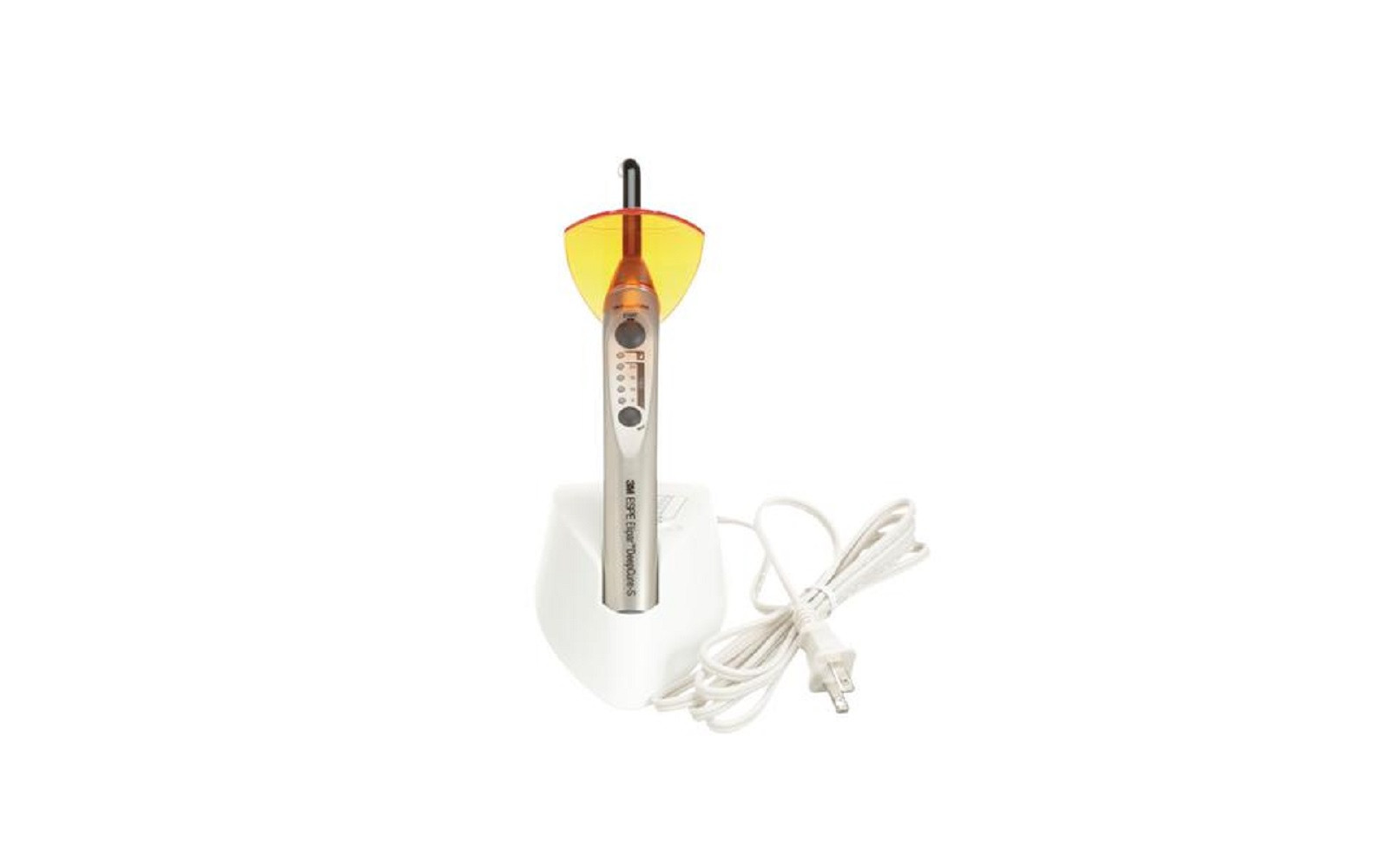
5. Elipar™ DeepCure-S — 3M

3M Elipar DeepCure-S is the stainless, one-piece DeepCure light. Published specs: 430–480 nm, 1470 mW/cm² (−10% / +20%), lithium-ion, a 10 mm black-coated autoclavable guide, and cure presets of 5, 10, 15, and 20 seconds plus a tack-cure. 3M’s optical claim is a more collimated beam so the edge of the tip and a distance of several millimetres still receive a useful dose. They describe compatibility with camphorquinone and Ivocerin. Runtime in the technical sheet is on the order of 120 minutes, about 720 ten-second cures, with output that does not sag as the battery drains.
The stainless body is the durability half. It is heavier than a pen, which the old table noted without a number. Weight is fatigue. The beam is the reason to carry it.
Who it is for: Practices that cure CQ and Ivocerin materials in deep posterior boxes and want 3M’s measured DeepCure-S, not the Paradigm value light and not a 3-second marketing mode.
Tradeoff: 430–480 nm is not 385–515 nm. A composite that requires violet light is a PowerCure or G4 problem. The 10 mm guide is the only size 3M sold with this model; a smaller tip is a different light. Tack-cure is for cleanup, not for a final polymerization. The brand on the charger base may say Solventum now.
6. SmartLite® Pro — Dentsply Sirona

Dentsply Sirona SmartLite Pro is a modular cordless light: a stainless and anodized-aluminum body, quick-connect tips that rotate, and two swappable LiFePO4 batteries so one can charge while the other runs. The curing tip on this intro kit is the large one — a 10 mm active diameter with a collimated beam. A separate transillumination tip is for cracks, interproximal shadowing, and access illumination. Old copy that mentioned a “1 mm focused” output belongs to that diagnostic tip, not to the cure you use on a molar.
Modularity is the reason to buy it instead of a single-guide Elipar. You change the tip for the task. You also have to put the cure tip back on before you cure. A transillumination tip will not polymerize a bulk fill.
Who it is for: Offices that want one Dentsply light for curing and for transillumination, with a battery they can exchange mid-day.
Tradeoff: LiFePO4 is a different charger chemistry from the lithium-ion packs in an Elipar or a Demi. Do not swap batteries across brands. Confirm wavelength on the current SmartLite Pro insert before you use it on a violet-initiator composite; modular and collimated does not by itself mean Polywave.
7. S.P.E.C. 3™ — Coltene

Coltene S.P.E.C. 3 is a cordless LED in a sealed aluminum body, with a lithium-polymer battery Coltene rates at more than 300 ten-second cures. The brochure wavelength is 430–490 nm. Modes are Standard (about 1600 mW/cm²), 3K (about 3000–3500 mW/cm²), and Ortho. Coltene’s internal example is a 2 mm increment of their Synergy composite in about 5 seconds on Standard and about 1 second on 3K. Guides are accessories: an 8 mm turbo tip and an 11 mm tip, clear or black.
3K is a high-irradiance blue mode, not a plasma arc and not a Polywave. Ortho mode is for bracket adhesives in short bursts, not for a 4 mm bulk-fill IFU. The aluminum body is easy to wipe; the tip you leave on the light is the tip that defines the spot size.
Who it is for: Coltene composite users who want Standard versus 3K versus Ortho on one blue LED and will match the mode to that composite’s time.
Tradeoff: A 1-second 3K cure of Synergy in Coltene’s lab is not a 1-second cure of someone else’s bulk fill. High mode heats the tooth. The 8 mm turbo tip raises intensity and misses the margins of a large occlusal unless you overlap. Wavelength stops at about 490 nm, so this is not the G4’s violet coverage.
8. Radii-Cal — SDI

This slot is SDI’s Radii-Cal, a cordless LED. It is not the Radii Plus. The previous version of this page pasted Radii Plus claims into the Radii-Cal section: at least 1500 mW/cm², a 6 mm depth of cure, a built-in radiometer, and 1200 ten-second cures. Those numbers belong to a different SDI model, or to marketing for that model, and they are not reused here.
SDI’s later Radii-Cal CX publishes a 440–480 nm camphorquinone peak, a collimated beam, and a radiometer calibrated to that unit. Buying the word “Radii-Cal” on an older box does not include the CX radiometer or the CX intensity. Read the label on the handpiece you have.
Who it is for: Practices that already own or are ordering the Radii-Cal specifically and will take output from that model’s insert.
Tradeoff: If you needed the radiometer and the collimated CX beam, order the CX, not a used Radii-Cal described with Plus specifications. A single blue peak still will not cover a violet-only initiator. Depth-of-cure claims without a named composite and a named shade are not a clinical guarantee.
9. Bluephase® G4 — Ivoclar

Ivoclar Bluephase G4 is the Polywave light (385–515 nm) with Polyvision and without PowerCure’s 3-second program. High mode is 1200 mW/cm². Pre-cure is 950 mW/cm², the mode Ivoclar points at for cleaning up a light-cured cement such as Variolink Esthetic. The guide is a swiveling 10 mm. Charging is inductive on a 100–240 V base, which is what the voltage in this product name refers to. Polyvision notices if you move off the tooth and warns you.
Choose G4 when you want Ivoclar’s broad spectrum and a light that complains if the cure is sloppy, and you do not need 3000 mW/cm². Choose PowerCure when you are actually placing Tetric PowerFill or PowerFlow and will follow the 3-second limits.
Who it is for: General restorative practices that cure many brands of composite and want one Polywave light with a 10 mm tip and movement feedback.
Tradeoff: 1200 mW/cm² at the tip is not 1200 at the bottom of a 4 mm box. Polyvision does not measure the composite. An optional radiometer exists on some G4 configurations; do not assume every kit has it. Pre-cure left on for a full polymerization is an under-cure.
10. FUSION® 5 — DentLight

DentLight’s Fusion 5 is a small cordless LED with a thin tip and a focused beam. DentLight markets short cure times and a uniform spot, and some Fusion kits add diagnostic light for transillumination. That is as far as this page will take the brochure. A 3-second claim is not a standing order for every composite in the office, and indications such as cancer detection or cold-laser therapy do not belong in a curing protocol unless they are in the IFU for the exact tip you bought.
The thin tip is the real buying point: it reaches a proximal box a 10 mm G4 guide cannot. The cost of a small tip is overlap. You cure the mesial, then the distal, then the buccal cavosurface, instead of one shot on the occlusal.
Who it is for: Dentists who want a slim DentLight tip for access and will look up that model’s wavelength before using it on a non-CQ composite.
Tradeoff: Focused and small can miss the margin you do not sweep. Confirm whether this Fusion 5 is a single blue peak or a broader spectrum; the listing does not prove Polywave the way Ivoclar’s 385–515 nm spec does. Heat still builds if you stack short high-power exposures without a pause.
Frequently Asked Questions
Does a higher mW/cm² number mean a better light?
It means more intensity at the place that number was measured, usually the tip. A collimated 1470 mW/cm² beam (Elipar DeepCure-S) can outperform a higher peak that falls off at the edge and at 8 mm. Distance, tip size, and wavelength decide the cure.
When is a 3-second cure actually indicated?
On this list, Ivoclar’s 3sCure is for Adhese Universal, Tetric PowerFill, and Tetric PowerFlow in posterior Class I and II, from the occlusal, with Bluephase PowerCure. Coltene’s 3K times are for the composites they tested, such as their Synergy example. No other material inherits those times.
Polywave or single-peak?
PowerCure and G4 publish 385–515 nm. Elipar DeepCure-S publishes 430–480 nm. S.P.E.C. 3’s brochure is 430–490 nm. Match the light to the initiator in the composite IFU. Feeling a hard surface only tells you the top cured.
How often should output be checked?
On a schedule, with a radiometer that understands that light, plus whenever a cure looks soft. G4’s Polyvision and a Radii Plus radiometer are not the same tool, and this page’s Radii-Cal listing is not a Radii Plus. A light that passes at the tip can still miss a box if the tip is tipped toward the cheek.
Read next
Stay on light-curing hardware and the materials it polymerizes:
Related articles
Keep exploring related topics from Dental Country.
The Top 15 Dental Chairs in the World
Compare 15 dental chair brands for 2026 — A-dec, Planmeca, Midmark, and more — by ergonomics, service, and cost.
Read article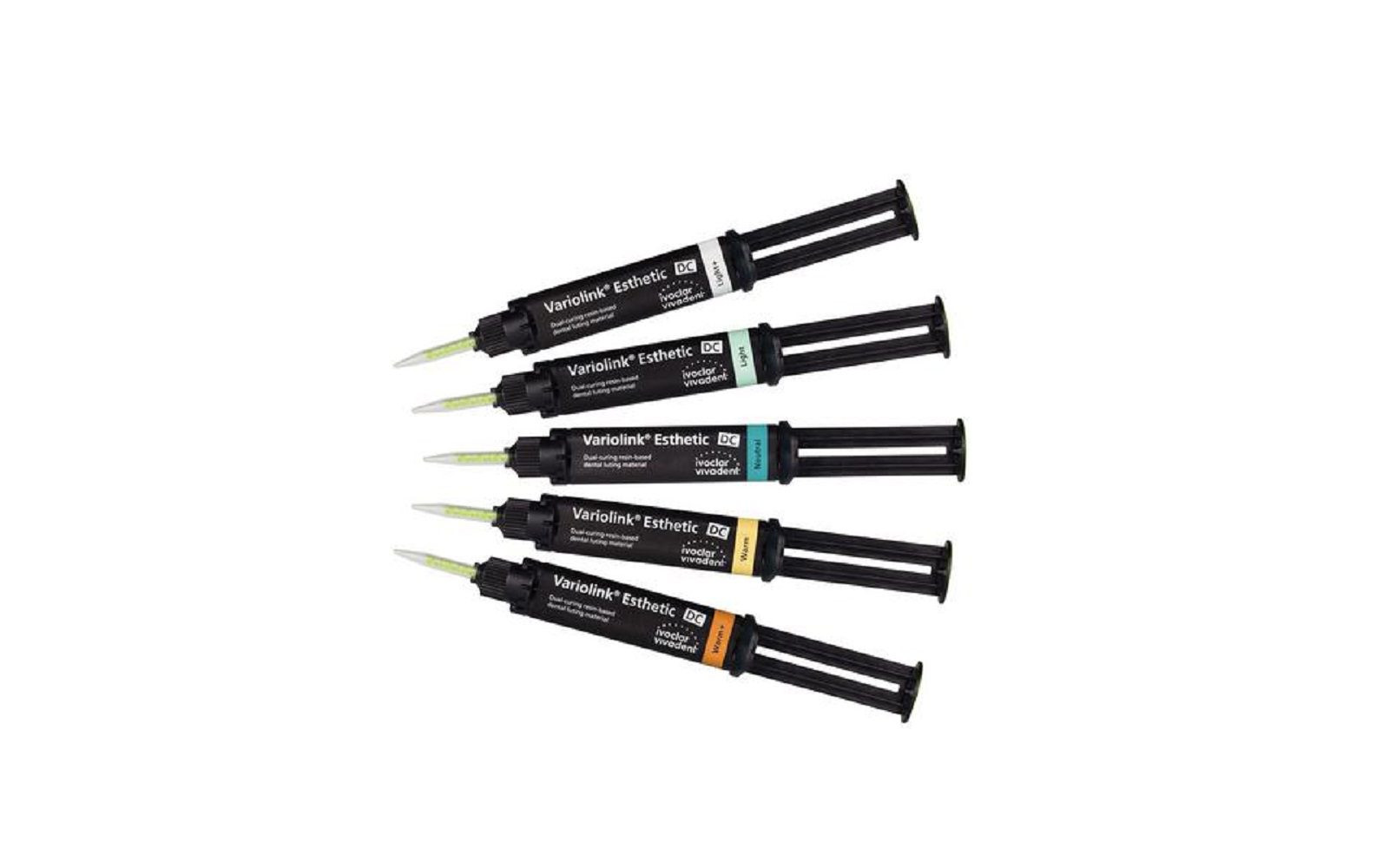
Top 10 Resin-Based Dental Cements
Adhesive vs self-adhesive resin cements: Variolink, RelyX, PANAVIA, and NX3 by bonding steps, cure, and cleanup.
Read article
Top 10 Bottle Cleaners for Dentists
Compare the best Bottle Cleaners for Dentists — our researched Top 10 ranking of the leading brands and options to help you choose the right fit for your practice.
Read article
7 Dental Websites to be Inspired by
Compare the best 7 Dental Websites to be Inspired by, ranked on performance, features, and value to help you choose the right fit for your practice.
Read article