
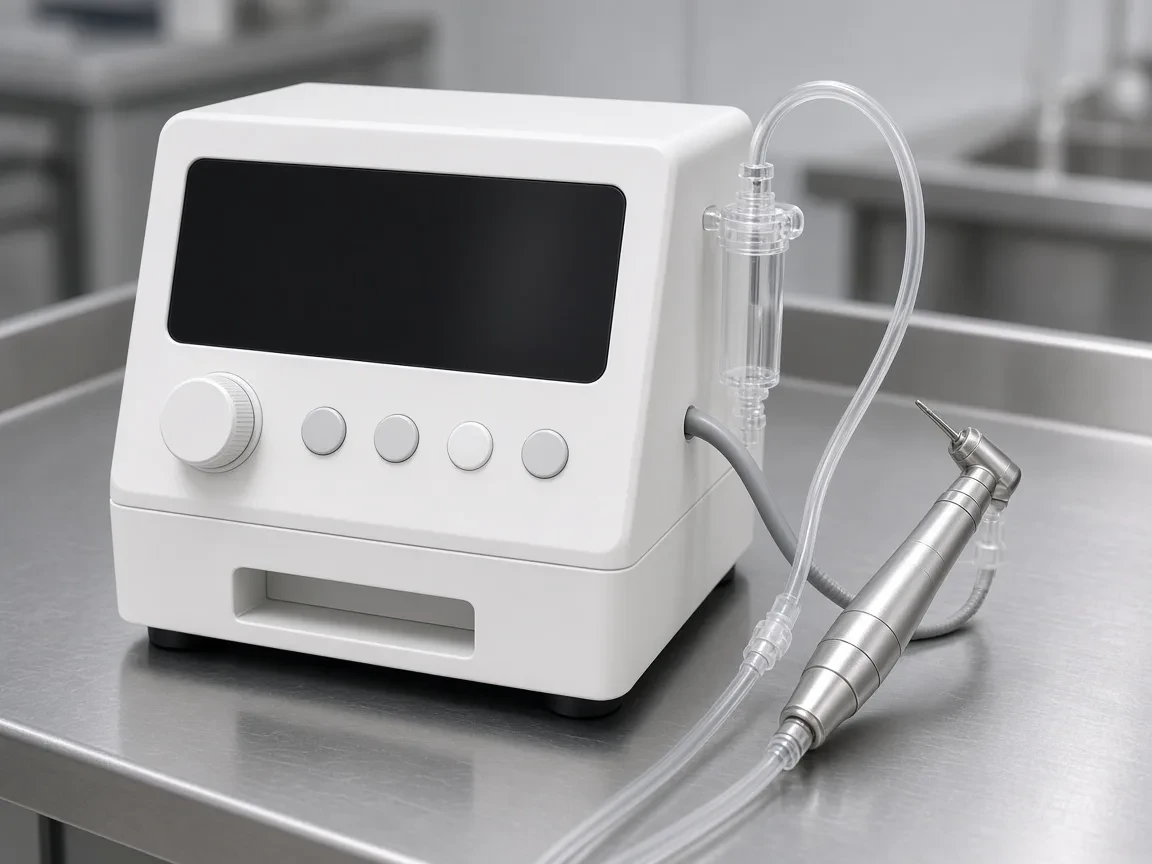
Dental Implant Motors: How to Choose.
How to choose an implant motor: torque control, saline irrigation, and how W&H, NSK, Aseptico, and Bien-Air differ.

Reviewed by Dr. Sean Myran, DMDDoctor of Dental Medicine, University of Pennsylvania
How we rank explains how these product lists are ordered.
An implant motor turns a surgical bur at the speed and torque the implant company’s drill protocol names. It is not an endodontic motor, and it is not the slow-speed handpiece you use for decay removal. The handpiece guide is the restorative handpiece. The CBCT guide is how you see the site before you pick up the motor.
How to choose an implant motor
- The protocol, not a favorite number. Speed and torque come from the implant system’s surgical manual for that drill step. The motor has to be able to hold those settings. This page does not print a universal torque. If the quote cannot store or at least display the steps you use, it is the wrong motor.
- Saline at the bur. Site preparation wants sterile irrigation on the drill. Some contra-angles carry fluid through the handpiece. Some drip it from an external line. Confirm which one the kit includes, and that the tubing is part of the quote.
- The contra-angle is half the purchase. Implant site prep uses a reduction contra-angle made for surgical burs, commonly a 20:1. A restorative slow-speed attachment is not that angle. Buy the angle the motor’s maker pairs with the console, unless the dealer shows a written match for a different angle.
- Who presses the pedal. A foot control lets the surgeon run speed without looking away. Some lines offer a wireless pedal. A console-only button is a different workflow. Decide that before you compare screen size.
- Service and the implant kit you already own. The motor does not include the drills. Those stay with the implant company. What you are buying is a console, a contra-angle, irrigation, and someone who can calibrate it. Ask who covers the console in your state.
How common implant motors differ
Treat the table as product differences, not a score. Torque figures belong on the implant company’s drill card and on the motor’s own manual, read together.
| Line | Known for | Best fit | Watch for |
|---|---|---|---|
| W&H Implantmed | A surgical console used with W&H implant contra-angles, with a foot control | Offices that want one European surgical brand for the motor and the angle | Confirm the angle ratio and whether the pedal is in the quote |
| NSK Surgic Pro | NSK’s implant console, often shown with an optical contra-angle and stored protocols | Practices that want the drill steps saved on the unit | A saved protocol is not the implant company’s manual. Update it when the drill kit changes |
| Aseptico | U.S. surgical motors sold as a serviceable console | An office that cares who repairs the box, and wants a straightforward surgical motor | Match the contra-angle to that Aseptico model. Do not assume a W&H angle plugs in |
| Bien-Air Chiropro | Bien-Air’s implant console, paired with Bien-Air surgical angles | Offices already on Bien-Air handpieces | The angle and the console are a pair. Irrigation tubing is part of the setup, not an afterthought |
W&H Implantmed
Implantmed is the W&H surgical motor offices meet first. The console, the foot control, and a W&H implant contra-angle are the purchase. Ask which pedal is included and whether irrigation runs through the angle. A display of torque only helps if the person running the drill can see it or has already set the step from the implant manual.
NSK Surgic Pro
Surgic Pro is NSK’s implant line. The reason to choose it is the contra-angle NSK pairs with it and the ability to keep protocols on the unit. Those stored steps have to match the implant system you are placing this year. A protocol left over from a kit you no longer use is worse than setting the speed from the card.
Aseptico
Aseptico sells surgical motors that many U.S. dealers can service without sending the console overseas. That is the reason to look at them. Confirm the contra-angle model number on the same quote as the console. An angle from another brand is a second compatibility question, not a free upgrade.
Bien-Air Chiropro
Chiropro is Bien-Air’s implant console. It belongs with a Bien-Air surgical angle. Offices that already own Bien-Air restorative handpieces still need the surgical angle. The restorative coupling is not the implant attachment. Include irrigation tubing and the foot control in the same order.
Related guides
Implant motor questions
Can I use my endo motor to place an implant?
No. An endo motor is built for files at endodontic torque. An implant motor is built for surgical burs and the implant system’s drill protocol. They are different consoles.
Does the motor include the drills?
No. Drills, taps, and the implant itself come from the implant company. The motor is the console, the contra-angle, and the irrigation. Quote those separately from the implant kit.
Do I need a CBCT if I own a motor?
The motor does not show you bone. Planning the site is the CBCT, yours or a referral scan. The motor only turns the bur after that plan exists.
Related articles
Keep exploring related topics from Dental Country.
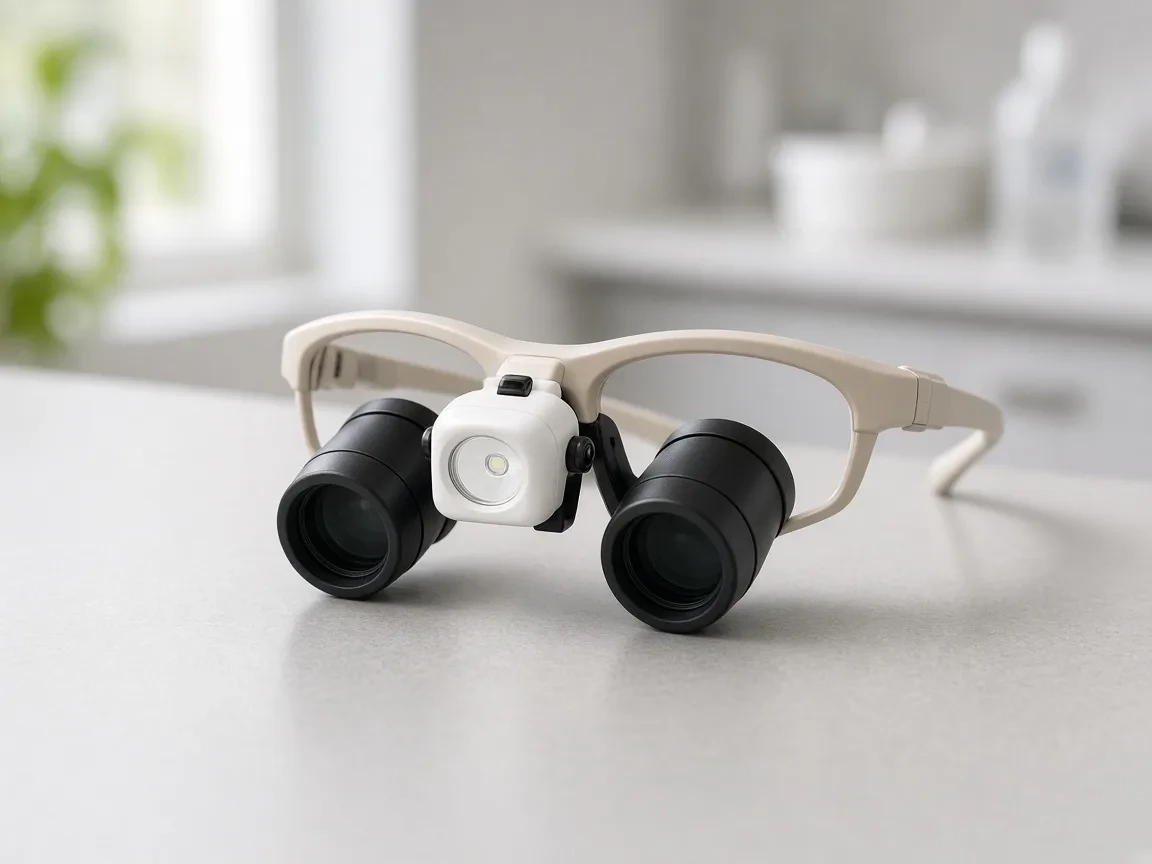
Dental Loupe Headlamps: How to Choose
How to choose a loupe headlamp: a mount that fits the frame, a pack or a cordless light, and how Designs for Vision, Orascoptic, and Lumadent differ.
Read article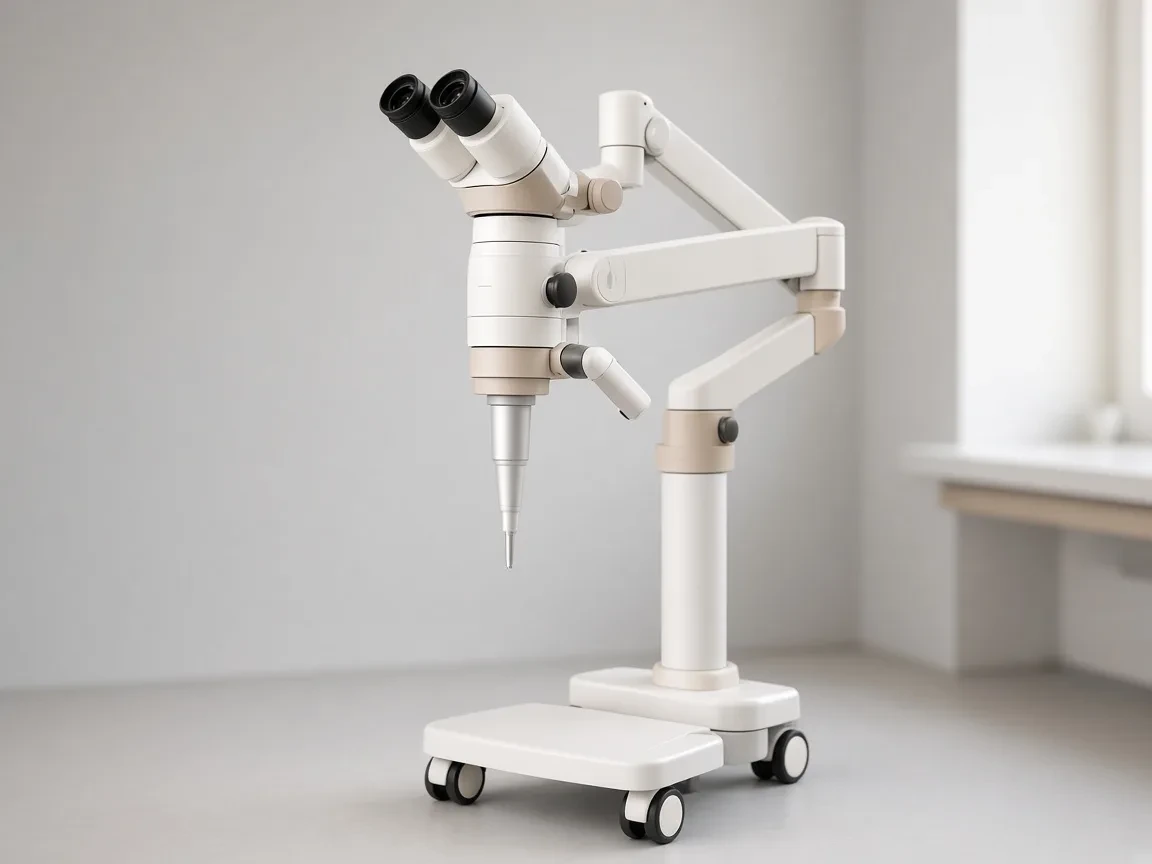
Dental Operating Microscopes: How to Choose
How to choose a dental operating microscope: the mount, the magnification steps, and how Zeiss, Global, and Zumax differ from loupes.
Read article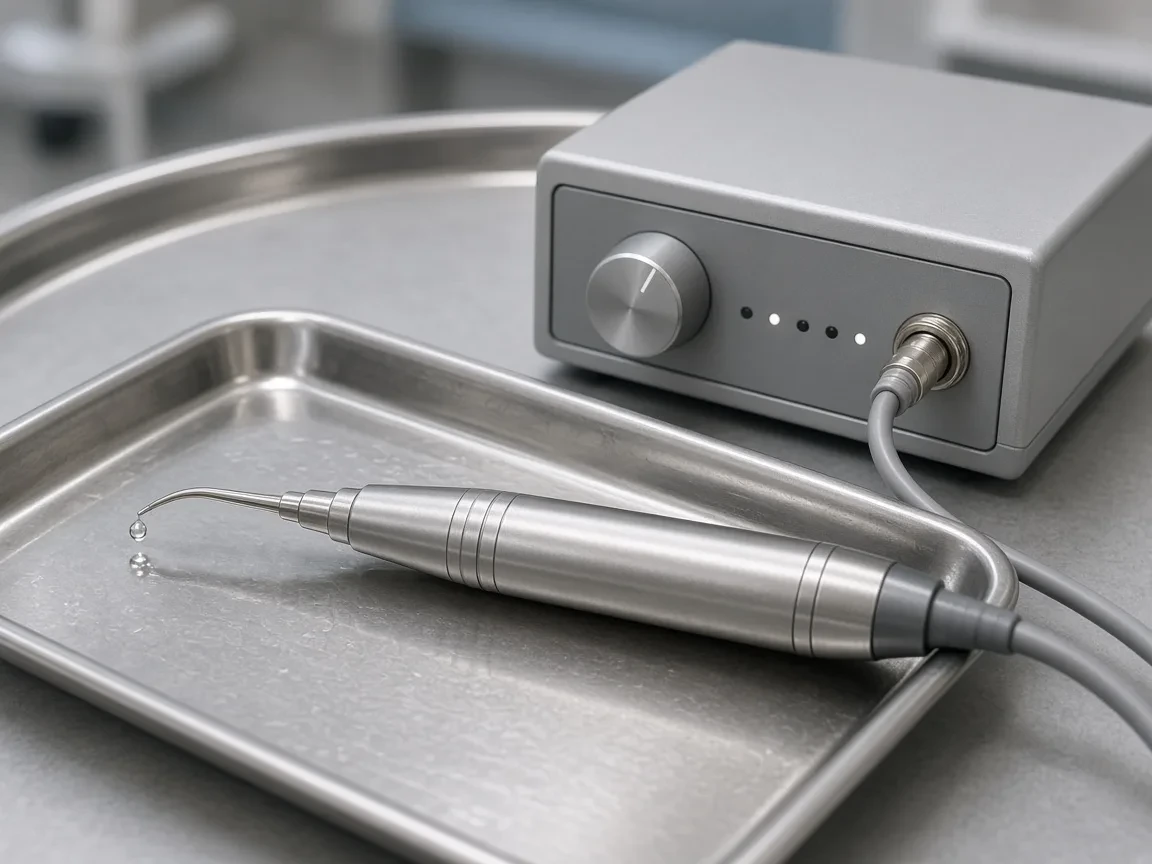
Dental Ultrasonic Scalers: How to Choose
How to choose an ultrasonic scaler: magnetostrictive versus piezo, and how Cavitron, Acteon, EMS, and NSK differ.
Read article
Dental Handpieces: How to Choose
How to choose a dental handpiece: air versus electric, high-speed versus slow-speed, and how W&H, NSK, Morita, and Midwest differ.
Read article