
Dental CBCT Systems: Field of View, Dose and Brands
CBCT field of view, voxel size, and 2D modes, and how Planmeca, Dentsply Sirona, Carestream, Vatech, DEXIS, and Morita differ.

Reviewed by Dr. Sean Myran, DMDDoctor of Dental Medicine, University of Pennsylvania
How we rank explains how these product lists are ordered.
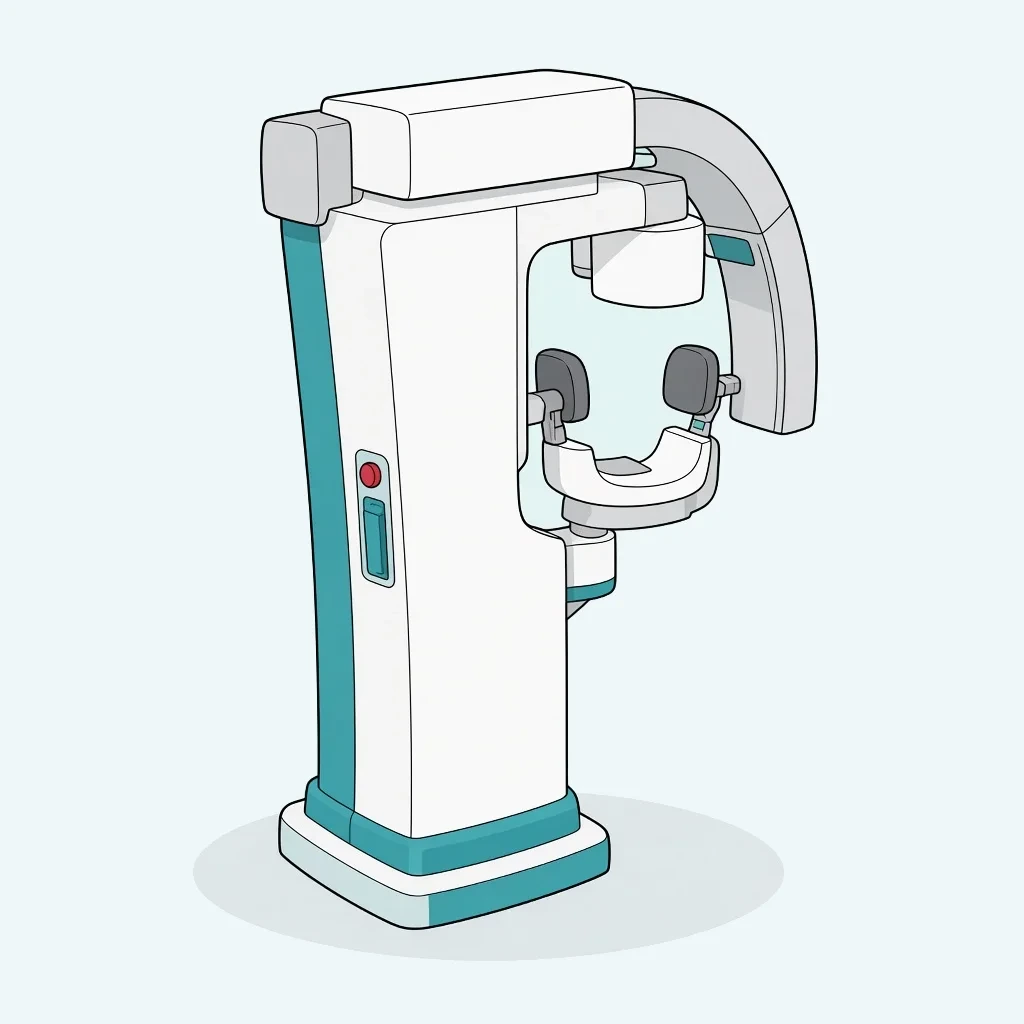
A dental CBCT is for practices that need three-dimensional views: implant planning, impacted teeth, endodontic anatomy, airway assessment, or pathology that a periapical or panoramic image cannot settle. It is a poor first imaging purchase for an office that still needs everyday bitewings. Buy the field of view you will actually use, then confirm the unit also covers the 2D images you take every day.
How to choose a CBCT
Ask the dealer to show these items on the spec sheet, not in a brochure headline.
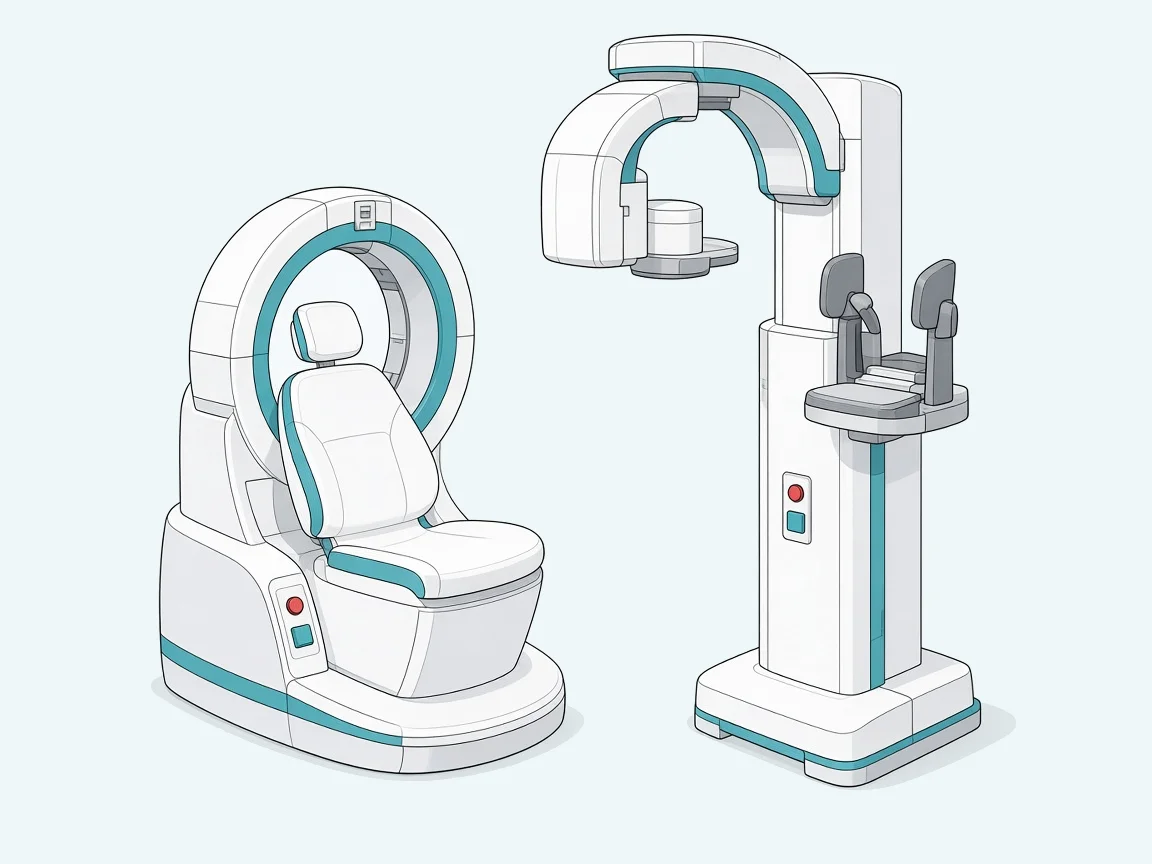
- Field of view. Small volumes suit single-tooth endo and single-implant sites. Medium volumes cover an arch. Large volumes cover both arches, the TMJ, or the airway. A larger volume is not a sharper image.
- Voxel size. Smaller voxels show fine anatomy and usually mean a longer scan or a higher dose for that protocol. Match the smallest voxel to the cases you do, and do not pay for a 0.07 mm mode you will never select.
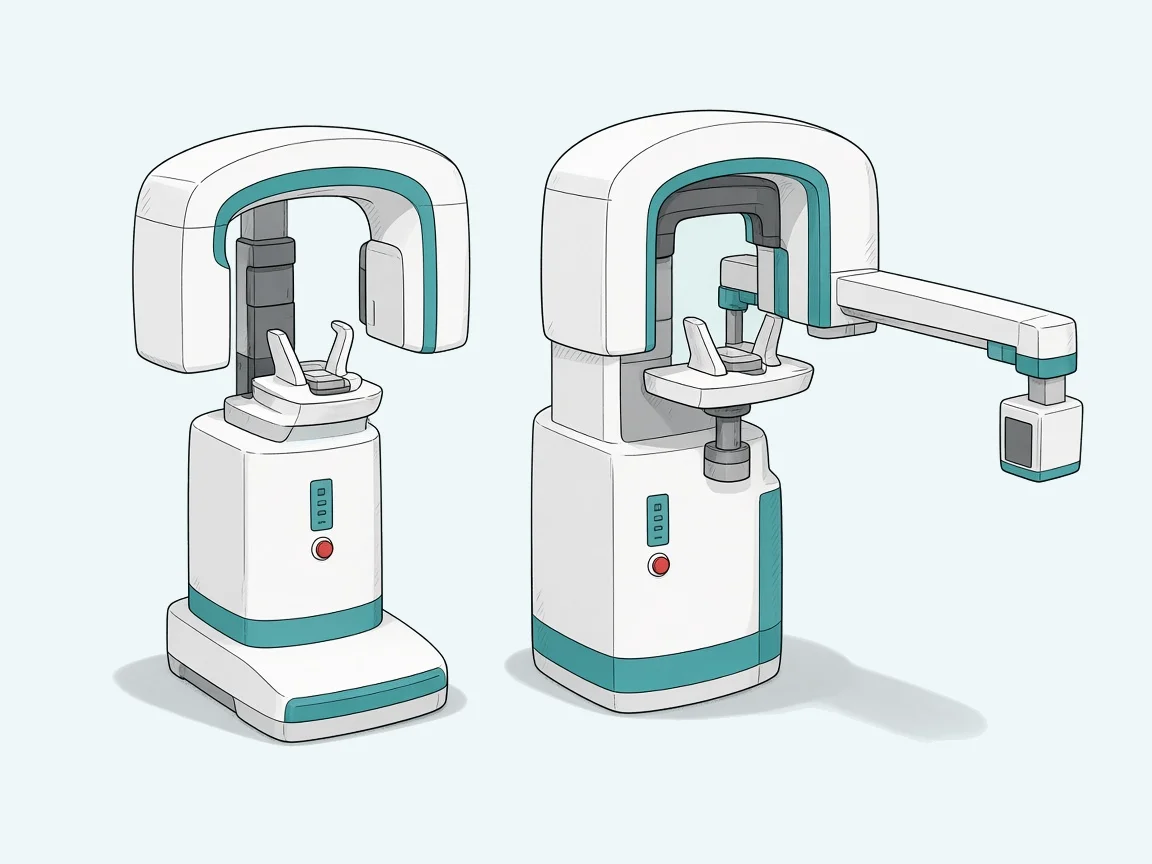
- 2D in the same unit. Many current systems also take a panoramic and, on some models, a cephalometric image. A combo unit can replace a separate pano. It does not replace a sensor for bitewings.
- Patient position. Most current units are standing. Some i-CAT-style units seat the patient. Seated units can be easier for wheelchair transfer and take a different footprint.
- Software and export. Implant planning, DICOM export, and whether the planning software is included or a yearly fee matter as much as the gantry.
How the major lines differ
Prices move with field of view, ceph attachment, and the dealer. Treat the notes below as product differences, not a ranking score.
| Brand | Known for | Best fit | Watch for |
|---|---|---|---|
| Planmeca | ProMax 3D family and larger Viso volumes, with Romexis software | Offices that want one platform for 2D and 3D | Confirm which FOV sizes are in the quote |
| Dentsply Sirona | Axeos for larger FOV, Orthophos for hybrid 2D/3D | Practices already on Sidexis | Software bundle is part of the real price |
| Carestream Dental | CS 8200 3D as a smaller-footprint unit, CS 9600 at the high end | General practices adding selectable FOV | Compare the FOV steps, not just the model name |
| Vatech | Green X and related lines, often sold on dose protocols and price | Offices comparing cost against a premium combo unit | Ask which low-dose protocol is the everyday setting |
| DEXIS | i-CAT heritage, including seated scanning, plus newer OP 3D units | Implant and surgical offices used to i-CAT workflows | Seated and standing units need different rooms |
| J. Morita | Veraview X800, aimed at partial and wider volumes | Endo and implant practices that care about small-voxel modes | Service coverage is regional; ask who covers you |
Planmeca
Planmeca’s ProMax platform is built so a practice can add 3D to a panoramic unit, and the Viso line is the larger-volume end of the family. Romexis is the software most Planmeca offices live in. The buying question is which field-of-view set is actually on the order, because the same family name covers very different volumes.
Dentsply Sirona
Axeos is Sirona’s larger-field system and also shoots 2D. Orthophos is the more common hybrid for offices that want panoramic imaging with a selectable 3D volume. If the practice already stores images in Sidexis, staying on that platform avoids a second imaging database.
Carestream Dental
The CS 8200 3D is the compact, selectable-FOV unit many general offices are shown. The CS 9600 is the larger, higher-specification system. Compare the FOV list and whether ceph is included before you compare the two model names as if they were the same class of machine.
Vatech
Vatech’s Green line is usually presented against the premium European units on dose presets and acquisition cost. Read the protocol that will be your default, not the lowest-dose marketing mode, and confirm the reconstruction computer is in the quote.
DEXIS and i-CAT
i-CAT is the seated CBCT many implant practices already know. DEXIS also sells standing OP 3D units. Those are different machines. A seated unit changes the room layout and can be easier for patients who cannot stand through the scan.
J. Morita
The Veraview X800 is Morita’s current volume CT, with partial-volume and wider scans in one unit. Offices that refer a lot of endo or place implants tend to look here for small-voxel protocols. Confirm who services Morita in your state before you treat the spec sheet as the whole decision.
Published specifications
Volumes and voxel sizes below are what the manufacturer published for the model named in the sections above. A blank cell was not stated on that page. Field of view still depends on the configuration on the quote. These rows are not a ranking.
| Model | Volumes the manufacturer lists | Voxel | 2D on the same unit |
|---|---|---|---|
| Planmeca Viso G7 | Single scan up to Ø30 × 20 cm. Multiple vertical scans up to Ø30 × 30 cm. Dental programs include volumes from Ø3 × 3 cm | Panoramic, and one-shot cephalometric imaging, on Planmeca’s comparison chart | |
| Dentsply Sirona Axeos | About Ø5 × 5.5 cm, Ø8 × 8 cm, Ø11 × 10 cm, and Ø17 × 13 cm, from the instructions for use | 80 µm on the Ø5 × 5.5 cm HD program. The Ø8 × 8 cm programs are 160 µm. The Ø11 × 10 cm HD program is 160 µm and the other Ø11 × 10 cm programs are 220 µm. The Ø17 × 13 cm programs are 220 µm | Sold as a 2D/3D hybrid. A cephalometric arm is optional in the extraoral brochure |
| Dentsply Sirona Orthophos SL 3D | Ø5 × 5.5 cm up to Ø11 × 10 cm in the extraoral family brochure | HD mode up to 80 µm in that brochure | Available as 2D or as a 2D/3D hybrid. Cephalometric imaging is optional |
| Carestream CS 8200 3D Advance Edition | 4 × 4 cm through 16 × 10 cm. Carestream marks several of the larger fields as optional | 75 µm minimum | Panoramic exams are listed. A cephalometric arm is optional. Weight without the ceph arm is 92 kg |
| Carestream CS 9600 | Depends on the edition. The 16 × 17 edition lists fields from 4 × 4 cm to 16 × 17 cm | 75 µm minimum | Panoramic modality is in the technical specifications. Carestream notes that panoramic is not available in Australia when the unit is installed with the 3D modality only. Scan ceph is a separate configuration |
| Vatech Green X | The Vatech America specification table lists 4 × 4, 5 × 5, 8 × 5, 8 × 8, 12 × 9, 16 × 11, and 18 × 15 cm. The global Green X page lists a shorter set: 16 × 9, 12 × 9, 8 × 8, 8 × 5, 5 × 5, and 4 × 4 cm | 0.05 mm on the 4 × 4 cm mode on the America table | The America table’s function line includes CT, panoramic, ceph, and model scan. Confirm which of those are on the unit you are quoted |
| DEXIS i-CAT FLX | V8: 8 × 5 cm to 8 × 8 cm. V10: up to 16 × 10 cm. V17: up to 23 × 17 cm | DEXIS says the same sensor also takes a traditional 2D panoramic | |
| DEXIS OP 3D | Four predefined volumes: 5 × 5, 6 × 9, 9 × 11, and an optional 9 × 14 cm. DEXIS says SMARTVIEW 2.0 positions them and adjusts height in 5 mm steps between 5 and 9 cm, which is how the page gets to 36 field-of-view sizes | Upgradeable panoramic, 3D, and cephalometric configurations. Four 3D resolutions are named: Low Dose, Standard, High, and Endo | |
| J. Morita Veraview X800 | Depends on the configuration. F40 lists Ø40 × 40 mm and Ø40 × 80 mm. R100 adds volumes through R100 × 80 mm. F150 adds volumes through Ø150 × 140 mm. Morita says the line offers up to 11 fields of view | 80 µm on the Ø40 × 40 mm field, which Morita also states as 2.5 LP/mm | Panoramic on the P configurations. Cephalometric on the CP configurations |
The imaging hub is where sensors, panoramic units, and this CBCT category sit together. A volume does not replace the bitewing.
Buying checklist
- Field of view on the order. Write down every volume in the quote. A family name covers more than one machine, which is why Viso G7, the CS 9600 editions, and the Veraview configurations are separate rows above.
- The voxel you will select. Match it to endo, single implants, or a larger orthodontic volume. Do not pay for a mode nobody in the office will turn on.
- 2D. Confirm whether panoramic and cephalometric images are included, optional, or unavailable in your country. Australia is called out on the CS 9600 specifications.
- The room. Seated and standing units need different footprints. The i-CAT section above is the seated heritage. Confirm the unit on the quote before you draw the room.
- Software. DICOM export, implant planning, and whether that software is included or a yearly fee belong on the same quote as the gantry.
- The sensor you still need. Bitewings stay on a sensor or a phosphor plate. Budget that receptor separately.
Related guides
CBCT questions
Do I need CBCT to place implants?
You need a three-dimensional view of the site. That can be your own unit or a referral scan. Owning one pays off when you plan enough cases that referral delays and repeat scans cost more than the machine.
Will a CBCT replace my intraoral sensor?
No. Bitewings and periapicals are still sensor or phosphor-plate images. A CBCT that also shoots a panoramic can replace a separate pano unit.
What should the quote include?
The gantry, the computer, installation, training, the software you will actually use, and the service contract after the warranty. A low gantry price with software and service left out is not a low price.
Sources
Planmeca
Viso G7 technical specifications.
Planmeca
Compare 3D imaging units.
Dentsply Sirona
Axeos instructions for use.
Dentsply Sirona
Extraoral imaging family brochure.
Carestream Dental
CS 8200 3D Advance Edition.
Carestream Dental
CS 9600 technical specifications.
Vatech America
Green X specifications.
Vatech
Green X.
DEXIS
i-CAT FLX V-Series.
DEXIS
ORTHOPANTOMOGRAPH OP 3D, field-of-view sizes.
DEXIS
Why practices should consider adding CBCT systems.
J
Morita. Veraview X800.
What changed: Nov 2026: the OP 3D row now uses the four volumes on the current DEXIS product page. The other rows were left on the manufacturer pages already cited.
Related articles
Keep exploring related topics from Dental Country.
Phosphor Plate Systems: ScanX, VistaScan, Xios Scan
Phosphor plate systems: reusable plates, a reader that is not the x-ray head, and how ScanX, Xios, and Pspix differ.
Read article
Dental X-ray Sensors: DEXIS, Schick, Carestream, Vatech
X-ray sensor size, cable, and software lock-in, and how DEXIS, Dentsply Sirona, Carestream, and Vatech differ from phosphor plates.
Read article
Intraoral Cameras: MouthWatch, DEXIS, Acteon Compared
Intraoral cameras compared on focus, capture, and software: MouthWatch, DEXIS, Acteon, Digital Doc, and Carestream.
Read article
Intraoral X-ray Units: Wall-Mount vs Handheld NOMAD
A wall-arm or handheld intraoral x-ray unit, a DC generator, and how Veraview, ProX, and NOMAD differ.
Read article