
Top 10 Dental Loupes & Magnifiers.
Seiler 3.5x loupes, visor magnifiers, clip-ons, and two lamps that are not clinical loupes.

Reviewed by Dr. Sean Myran, DMDDoctor of Dental Medicine, University of Pennsylvania
How to Choose Dental Loupes
This shortlist is the ten catalog items already on the page, kept in that order. It is not a scored ranking of through-the-lens loupe systems. Two rows state a clinical magnification in times: Seiler Sport Loupes at 3.5X, and Seiler titanium-frame loupes at 3.5X (that line is also offered at 2.5X and 3.0X). The other eight are headband visors, clip-on magnifiers, a binocular zoom scope, a float-arm fluorescent lamp, and a tabletop magnifying lamp. A lamp does not move when you turn from the tray to the mouth.
The old comparison table printed prices and a lens count of “1” for almost every row, including the binocular Buffalo scope. Those prices are not repeated here. The lens-count column is not usable. Working distance and declination angle, the two numbers that set your neck in the chair, are not published for any item on this page.
Buying criteria that actually change the purchase
- Times versus a plus diopter — Seiler rows are written 3.5X. The Loupe Mag clip-on is written +3. A plus mark on a clip-on reader is a diopter add, not three times magnification. For a simple magnifier, a +3 add is about 1.75× (diopters ÷ 4, plus 1) at a 25 cm reference. That is how to read the label. It is not a measured field of view for this clip.
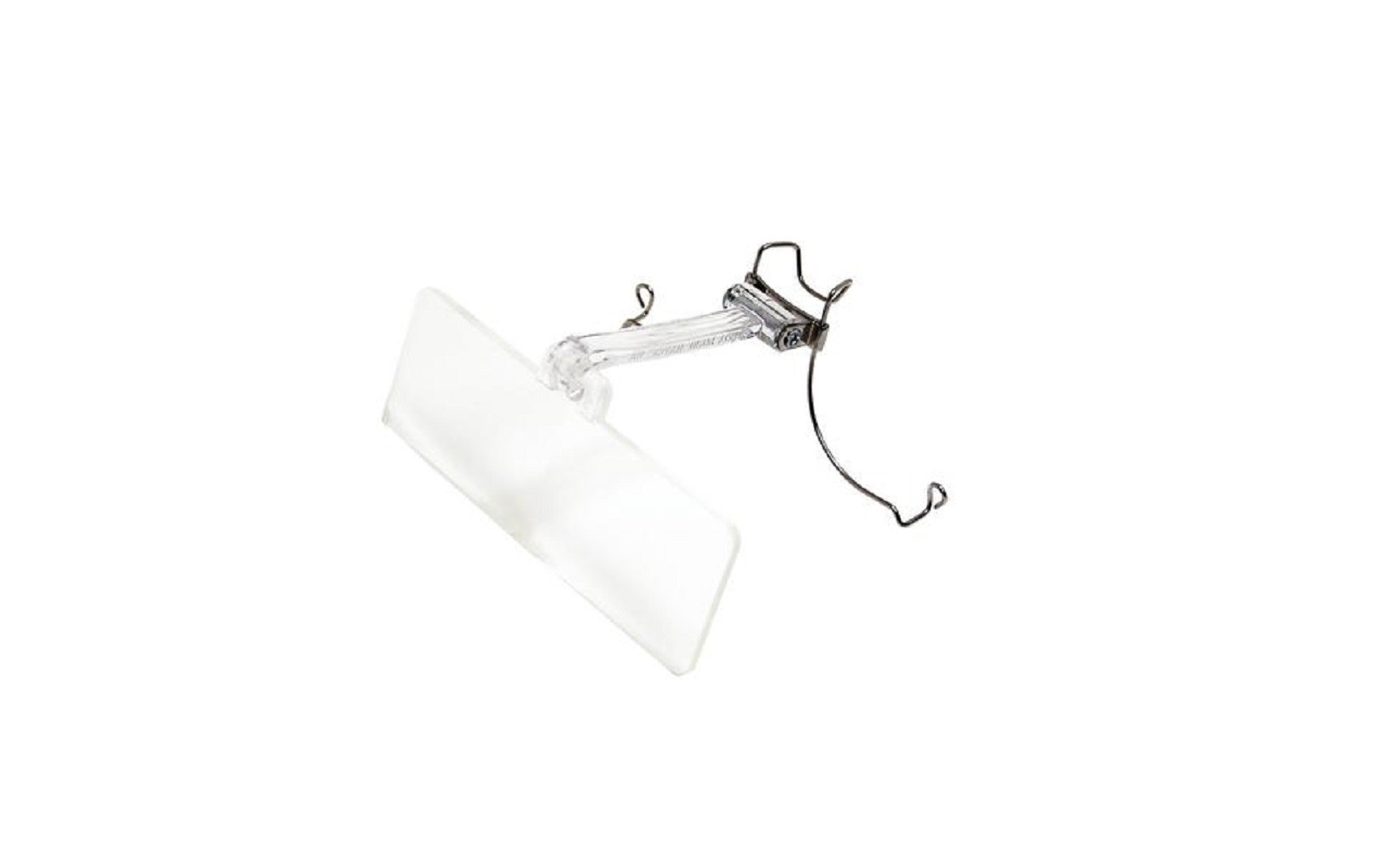
- Mount — a headband visor (Optivisor, Lactona visor, the Sport Loupes row, Buffalo) sits over the face. A clip-on (Opticaid, Loupe Mag, Palmero) needs a frame and can swing away. The Seiler titanium pair is a prescription-ready frame in blue, black, silver, or red. Those are different objects.
- What is not a loupe — the Classic Style Twin Tube is two 15-watt daylight fluorescent tubes on a Dazor float arm. The adjustable-arm lamp is a tabletop fluorescent with a lens and no brand name on this page. They light a bench.
- Fit, not a color — 3.5X without a working distance still leaves you hunched or reaching. Seat the working distance in the dental chair you actually use. Loupes also do not see around a tooth; a mouth mirror still does that job.
| Item | What it is | Power the listing states | Mount | Watch-out |
|---|---|---|---|---|
| Optivisor | Headband visor, Dixon | None stated | Dial headband, over glasses | No magnification number at all. |
| Visor Loupe | Acrylic visor, Lactona | None stated | Headband, over glasses | Recessed lenses resist scratches. They do not state power. |
| Opticaid clip-on | Clip-on magnifier, Dixon | None stated | Any eyeglass frame, swing-away | Binocular viewing is claimed. Power is not. |
| Loupe Mag +3 | Clip-on reader | +3 (diopter-style, not 3.5X) | Aviator, goggle, or prescription frames | Do not read +3 as 3× or as the Seiler 3.5X. |
| Sport Loupes | Clinical loupe, Seiler | 3.5X | Listed as a headband | Sealed optics. No working distance or declination. |
| Titanium loupes | Clinical loupe, Seiler | 3.5X on this row; line also 2.5X and 3.0X | Prescription-ready titanium frame | Frame color is not a fit. Distance is still unpublished. |
| Twin-tube float arm | Fluorescent task lamp | Not a magnifier | Clamp, Dazor float arm | Copy says two 15-watt tubes. The image name also says 3-tube. |
| Adjustable-arm lamp | Tabletop magnifying lamp | None stated | Table clamp | No brand and no diopter. It stays on the bench. |
| Palmero spectacle loupes | Clip-on spectacle magnifier | None stated; “optically correct” | Clips to eyeglasses, swing arm | A swing arm without a power is a convenience, not a loupe spec. |
| Binocular zoom scope | Headband binocular, Buffalo Dental | Zoom, range not stated | Padded leather headband | Plastic tilt lenses. The old “1 lens” cell is wrong for a binocular. |
1. Optivisor — Dixon Inc

The Optivisor is a hands-free visor worn over eyeglasses. Dixon’s listing gives a dial-adjustable headband and a pivot so the visor stays at a chosen tilt. It is described as lightweight and durable. It is aimed at dental, medical, and lab detail work.
No magnification is stated, in the table or in the product copy. A visor you can tip out of the way is useful at a bench. It is not a 3.5X Seiler, and it will not hold a declination angle you were never given.
Who it is for: Someone who already wears glasses and wants a flip-down visor for lab or inspection work, and who will check the lens power on the plate before clinical use.
Tradeoff: Without a stated power, working distance, or field, you cannot match it to a chair position. “Fits over eyeglasses” also means the visor sits outboard of your prescription, which is a different optical stack than a prescription-ready titanium frame.
2. Visor Loupe — Lactona Corporation

Lactona’s Visor Loupe is a lightweight headband magnifier with optical-grade acrylic lenses, recessed to reduce scratches. The listing says it can be worn with regular glasses and taken on and off quickly. The intended use is the oral cavity or the lab bench.
Recessed acrylic is a durability detail. It is not a magnification. The page never states 2.5X, 3.5X, or a diopter for this visor.
Who it is for: A lab or clinic that wants an inexpensive acrylic visor over existing glasses and will confirm the lens power on the unit in hand.
Tradeoff: Acrylic scratches less when it is recessed, and it still scratches. A headband visor has no interpupillary adjustment in this copy. If the two lenses do not match your eyes, you will fight the image all day.
3. Opticaid Clip-On Magnifier — Dixon Inc

The Opticaid clips to an eyeglass frame. Dixon describes binocular viewing, a swing-away mount that moves in any direction, and a lightweight build so both hands stay free. Dental, medical, and lab use are all named.
Binocular means the listing claims depth, not a single peephole. Power is still absent. A clip that swings “in any direction” can also swing out of the optical axis you just set.
Who it is for: Eyeglass wearers who want a clip-on they can flip aside between patients, and who will read the diopter molded on the lens.
Tradeoff: Clip-ons depend on the frame. A thick modern frame or a sports strap may not match “any standard eyeglass frame.” There is no sealed optic and no stated working distance.
4. Loupe Mag Clip-On +3

Loupe Mag Clip-On +3 attaches with a molded plastic friction bar and a wire clip. The listing names aviator, goggle-style, and prescription glasses, and it includes a protective case. The power cell is written +3, while the Seiler rows on the same table are written 3.5X.
Treat +3 as a diopter-style add until the lens itself says otherwise. That is roughly 1.75× for a simple magnifier, not the 3.5× clinical loupe two rows below. No brand name is given for this clip.
Who it is for: A low-power clip for frame-wearers who want a case in the drawer and do not need a fitted 3.5X working distance.
Tradeoff: Friction-fit plastic loosens. A clip that shifts mid-procedure is worse than no magnification. Goggle-style eyewear and a loupe clip also compete for the same bridge.
5. Sport Loupes, 3.5X — Seiler

Seiler Sport Loupes are the first row on this page that states a clinical magnification: 3.5X, with sealed optics against dust and moisture. The copy says the field is wide enough to view the mouth, and that the optics are highly corrected. The old table lists a headband mount and, in the notes, “low power magnification.”
3.5X is a normal step up from a 2.5X starting pair. It is not a 6× surgical loupe, and this page never lists 6×. “Low power” in the old table does not match a 3.5X label. Sealed optics matter in a wet operatory. They do not replace a stated working distance or declination.
Who it is for: A clinician who wants Seiler’s 3.5X Sport Loupes specifically, on the headband this table lists, and who will get working distance from the current Seiler insert or a fitter before the first full day.
Tradeoff: Higher magnification narrows the field and exaggerates head movement. If the insert does not publish distance, do not guess it from a 3.5X headline. The titanium-frame Seiler below is a different mount at the same stated power.
6. Loupes, 3.5X — Seiler titanium frames

This Seiler pair is the prescription-ready titanium frame, in blue, black, silver, or red. The listing says the line is available at 2.5X, 3.0X, and 3.5X. The row itself is the 3.5X. Copy on the page credits highly corrected optics that let you view the mouth, which is the same claim made for the Sport Loupes.
The frame is the difference. A prescription can go in the carrier, so you are not stacking a visor over street glasses. Color is cosmetic. 2.5X versus 3.5X is the clinical choice, and it is a choice this row collapses into one rank. Order the magnification you measured a need for, not “the 3.5 because it is ranked sixth.”
Who it is for: Dentists who want Seiler optics in a titanium frame that accepts a prescription, and who will specify 2.5X, 3.0X, or 3.5X plus a working distance the fitter can build.
Tradeoff: Nothing on this page states pupillary distance, working distance, or declination. A titanium frame in the wrong distance is a light, expensive way to flex your neck. The Sport Loupes row is the headband alternative at 3.5X only.
7. Classic Style Twin Tube — float-arm fluorescents

This item is a lamp. The product copy specifies two 15-watt daylight fluorescent tubes, a Dazor floating arm you move with a finger, and no exposed wires or springs. The mount in the old table is a clamp. The image filename also says “3-tube” and “2 Classic Tube Clamp, White.” Buy the tube count printed on the fixture.
Daylight fluorescent task light can reduce squinting at a bench. It does not magnify, and it does not follow your head to the patient. It is on a loupes list because the old catalog put it here.
Who it is for: A lab bench or operatory that needs a clamp-mounted fluorescent float arm and will order the two-tube or three-tube version the nameplate shows.
Tradeoff: Fluorescent tubes are a different maintenance item than an LED loupe light, and this copy does not claim LED. A lamp at the bench does not fix a working distance your loupes never had. Weight and price in the old table are not reused.
8. Adjustable Arm Magnifying Lamp

The adjustable-arm magnifying lamp is tabletop-mounted, with a fluorescent light and an integrated magnifying lens on a movable arm. The listing says one per package. No brand, no diopter, and no lens diameter appear in the copy.
A lens over a bench helps inspection and small-part work. The arm has to be positioned for every patient or every cast. It is not worn, so it cannot set your posture.
Who it is for: A bench station that wants light and some magnification in one clamp, and that will read the diopter etched on the lens because this page does not.
Tradeoff: Unknown power plus a fixed mount means you lean into the lens. That is the posture problem loupes are bought to avoid. No brand on the listing means no brand page and no parts trail from this write-up.
9. Magnifying Spectacle Loupes — Palmero Sales

Palmero’s Magnifying Spectacle Loupes clip onto eyeglasses. The listing calls the lenses optically correct and describes a lightweight arm that swings up or down. Dental, medical, and lab use are named. Power is not.
“Optically correct” means the copy is promising a lens that is not a toy warp. It is not a number. The swing arm is the same convenience as the other clip-ons: magnified, then normal vision, without removing glasses.
Who it is for: Prescription-glass wearers who want Palmero’s swing-arm clip and will match the unmarked power to the task before using it on a patient.
Tradeoff: A clip-on arm adds leverage on the frame. Extended wear is a frame problem as much as a lens problem. There is no sealed housing and no stated field.
10. Binocular Zoom Scope — Buffalo Dental

Buffalo Dental’s Binocular Zoom Scope is a head-worn binocular: padded leather headband, plastic tilt lenses “for improved viewing convergence,” and adjustable zoom. The listing calls it hands-free for clinical or lab detail. It does not publish the zoom range, a working distance, or a weight.
The old table’s “1 lens” cell does not describe a binocular. Plastic tilt lenses are also not the sealed, highly corrected optics Seiler describes on the 3.5X rows. Zoom without end-stops in the copy is a knob you still have to calibrate to your own eyes.
Who it is for: A lab or clinic that wants Buffalo’s leather-headband binocular specifically, and that will test convergence and the actual zoom range on the face before a procedure day.
Tradeoff: Plastic lenses and an unpublished range can disappoint if you expected a Seiler 3.5X. Headband pressure from a padded leather band is its own fatigue. This is still not a through-the-lens loupe, because the page never says it is.
Frequently Asked Questions
Are any of these TTL or flip-up loupes?
The page does not use either term. The two Seiler rows state 3.5X and a mount (headband for Sport Loupes, titanium frame for the other). Visors, clip-ons, the Buffalo scope, and the two lamps are different categories. Do not buy them as a through-the-lens system.
Why did the old introduction say 2.5x to 6x?
The titanium Seiler line is listed at 2.5X, 3.0X, and 3.5X. Nothing on this page is specified at 6x. The +3 clip-on is not 3×. The range in the old introduction described a market this catalog does not contain.
Can the magnifying lamp replace loupes?
No. Both lamps stay on a clamp. Your neck still travels to the patient. Loupes, if the working distance is real, let you sit back in the chair you already own. A mirror still shows the surfaces that face away from you.
What should a fitter measure if I buy the Seiler frame?
Working distance in your normal seated posture, declination, and pupillary distance, plus the magnification (2.5X, 3.0X, or 3.5X on that line). This page has the magnification choices and the frame colors. It does not have the measurements.
Read next
Magnification only helps if the chair and the mirror match how you sit and what you still cannot see straight on:
Related articles
Keep exploring related topics from Dental Country.
Top 10 Resin-Based Dental Cements
Adhesive vs self-adhesive resin cements: Variolink, RelyX, PANAVIA, and NX3 by bonding steps, cure, and cleanup.
Read article
Top 10 Flowable Dental Composites
Flowable composite buying guide: SDR flow+ 4 mm bases versus Giomer, heavy-flow, and shade-matched liners.
Read article
Top 10 Bottle Cleaners for Dentists
Compare the best Bottle Cleaners for Dentists — our researched Top 10 ranking of the leading brands and options to help you choose the right fit for your practice.
Read article
7 Dental Websites to be Inspired by
Compare the best 7 Dental Websites to be Inspired by, ranked on performance, features, and value to help you choose the right fit for your practice.
Read article