
Top 10 Flowable Dental Composites.
Flowable composite buying guide: SDR flow+ 4 mm bases versus Giomer, heavy-flow, and shade-matched liners.
How to Choose a Flowable Composite
A flowable is not one material with ten logos. On this list, one product is a bulk-fill base (SureFil SDR flow+), two are meant to be the restoration rather than a liner (Beautifil Flow Plus and, in a stiffer way, GrandioSO Heavy Flow), and the rest are conventional flowables you use to wet a box, line a cavity, or fill a small preparation — then cap or finish within a normal light-cure increment. Buying “the most popular flowable” without that split is how a 4 mm posterior base gets placed with a syringe that was never cleared for it.
Dentsply Sirona’s SDR flow+ instructions are specific: a fluoride-containing, radiopaque, light-cured flowable that can be placed in 4 mm increments, self-levels, and is designed as a base under a methacrylate universal or posterior composite when you are replacing occlusal enamel. It is also cleared as a stand-alone filling where there is no occlusal contact, including Class III and V. The other syringes here do not inherit that 4 mm claim.
Buying criteria that actually change the outcome
- Bulk-fill base vs conventional flowable — only SDR flow+ on this page is written for a 4 mm increment. Everything else is placed and cured the way that product’s IFU describes, which for a traditional flowable means thinner increments.
- Does it run, or does it stay — SDR is self-leveling on purpose. GrandioSO Heavy Flow and Beautifil Flow Plus F00 are the opposite: they hold a shape. A heavy-flow syringe makes a poor Class II box liner if you needed the material to seek the margin.
- Final restoration vs liner — Beautifil Flow Plus is a Giomer restorative (S-PRG filler, fluoride release and recharge in Shofu’s literature), sold in a sculptable F00 and a lower-viscosity F03. Filtek Supreme Flowable, Herculite Ultra Flow, and Venus Diamond Flow are shade companions to a packable line.
- Shade system you already own — a flowable only matches the composite it was built beside. Filtek flowable does not share a shade guide with Venus Diamond, and Esthet-X Flow is an older microhybrid shade system.
- Fluoride is not universal — SDR flow+ and Beautifil’s Giomer filler are the listings here with a real fluoride story from the manufacturer. Do not assume the other eight release fluoride because a catalog grid once said yes.
| Material | Maker | Job | Handling | Increment | Watch-out |
|---|---|---|---|---|---|
| Patterson Flowable | Patterson | House-brand liner and small fills | Low-viscosity syringe | Conventional light-cure | Distributor brand; little independent literature next to Filtek or SDR |
| SDR flow+ | Dentsply Sirona | Bulk-fill base; stand-alone only off the occlusion | Self-leveling | Up to 4 mm | Cap occlusal enamel with a universal composite |
| Filtek Supreme Flowable | 3M | Esthetic small restorations and liners | Nanocomposite; 3M’s flow-on-demand handling | Conventional | Not a 4 mm bulk-fill |
| Tetric EvoFlow | Ivoclar | Liner, Class V, small cavities | Flowable syringe in the Tetric family | Conventional | Not Tetric’s bulk-fill flowable |
| Beautifil Flow Plus | Shofu | Can be the final restoration | Giomer; F00 stacks, F03 flows | Conventional light-cure | Read which viscosity is in the syringe |
| GrandioSO Heavy Flow | VOCO | Small restorations that must not slump | Highly filled heavy flow | Conventional | Too stiff to self-level into a box |
| Herculite Ultra Flow | Kerr | Shade-matched liner and small Class V | Nanohybrid flowable | Conventional | Matches Herculite Ultra, not a random packable |
| Venus Diamond Flow | Kulzer | Cervical and small cavities; liner under Venus Diamond | Nanohybrid flowable | Conventional | Shade match depends on using the Venus system |
| Esthet-X Flow | Dentsply Sirona | Legacy microhybrid flowable | Stacks, then flows | Conventional | Older shade system; not a bulk-fill |
| Clearfil Majesty Flow | Kuraray | Anterior and posterior flowable restorative | Highly filled; less runny than a thin liner | Conventional | Still light-cure limited; not a dual-cure core |
Pair a flowable with the packable you already cure: universal composites · glass ionomer restoratives
1. Patterson® Flowable Composite

Patterson Flowable Composite is the distributor’s house-brand syringe: a light-cured, low-viscosity composite sold as 1 g refills for lining, small repairs, and Class V-type work. It is the flowable you get when the order is already going through Patterson and you want a generic low-viscosity resin, not a branded bulk-fill or a Giomer.
House brands can be perfectly serviceable and still have almost no published clinical file next to SDR, Filtek, or Beautifil. Treat this syringe as a conventional flowable. Do not give it SDR’s 4 mm increment, and do not assume fluoride release unless the insert in the box you received says so. Shade range and tip design are whatever the current Patterson refill card lists.
Who it is for: Offices that want an inexpensive liner syringe on a Patterson order and already use a separate packable for anything load-bearing.
Tradeoff: You are not buying a researched handling story or a matching shade system. If the restoration has to disappear next to Filtek Supreme or Venus Diamond, use that line’s flowable. If the cavity is a deep Class II, this is not the bulk-fill base.
2. SureFil® SDR® flow+ — Dentsply Sirona

Dentsply Sirona SureFil SDR flow+ is a one-component, fluoride-containing, radiopaque, light-cured composite with the company’s stress-decreasing resin. The DFU allows 4 mm increments and describes a self-leveling consistency that adapts to the cavity. As a base in Class I and II it is meant to be covered with a methacrylate universal or posterior composite that replaces occlusal and facial enamel. It is also indicated as a liner, a pit-and-fissure sealant, a conservative Class I, a core buildup, and Class III and V restorations, including stand-alone use where it is not in occlusal contact.
That is a different instrument from a “pretty flowable.” The universal shade is a dentin replacement; A1, A2, and A3 exist so Class III and V can be left uncapped and still look like a tooth. The Compula tip in this listing is for injecting the base while the tip stays in the material so it self-levels instead of folding in bubbles. It is chemically compatible with conventional methacrylate adhesives and with the capping composite, including brands other than Dentsply.
Who it is for: Posterior-heavy practices that want a 4 mm flowable base under a capped Class I or II, and a single syringe that can also do a Class V without a second flowable.
Tradeoff: Leave the occlusal enamel to the packable. SDR is not a high-polish enamel replacement on a biting surface. Cure the 4 mm increment with the light and time in the current DFU — do not borrow a 10-second habit from a different composite. Fluoride in the formula is not a reason to skip the adhesive.
3. Filtek™ Supreme Flowable — 3M

3M Filtek Supreme Flowable is the light-cured nanocomposite syringe matched to the Filtek Supreme restorative family. 3M’s handling phrase for it is flow-on-demand: it moves when you push the plunger and holds better once the pressure stops, which is the opposite of SDR’s self-leveling pool. The 2 g syringe in this listing is a conventional esthetic flowable for small restorations, liners, repairs, and sealant-type applications — not a 4 mm bulk base.
The reason to stock it is shade and polish next to Filtek Supreme, not a unique cavity class. If the packable in the cassette is Filtek, the flowable should be too, or the cervical and the occlusal will not be the same tooth. Radiopacity is part of the restorative claim so you can find it on a bitewing; it does not make the material a bulk-fill.
Who it is for: Practices standardized on Filtek Supreme who need the matching flowable for liners, small anterior repairs, and pit repairs.
Tradeoff: Flow-on-demand still has a conventional depth of cure. Do not fill a 4 mm proximal box with it because SDR is on backorder. The 3M oral-care business now sits with Solventum; the syringe may still say Filtek. Match the shade guide to the Filtek generation you actually use.
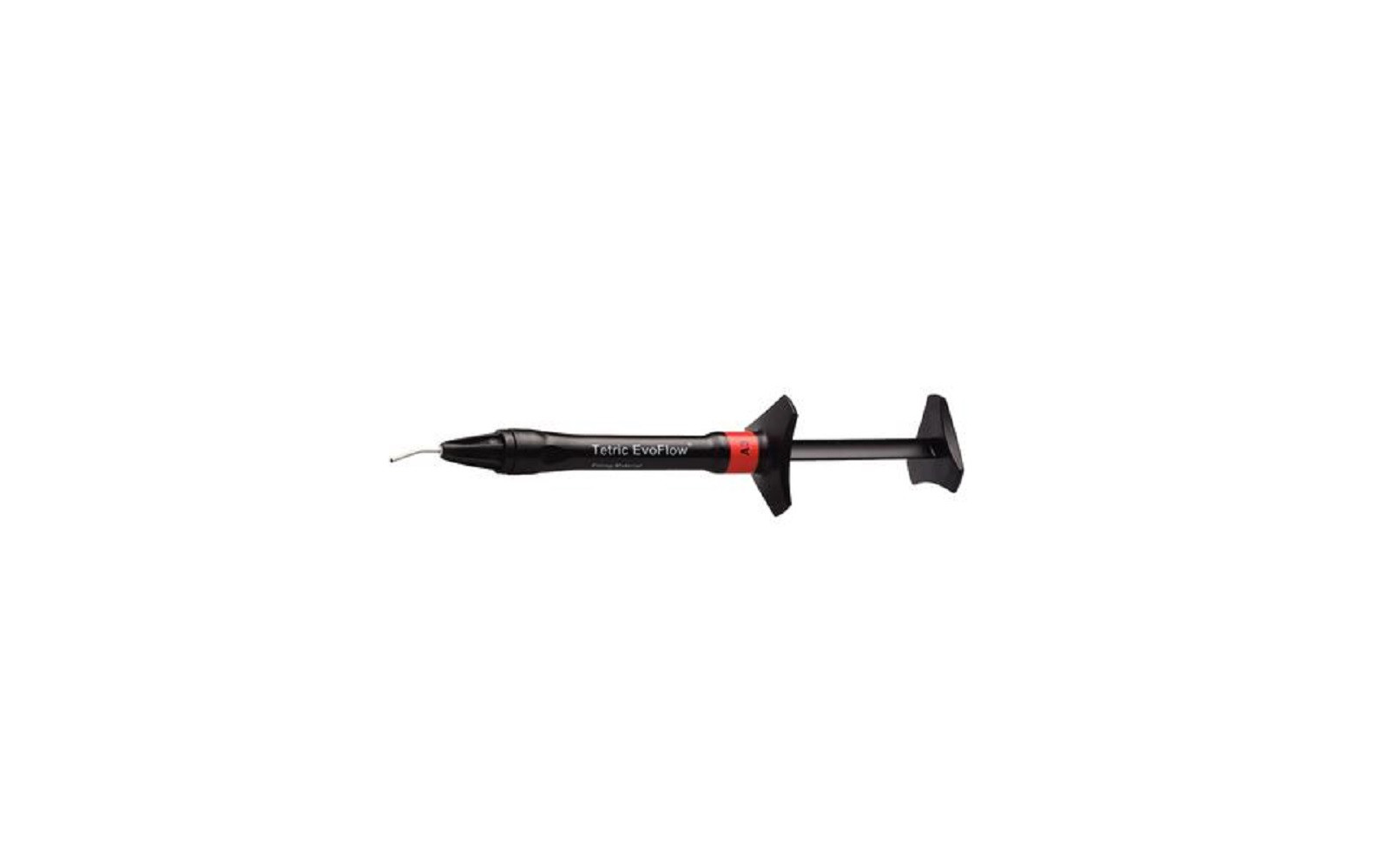
4. Tetric EvoFlow® — Ivoclar

Ivoclar Tetric EvoFlow is the light-cured flowable in the Tetric direct-restorative family, sold here as a 2 g syringe refill. It is the liner and small-cavity material: cervical lesions, small Class I and III, and the adaptive first layer under a Tetric sculptable composite. It is not Ivoclar’s bulk-fill flowable. Those are separate products (Tetric PowerFlow and the bulk-fill restoratives). Giving EvoFlow a 4 mm increment because the name says Tetric is the mistake.
Stay inside the Tetric shade system if the point of this syringe is an invisible margin against Tetric EvoCeram or the current Tetric packable. A flowable from another brand can bond just fine and still show a line. Ivoclar’s adhesive for this family is the one to read; the flowable does not self-adhere.
Who it is for: Ivoclar offices that want a conventional flowable matched to Tetric for liners and small restorations, and that already stock a different product when they need a bulk-fill base.
Tradeoff: Easy to confuse with Tetric’s bulk-fill syringes on a crowded shelf. Label the drawer. EvoFlow will not forgive a deep proximal box the way SDR’s DFU does, and it is not a dual-cure core material for a post space.
5. BEAUTIFIL® Flow Plus — Shofu

Shofu Beautifil Flow Plus is a Giomer hybrid: Shofu’s S-PRG filler is the fluoride-release-and-recharge claim, and the material is intended to be a restorative, not only a liner. Flow Plus comes in two viscosities that do opposite jobs. F00 (zero flow) stacks and can build a shape. F03 flows more and wets a margin. Both are light-cured, injectable hybrids with enough body that Shofu markets them for direct restorations rather than as a runny base.
That is why it does not sit in the same sentence as Patterson’s house flowable. You can line a box with F03 and you can restore a cervical or a small occlusal with F00 without immediately capping it in another brand’s packable — follow the shade and the increment in Shofu’s instructions. The 2.2 g syringe in this listing needs the viscosity code on the label. “Flow Plus” alone does not tell you which one arrived.
Who it is for: Practices that want a fluoride-releasing Giomer they can leave as the final surface, especially Class V and small restorations, and who will stock F00 and F03 as different instruments.
Tradeoff: Light-cure only. A deep core or a post canal will not cure at the bottom; that job on this site’s core list belongs to LuxaCore or Clearfil DC Core Plus. Giomer fluoride is not a sealant substitute if the margin is contaminated. F00 will not self-level into an undermined box — use F03 or SDR for that.
6. GrandioSO® Heavy Flow — VOCO

VOCO GrandioSO Heavy Flow is the stiff end of the flowable category. VOCO’s “heavy flow” designation means a highly filled nanohybrid that stays where you place it instead of running to the gingival margin. The 2 g syringes in this refill are for small restorations, cervical lesions, and places where a slumpy liner would be a liability — not for a self-leveling Class II base.
High filler is the trade you are making: more body and a restoration that can stand as the filling in a small cavity, less ability to wet a sharp line angle by itself. If the cavity needs a seeker, choose SDR or a low-viscosity flowable and use Heavy Flow where you wanted composite that does not sag before you cure it.
Who it is for: Operators who dislike runny flowables and want VOCO’s highly filled syringe for small, precise restorations and for blocking out undercuts without a puddle.
Tradeoff: It will not do SDR’s job. Pushing a heavy-flow material into a deep box and hoping it adapts is how you leave a void at the gingival margin. Cure in conventional increments. Confirm the current filler claim on VOCO’s sheet if you are comparing numbers; the handling difference is the part that changes the procedure.
7. Herculite® Ultra Flow — Kerr

Kerr Herculite Ultra Flow is the nanohybrid flowable matched to Herculite Ultra. The 2 g syringes with tips are a conventional light-cured flowable for liners, small Class I and V restorations, and repairs next to that shade system. Kerr’s “smart placement” language is about handling — it adapts, then you cure — not about a 4 mm bulk-fill clearance.
Stock it when the packable in the room is Herculite Ultra and you are tired of a mismatched cervical shade. It does not replace a Giomer if fluoride recharge is the reason you were looking at Beautifil, and it does not replace SDR under a large posterior composite.
Who it is for: Kerr Herculite users who need the companion flowable for liners and small tooth-colored repairs.
Tradeoff: A tip on the syringe does not change depth of cure. Do not backfill a post space with it and call the result a core. If the practice has moved from Herculite Ultra to a different universal composite, this flowable’s shade match is no longer a reason to keep it.
8. Venus® Diamond Flow — Kulzer

Kulzer Venus Diamond Flow is the light-cured nanohybrid flowable companion to Venus Diamond. Kulzer positions it for smaller cavities, cervical fillings, and as a liner under a normal-viscosity composite from the same system. The 1.8 g syringe is a conventional flowable: useful where you want Venus shade and a lower viscosity, not where you want a 4 mm dentin replacement.
The multifunctional claim — liner or small restoration — is real only inside the curing rules for this syringe. Cervical lesions are the everyday win, because access is easy and the shade sits next to Venus Diamond occlusal work. A posterior box still wants either a self-leveling bulk-fill base or a careful incremental fill, not a hope that “flow” means “bulk.”
Who it is for: Kulzer offices matching liners and Class V restorations to Venus Diamond.
Tradeoff: Nanohybrid polish does not extend the increment. If Venus Diamond is not the packable you place, the shade argument collapses and a different flowable may be the simpler inventory. Read the adhesive compatibility in the current insert; the flowable is not self-adhesive.
9. Esthet-X® Flow — Dentsply Sirona

Dentsply Sirona Esthet-X Flow is a visible light-cured, radiopaque microhybrid flowable from the older Esthet-X restorative line. Dentsply described the handling as pseudoplastic: it stacks, then flows when you place it. The 1.3 g syringe with tips is a conventional anterior/posterior flowable for primary and permanent teeth, not the bulk-fill technology Dentsply later put into SDR flow+.
It remains on supplier lists because offices still have the Esthet-X shade guide and because microhybrid flowables are predictable liners. It is the wrong syringe if you thought every Dentsply flowable was SDR. Different chemistry, different increment, older shade names.
Who it is for: Practices that still match repairs to existing Esthet-X restorations, or that want a legacy microhybrid flowable and understand it is not a bulk-fill base.
Tradeoff: Shade inventory for a retired or shrinking line is expensive. If new posterior work has moved to SDR plus a current universal composite, keep Esthet-X Flow only for repairs that must match old Esthet-X, not as the default liner for every operatory.
10. Clearfil Majesty™ Flow — Kuraray

Kuraray Clearfil Majesty Flow is Kuraray’s universal light-cured flowable for anterior and posterior restorations, sold here as a 3.2 g syringe with tips. Kuraray emphasizes a high filler load for a flowable, radiopacity, and a syringe that delivers on demand without a stream of bubbles. It handles closer to GrandioSO Heavy Flow than to a watery liner: it can be the restoration in a small cavity, and it is less likely to run off a cervical margin.
Pair it with a Clearfil adhesive. The flowable does not carry PANAVIA’s self-adhesive cement chemistry, and it will not cure at the bottom of a core the way Clearfil DC Core Plus does. High filler improves body; it does not turn the material into a 4 mm bulk-fill.
Who it is for: Kuraray users who want one highly filled flowable for small anterior and posterior restorations and for a liner that stays on the tooth while they sculpt.
Tradeoff: Still a light-cure increment product. If the case is a deep Class II base, use a bulk-fill that says 4 mm, then cap. If the case is a post and core, use a dual-cure core composite. Majesty Flow’s filler claim is a reason to read the current technical data sheet rather than a number to invent in the operatory.
Frequently Asked Questions
Can I fill a 4 mm Class II with any flowable on this list?
No. SureFil SDR flow+ is the product whose instructions describe a 4 mm increment, and even then the occlusal enamel is capped with a universal or posterior composite. The other flowables here are conventional light-cured materials. Follow each insert’s increment and curing time.
Which flowable can be the final restoration?
Beautifil Flow Plus is built as a Giomer restorative, with a sculptable F00 and a more flowable F03. GrandioSO Heavy Flow and Clearfil Majesty Flow are highly filled flowables used for small restorations, not only as liners. SDR flow+ can stand alone in non-occlusal uses such as Class III and V. A house-brand or shade-matched liner syringe is a poor default occlusal surface.
Do all flowables release fluoride?
No. SDR flow+ is fluoride-containing in Dentsply Sirona’s DFU. Beautifil Flow Plus uses Shofu’s S-PRG Giomer filler, which Shofu describes as releasing and recharging fluoride. The other products on this list should not be labeled fluoride-releasing unless their own insert says so.
How do I match a flowable to my packable composite?
Use the flowable from the same restorative family: Filtek Supreme Flowable with Filtek Supreme, Herculite Ultra Flow with Herculite Ultra, Venus Diamond Flow with Venus Diamond, Tetric EvoFlow with Tetric. A different brand can still bond. It will not share the shade guide.
Read next
Stay on restorative materials:
Related articles
Keep exploring related topics from Dental Country.
Top 10 Hand Waxing Instruments in Dentistry
Compare PK Thomas, LeCron, Roach, Akers, and TiN wax carvers for crown, partial, and denture wax-ups.
Read article
Top 10 Amalgamators & Parts for Dentistry
Compare capsule mixers and parts — Silamat S6, RotoMix, Ultramat 2, GC CM-II — by timer, motion, and use.
Read article
Top 10 Bottle Cleaners for Dentists
Compare the best Bottle Cleaners for Dentists — our researched Top 10 ranking of the leading brands and options to help you choose the right fit for your practice.
Read article
7 Dental Websites to be Inspired by
Compare the best 7 Dental Websites to be Inspired by, ranked on performance, features, and value to help you choose the right fit for your practice.
Read article