
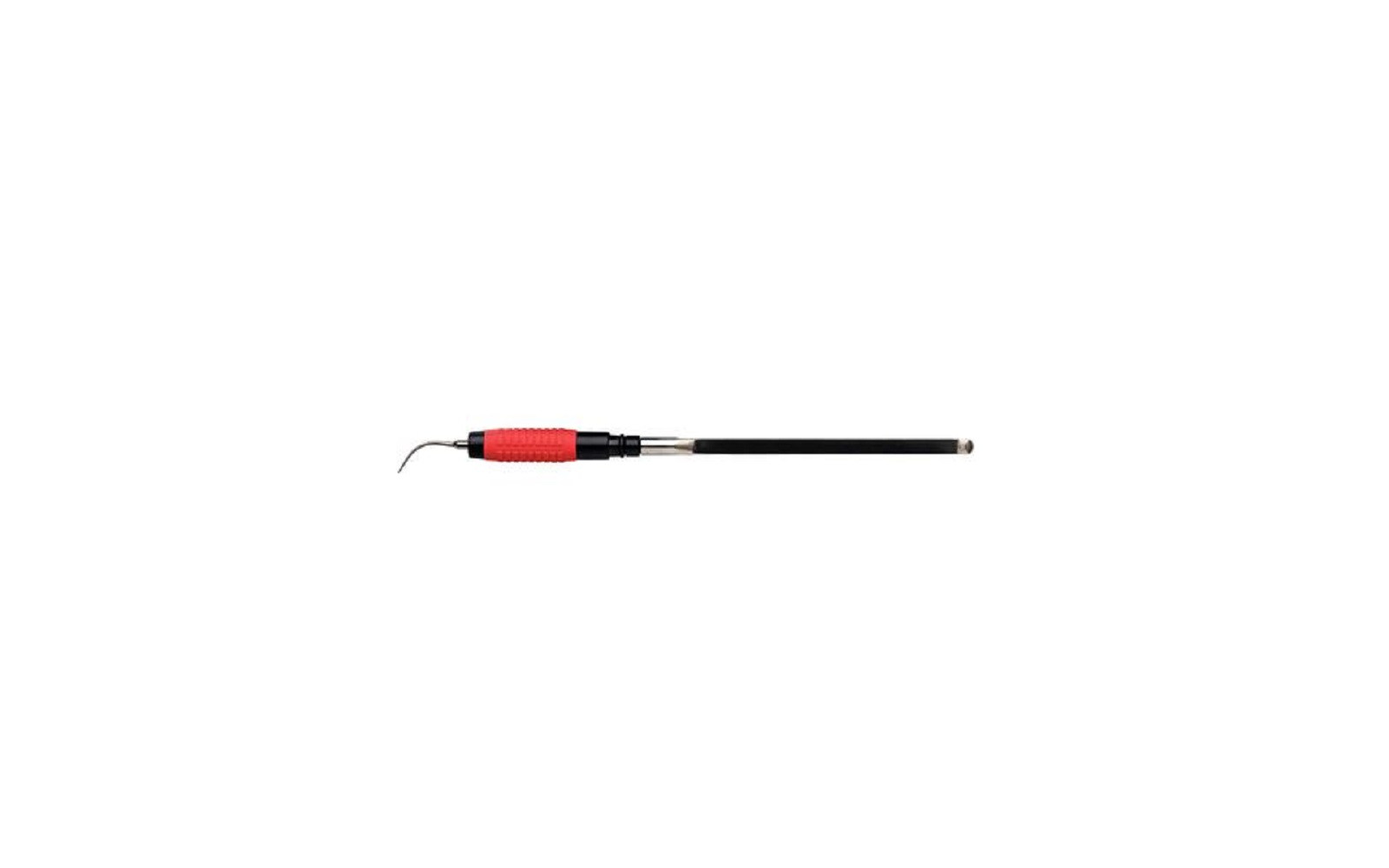
Top 10 Periotomes in Dentistry.
Compare anterior and posterior periotomes from Premier, Hu-Friedy, Directa Luxator, TBS, and Nordent for atraumatic extractions.
How to Choose a Periotome for Atraumatic Extraction
A periotome is a thin, sharp blade you walk into the periodontal ligament to sever Sharpey’s fibers before the elevator or forceps come out. Used correctly, it is how you keep the buccal plate on a future implant site. Used as a pry bar, it is how you snap a $150 tip in the sulcus. That is the whole category in one warning.
Geometry splits the drawer. Anterior blades are straighter and usually narrower for incisors and canines. Posterior blades add a contra-angle or left/right offset so you can reach molars without resting the handle on the lip. Double-ended instruments (Premier Big Easy, PDT, Nordent DuraLite) put two shapes in one hand. Single-ended Hu-Friedy and Directa Luxator P-series tips give you a longer, more precise shank and — on the Luxator P-series — a pen grip and a mallet knob.
Blade design is the other split. Smooth thin steel (Hu-Friedy Immunity Steel / Satin Steel) slices ligament with a push-and-walk motion. Micro-serrated or serrated titanium (TBS, PDT) bites a little more aggressively in a tight furcation. Directa’s Luxator P-series is thinner and sharper than the original Luxator elevators, titanium-coated, about 3 mm wide, and not indicated as an elevator — the company is blunt about tip damage if you lever.
Buying criteria that protect bone and tips
- Tooth position first — anterior straight or angled for incisors; posterior left/right or contra-angle for molars. A “universal” double-end still has a best end for each site.
- Cut vs luxate — periotomes and Luxator P-series cut ligament axially. Conventional luxators and elevators wedge. If you only own one and you lever with it, buy a sturdier elevator for the second motion.
- Handle — silicone Big Easy and round DuraLite reduce pinch on a long extraction. Pen-grip P-series maximizes tactile sense and accepts a mallet tap on the knob. Satin Steel Hu-Friedy is thinner in the hand and easier to bag in a surgical cassette.
- Coating — titanium nitride (Nordent, some TBS/Luxator tips) stays visually sharp longer and is steam-autoclavable. Coatings do not make a tip lever-safe.
- Kit vs single — a TBS four-instrument cassette covers straight and angled access. A single Hu-Friedy posterior left does not. Buy the gap you actually extract.
Periotome comparison
| Instrument | Maker | Ends | Access | Blade / handle | Do not |
|---|---|---|---|---|---|
| Big Easy anterior | Premier | Double | Anterior | Thin blades, silicone Big Easy handle | Use as a posterior molar elevator |
| Big Easy posterior | Premier | Double | Posterior | Same handle, posterior blade pair | Lever on the buccal plate |
| Posterior left, single end | Hu-Friedy | Single | Left posterior | Immunity Steel, Satin Steel handle | Expect it to reach the opposite arch side cleanly |
| TBS angled flexible serrated | TBS Dental | Single | Angled / tight spaces | Flexible serrated titanium tip | Bend it as if it were an explorer |
| Anterior angled, single end | Hu-Friedy | Single | Anterior angled | Fixed thin blade, Immunity Steel | Substitute for a posterior contra-angle |
| Luxator P-series (P1–P4) | Directa | Single, pen grip | P1 straight (anteriors/premolars); P2 curved; P3 contra-angle posteriors; P4 dual-edge root tips | ~3 mm Ti-coated, mallet knob, color rings | Use as an elevator — Directa forbids levering |
| Anterior straight, single end | Hu-Friedy | Single | Anterior straight | Immunity Steel | Force it around a molar distal |
| Posterior double end | PDT | Double | Posterior | Micro-serrated blades | Treat serrations as a saw against bone |
| TBS serrated kit + cassette | TBS Dental | Four singles | Straight and angled mix | Titanium serrated, cassette | Skip learning which tip is which |
| DuraLite #2 posterior | Nordent | Double | Posterior, contra-angle | TiN-coated tips, DuraLite round handle, USA | Use the posterior #2 as your only anterior tool |
Dental elevators · Elevator and periotome kits · Root tip picks
1. Big Easy — Anterior, Double End (Premier)

Premier’s Big Easy anterior periotome is a double-ended ligament cutter on the company’s oversized, medical-grade silicone handle. The hollow, balanced handle is the reason people buy Big Easy anything — wet gloves, long appointments, less pinch. The blades are the anterior pair: thin enough to enter the sulcus on incisors and canines without the bulk of a posterior offset.
Work it as a walk-around: seat the blade in the PDL, apply apical pressure, advance a millimeter, rotate to the next surface. The second end is there so you can change attack angle without changing instruments, not so you can pry from both ends.
Who it is for: GPs and implant dentists who extract anteriors often and already like Premier’s Big Easy hygiene and surgical handles.
Tradeoff: a silicone club is bulkier in a tight anterior cassette than a Hu-Friedy single-end. It is also the wrong silhouette for a second molar. Buy the posterior Big Easy (or a P3 / Hu-Friedy posterior) instead of leaning this one into the ramus.
2. Big Easy — Posterior, Double End (Premier)

Same silicone handle, posterior blade pair. The value is reach: you can stand in a more neutral wrist position on premolars and molars while the blade stays in the ligament instead of the handle colliding with the commissure. Double-end means two posterior attitudes, not “anterior plus posterior.”
Posterior plates are the ones implant dentists cry over. The Big Easy’s comfort can tempt you to push harder because your fingers are not screaming. That is how buccal plate shows up in the suction. Keep the motion apical and circumferential; when the tooth does not move, switch to an elevator that is allowed to wedge.
Who it is for: the same Premier users as the anterior, on the other half of the arch.
Tradeoff: you now own two Big Easy periotomes to cover the mouth. That is still cheaper than one snapped Luxator tip, but it is not a four-shape Directa kit. Silicone should be inspected for splits after autoclave — a torn handle is a hygiene problem, not a badge of volume.
3. Posterior Left, Single End — Hu-Friedy

Hu-Friedy’s posterior-left single-end periotome is a one-sided, cassette-friendly blade in Immunity Steel® with a Satin Steel handle. “Left” is not marketing — the offset is built for one approach to posterior teeth. Pair it with a right, or accept that you will rotate the patient and yourself to make a left work on the other side.
Immunity Steel is Hu-Friedy’s hard, corrosion-resistant surgical steel; the company sells these as bone-preserving extraction instruments with a thin fixed blade. Single-end gives you a longer, quieter shank than a double-end silicone bat. It bags next to elevators and looks like the rest of a Hu-Friedy surgical kit.
Who it is for: surgeons already standardized on Hu-Friedy steel who want a named posterior periotome in the cassette, not a mixed-brand handle.
Tradeoff: one end, one side. If your extractions are evenly left and right, buy the pair. If you want mallet-ready pen grip, that is the Luxator P-series, not this handle.
4. Serrated Periotome — Angled, Single End, Flexible (TBS)

TBS’s angled flexible periotome uses a serrated titanium tip on a light handle. Flexibility is the feature: the blade can follow a curved root or a crowded posterior approach where a rigid Hu-Friedy shank wants a straight line. Serrations help the tip stay in the ligament instead of skating on calculus or enamel.
Flexible is not “bend it into a new instrument.” Over-flexing work-hardens and then snaps the tip, usually subgingival. Use the factory angle. If you need a different angle, pick another TBS shape from the kit rather than customizing this one at the chair.
Who it is for: clinicians extracting in crowded posterior sextants or along curved roots who already like serrated titanium.
Tradeoff: less of a precise, rigid plane than Hu-Friedy Immunity Steel. Some operators find serrations chatter on thin anterior bone. Keep a smooth anterior (Premier or Hu-Friedy) for incisors.
5. Anterior Angled, Single End — Hu-Friedy

The anterior angled Hu-Friedy is the same Immunity Steel family as the posterior left, with a fixed thin blade canted for incisors and canines when a straight approach hits the lip or a deep overbite. Single-end, satin handle, surgical-cassette native.
Angled anteriors are how you stay in the PDL on a maxillary central without the handle standing straight up into the light. They are not a shortcut around a labial plate that is already paper-thin — take smaller steps and consider a flap if the tooth is ankylosed.
Who it is for: Hu-Friedy surgical kits that already have a straight anterior and still cannot reach certain incisors cleanly.
Tradeoff: an extra single-end to bag and track. If you extract very few anteriors, the Premier Big Easy anterior double-end may cover both angles in one instrument.
6. Luxator® P-series — Directa

Directa’s Luxator P-series is a pen-grip periotome line, thinner and sharper than the original Luxator instruments. Official variants: P1 straight, dark green — anteriors and premolars; P2 inverted/curved, light blue — mesial/distal; P3 contra-angle, dark blue — posteriors; P4 dual-edge, lilac — fractured root tips and very decayed teeth. Blades are about 3 mm, titanium-coated, steam-autoclavable. The handle has a knob for a surgical mallet in the long axis.
Directa’s instructions are the ranking criterion: cut the periodontal ligament axially, then finish with forceps or a real elevator. Do not use the P-series as an elevator. The thin tips fail if you wedge. That is not fine print — it is the difference between this design and a Forte / conventional Luxator.
Who it is for: implant-oriented extractors who want tactile, color-coded singles and will respect the no-lever rule.
Tradeoff: four instruments (or the PK4 kit) to cover what two Big Easy handles pretend to cover. Tips are consumable if your team luxates out of habit. Train that habit out before you buy a set for every operatory.
7. Anterior Straight, Single End — Hu-Friedy

The straight anterior is the simplest Hu-Friedy periotome: thin blade, Immunity Steel, one end, no offset. It is the instrument you walk around a central or lateral when access is open and you want the most direct apical line.
Straight is also the easiest to over-insert on a narrow lower incisor. The plate is thin, the root is flat, and a deep plunge is a dehiscence. Short steps, stay in the ligament, and switch to the angled anterior when the lip or a deep bite blocks the handle.
Who it is for: Hu-Friedy users building a minimal anterior pair (straight + angled) rather than a silicone double-end.
Tradeoff: no posterior utility. Do not “just this once” it on a molar distal — that is how straight blades get used as elevators and then get sent to the sharp container.
8. Posterior, Double End — Paradise Dental Technologies

PDT’s posterior double-end periotome uses micro-serrated blades on a posterior pair. Serrations give a slightly grabby cut in the ligament, which some operators prefer on multi-rooted teeth where a polished blade wants to skate. PDT handles are the familiar resin, light and textured, that hygiene and perio already have in the drawer.
Micro-serrated is still a cut, not a saw. Running the serrations against crestal bone as if you were filing is how you create a crater. Walk apically. The second end is the other posterior attitude — use it, do not flip to an anterior motion that the blade does not have.
Who it is for: offices already in the PDT ecosystem that want a posterior periotome that matches existing handles and cassettes.
Tradeoff: less “famous” than Hu-Friedy or Directa in oral surgery literature, which only matters if your team will not pick it up. If you need mallet-ready axial force, the Luxator P-series knob is the purpose-built answer.
9. Serrated Periotome Kit with Cassette — TBS

The TBS kit is four serrated titanium periotomes — typically a mix of straight and angled — in a cassette. That is the honest way to buy TBS: you get the flexible angled (listed separately above) plus the shapes that one single cannot cover, already in a sterilizable box so they do not migrate into the explorer tray.
A kit only helps if the team can name each tip. Color or silhouette training is worth a lunch meeting. The cassette also protects flexible tips from being crushed under an elevator in a bag.
Who it is for: implant and oral-surgery operatories that want serrated titanium coverage without ordering SKUs one at a time.
Tradeoff: four similar-looking blades are easy to mix up under a surgical light. If you only extract anteriors, a Premier or Hu-Friedy single is less clutter. Flexible titanium still is not an elevator.
10. DuraLite® Round Handle, Double End — Nordent

Nordent’s #2 posterior periotome is double-ended, contra-angle, titanium-nitride coated, on the DuraLite® round handle, made in the USA. Patterson’s spec sheet lists stainless handle, TiN-coated stainless tips, posterior tooth position. There is a matching #1 anterior DuraLite if you want the same handle family on both arches.
TiN is a hard, gold-colored coating that holds an edge appearance and slides a bit differently than bare steel. DuraLite is Nordent’s lightweight round handle — less silicone bulk than Big Easy, more fill than a thin Hu-Friedy. Contra-angle tips are the posterior access story: you can stay off the lip and still aim down the PDL of a molar.
Who it is for: US-made instrument buyers who want a coated posterior double-end without switching to Directa’s pen-grip system.
Tradeoff: #2 is posterior. Buying only this SKU leaves anteriors poorly covered. Coating wear at the very tip is cosmetic until the steel rolls — then it is a sharpening or replacement decision. Still not a luxating elevator.
Frequently Asked Questions
What is the difference between a periotome and a luxator?
A periotome is a thin blade for cutting the periodontal ligament with apical, circumferential pressure. Many luxators are wedging instruments. Directa’s Luxator P-series is a pen-grip periotome — thinner than original Luxators — and Directa says not to use it as an elevator. Finish the extraction with forceps or a purpose-built elevator.
Should I buy anterior and posterior periotomes separately?
Yes, if you extract both. Anterior blades and handles are the wrong shape for second molars; posterior contra-angles and left/right offsets are clumsy on incisors. Double-ended Premier or Nordent instruments still come in anterior vs posterior models.
Can I tap a periotome with a mallet?
Only if the instrument is designed for it. The Luxator P-series handle includes a knob for axial mallet force. Thin Hu-Friedy and flexible TBS tips are easy to snap with a poorly aimed tap. When in doubt, advance by hand.
Do titanium-nitride coatings make periotomes stronger for levering?
No. TiN can help the tip stay sharp-looking and corrosion-resistant. It does not change the rule: periotomes cut ligament; they do not luxate like a Cryer or a straight elevator.
Read next
Related articles
Keep exploring related topics from Dental Country.
The Top 15 Dental Chairs in the World
Compare 15 dental chair brands for 2026 — A-dec, Planmeca, Midmark, and more — by ergonomics, service, and cost.
Read article
Top 10 Resin-Based Dental Cements
Adhesive vs self-adhesive resin cements: Variolink, RelyX, PANAVIA, and NX3 by bonding steps, cure, and cleanup.
Read article
Top 10 Bottle Cleaners for Dentists
Compare the best Bottle Cleaners for Dentists — our researched Top 10 ranking of the leading brands and options to help you choose the right fit for your practice.
Read article
7 Dental Websites to be Inspired by
Compare the best 7 Dental Websites to be Inspired by, ranked on performance, features, and value to help you choose the right fit for your practice.
Read article