
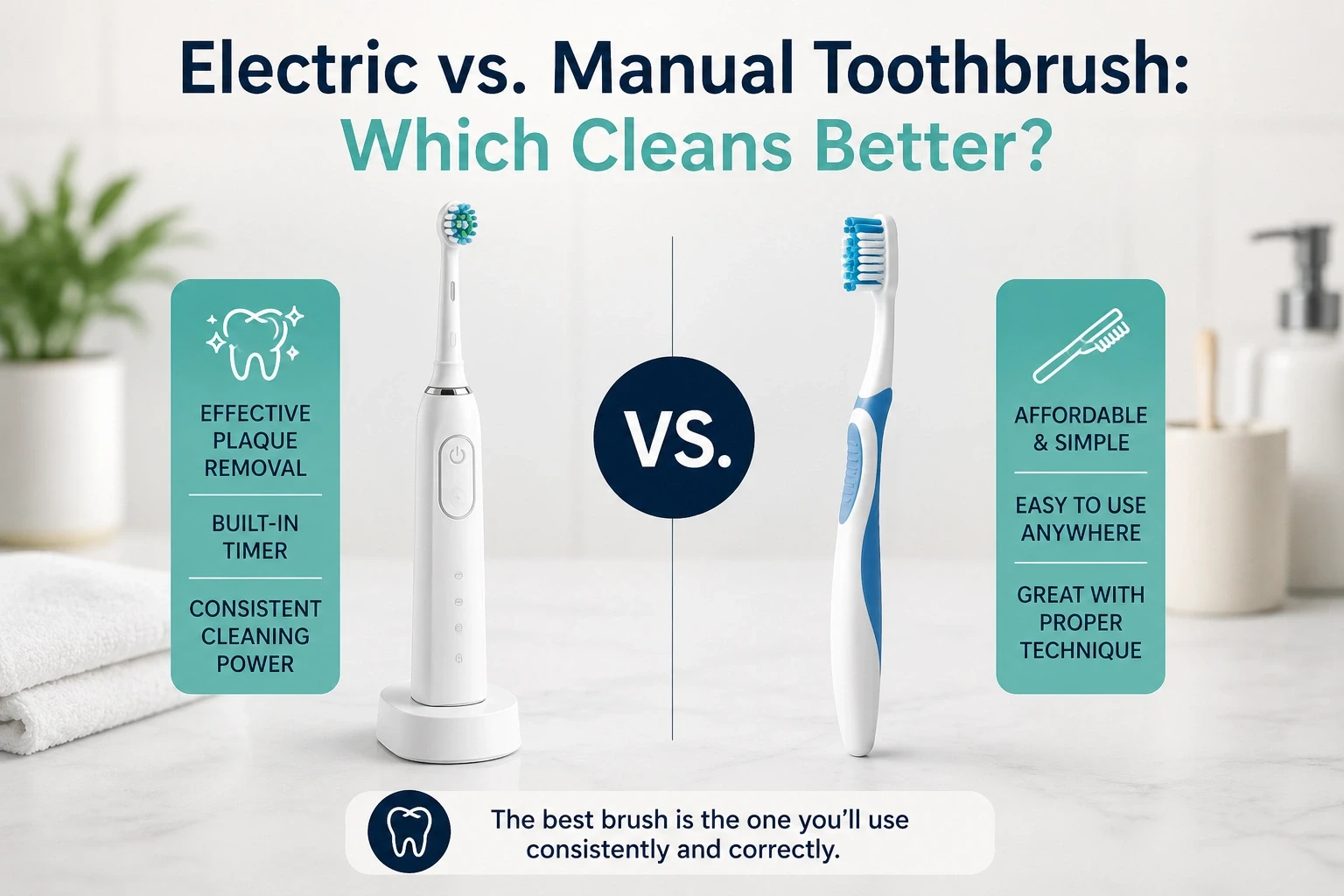
Electric vs. Manual Toothbrush: Which Cleans Better?
Compare electric and manual toothbrushes on plaque removal, gum safety, cost, and technique. See when a powered brush helps you clean better.
Does an Electric Toothbrush Clean Better Than a Manual One?
Both electric and manual toothbrushes can keep teeth healthy when technique is good. Powered brushes often make consistent motion, timing, and gentle pressure easier — which is why many hygienists recommend them for plaque-prone areas, braces, or limited dexterity. A soft manual brush still works when you angle it correctly and brush long enough. This guide compares cleaning power, gum safety, cost, and who should choose which.
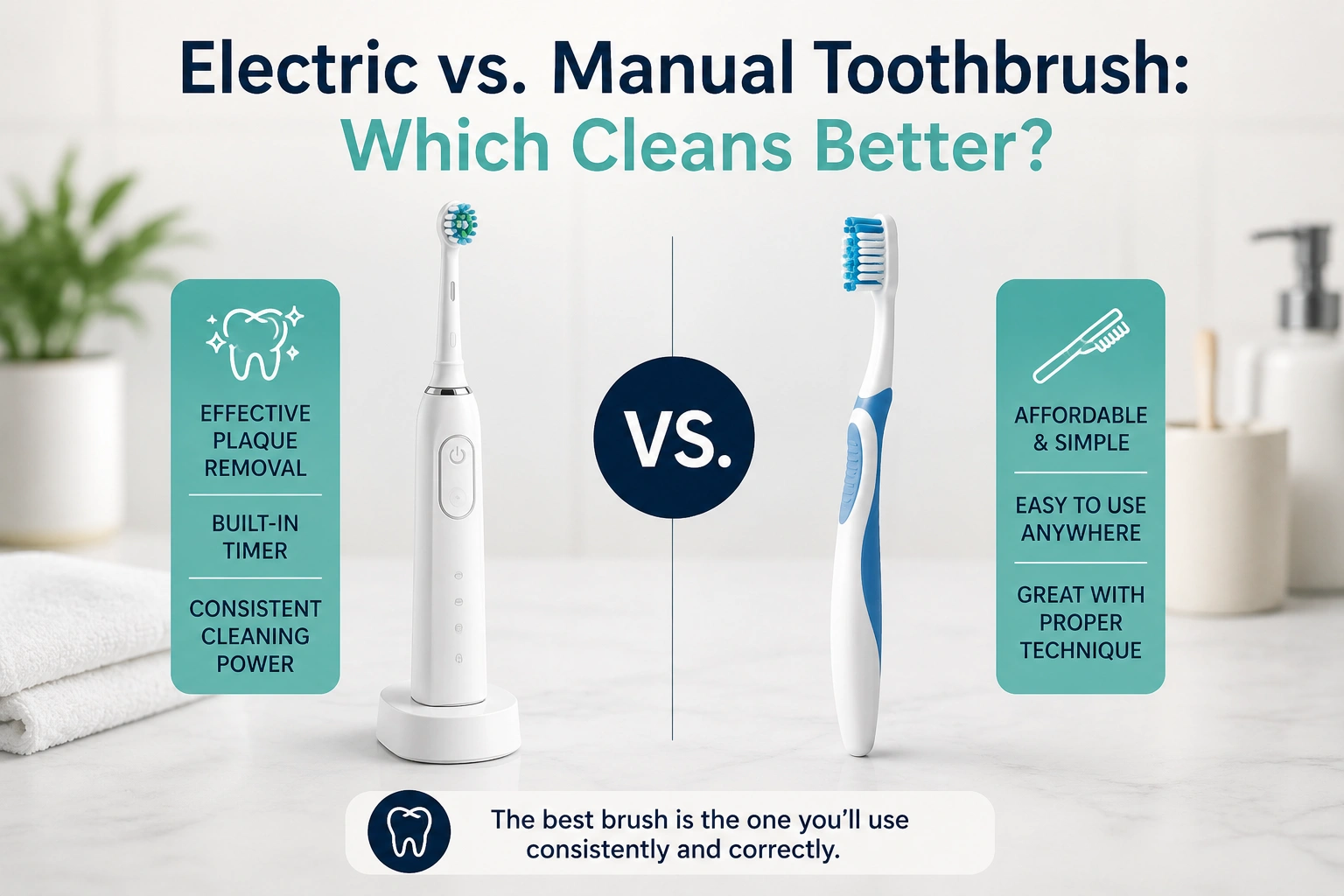
Quick Comparison
| Factor | Electric Toothbrush | Manual Toothbrush |
|---|---|---|
| Plaque removal | Often higher with less effort | Excellent with careful technique |
| Typical cost | $30–$250+ plus replacement heads | $3–$10 per brush |
| Timers / sensors | Common on mid- and high-end models | You track time yourself |
| Best for | Braces, arthritis, heavy plaque formers | Travel, simplicity, tight budgets |
| Noise / charging | Needs power; some models are loud | Silent and always ready |
| Replacement | Heads every ~3 months | Whole brush every ~3 months |
Cost and Long-Term Value
A quality manual brush costs little, but replacement still matters every three months. Electric handles cost more up front; the recurring cost is replacement heads. If a powered brush helps you clean more thoroughly and reduces gingivitis visits, the extra spend can be worthwhile. Kids’ models and travel brushes change the math — buy for the mouth and habit you actually have.
Technique, Timeline, and Daily Use
Dentists generally want twice-daily brushing for about two minutes with fluoride toothpaste. Electric brushes often include quadrant timers. Manual brushing works when you systematically clean outer, inner, and chewing surfaces without scrubbing sideways at the gumline. Neither brush replaces floss or interdental cleaners between teeth.
Gum Safety and Risks
Hard bristles and heavy pressure cause recession with either tool. Soft bristles and a light grip protect enamel and gums. Pressure sensors on some electric models help break a scrubbing habit. Frayed bristles mean it is time to replace the head or brush — worn filaments clean less predictably.
The Case for Electric Toothbrushes
Pros
- More plaque removal with less effort — Helpful if technique is inconsistent.
- Timers and pressure alerts — Build better habits automatically.
- Smaller heads — Can reach crowded areas and around braces or attachments.
- Helpful for limited dexterity — Arthritis, tremor, or caregivers benefit.
Cons
- Higher cost — Handle plus ongoing head replacements.
- Charging and travel friction — Easy to leave behind.
- Not magic — Missed spots stay missed if you rush.
The Case for Manual Toothbrushes
Pros
- Inexpensive and simple — Easy to keep extras at work or in a bag.
- Quiet and always ready — No battery anxiety.
- Fully effective with good technique — Soft bristles + two minutes still works.
Cons
- Technique dependent — Easy to scrub too hard or finish too fast.
- No built-in timer — Many people under-brush without noticing.
- Larger heads on some brands — May miss tight spaces.
Who Should Choose Which?
- Choose electric if you have braces, gingivitis, limited dexterity, or keep seeing the same plaque patterns at cleanings.
- Choose manual if your gums and checkups look good, you prefer simplicity, or you need a low-cost backup everywhere you go.
- Either way pick soft bristles, replace worn brushes, and pair brushing with daily interdental cleaning.
What the Research and Checkups Usually Show
Clinical reviews often find powered brushes remove a bit more plaque and reduce gingivitis versus manual brushes when people use them as directed — especially oscillating-rotating designs. That edge is modest if your manual technique is already excellent. The practical win is behavioral: timers, smaller heads, and pressure sensors help average brushers become consistent brushers. If your hygienist maps the same plaque islands every visit, ask whether brush type, floss type, or both need to change.
Kids and teens may accept a powered brush more readily, but supervision still matters. Adults with recession should prioritize soft filaments and light pressure over “more power.” Pair any brush with fluoride toothpaste and interdental cleaning; cavities between teeth are not a toothbrush brand problem alone.
Travel, Kids, and Shared Households
Keep a soft manual brush in every travel bag even if you love your electric handle at home. For kids, look for appropriately sized heads and make brushing a timed game rather than a wrestling match. In shared bathrooms, label brush heads and replace them on a calendar reminder — forgotten heads fray long before people notice.
How to Decide
The best toothbrush is the one that helps you clean gently for two full minutes, twice a day. If your hygienist keeps finding plaque in the same zones, upgrade technique first — then consider whether a powered brush would make the right motion easier.
For neutral background before your visit, review MouthHealthy brushing guidance and CDC oral health prevention guidance.
Need a shorter answer first? See our FAQ: Electric vs manual toothbrush: which is better?.
Related comparisons: How to brush and floss properly | When to replace your toothbrush | Power-assisted brush picks.
When you are ready for a case-specific recommendation, find a dentist near you through Dental Country and ask which option fits your diagnosis, timeline, and budget.
Frequently Asked Questions
Do dentists recommend electric toothbrushes?
Many do, especially for patients who struggle with timing, pressure, braces, or dexterity. A soft manual brush used well can still earn excellent checkups.
Are sonic and oscillating brushes different?
Both can work. Oscillating-rotating and sonic designs use different motions; comfort, head size, and consistent use matter more than marketing labels.
Can an electric brush damage enamel?
Aggressive pressure and hard bristles can contribute to wear and recession with any brush. Use soft bristles and light pressure; enable pressure sensors when available.
How often should you replace brush heads?
About every three months, or sooner if bristles splay. Frayed filaments clean less effectively and can encourage harder scrubbing.
Related articles
Keep exploring related topics from Dental Country.
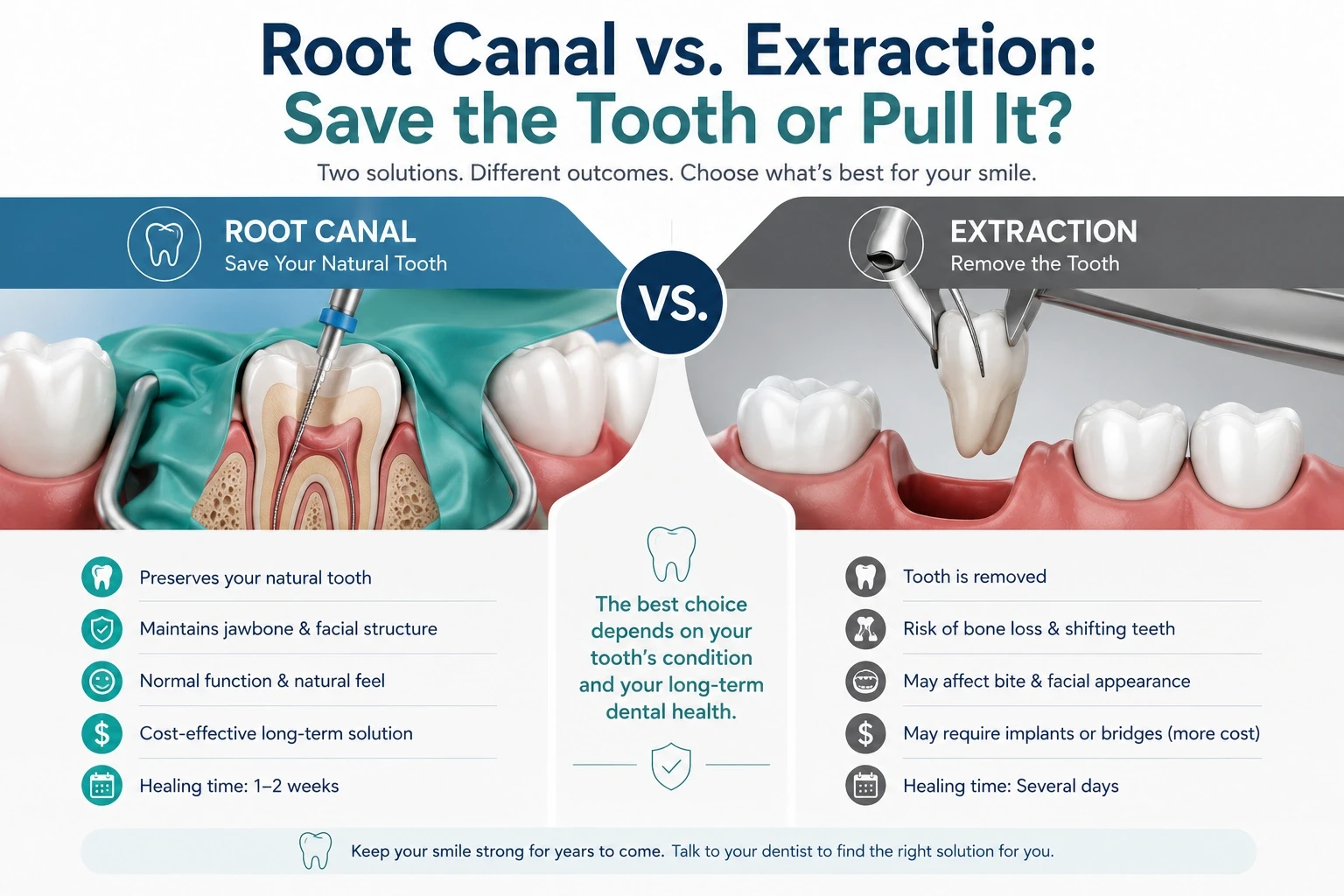
Root Canal vs. Extraction: Save the Tooth or Pull It?
Should you save a damaged tooth with a root canal or have it pulled? Weigh cost, recovery, prognosis, and replacement needs before you decide.
Read article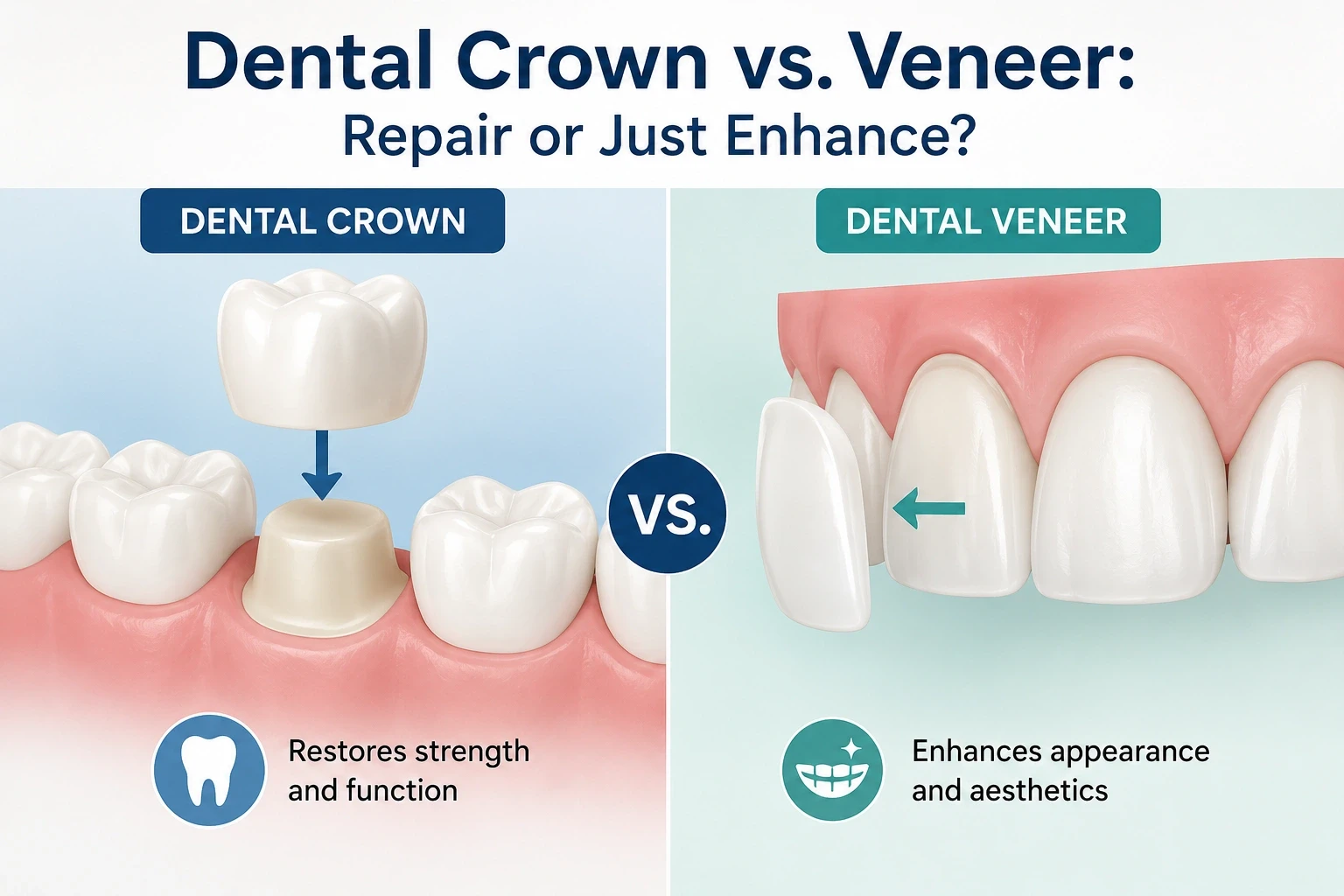
Dental Crown vs. Veneer: Repair or Just Enhance?
Crowns restore damaged teeth; veneers enhance healthy ones. Compare cost, tooth preparation, durability, and which cosmetic or restorative path fits.
Read article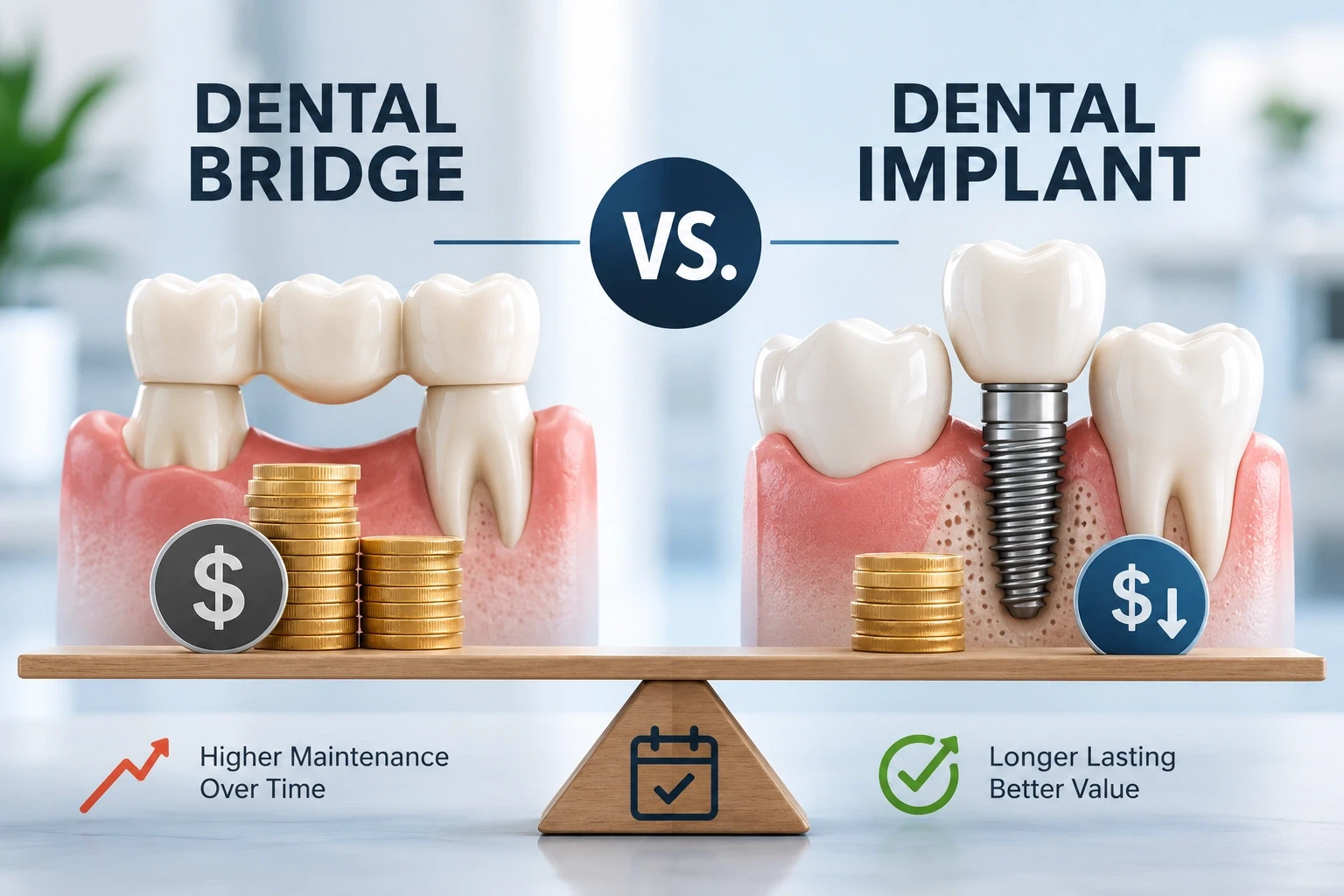
Dental Bridge vs. Implant: The Long-Term Cost Difference
A dental bridge costs less upfront, but an implant can last decades and spare neighboring teeth. Compare price, longevity, surgery, and candidacy.
Read article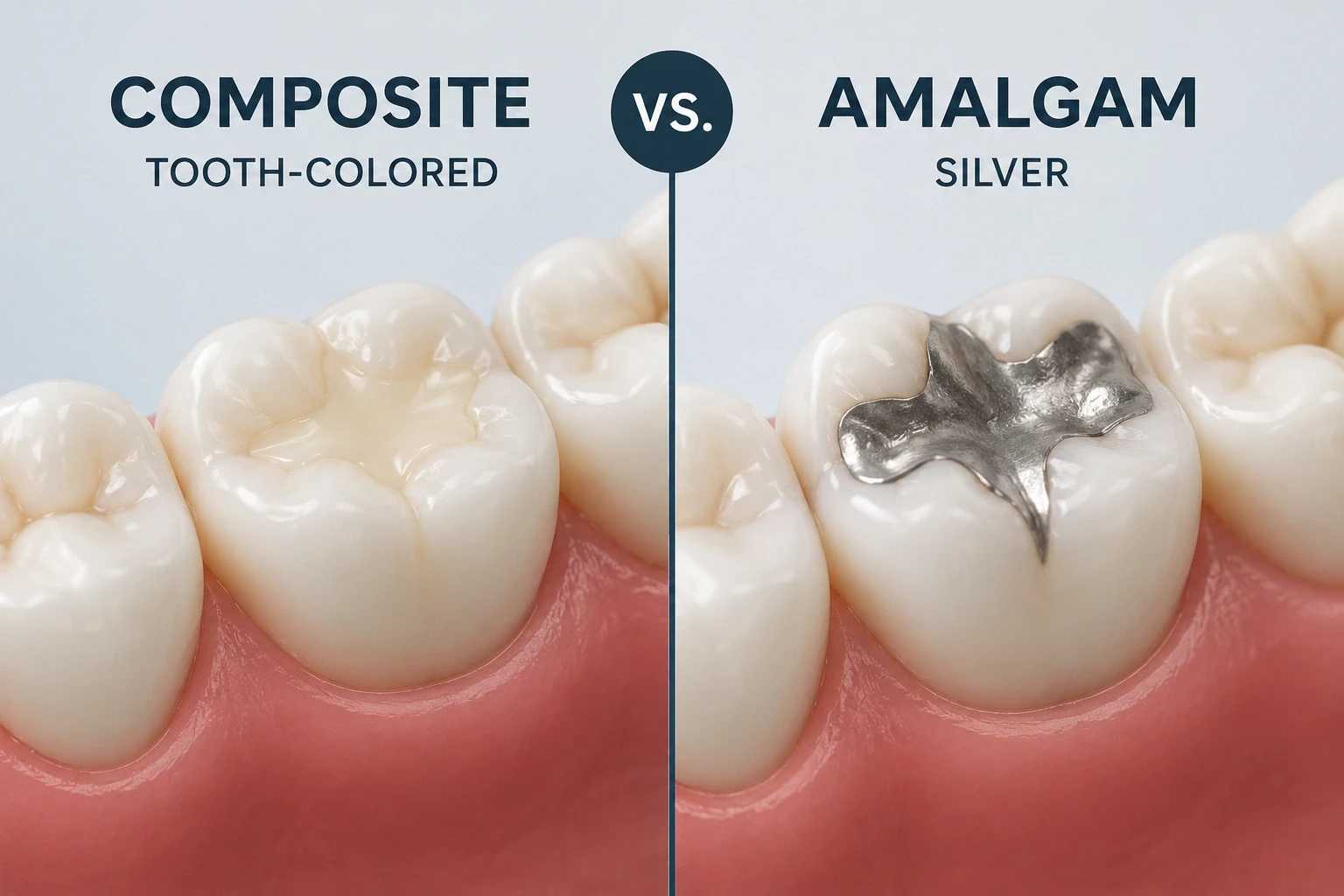
Composite vs. Amalgam Fillings: Tooth-Colored or Silver?
Tooth-colored composite or durable silver amalgam? Compare cost, lifespan, appearance, bonding, and safety so you can choose the right filling material.
Read article