
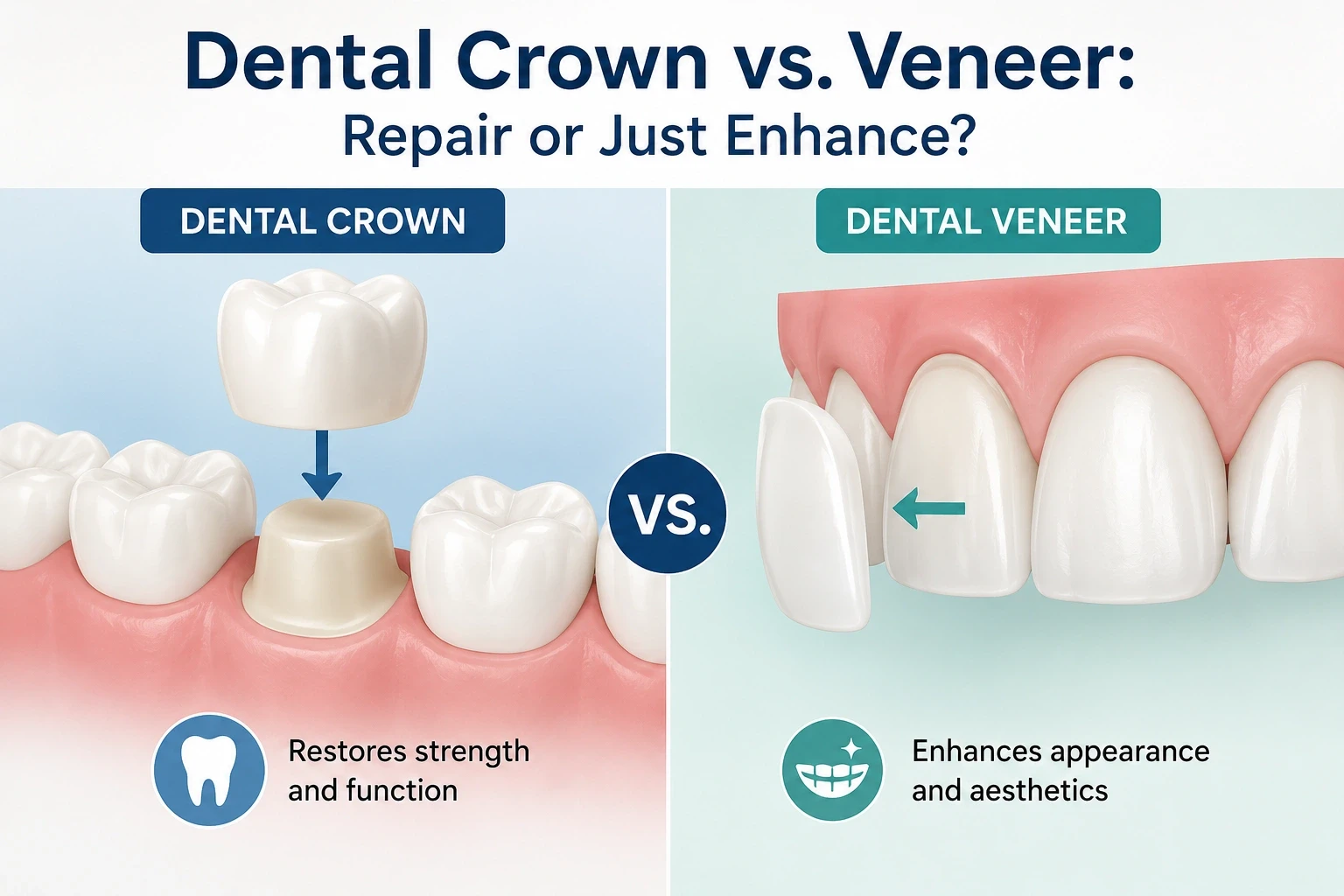
Dental Crown vs. Veneer: Repair or Just Enhance?
Compare dental crowns and veneers on strength, tooth prep, cost, and cosmetics. Learn when you need full coverage versus a front-surface veneer.

Reviewed by Dr. Sean Myran, DMDDoctor of Dental Medicine, University of Pennsylvania
Dental Crown or Veneer: Repair or Enhance?
A crown covers the entire visible tooth when structure is cracked, root-canaled, or heavily filled. A veneer is a thin cover bonded mainly to the front of a mostly healthy tooth for shape and color changes. Crowns protect; veneers cosmetically refine. Choosing the lighter option on a weak tooth risks failure — choosing a full crown on a healthy tooth removes more enamel than necessary.
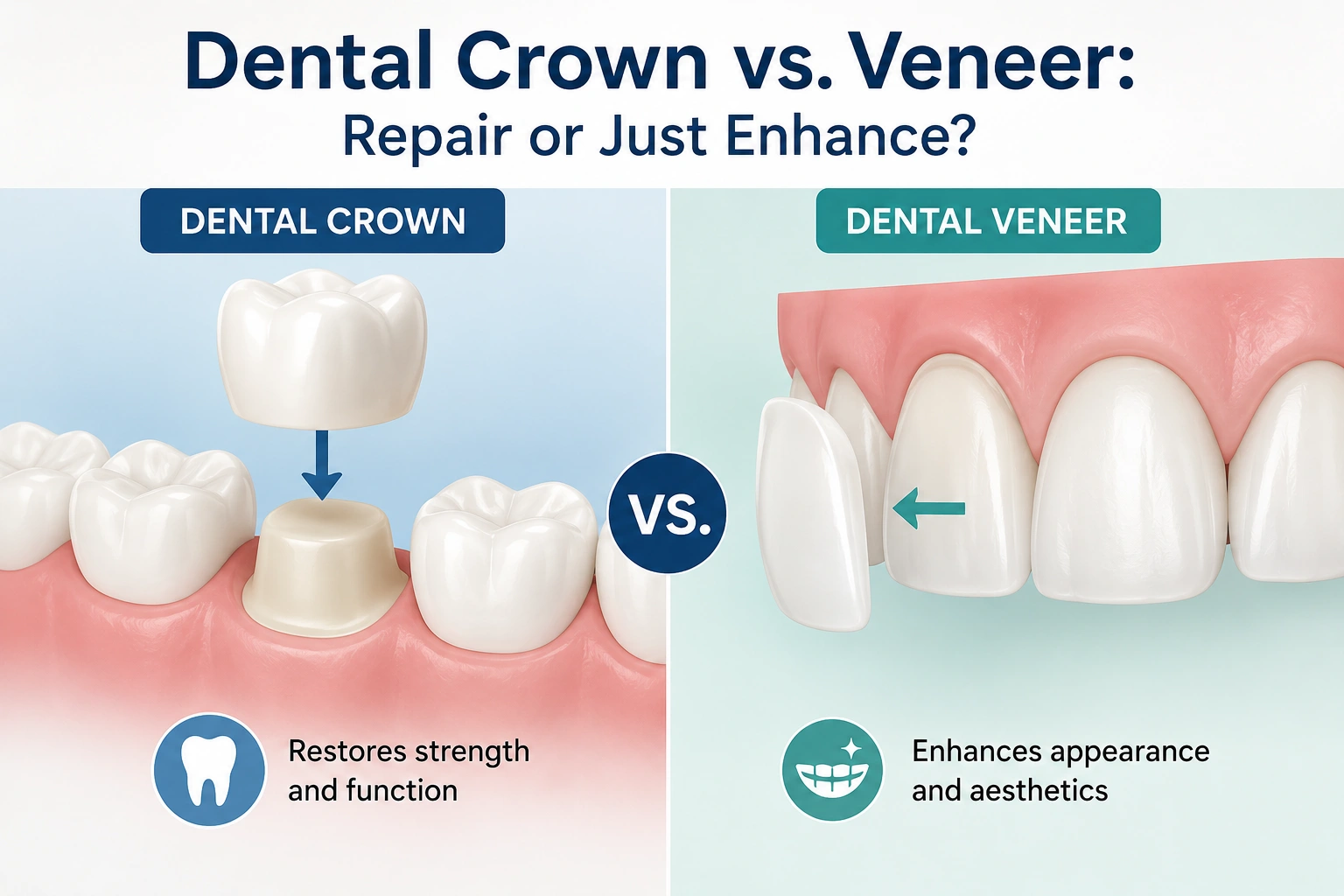
Quick Comparison
| Factor | Dental Crown | Veneer |
|---|---|---|
| Coverage | Full tooth (above gumline) | Usually front surface only |
| Main job | Strengthen and restore damaged teeth | Improve smile aesthetics |
| Tooth preparation | More reduction around the tooth | Less reduction when enamel is sound |
| Typical cost (per tooth) | $800–$2,500+ | $800–$2,500+ (material dependent) |
| Best for | Cracks, large fillings, after root canals | Color/shape tweaks on healthy teeth |
| Whitening later | Porcelain shade is fixed | Porcelain shade is fixed |
Cost and Planning
Fees overlap because lab work and material (zirconia, lithium disilicate, porcelain-fused-to-metal) drive cost more than the word “crown” vs “veneer.” Smile makeovers with many veneers add up quickly. Insurance may cover crowns when teeth are broken down, while veneers are often elective. Whitening natural neighboring teeth before shade selection prevents mismatched porcelain.
Procedure and Longevity
Both usually need preparation, temporaries, and a bonded or cemented final restoration. Crowns last many years when margins stay clean; veneers shine when bite forces and habits (nails, ice, grinding) are controlled. Night guards protect either investment if you clench.
Risks
Over-reduced teeth can become sensitive. Poorly fitting margins invite decay. Veneers on teeth that needed crowns may crack or debond. Neither restoration makes a tooth maintenance-free — floss daily at the edges.
The Case for a Crown
Pros
- Structural reinforcement — Holds together compromised teeth.
- Works after root canals — Common protective step for molars.
- Covers all visible surfaces — Hides large old fillings circumferentially.
Cons
- More tooth reduction — Irreversible preparation.
- Overkill for minor cosmetic goals — Healthy teeth may not need full coverage.
The Case for a Veneer
Pros
- Conservative cosmetics — Changes color and shape with less bulk than a crown when appropriate.
- Natural translucency options — Modern ceramics mimic enamel well.
- Smile design flexibility — Length and contour can be planned digitally or with mock-ups.
Cons
- Needs adequate enamel and a healthy bite — Not a fix for failing teeth.
- Usually elective cost — Limited insurance help.
- Can still chip — Habits and grinding matter.
Who Should Choose Which?
- Choose a crown if the tooth is cracked, heavily restored, root-canaled, or needs strength more than a facelift.
- Choose a veneer if the tooth is structurally sound and you mainly want color, minor alignment camouflage, or shape refinement.
- Ask about bonding or whitening first when a less invasive option can meet the goal.
Mock-Ups, Materials, and Bite Checks
Cosmetic cases benefit from trial smiles — digital previews, putty mock-ups, or temporary veneers — so you can test length and bite before porcelain is finalized. Material choice (zirconia toughness versus highly translucent glass ceramics) should match whether the tooth is a molar workhorse or a front-tooth showpiece. Dark underlying tooth stumps may need more opaque ceramics or full crowns rather than ultra-thin veneers.
Always confirm how the new edges meet your bite. Pretty restorations that hit too hard in excursion chip. If you play instruments, chew ice, or grind at night, tell your dentist before preparation day.
One Tooth Versus a Full Smile Design
A single dark tooth after trauma may need a crown or opaque ceramic strategy, while even color across many teeth may start with whitening plus one or two veneers. Full-smile veneer cases require gum symmetry, bite analysis, and a maintenance commitment. Do not let a social-media “snap-on” fantasy skip the structural exam.
If budget is tight, prioritize teeth that are structurally at risk for crowns first, then phase cosmetic veneers later. Mixing materials across a smile can still look natural when shades are planned together. Get a written sequence so emergency coverage and elective cosmetics do not collide mid-treatment.
Bring inspiration photos, but prioritize function notes from your dentist over filters. A smile that looks great in still photos must still chew and speak comfortably every day.
How to Decide
Let structure lead cosmetics. If the tooth needs armor, crown it. If the tooth is healthy and you want a smile upgrade, a veneer — or sometimes whitening/bonding alone — is the more precise tool.
For neutral background before your visit, review MouthHealthy crowns overview and MouthHealthy veneers overview.
Need a shorter answer first? See our FAQ: Veneers vs crowns: which do I need?.
Related comparisons: In-office vs. at-home whitening | Teeth whitening encyclopedia | Porcelain vs composite veneers.
When you are ready for a case-specific recommendation, find a dentist near you through Dental Country and ask which option fits your diagnosis, timeline, and budget.
Frequently Asked Questions
Can a veneer be placed on a tooth that needs a crown?
Usually no. If too little healthy tooth remains, a veneer will not provide enough strength. Your dentist should show why full coverage is safer.
Do crowns and veneers stain?
High-quality ceramics resist stains better than natural enamel, but the cement line and nearby teeth can still discolor. Avoid smoking and polish at cleanings.
How many visits does each take?
Often two visits with temporaries in between, or fewer with same-day milling. Complex smile cases add mock-up and try-in appointments.
Is a crown forever?
No restoration is permanent. Crowns may need replacement after years of wear, decay at margins, or gum changes — hygiene still decides longevity.
Related articles
Keep exploring related topics from Dental Country.
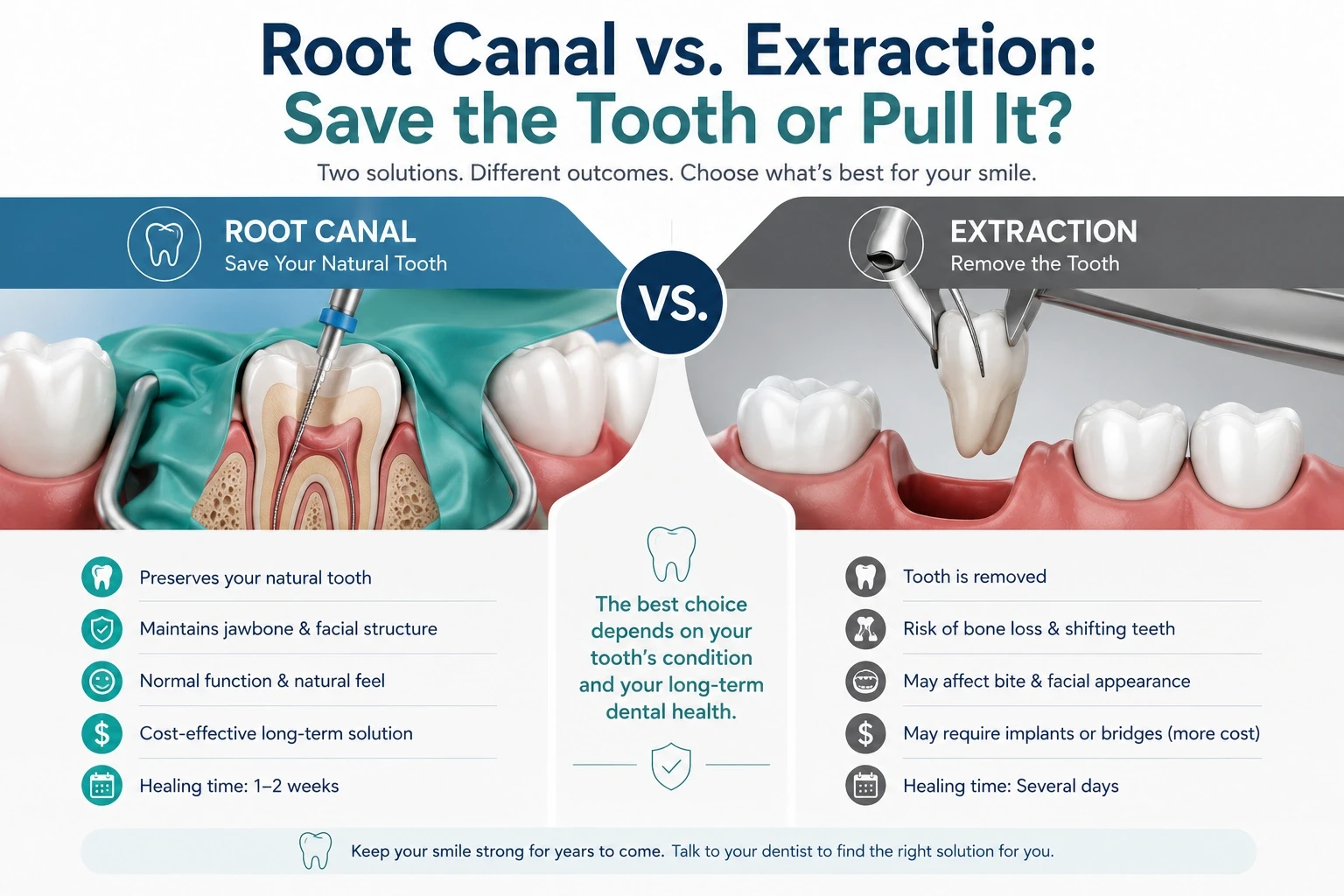
Root Canal vs. Extraction: Save the Tooth or Pull It?
Should you save a damaged tooth with a root canal or have it pulled? Weigh cost, recovery, prognosis, and replacement needs before you decide.
Read article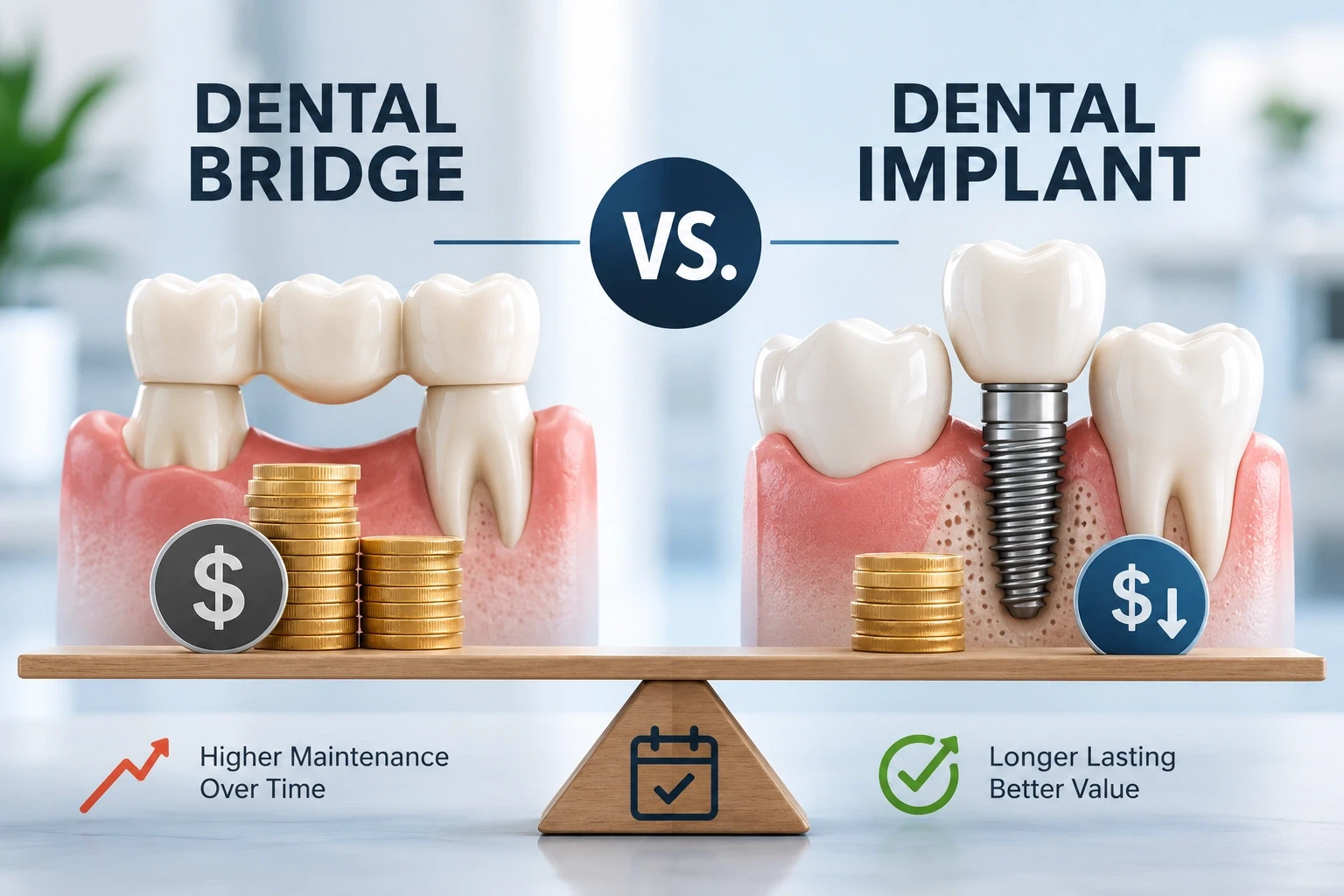
Dental Bridge vs. Implant: The Long-Term Cost Difference
A dental bridge costs less upfront, but an implant can last decades and spare neighboring teeth. Compare price, longevity, surgery, and candidacy.
Read article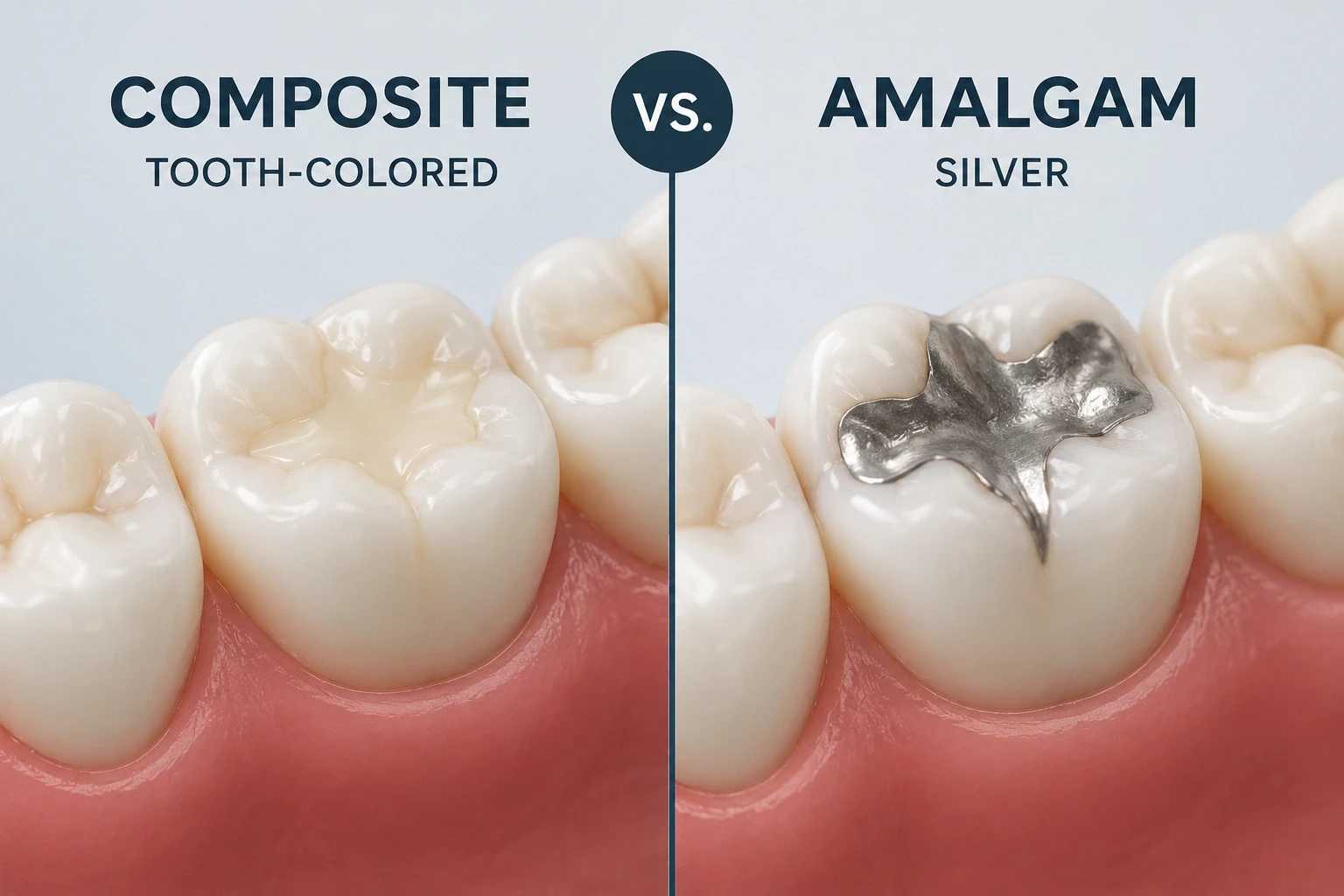
Composite vs. Amalgam Fillings: Tooth-Colored or Silver?
Tooth-colored composite or durable silver amalgam? Compare cost, lifespan, appearance, bonding, and safety so you can choose the right filling material.
Read article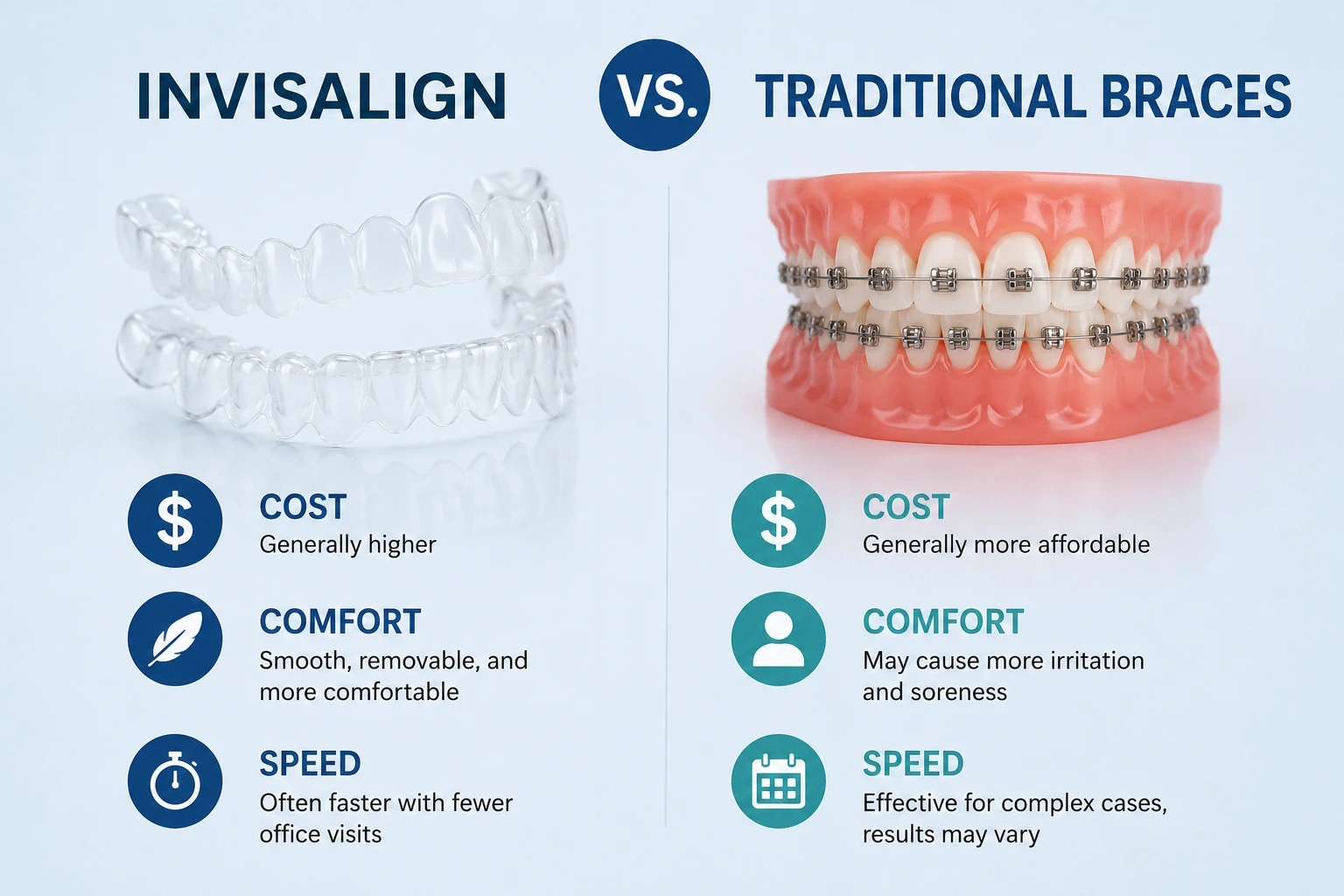
Invisalign vs. Traditional Braces: Cost, Comfort & Speed
Clear aligners or metal braces? Compare Invisalign and traditional braces on cost, treatment time, comfort, compliance, and which cases each option handles best.
Read article