
Porcelain Vs Composite Veneers: What’s The Difference?
Compare porcelain and composite veneers by look, cost, lifespan, repair, stain resistance, and tooth preparation before cosmetic treatment safely.

Reviewed by Dr. Sean Myran, DMDDoctor of Dental Medicine, University of Pennsylvania
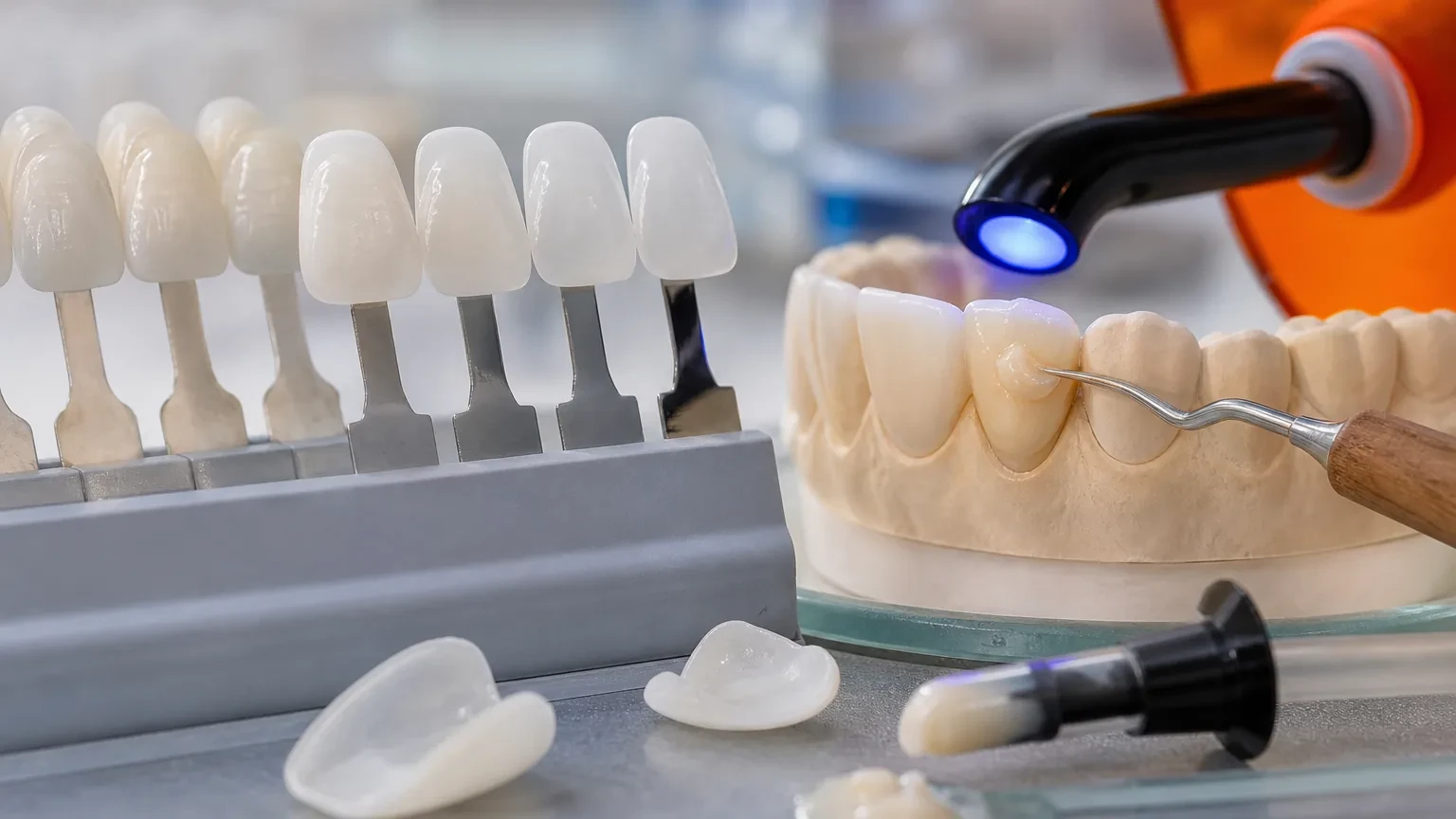
Porcelain veneers are thin ceramic shells made outside the mouth and bonded to the front of teeth. Composite veneers are tooth-colored resin shaped directly on the tooth or made in a simpler lab process. Both can improve color, edge shape, small gaps, and worn corners, but they do not behave the same once you leave the chair. MouthHealthy describes veneers as thin coverings placed over the front of teeth, so the material choice should be tied to your enamel, bite, budget, and expectations for maintenance.
Porcelain And Composite Compared
| Factor | Porcelain Veneers | Composite Veneers |
|---|---|---|
| Appearance | Layered translucency and gloss that can look enamel-like | Good shade change, but surface polish may dull sooner |
| Typical visits | Consult, preparation, temporary phase, bonding visit | Often completed in one visit for direct bonding |
| Stain resistance | High when glazed and intact | More likely to pick up color over time |
| Repair | Small repairs may be difficult; remakes are sometimes needed | Chips can often be patched chairside |
| Cost pattern | Higher per tooth, usually longer planned lifespan | Lower initial fee, usually more maintenance |
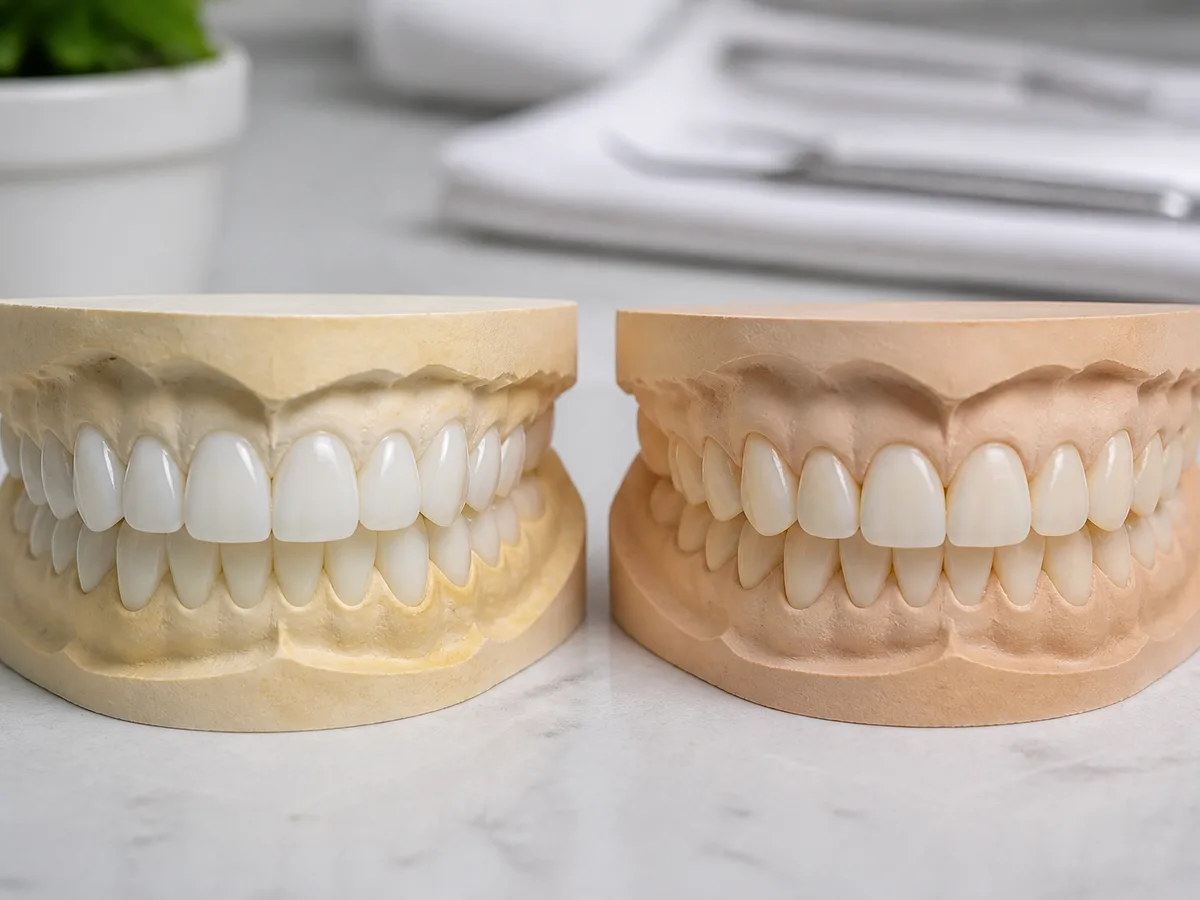 The right material depends on the mouth around it.
Material changes the long-term plan
Porcelain is chosen when color stability, edge detail, and a high-gloss finish matter most. Composite is useful for smaller changes, trial smiles, limited budgets, or repairs that need a same-day answer. The best comparison is not abstract; it starts with how many teeth show when you smile, whether enamel can support bonding, and how much wear the bite creates.
Where The Choice Gets Personal
Porcelain usually needs more planning because the lab has to design shape, thickness, shade, and texture. Many cases include temporary veneers so you can preview length and contour. Composite moves faster, but it depends heavily on the dentist's chairside sculpting and later polishing. If you are deciding partly by lifespan, How Long Do Veneers Last? explains why grinding, enamel, and care matter as much as the material label.
Preparation is another difference. Some teeth need little reshaping. Others need enamel reduction so the new surface does not look bulky. Crowding, dark staining, old bonding, and rotated teeth can all change how conservative the plan can be. If your teeth are not ideally aligned, read Can Veneers Fix Crooked Teeth? before assuming veneers can replace orthodontics.
Cost should be compared over time. A composite veneer that costs less today may need polishing, patching, or replacement earlier. A porcelain veneer costs more at the start but may hold color and shine longer when bonded to healthy enamel and protected from heavy forces. The better value is the option you can maintain without surprise repairs.
Also ask how the material will look beside teeth that are not being treated. One bright porcelain veneer on a single front tooth can be harder to match than several veneers designed together. Composite can blend small repairs nicely, but it may need periodic polish so the repaired tooth does not stand out as the years pass.
 A mockup can reveal thickness and shape before treatment.
Ask to see the plan in your smile
Photos, mockups, and shade tabs make the choice less theoretical. Ask how each material would handle your edge length, tooth color, gumline, and bite. If you need a local opinion, use find a dentist and ask whether the office offers both porcelain and composite examples.
A Practical Way To Decide
Choose porcelain when you want the most durable cosmetic change across several visible teeth and you accept a higher fee and lab process. Choose composite when the goal is smaller, faster, easier to repair, or lower cost. In either case, ask how much enamel changes, what happens if a veneer chips, and how the color will age beside natural teeth. If budget is central, How Much Do Veneers Cost? can help you compare written estimates.
Related articles
Keep exploring related topics from Dental Country.
How Long Do Veneers Last?
Veneer lifespan is not just a number on a brochure. The material, bite, enamel, and daily habits decide how long the result stays useful.
Read article
Do Veneers Ruin Your Teeth?
Veneers do not automatically ruin teeth, but they are not consequence-free. The safety question is preparation, bonding, hygiene, and case selection.
Read article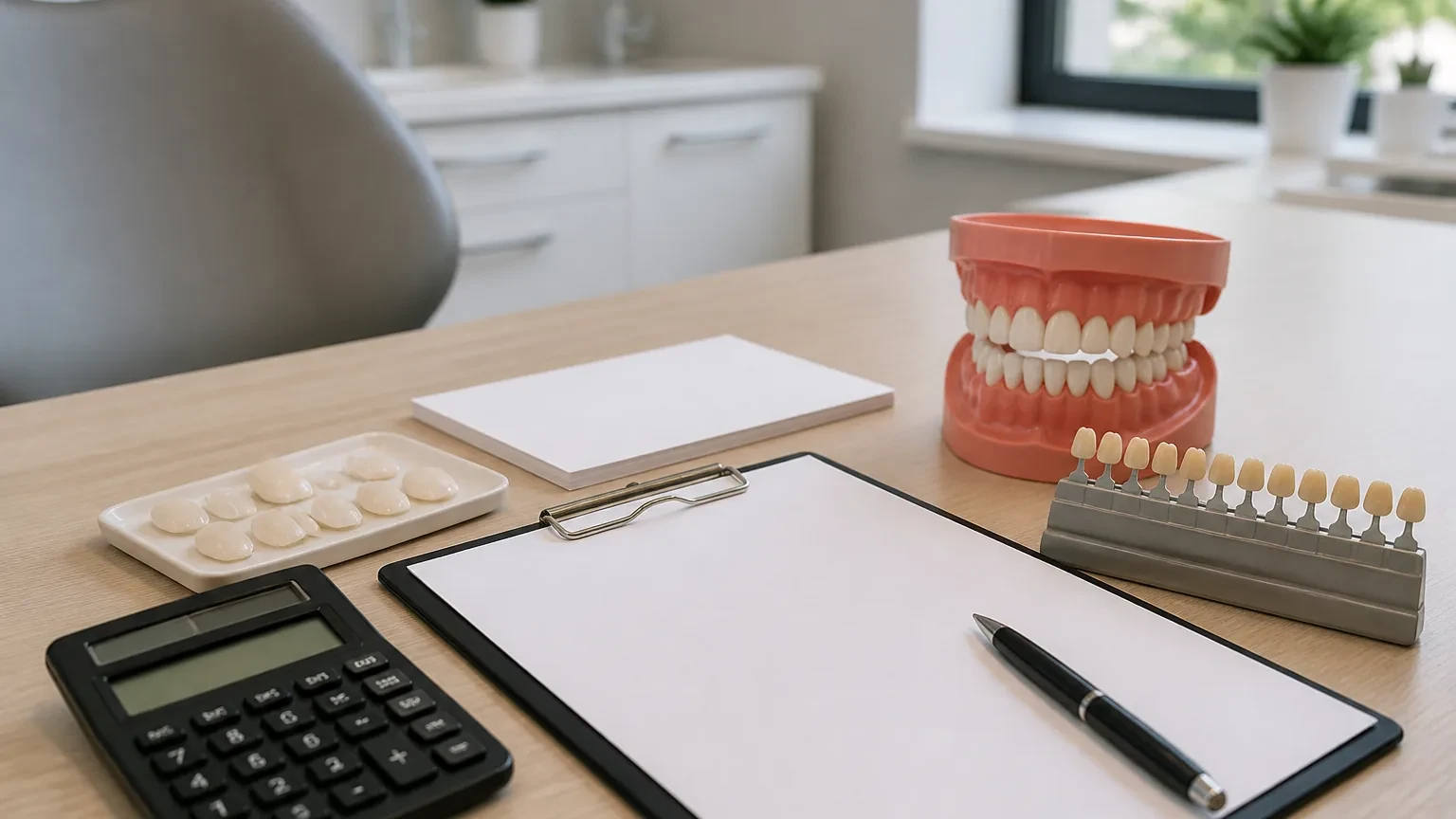
How Much Do Veneers Cost?
A veneer quote is more than a per-tooth price. Material, design, preparation, temporaries, and future maintenance all shape the real cost.
Read article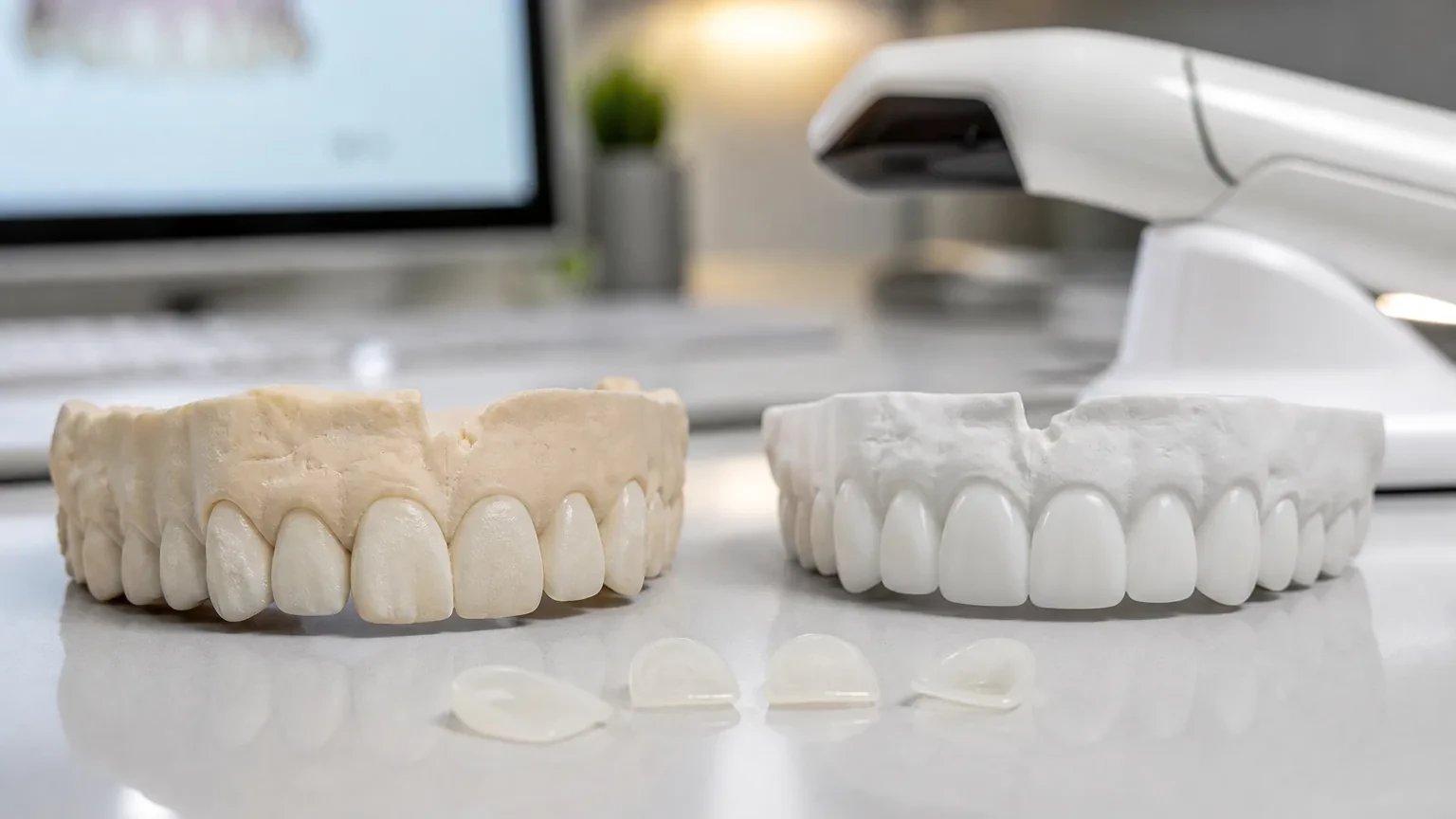
Can Veneers Fix Crooked Teeth?
Veneers can camouflage mild crookedness, but they do not move roots or correct a bite. The limit is where cosmetic reshaping becomes risky.
Read article