
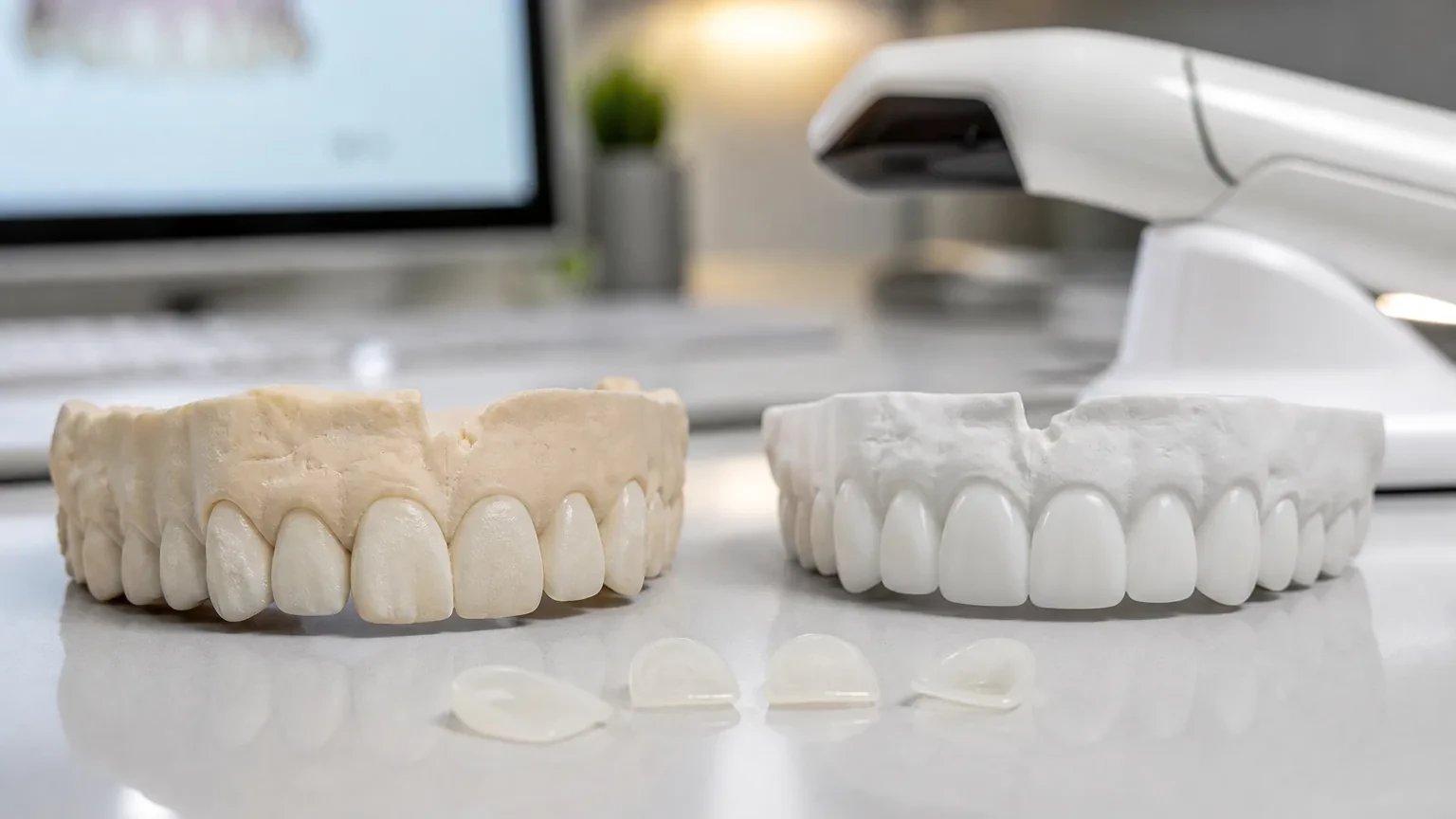
Can Veneers Fix Crooked Teeth?
Veneers can hide mild crookedness, gaps, and uneven edges, but crowding, bite problems, and rotated teeth may need orthodontics first safely.

Reviewed by Dr. Sean Myran, DMDDoctor of Dental Medicine, University of Pennsylvania
Veneers can make mildly crooked teeth look straighter by changing the visible front surface, but they do not move teeth, roots, or jaws. That distinction matters. A rotated front tooth may be improved with careful shaping and porcelain, while severe crowding may require too much enamel removal or create bulky, hard-to-clean margins. MouthHealthy describes veneers as coverings bonded to front tooth surfaces, not orthodontic appliances.
When Veneers May Work
- Small gaps: veneers can widen selected teeth when proportions still look natural.
- Mild rotations: slight turns may be camouflaged with contour and shade.
- Uneven edges: worn or chipped corners can be restored visually.
- Small size differences: narrow lateral incisors or short teeth may be reshaped.
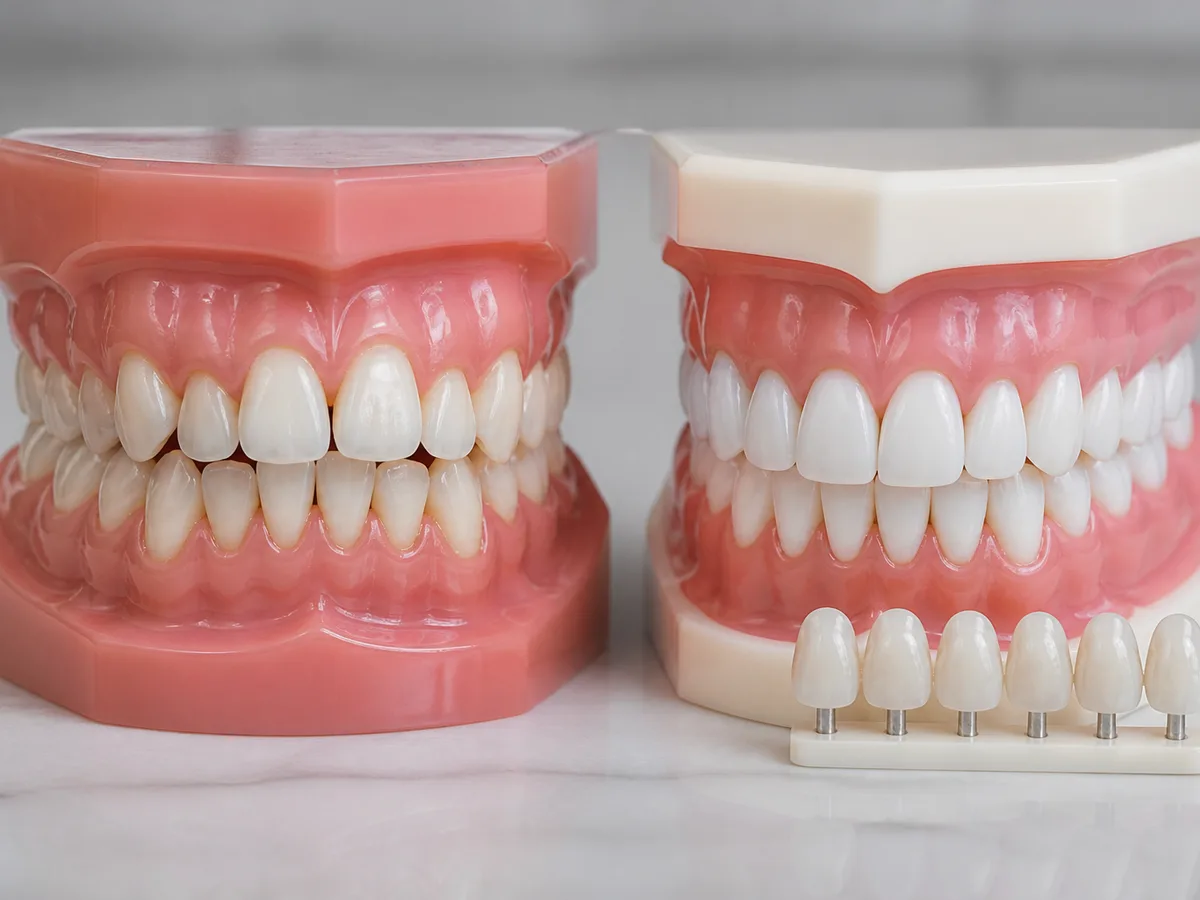 A preview helps separate possible from forced.
Camouflage is not the same as movement
A mockup can show whether the proposed tooth shape looks natural from the front and side. It can also reveal warning signs: a tooth that would need to be made too thick, an edge that would stick out, or a gumline that still looks uneven. Those clues help decide whether orthodontics should come before veneers.
Where Veneers Hit Their Limit
Veneers are less appropriate when teeth overlap heavily, roots are angled poorly, the bite is edge-to-edge, or the lower teeth strike the proposed veneer edges. In those cases, making the smile look straight may require aggressive preparation or leave restorations under constant force. Orthodontics can create space and improve the bite before cosmetic dentistry begins.
The sequence does not have to be all or nothing. Some patients use aligners or braces first, then place fewer veneers afterward for color, shape, or worn edges. Others choose composite bonding as a smaller trial before porcelain. If you are comparing materials for that plan, Porcelain Vs Composite Veneers: What’s The Difference? explains the tradeoffs.
Ask the dentist to show what would be removed from each tooth. A conservative plan may stay mostly in enamel. A risky plan may need deep reduction on the tooth that sticks out most. That is where the question shifts from "Can veneers make it look straight?" to "Can veneers do this without weakening the tooth?" For tooth-safety concerns, read Do Veneers Ruin Your Teeth?.
Gumline symmetry is part of the decision too. Veneers can change the visible tooth surface, but they do not move the gum attachment or root position. If one tooth is much higher, lower, or tilted at the gumline, a veneer may improve the edge while the uneven foundation still shows. Orthodontics or gum contouring may be discussed before the final cosmetic plan.
Speech can reveal overbuilding as well. Teeth made too long or too thick to hide crookedness may change how the lips and tongue meet. A trial smile gives you a chance to test speaking, smiling, and side views before final porcelain is made.
 Straight-looking teeth still need stable contact.
The bite sets the boundary
A smile can look straighter in a photo while the bite still overloads the new edges. Ask whether your lower teeth will hit the veneers during chewing or grinding. If you need an opinion on cosmetic alignment options, use find a dentist and ask for a consultation that includes bite photos or scans.
The Best Candidate For Veneer Camouflage
The best candidate has mild visible unevenness, healthy gums, enough enamel, reasonable tooth position, and a bite that will not pry against the restorations. Veneers can be a beautiful finishing step when the problem is mostly shape and color. When the problem is tooth position, orthodontics may be the more conservative first move. If you are unsure where you fit, Who Is A Good Candidate For Veneers? gives a broader checklist.
Related articles
Keep exploring related topics from Dental Country.
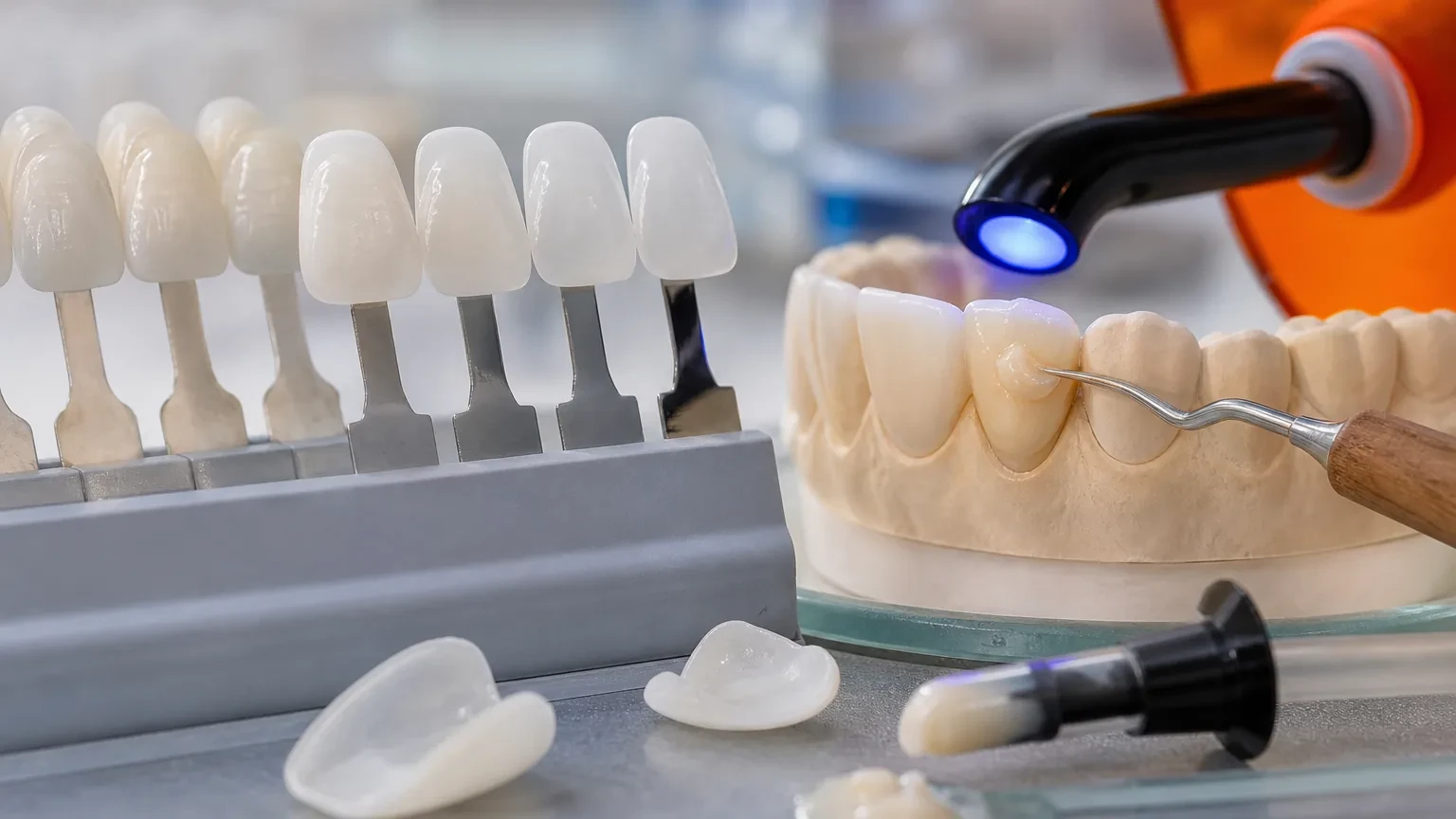
Porcelain Vs Composite Veneers: What’s The Difference?
Porcelain and composite veneers can change tooth shape and color, but they age, stain, repair, and cost differently.
Read article
How Long Do Veneers Last?
Veneer lifespan is not just a number on a brochure. The material, bite, enamel, and daily habits decide how long the result stays useful.
Read article
Do Veneers Ruin Your Teeth?
Veneers do not automatically ruin teeth, but they are not consequence-free. The safety question is preparation, bonding, hygiene, and case selection.
Read article
How Much Do Veneers Cost?
A veneer quote is more than a per-tooth price. Material, design, preparation, temporaries, and future maintenance all shape the real cost.
Read article