
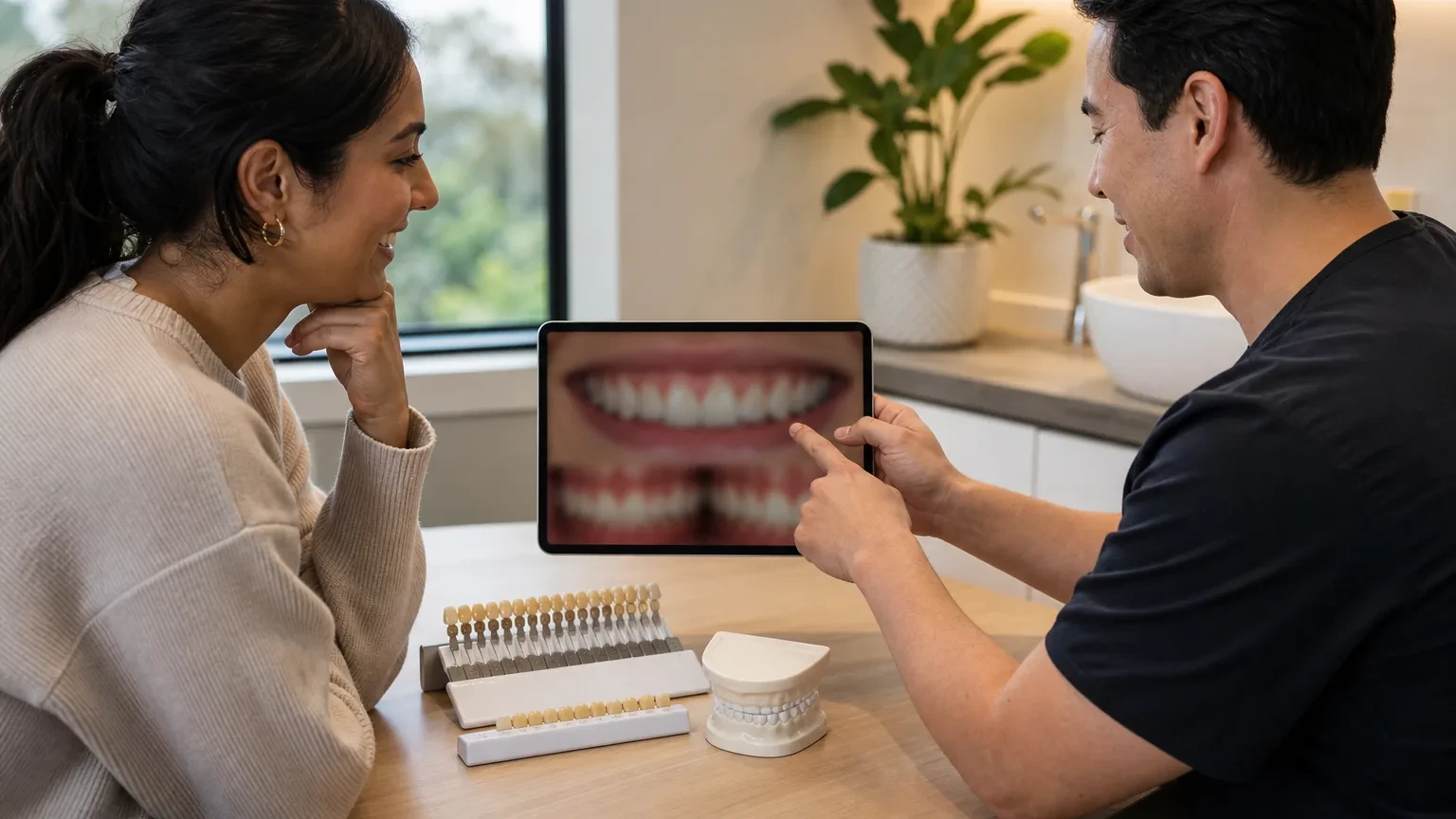
Who Is A Good Candidate For Veneers?
Good veneer candidates have healthy gums, enough enamel, realistic goals, stable bite forces, and cosmetic concerns veneers can safely address.

Reviewed by Dr. Sean Myran, DMDDoctor of Dental Medicine, University of Pennsylvania
A good candidate for veneers has healthy teeth and gums, enough enamel for predictable bonding, cosmetic concerns that veneers can actually solve, and a bite that will not overload thin restorations. Veneers can improve color, shape, worn edges, small gaps, and mild unevenness, but they are not a substitute for treating decay, gum disease, or major bite problems. MouthHealthy describes veneers as a cosmetic option for changing tooth appearance, and cosmetic treatment still needs a dental diagnosis.
Veneer Candidate Checklist
- Healthy gums: no active periodontal disease or uncontrolled bleeding around margins.
- Low decay risk: cavities and leaking fillings are treated before cosmetic bonding.
- Enough enamel: bonding is more predictable when preparation stays conservative.
- Stable bite: grinding, clenching, and edge-to-edge contacts are managed.
- Realistic goals: shade, shape, and symmetry expectations match what veneers can deliver.
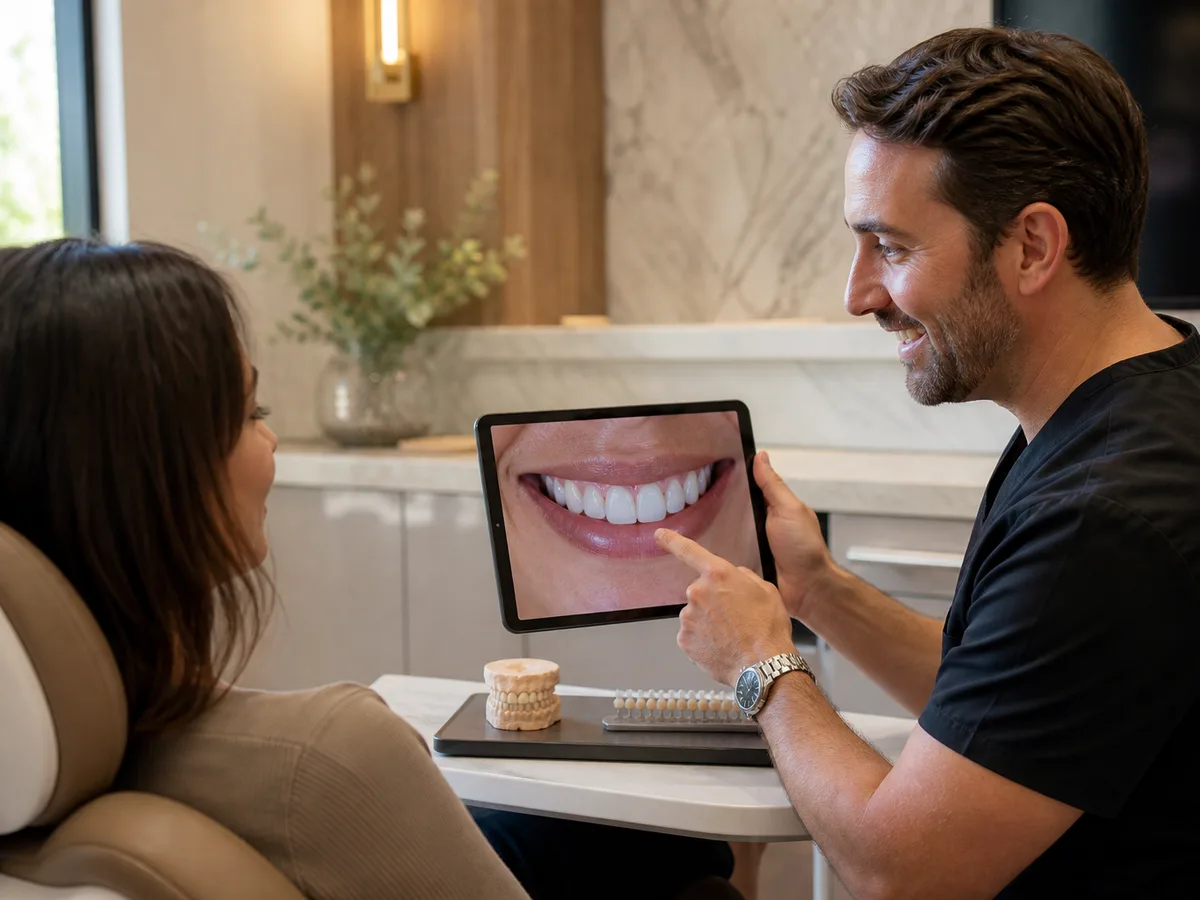 Healthy foundations make cosmetic work last longer.
The exam comes before the smile design
A cosmetic consult should not skip routine dental questions. Gum measurements, cavity checks, X-rays when needed, bite photos, and discussion of habits all protect the final result. If those steps reveal disease or instability, treating them first is not a delay; it is what makes the cosmetic work more predictable.
Signs Veneers May Need To Wait
Veneers may need to wait if gums are inflamed, cavities are active, enamel is severely worn, teeth are very crowded, or grinding is uncontrolled. A history of broken front teeth also deserves attention. The dentist may recommend whitening, orthodontics, bonding, crowns, a nightguard, or periodontal care before veneers. If crowding is the concern, Can Veneers Fix Crooked Teeth? explains the camouflage limits.
Candidates also need to understand permanence. Many veneer cases require enamel reshaping, and veneers usually need replacement at some point. That does not make them a poor choice, but it does mean the decision should fit your long-term budget and maintenance habits. For lifespan planning, How Long Do Veneers Last? is worth reading before treatment starts.
Expectations matter as much as dental findings. Photos of smiles you like can help, but copying another person's teeth may not fit your face, gumline, or bite. A good candidate can discuss brightness, length, texture, and natural variation without expecting a filter-perfect result that ignores function.
Age alone does not decide candidacy. A younger adult with healthy enamel and stable habits may be a better candidate than an older patient with active decay, and the reverse can also be true. Medical conditions, dry mouth, medications, and frequent snacking can raise cavity risk around margins, so the dentist should connect candidacy to current risk rather than appearance alone.
A good candidate is also ready for maintenance. That means replacing a lost nightguard, booking cleanings, calling when a margin feels rough, and accepting that future replacement is part of cosmetic dentistry. The commitment is manageable, but it should be clear before treatment begins.
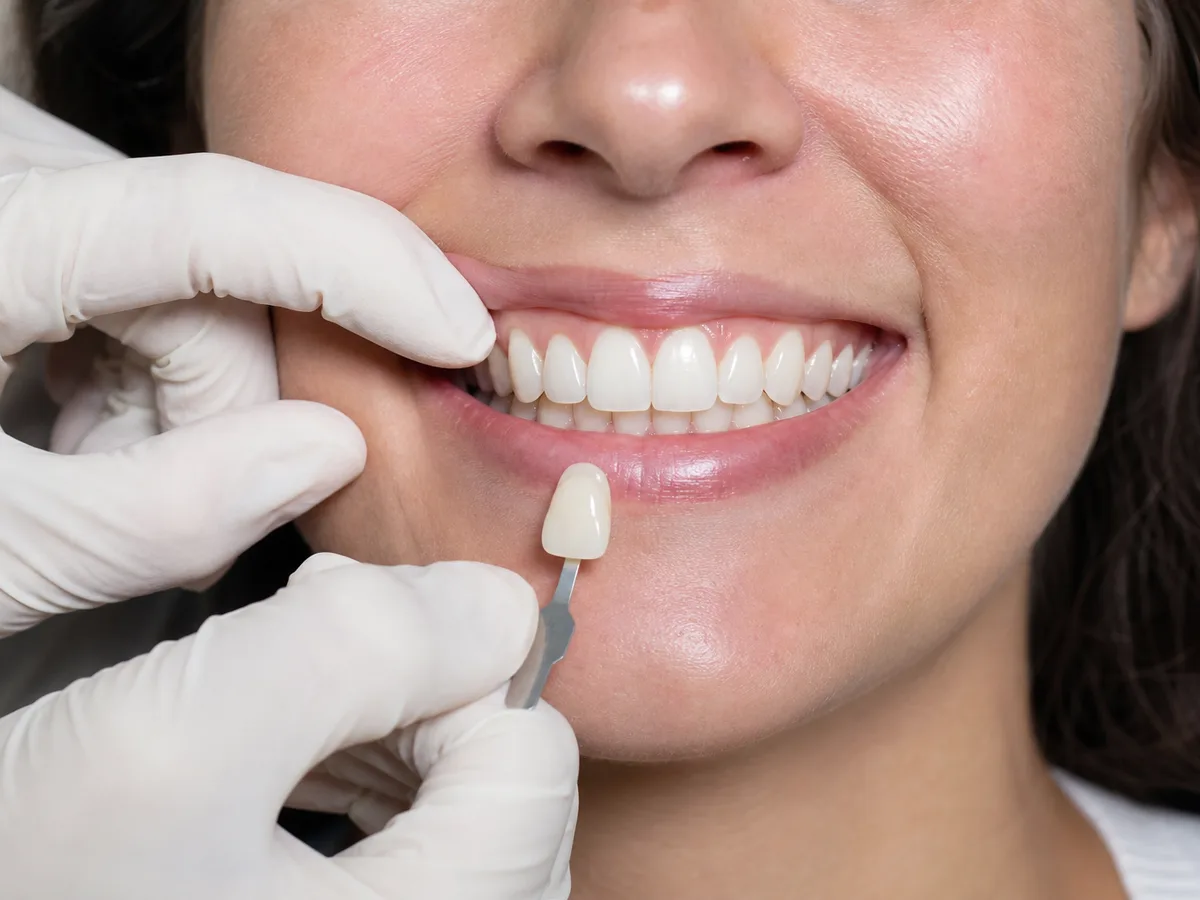 A preview turns preferences into specific feedback.
Preview the result before enamel changes
A mockup, wax-up, or temporary trial smile can reveal whether the proposed shape feels believable when you speak and smile. Ask what can still be changed before final bonding. If you want a candidacy opinion, use find a dentist and request a full cosmetic evaluation, not only a price quote.
A Good Candidate In Plain Terms
You may be a good candidate if your mouth is healthy, the cosmetic problem is mostly color or shape, you have enough tooth structure, and you are willing to maintain the work. You may not be ready yet if disease, crowding, or bite forces would make veneers fragile. If you are deciding between thin coverage and stronger coverage, read Veneers Vs Crowns: Which Do I Need?.
Related articles
Keep exploring related topics from Dental Country.
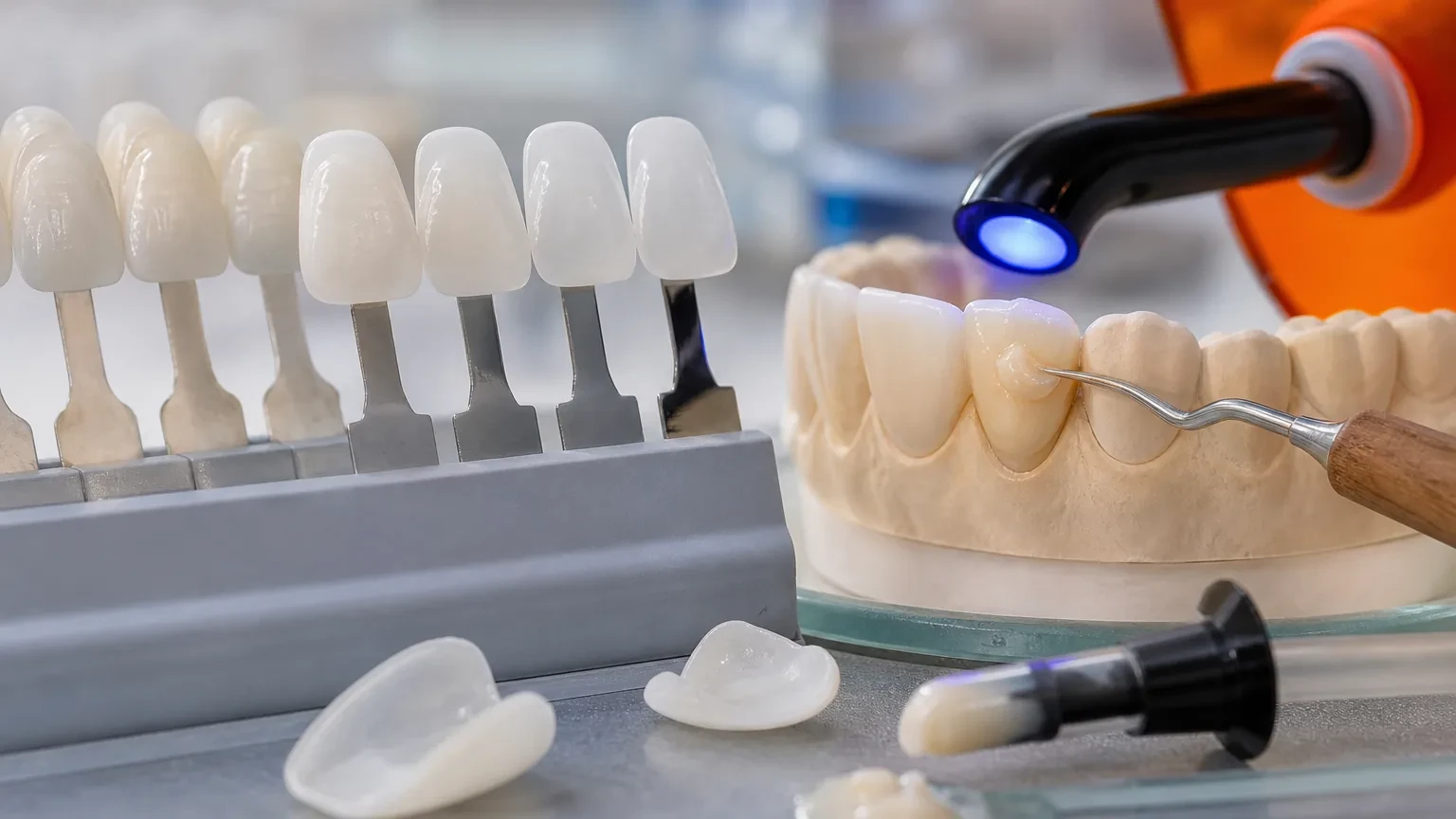
Porcelain Vs Composite Veneers: What’s The Difference?
Porcelain and composite veneers can change tooth shape and color, but they age, stain, repair, and cost differently.
Read article
How Long Do Veneers Last?
Veneer lifespan is not just a number on a brochure. The material, bite, enamel, and daily habits decide how long the result stays useful.
Read article
Do Veneers Ruin Your Teeth?
Veneers do not automatically ruin teeth, but they are not consequence-free. The safety question is preparation, bonding, hygiene, and case selection.
Read article
How Much Do Veneers Cost?
A veneer quote is more than a per-tooth price. Material, design, preparation, temporaries, and future maintenance all shape the real cost.
Read article