
How Much Do Veneers Cost?
Veneer cost varies by material, number of teeth, lab work, mockups, gum health, repairs, and replacement plans. Learn what estimates include.

Reviewed by Dr. Sean Myran, DMDDoctor of Dental Medicine, University of Pennsylvania
Veneer cost varies widely because one composite repair on a chipped tooth is not the same project as eight porcelain veneers designed with a lab. The fee may reflect material, dentist experience, lab artistry, digital scans, wax-ups, temporaries, gum treatment, whitening, bite guards, and follow-up polishing or repairs. MouthHealthy describes veneers as custom coverings for tooth appearance, and custom work is exactly why estimates need detail.
What Usually Drives The Fee
- Material: porcelain usually costs more per tooth than direct composite.
- Number of teeth: changing one tooth is different from designing a smile line.
- Planning: photos, scans, wax-ups, and mockups may be included or billed separately.
- Preparation: old bonding, gum contouring, decay, or bite issues can add treatment.
- Protection: nightguards, retainers, or sports guards may be recommended after bonding.
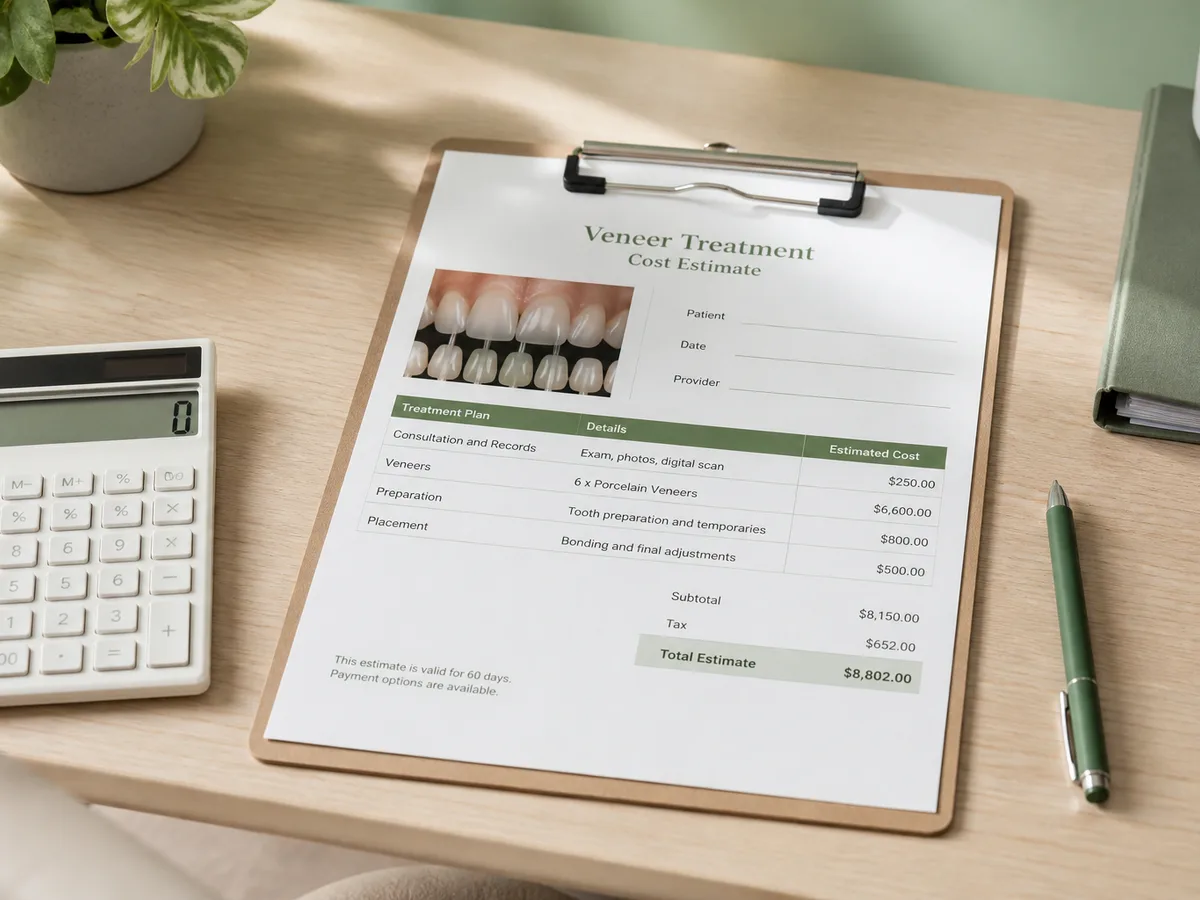 Written inclusions make estimates easier to compare.
Compare complete smile plans
A low per-tooth number is not always a lower total. Ask whether the quote includes the consultation, X-rays, diagnostic wax-up, temporary veneers, final bonding, bite adjustments, follow-up visits, and nightguard. If whitening is planned before shade selection, make sure that fee and timeline are listed too.
Questions To Ask About The Estimate
- Is the fee for porcelain, composite, or a mix of both?
- How many teeth are included, and why that number?
- Are temporaries, mockups, and final photos included?
- What happens financially if a veneer chips or needs remake?
- Will whitening, gum treatment, orthodontics, or a guard be needed first?
Insurance often does not cover veneers when the purpose is cosmetic, though policies vary and some adjacent treatment may have different rules. Do not rely on a casual insurance answer. Ask the office to separate cosmetic fees from any health-related treatment, and read your plan language before assuming reimbursement.
Cost also depends on whether veneers are the right tool. If teeth are crowded, worn down, or heavily filled, the dentist may recommend orthodontics, crowns, or staged care instead. Can Veneers Fix Crooked Teeth? and Veneers Vs Crowns: Which Do I Need? can help you understand why the cheapest cosmetic shortcut may not be the safest long-term plan.
Think about replacement before you start. Porcelain may cost more at first, but composite may need earlier repair or replacement. A fair estimate includes the expected maintenance rhythm, not only the appointment that creates the new smile. For lifespan context, see How Long Do Veneers Last?.
The number of veneers is another cost lever. Some smiles need only two or four teeth treated because the surrounding teeth already match. Others need six, eight, or ten to keep shade and shape from stopping abruptly in the smile line. Ask the dentist to explain the recommended count with photos, not just a package price.
Deposits and remake policies also deserve attention. Cosmetic dentistry is customized, so offices may have strict refund rules once lab work begins. Ask when payments are due, what happens if you dislike the temporary mockup, and how shade or shape changes are handled before the final veneers are bonded.
 The clearest estimate explains both design and maintenance.
Financing changes timing, not total cost
Monthly payments can make treatment easier to start, but the full fee, interest, refund policy, and remake policy still matter. Ask for a written sequence before paying a deposit. To compare local cosmetic consultations, use find a dentist and bring the same questions to each office.
A Sensible Cost Frame
Compare veneer cost as a full plan: diagnosis, smile design, material, temporary phase, bonding, protection, and future repairs. The best price is not automatically the lowest; it is the one tied to a healthy mouth, a design you approve, and maintenance you understand before enamel is changed.
Related articles
Keep exploring related topics from Dental Country.
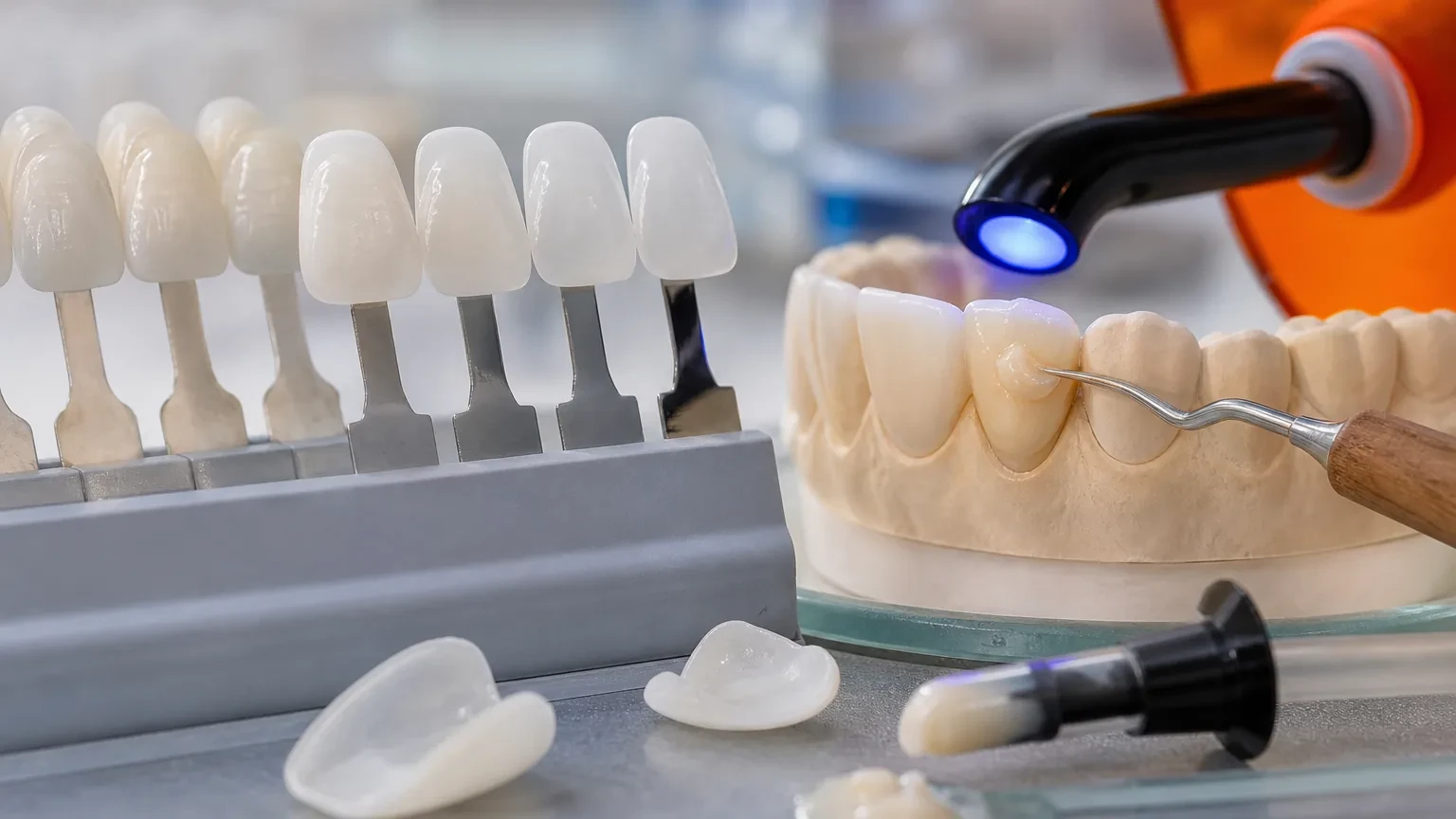
Porcelain Vs Composite Veneers: What’s The Difference?
Porcelain and composite veneers can change tooth shape and color, but they age, stain, repair, and cost differently.
Read article
How Long Do Veneers Last?
Veneer lifespan is not just a number on a brochure. The material, bite, enamel, and daily habits decide how long the result stays useful.
Read article
Do Veneers Ruin Your Teeth?
Veneers do not automatically ruin teeth, but they are not consequence-free. The safety question is preparation, bonding, hygiene, and case selection.
Read article
Can Veneers Fix Crooked Teeth?
Veneers can camouflage mild crookedness, but they do not move roots or correct a bite. The limit is where cosmetic reshaping becomes risky.
Read article