
Veneers Vs Crowns: Which Do I Need?
Veneers cover the front of teeth for cosmetic changes; crowns cover more tooth for strength. Compare indications, prep, cost, and durability.

Reviewed by Dr. Sean Myran, DMDDoctor of Dental Medicine, University of Pennsylvania
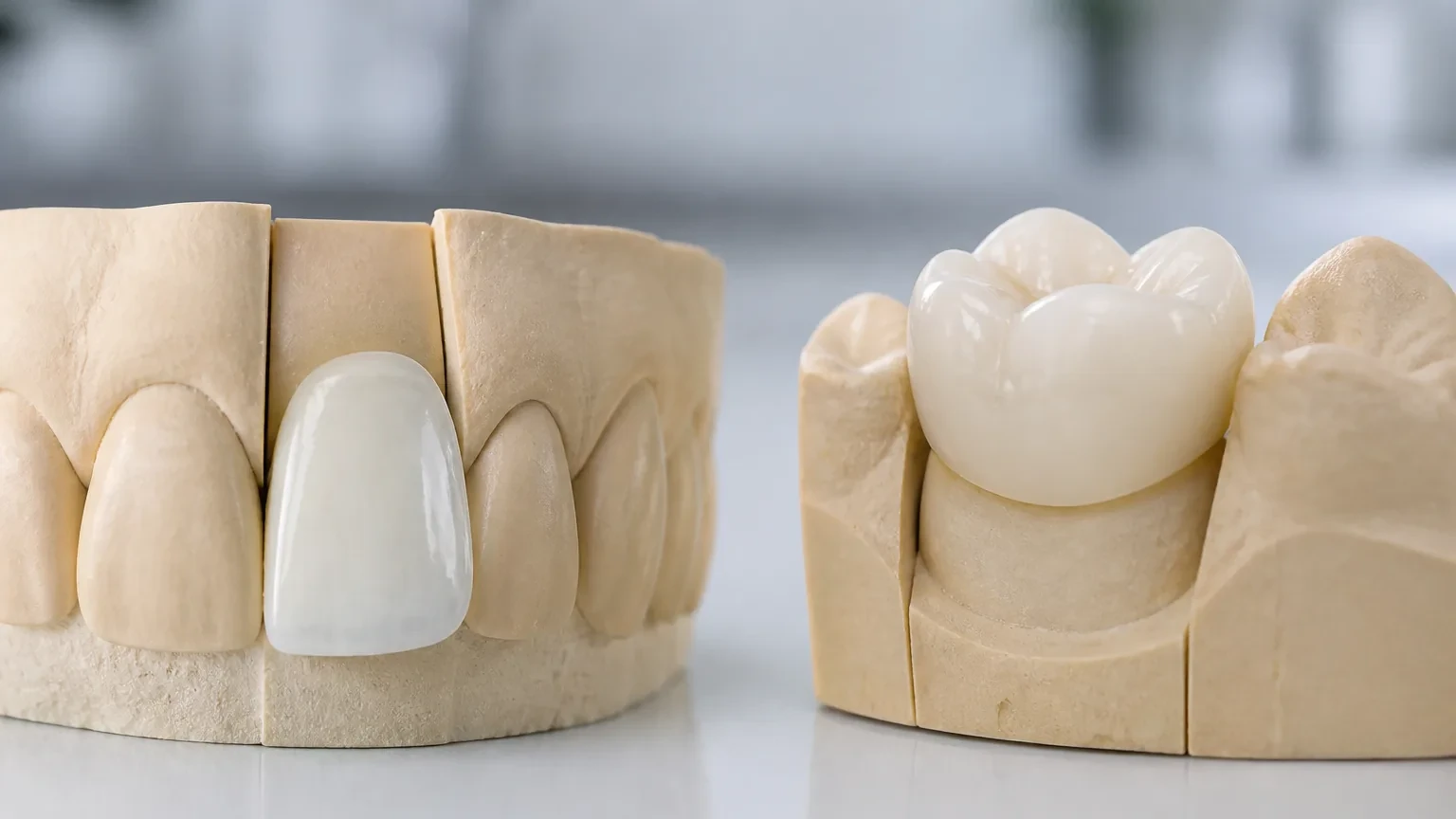
Veneers and crowns are both bonded or cemented restorations, but they are not interchangeable. A veneer covers mainly the front surface of a tooth to change color, shape, or minor alignment. A crown covers much more of the tooth and is used when strength, cracks, large fillings, or major breakdown are part of the problem. MouthHealthy describes veneers as thin coverings for front tooth surfaces; crowns are a broader coverage choice.
Veneers And Crowns Compared
| Factor | Veneer | Crown |
|---|---|---|
| Main purpose | Cosmetic change to visible front surface | Strength, coverage, shape, and protection |
| Tooth preparation | Usually less, often focused on enamel | More reduction around the tooth |
| Best fit | Healthy tooth with cosmetic concerns | Weak, cracked, heavily filled, or root-canal-treated tooth |
| Failure concern | Chip, debond, margin stain | Decay at margin, fracture, bite issues, crown loosening |
| Cosmetic role | Excellent for smile design when tooth is strong | Can be cosmetic, but chosen when coverage is needed |
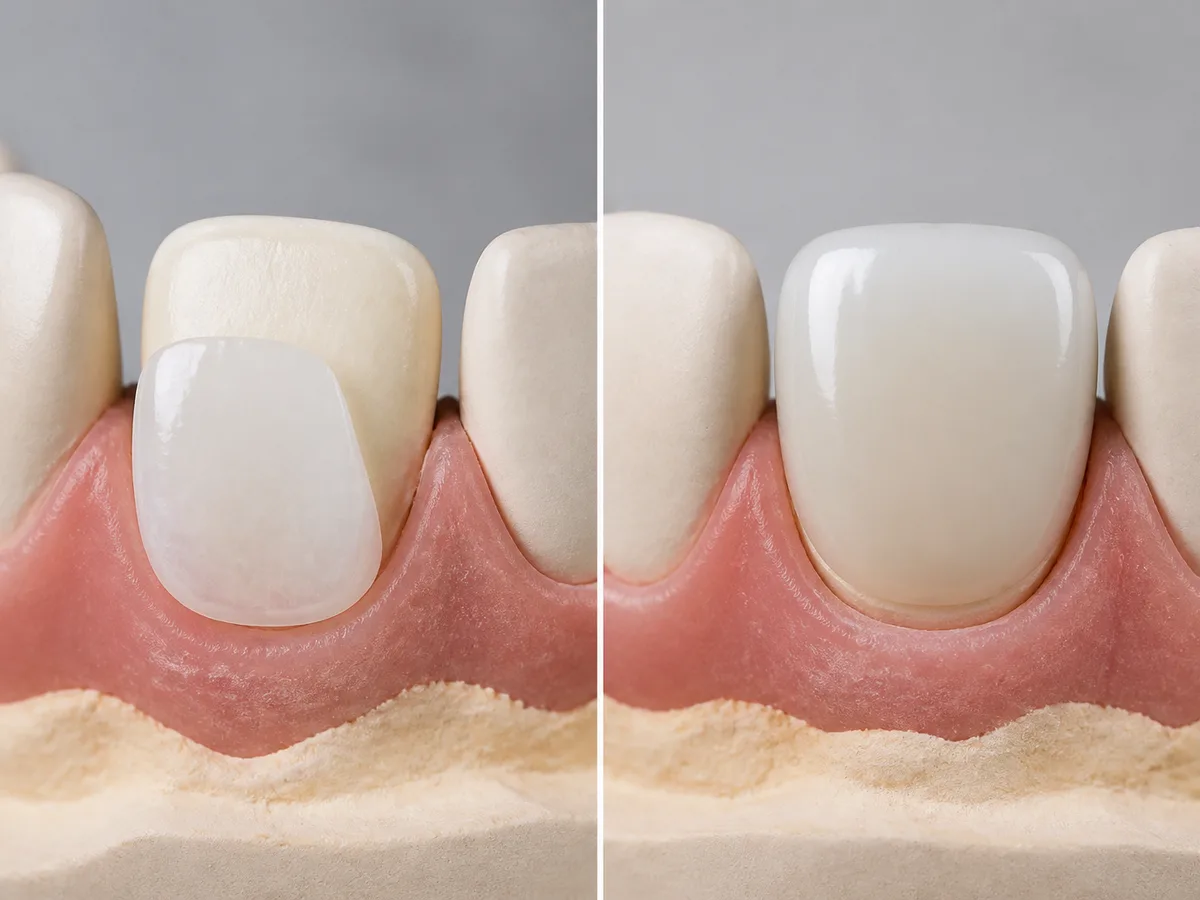 The restoration should match the remaining tooth.
Coverage follows tooth condition
The healthiest-looking option is not always the thinnest one. A tooth with a large old filling may not have enough strong structure for a veneer edge to last. A crown may remove more tooth during preparation, but it can also brace walls that would otherwise crack. The recommendation should explain what failure it is trying to prevent.
How Dentists Decide
The exam looks at enamel, fillings, cracks, bite marks, gum position, root health, and the amount of tooth showing in the smile. A healthy front tooth with discoloration or minor shape concerns may be a veneer candidate. A tooth with a root canal, fracture line, or large filling may need crown coverage even if the cosmetic goal is similar.
Crowns may also be used when a dramatic color change is needed on a dark tooth and a veneer would have to be too thick or opaque. Veneers work best when the underlying tooth gives enough support and the desired shade can be achieved without aggressive reduction. If you are worried about enamel changes, Do Veneers Ruin Your Teeth? gives a safety frame for the veneer side of the decision.
Cost comparisons can be misleading because the diagnosis differs. A crown may cost more or less than a veneer depending on materials and office fees, but the larger question is whether the tooth needs coverage. For cosmetic budget planning, How Much Do Veneers Cost? lists estimate questions that also help when crowns enter the plan.
Do not be surprised if one smile plan includes both restorations. A strong tooth near the front may get a veneer while a neighboring tooth with a root canal or large filling gets a crown shaded to match. Mixed plans require careful lab communication, but they can preserve more tooth structure where full coverage is not needed.
Ask whether the lab will make both restorations together so color and surface texture are coordinated.
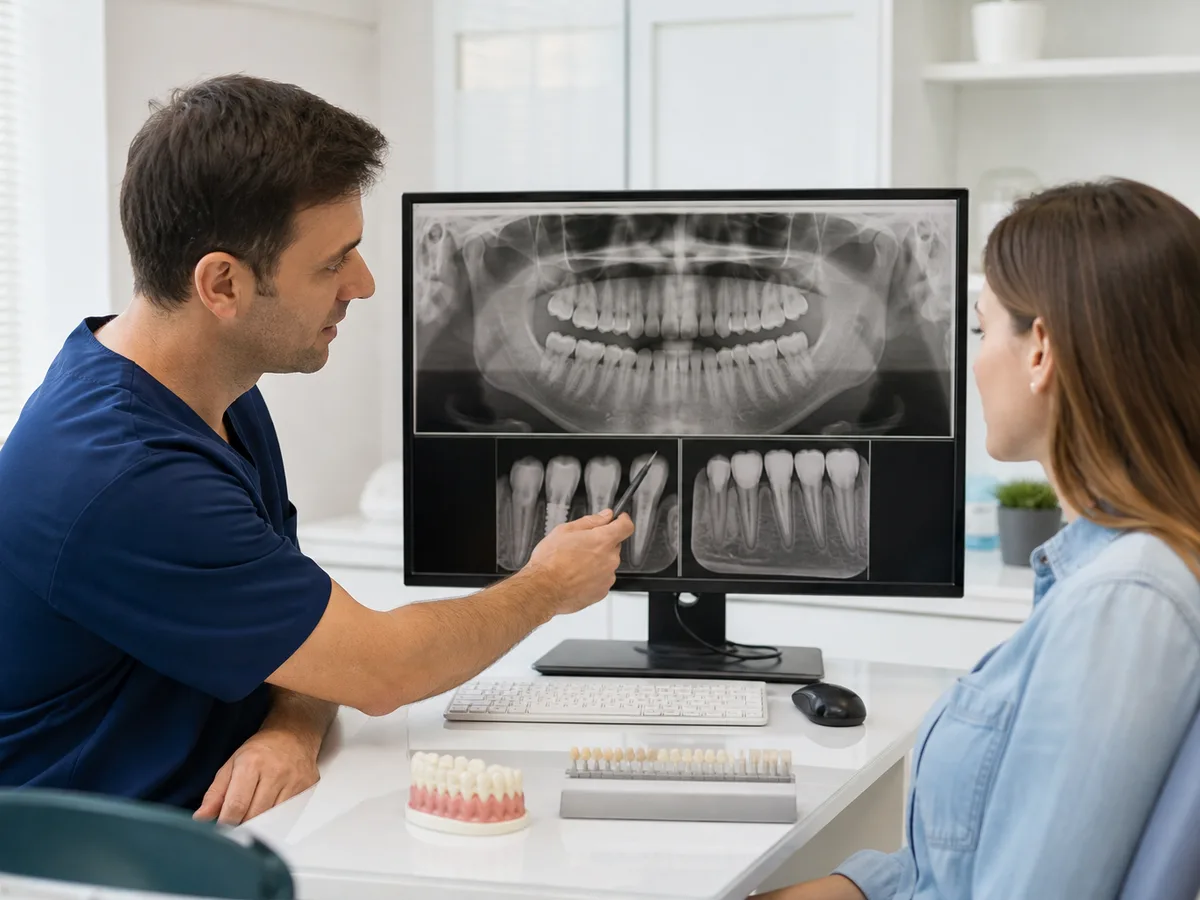 Diagnosis should come before the restoration label.
Ask what the tooth can safely hold
A clear plan names the risk: weak cusps, old filling, crack, dark stump shade, bite force, or mostly cosmetic reshaping. Ask to see the X-ray and photos. If you want another opinion on a borderline tooth, use find a dentist and bring any existing records.
Which Do You Need?
You likely need a veneer when the tooth is mostly healthy and the goal is appearance. You may need a crown when the tooth needs strength, coverage, or protection from fracture. The best recommendation explains why the chosen restoration fits the tooth today and how it will be maintained later. If your question is whether veneers can mask tooth position instead, see Can Veneers Fix Crooked Teeth?.
Related articles
Keep exploring related topics from Dental Country.
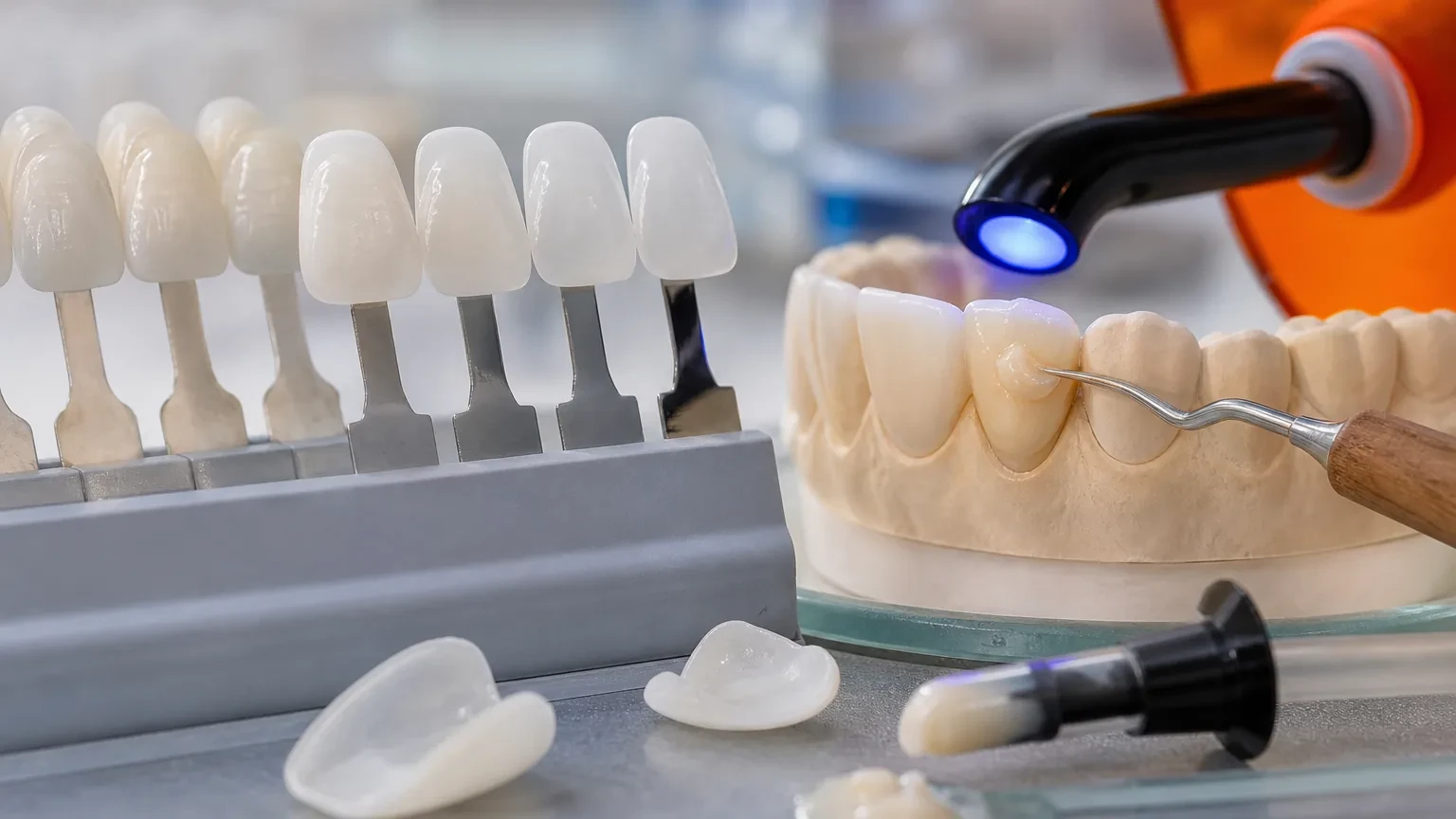
Porcelain Vs Composite Veneers: What’s The Difference?
Porcelain and composite veneers can change tooth shape and color, but they age, stain, repair, and cost differently.
Read article
How Long Do Veneers Last?
Veneer lifespan is not just a number on a brochure. The material, bite, enamel, and daily habits decide how long the result stays useful.
Read article
Do Veneers Ruin Your Teeth?
Veneers do not automatically ruin teeth, but they are not consequence-free. The safety question is preparation, bonding, hygiene, and case selection.
Read article
How Much Do Veneers Cost?
A veneer quote is more than a per-tooth price. Material, design, preparation, temporaries, and future maintenance all shape the real cost.
Read article