
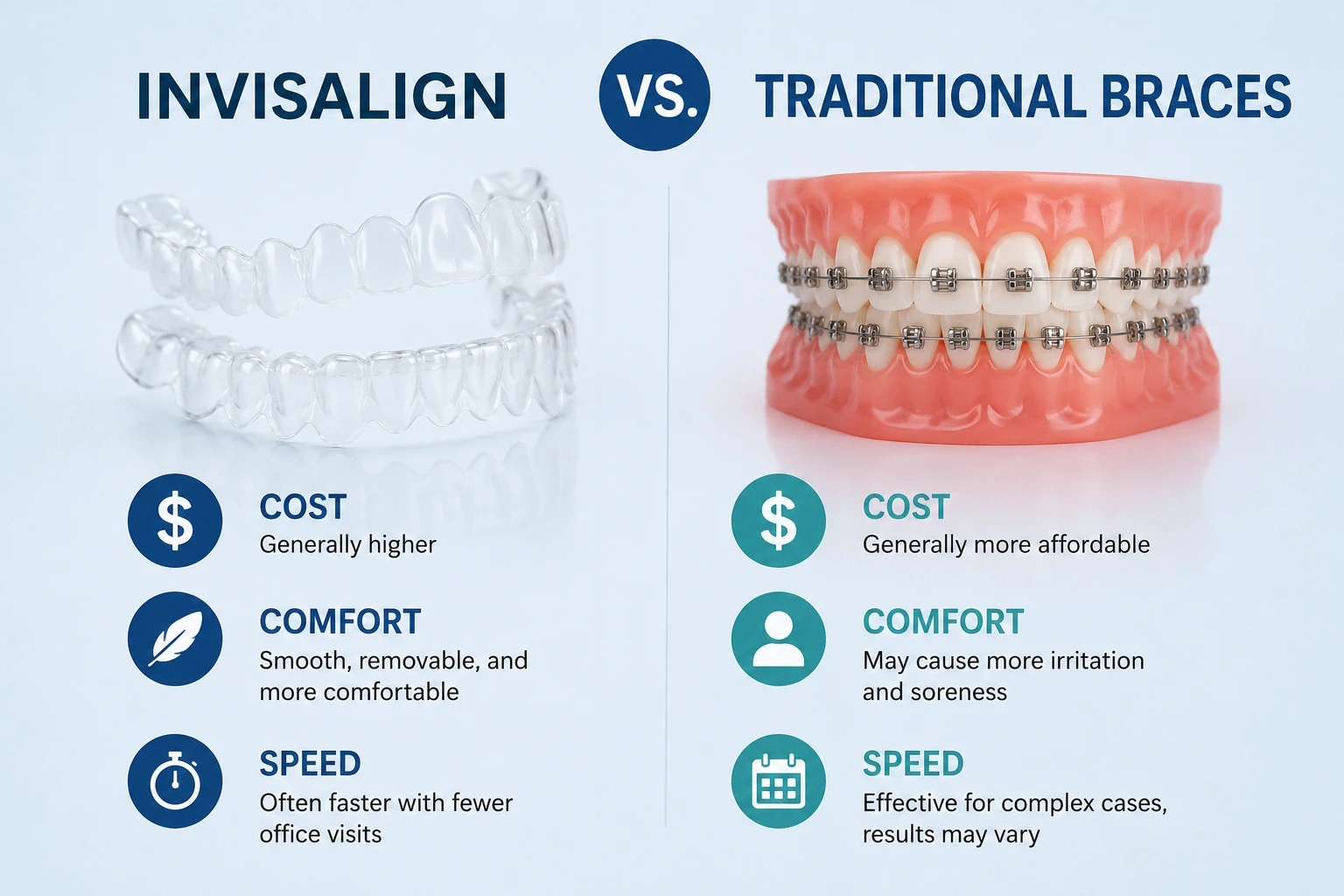
Invisalign vs. Traditional Braces: Cost, Comfort & Speed.
Compare Invisalign and braces on cost, treatment time, comfort, and case complexity. See who should choose clear aligners before you book a consult.

Reviewed by Dr. Sean Myran, DMDDoctor of Dental Medicine, University of Pennsylvania
Should You Choose Invisalign or Traditional Braces?
Both Invisalign and traditional braces can straighten teeth and improve bite function. The better choice depends on case complexity, how consistently you can wear removable trays, how visible you want treatment to be, and your budget. This comparison walks through cost, timeline, comfort, and decision criteria so you can ask sharper questions at a consult.
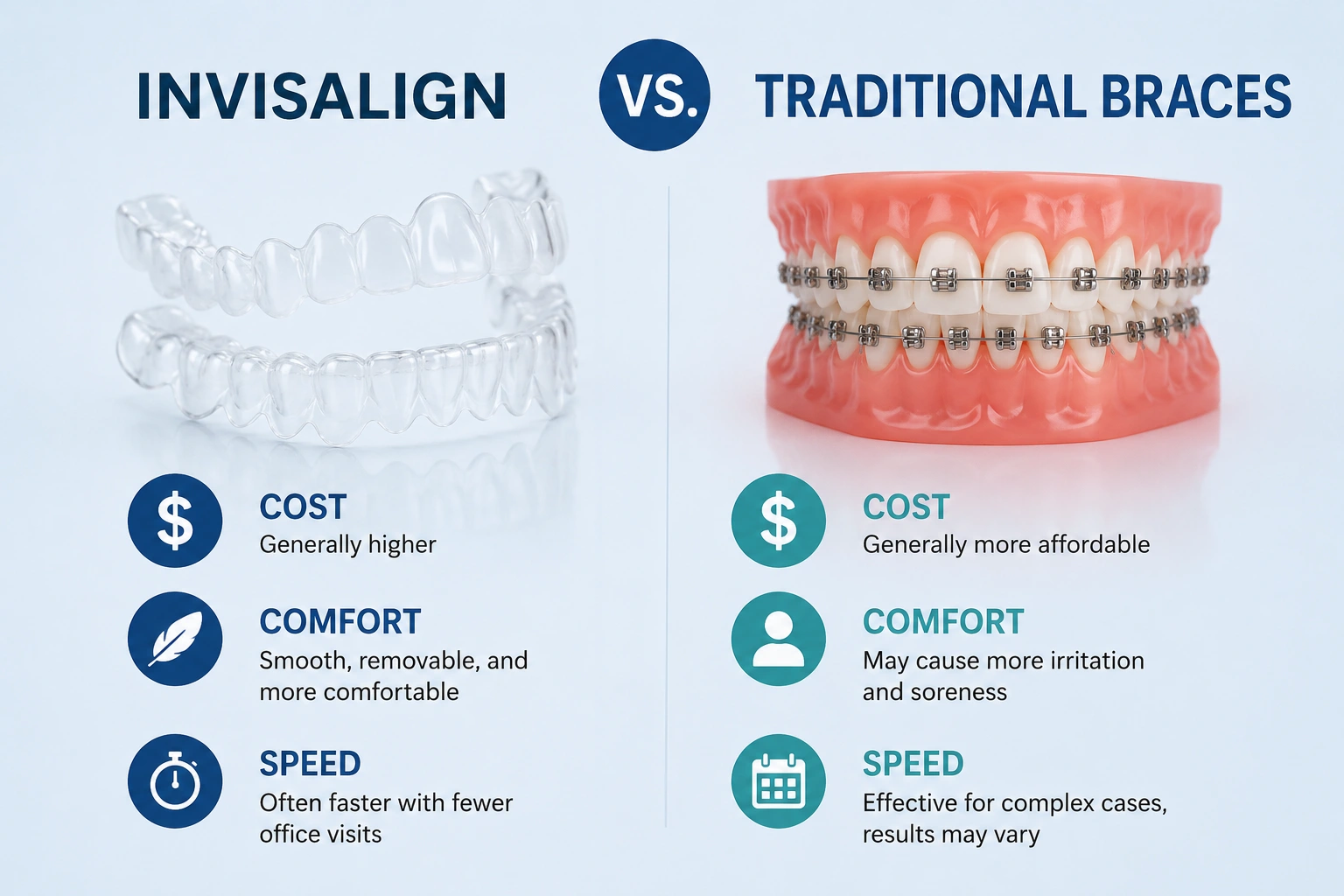
Quick Comparison
| Factor | Invisalign (Clear Aligners) | Traditional Braces |
|---|---|---|
| Typical cost | $3,000–$8,000 | $3,000–$7,000 |
| Treatment time | 6–18 months (many mild–moderate cases) | 18–36 months (wider case range) |
| Visibility | Nearly invisible trays | Visible brackets and wires (ceramic less obvious) |
| Removable | Yes — remove to eat and clean | No — fixed until adjustments |
| Best for | Mild–moderate crowding/spacing with good compliance | Mild–complex bites, rotations, and younger patients |
| Diet | No food restrictions while trays are out | Avoid hard/sticky foods that break brackets |
| Discipline needed | Wear 20–22 hours/day | Always working; hygiene is the main habit |
Cost, Insurance, and Value
Sticker prices often overlap. Invisalign can cost more in brand-name markets, while complex braces cases with elastics, expanders, or longer visits can close the gap. Ask for a full fee that includes records, refinements or emergency visits, and retainers. Many dental plans cover a portion of orthodontics with lifetime maximums; coverage usually follows the diagnosis more than the brand name. Financing and HSA/FSA funds are common for both.
Procedure and Timeline
Invisalign starts with digital scans or impressions, a staged aligner plan, and tray changes every one to two weeks for most patients. Check-ins may be in-office or hybrid. Traditional braces bond brackets, place a wire, and adjust on a schedule. Complex bite work, impacted teeth, or large rotations often favor fixed appliances. Either path ends with retainers — skipping retention is the fastest way to lose results.
Comfort, Lifestyle, and Maintenance
Aligners avoid sharp brackets but can cause pressure when trays change and require tray cleaning plus excellent wear time. Braces can irritate cheeks and make flossing slower, yet they do not depend on remembering to put trays back in. Athletes, speakers, and professionals often prefer aligners for discretion; kids and teens who lose trays may do better with braces.
Risks and Limitations
Poor aligner wear leads to stalled tracking and extra refinements. Braces raise plaque risk around brackets if cleaning slips. Neither option is “set and forget”: gum health, enamel integrity, and realistic goals matter more than marketing photos. Severe skeletal discrepancies may need surgery or other appliances beyond a simple brand comparison.
The Case for Invisalign
Pros
- Nearly invisible — Clear trays are hard to notice in conversation.
- Removable — Eat, brush, and floss without navigating wires.
- Comfortable for many adults — No brackets to catch on cheeks.
- Digital planning — Many offices preview staged tooth movement before you start.
- Fewer broken-bracket emergencies — Nothing to snap off mid-snack.
Cons
- Compliance critical — Must wear trays about 20–22 hours a day.
- Not ideal for every complex bite — Some movements still favor braces.
- Easy to misplace — Trays left in napkins are a classic setback.
- Attachments may still show — Tooth-colored buttons are common for control.
The Case for Traditional Braces
Pros
- Handles tougher cases — Severe crowding, rotations, and bite problems.
- No tray discipline required — Fixed appliances keep working.
- Strong option for kids and teens — Nothing to remember to wear.
- Decades of predictable protocols — Well understood by orthodontists.
Cons
- More visible — Metal shows; ceramic helps but can stain around edges.
- Food restrictions — Hard and sticky foods can break brackets.
- Harder hygiene — Plaque around brackets raises stain and cavity risk.
- Adjustment soreness — Teeth often feel tender after wire changes.
Who Should Choose Which?
- Choose Invisalign if you have mild-to-moderate crowding or spacing, value discretion, and will wear trays consistently.
- Choose braces if you have a complex bite, need maximum control, or prefer not to manage removable trays.
- Ask about hybrids if your provider recommends braces for part of treatment and aligners later, or ceramic braces for a middle path.
How to Decide
Case complexity and daily habits decide the winner more than brand ads. For mild-to-moderate cases where discretion and removability matter, Invisalign often wins on lifestyle. For complex bites — or patients who will not wear trays enough hours — braces are usually more predictable. Bring photos of your goals and ask which movements are easy, difficult, or unrealistic with each appliance.
For neutral background before your visit, review AAO clear aligner guidance and MouthHealthy braces overview.
Need a shorter answer first? See our FAQ: Invisalign vs braces: which is right for me?.
Related comparisons: Invisalign vs. ClearCorrect | Invisalign vs ceramic braces FAQ | How clear aligners differ from braces.
When you are ready for a case-specific recommendation, find a dentist near you through Dental Country and ask which option fits your diagnosis, timeline, and budget.
Frequently Asked Questions
Is Invisalign cheaper than braces?
Not always. Local fees overlap, and complex braces or long aligner refinements can change the total. Compare complete treatment plans, not brochure starting prices.
Can Invisalign fix an overbite?
Many overbites improve with aligners when planned carefully, sometimes with elastics or attachments. Deep or skeletal issues may still need braces or other treatment.
Do you still need retainers after either option?
Yes. Teeth can drift after active treatment ends. Plan on retainers after Invisalign or braces if you want the result to last.
Which option is faster?
Mild aligner cases can finish sooner than multi-year braces, but timeline follows the bite, not the brand. Your provider should estimate based on records, not averages alone.
Related articles
Keep exploring related topics from Dental Country.
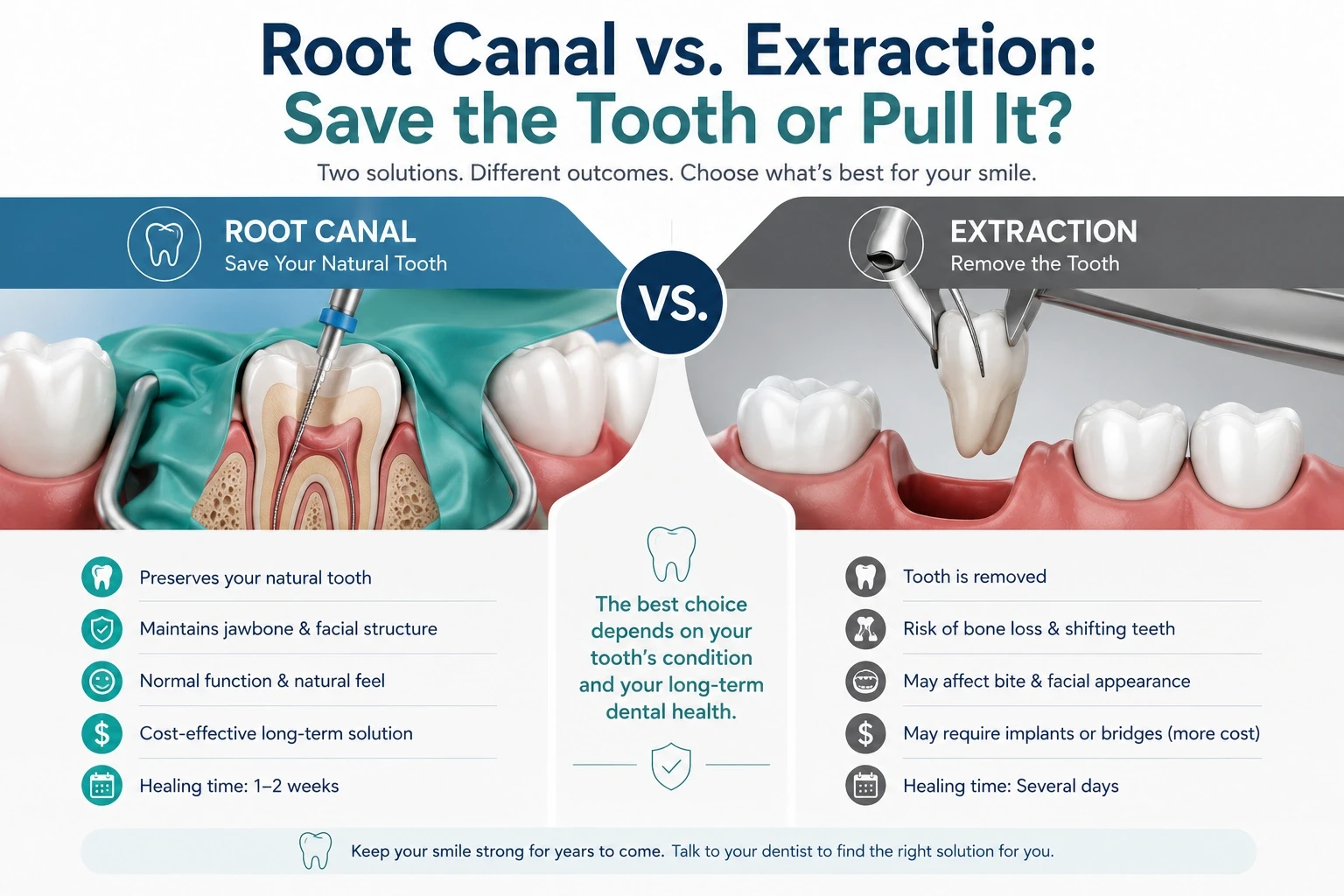
Root Canal vs. Extraction: Save the Tooth or Pull It?
Should you save a damaged tooth with a root canal or have it pulled? Weigh cost, recovery, prognosis, and replacement needs before you decide.
Read article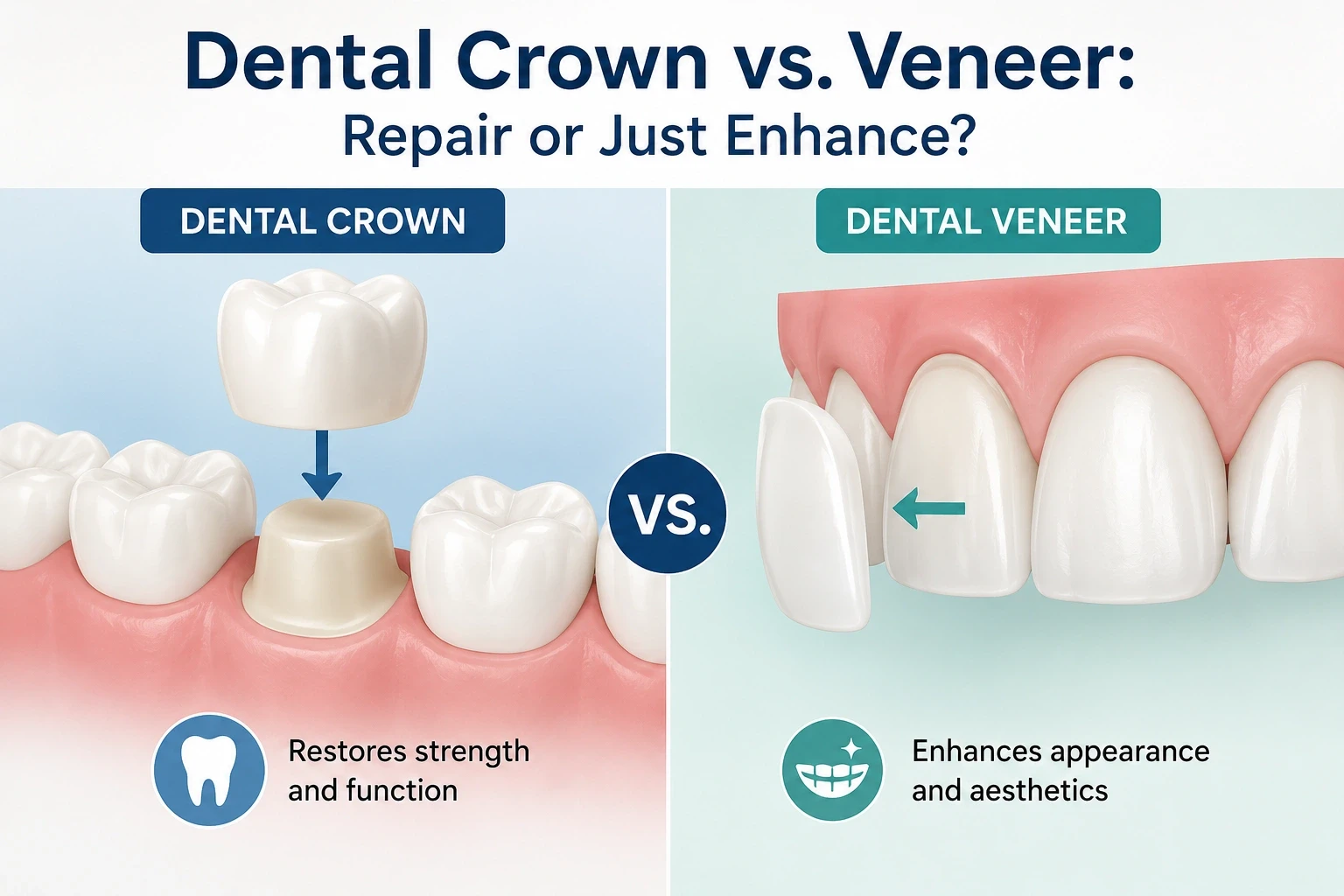
Dental Crown vs. Veneer: Repair or Just Enhance?
Crowns restore damaged teeth; veneers enhance healthy ones. Compare cost, tooth preparation, durability, and which cosmetic or restorative path fits.
Read article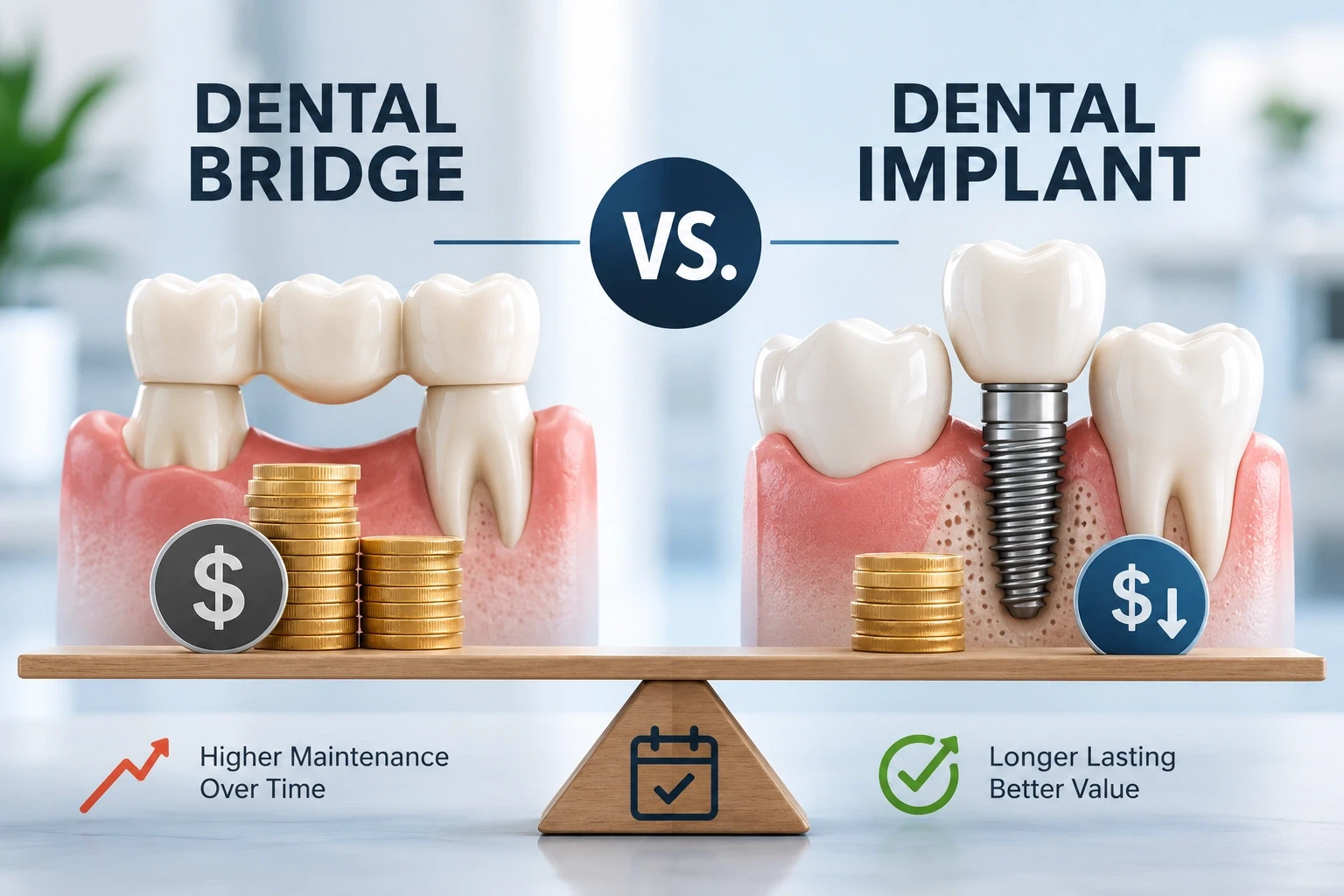
Dental Bridge vs. Implant: The Long-Term Cost Difference
A dental bridge costs less upfront, but an implant can last decades and spare neighboring teeth. Compare price, longevity, surgery, and candidacy.
Read article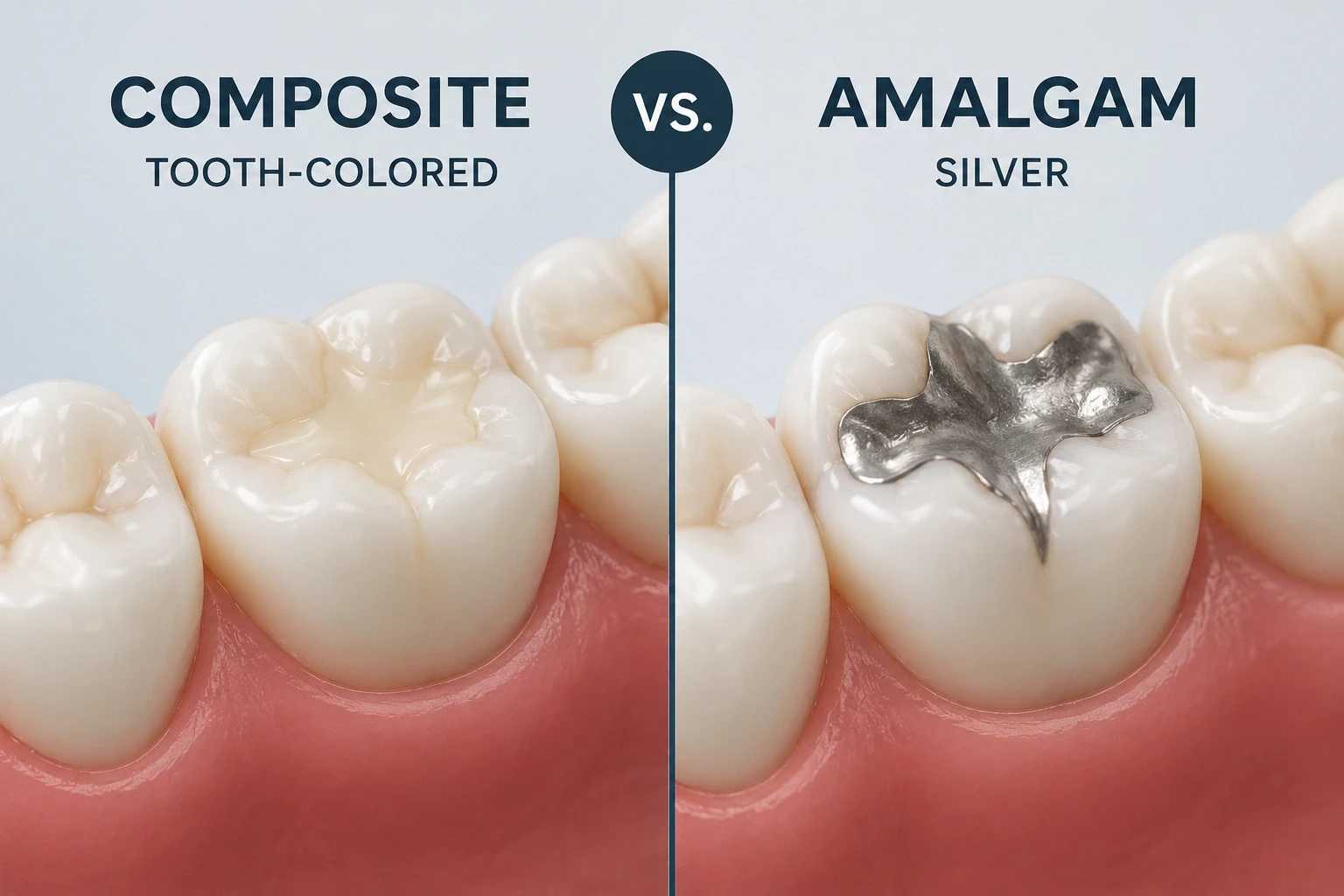
Composite vs. Amalgam Fillings: Tooth-Colored or Silver?
Tooth-colored composite or durable silver amalgam? Compare cost, lifespan, appearance, bonding, and safety so you can choose the right filling material.
Read article