
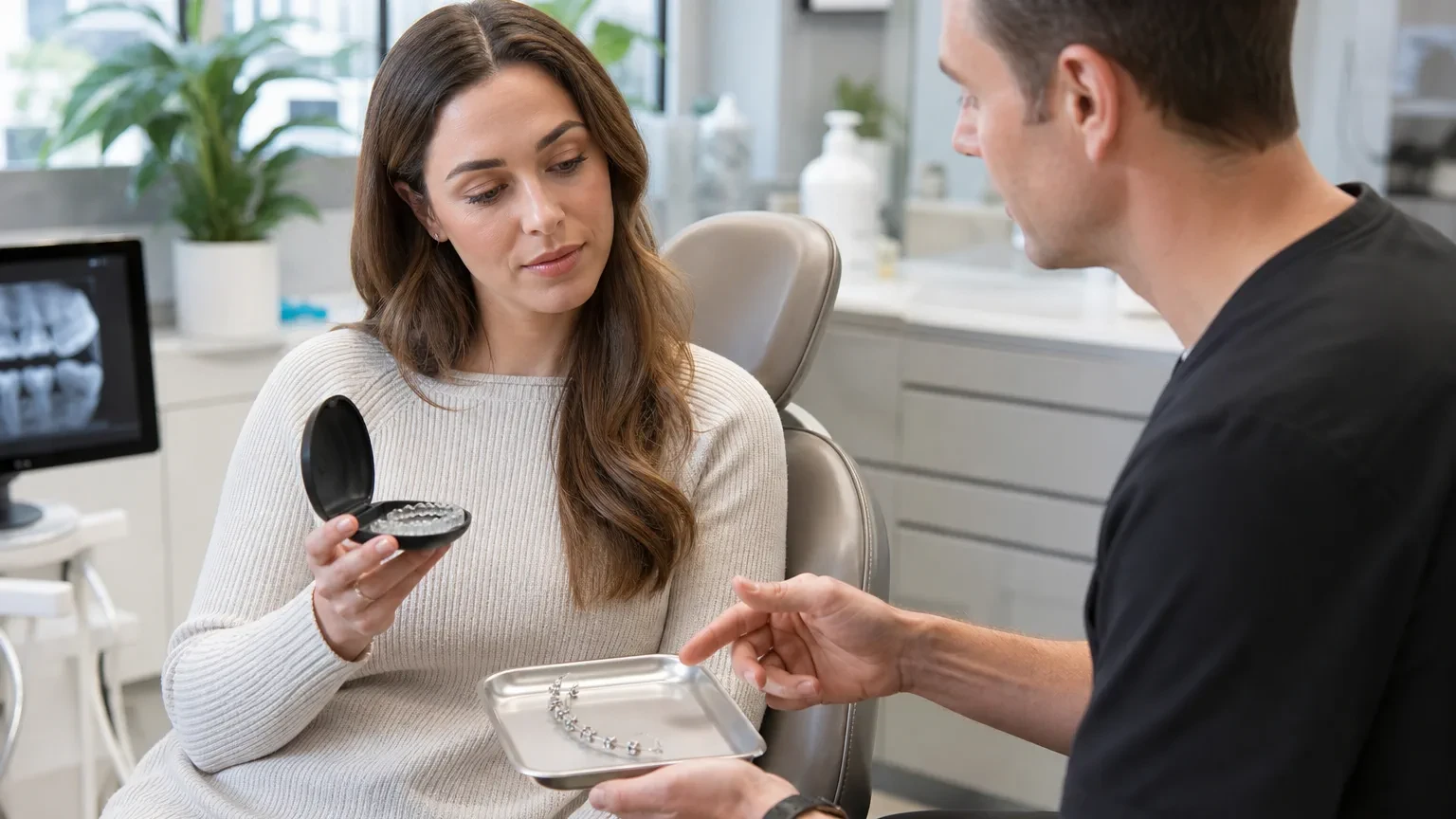
Invisalign Vs Braces: Which Is Right For Me?
Compare Invisalign brand clear aligners with braces on visibility, wear time, bite control, and hygiene. Candidacy depends on your bite and goals.

Reviewed by Dr. Sean Myran, DMDDoctor of Dental Medicine, University of Pennsylvania
Neither Invisalign nor braces is automatically “right” for every smile. Invisalign is a brand of clear aligners from Align Technology; braces are fixed brackets and wires that many practices still use for a wide range of bite problems. The American Association of Orthodontists explains that braces and clear aligners each have strengths, and that suitability is case-dependent. Your candidacy depends on tooth movement needed, jaw relationships, gum and bone health, and how reliably you would wear removable trays.
If you are weighing looks against control, also skim Invisalign versus ceramic braces and whether aligners can match braces for your case.
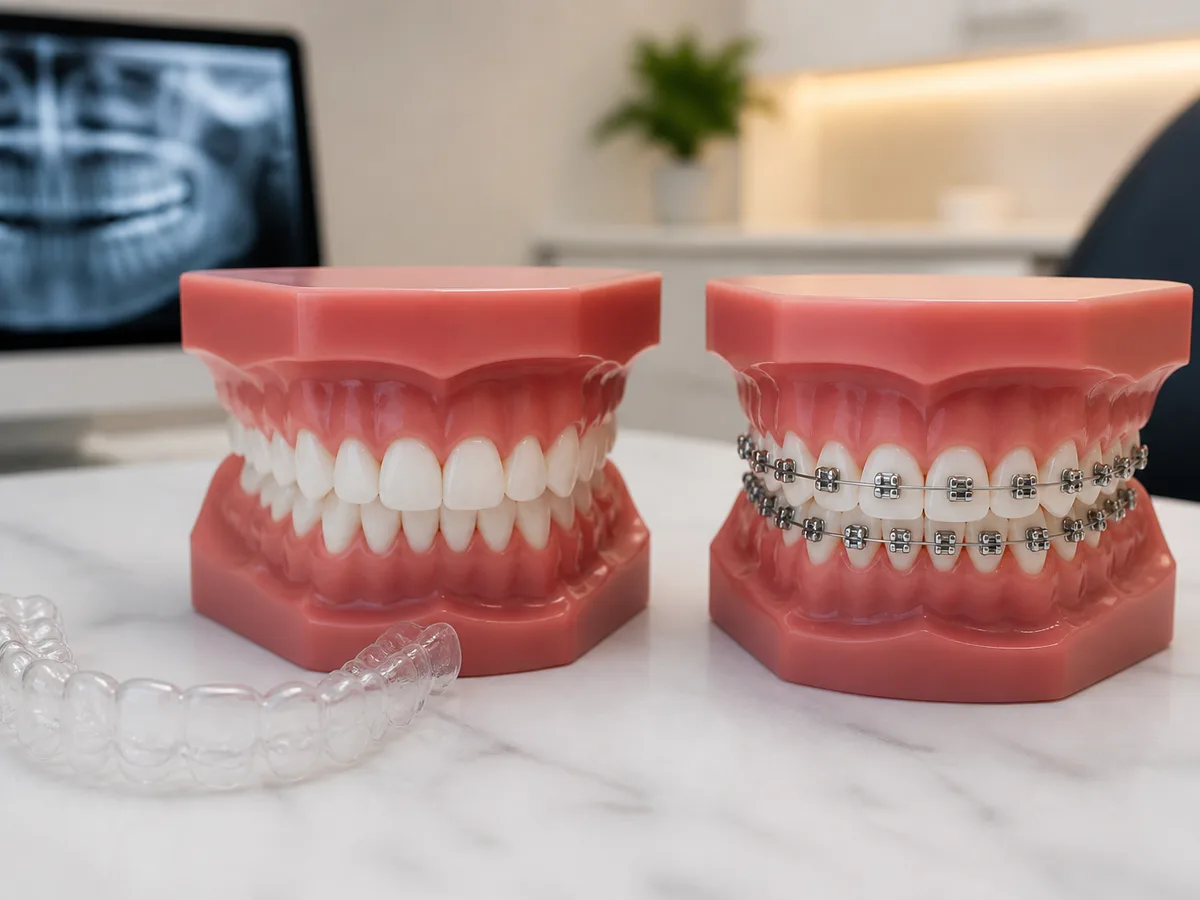
Side-By-Side Snapshot
| Factor | Invisalign (brand aligners) | Braces |
|---|---|---|
| Visibility | Clear trays; attachments may show | Metal or tooth-colored brackets stay on |
| Removability | Out for meals and brushing | Fixed until the office adjusts or removes them |
| Wear responsibility | Usually ~20–22 hours/day as prescribed | Always working unless a bracket breaks |
| Diet | Fewer food limits while trays are out | Avoid hard, sticky foods that damage wires |
| Case range | Many mild-to-moderate cases; complex bites vary | Broad range, including many complex bites |
Tables simplify tradeoffs; they do not replace records, photos, and a bite analysis. Two people with “crowding” can need very different force systems. Alternatives to Invisalign—other aligner brands, ceramic braces, lingual braces—also vary in materials and clinician experience.
Compliance is the quiet tie-breaker. Aligners only move teeth while they are seated; a busy week of dinners, workouts, and “I’ll put them back later” can stall a plan that looked perfect on screen. Braces keep working through those weeks, though they ask for careful cleaning and food choices. Be honest about which discipline you will keep when nobody is watching. That honesty is clinical data, not a personality judgment.
Cost comparisons should include the full pathway: exams, attachments or IPR, elastics, refinement or repair visits, retainers, and the risk of switching mid-treatment. A lower tray fee that cannot finish a bite may cost more than braces quoted accurately on day one. Ask what happens financially if trays stop tracking and a wire appliance becomes the backup.
 Candidacy follows diagnosis.
Start with the bite, not the brand
Ask what must change: rotations, bite depth, crossbite, spacing after extractions, or jaw growth concerns. Then ask which appliance the clinician trusts for those moves in your mouth. A brand name is a delivery system; the plan is the product. If trays would demand perfect wear and your schedule is chaotic, fixed braces may be the more predictable path even if you preferred clear plastics at first. Request a plain explanation of attachments, elastics, and expected visit rhythm before you choose.
Questions That Narrow The Choice
- How many hours per day would aligners need to work in my case?
- Would I need attachments, elastics, or IPR (polishing between teeth)?
- If progress stalls, what is the backup—refinements, braces, or a hybrid?
- How do hygiene, sports, and speech differ with each option for me?
- What is included in the fee: refinements, retainers, emergency visits?
AAO materials note that clear aligners are not right for everyone and that an orthodontist recommends the best option based on unique needs. That caution applies whether you are comparing Invisalign to metal braces or to another removable system. Gum health, short roots, and unrestored decay can delay either path until the mouth is stable enough for orthodontic force.
 Match habits to the appliance.
Lifestyle honesty matters
Removable trays reward consistent wear and careful cleaning before trays go back in. Braces reward careful brushing around brackets and food discipline. Neither option succeeds on aesthetics alone. When you are ready to compare local providers who offer supervised aligner or braces care, use Find a Dentist and ask which appliances they recommend for your records—not which brand they advertise most. Bring photos of your goals and a list of prior dental work so the consult stays grounded.
For a fuller decision path, see how to choose between Invisalign and braces. The right answer is the plan your clinician can defend with your scans—not a social-media before-and-after that hides bite complexity. Revisit the choice if your goals shift from front-tooth cosmetics to full bite correction after records are reviewed.
Related articles
Keep exploring related topics from Dental Country.
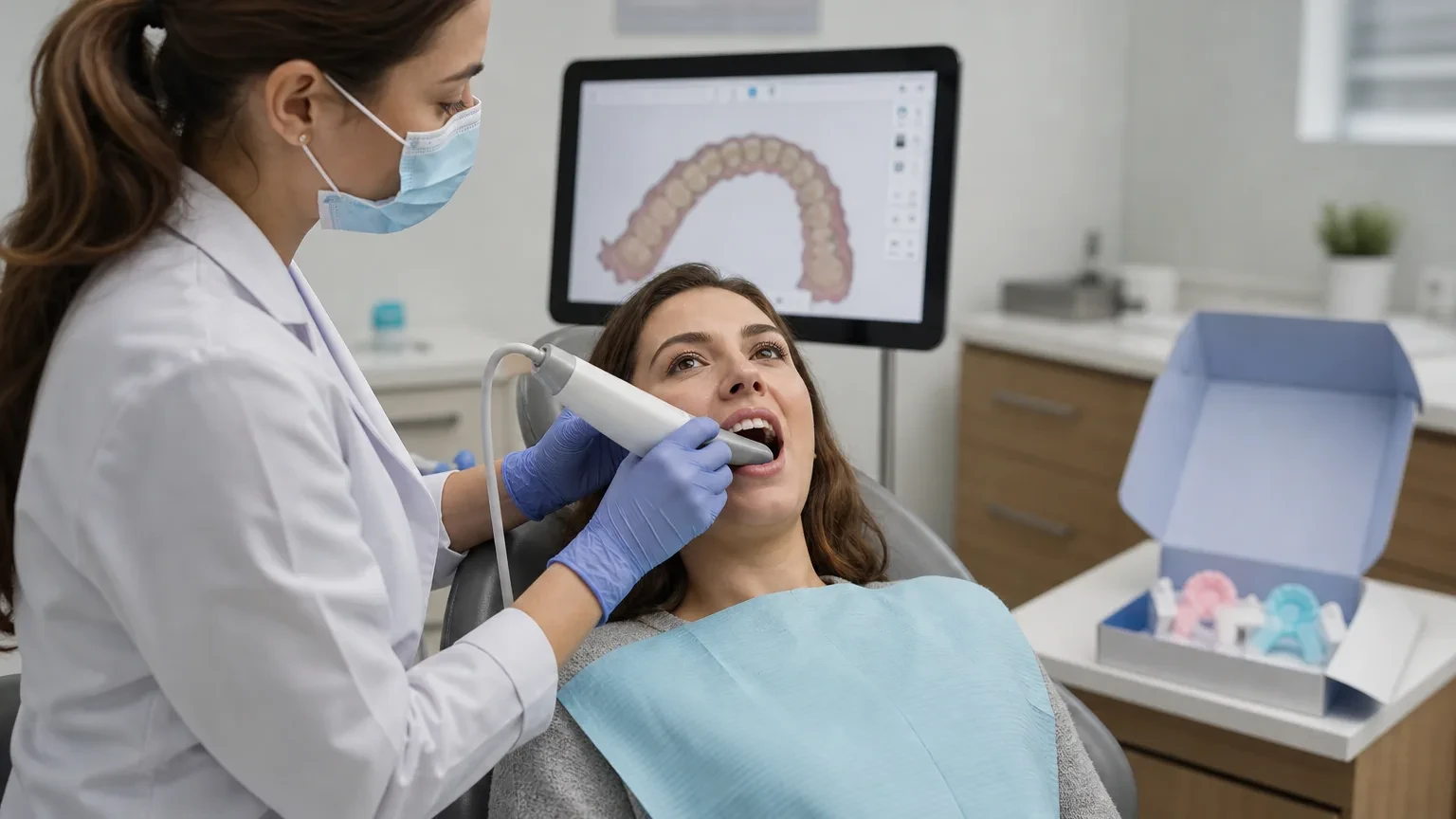
Invisalign Vs SmileDirectClub: What's The Difference?
Invisalign care is typically planned and monitored in a dental or orthodontic office; SmileDirectClub was a direct-to-consumer aligner model with remote oversight. The difference that matters most is clinical examination and ongoing in-person judgment—not tray clarity.
Read article
Invisalign Vs Ceramic Braces: Which Looks Better?
“Looks better” depends on distance, lighting, attachments, and how your case moves. Invisalign trays and ceramic braces both aim for discretion, yet they hide hardware in different ways—and neither is purely cosmetic.
Read article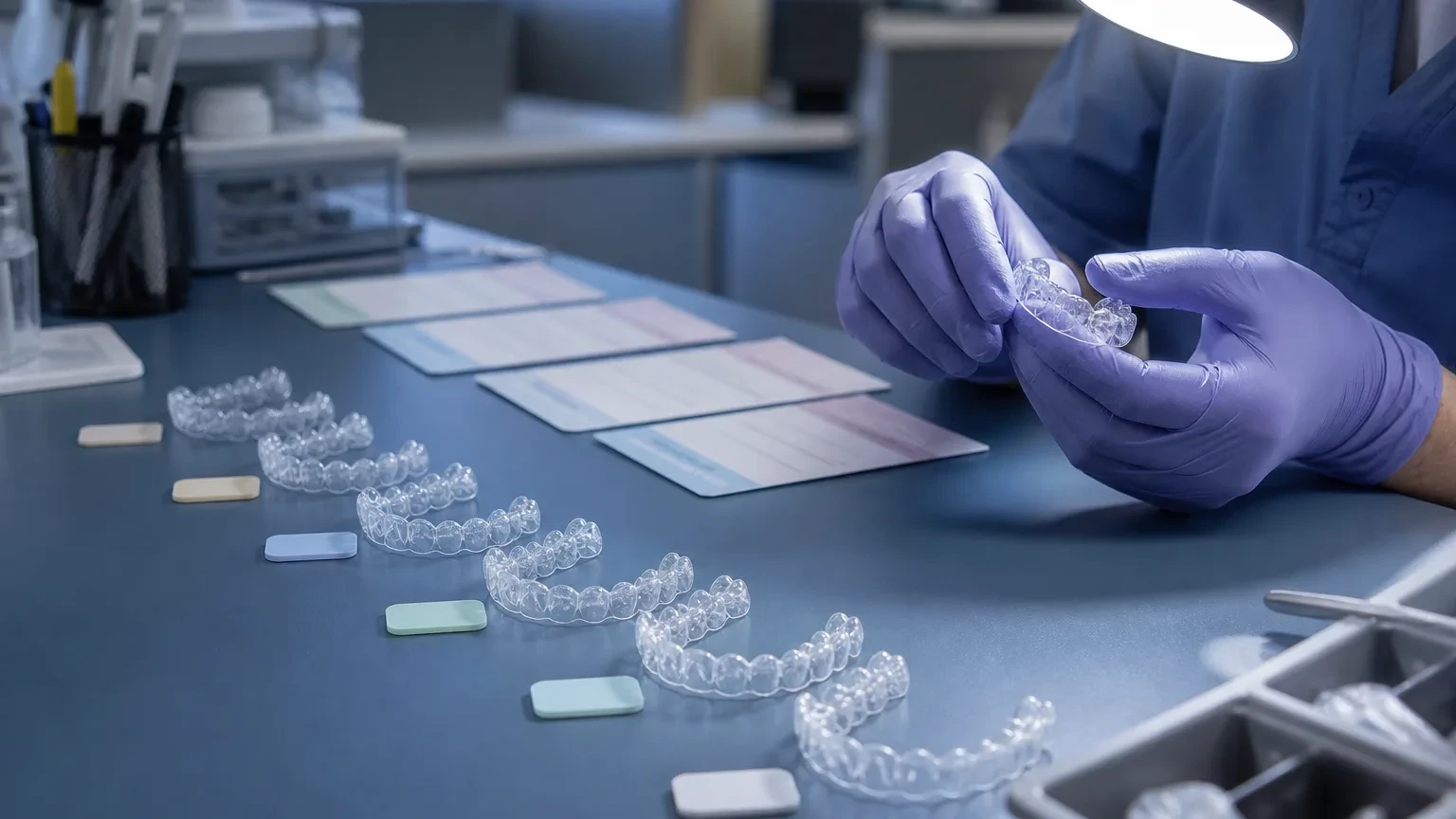
What Are Invisalign Refinements?
Invisalign refinements are additional trays ordered after a progress check when teeth have not fully reached the planned positions. They are common in supervised care and do not automatically mean treatment failed.
Read article
Invisalign Express Vs Comprehensive: What's The Difference?
Express-style Invisalign packages are aimed at shorter, limited movements; Comprehensive covers a wider range of tooth and bite changes. The label matters less than whether your diagnosis fits the package limits.
Read article