

Invisalign Vs Ceramic Braces: Which Looks Better?
Compare Invisalign trays with ceramic braces for appearance, upkeep, and bite control. Looks matter, but case complexity still guides the choice.

Reviewed by Dr. Sean Myran, DMDDoctor of Dental Medicine, University of Pennsylvania
Picture Jordan, who wants a discreet adult treatment for mild crowding before a work year of video calls. Jordan’s first question is appearance: clear trays or tooth-colored brackets? Invisalign is a removable clear-aligner brand; ceramic braces are fixed tooth-colored or clear brackets with a wire. Mayo Clinic describes braces as brackets and wires that apply steady pressure to move teeth; ceramic changes the look of that system, not the biology. Which “looks better” depends on viewing distance, whether aligner attachments are needed, and how stained elastics or tray edges photograph on camera.
Jordan also compares lingual braces versus Invisalign for hidden hardware and Invisalign versus braces overall for bite control.
Decision Factors Beyond The Mirror Selfie
- Daylight vs camera: trays can flash at certain angles; ceramic can show a thin wire line.
- Attachments: tooth-colored bumps for Invisalign can be more visible than ads suggest.
- Staining: some ceramic ties discolor with coffee, curry, or smoking.
- Hygiene theater: trays come out to brush; ceramic needs careful flossing around brackets.
- Case difficulty: a “prettier” appliance that cannot finish the bite is not a win.
Jordan’s work calendar adds another layer. Aligners come out for client lunches, which helps food freedom and can hurt wear time if trays stay in a case too long. Ceramic braces stay on through those meals, which helps tooth movement and complicates flossing in a hotel bathroom. Neither lifestyle pattern is wrong; each maps to a different appliance burden. Saying the quiet part aloud in consult prevents a pretty plan that collapses on travel weeks.
Color and texture matter more than ads admit. Clear trays can yellow without careful cleaning. Ceramic brackets can look great on day one and show stained ties later if diet and smoking are not discussed. Ask what the office uses for ties or coated wires, how often they change them, and whether attachments on your laterals would sit in the smile zone. Those details decide whether “looks better” survives month six.
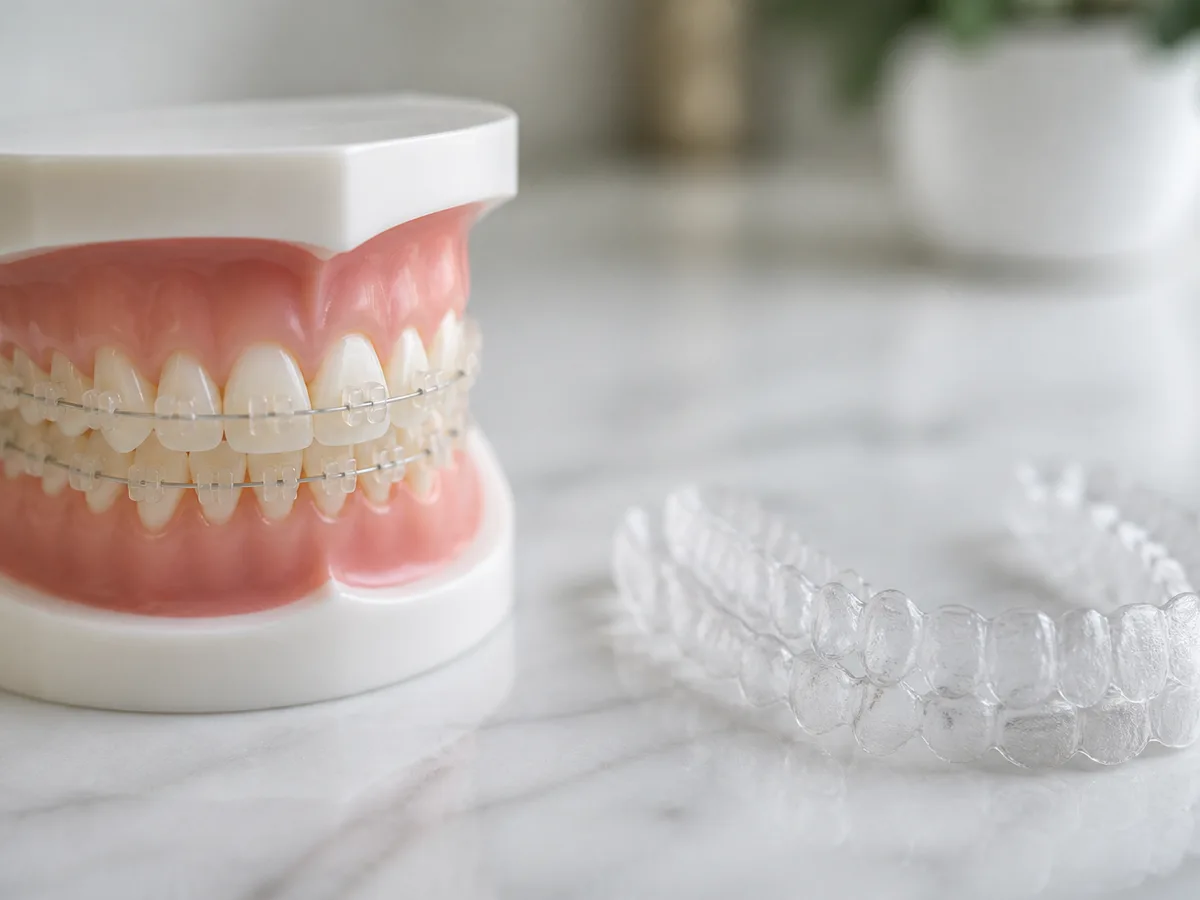 Ask for realistic case photos.
Discretion is not identical
From conversational distance, well-fitting Invisalign trays are often hard to notice, especially without large attachments on front teeth. Ceramic braces blend better than metal yet still read as braces up close. Speech, lip posture, and smiling habits change what others see. Ask for case photos of patients with similar attachment patterns or ceramic setups—not only ideal stock images. If video calls are your main stage, test how each option looks on camera under your usual lighting.
Next Steps For Jordan’s Visit
- Share photo and speech priorities (calls, weddings, performances).
- Ask whether predicted attachments would sit on highly visible teeth.
- Compare total time, refinement policy, and emergency repair visits.
- Confirm periodontal health before either appliance starts.
Alternatives vary: some offices propose a short ceramic phase then trays, or trays with limited elastics. Candidacy still depends on root positions, bite depth, and compliance. Invisalign brand marketing should not overrule a clinician who says ceramic braces will control a rotation more predictably. A hybrid plan is still a clinical plan—it should name who manages each phase and how success is measured.
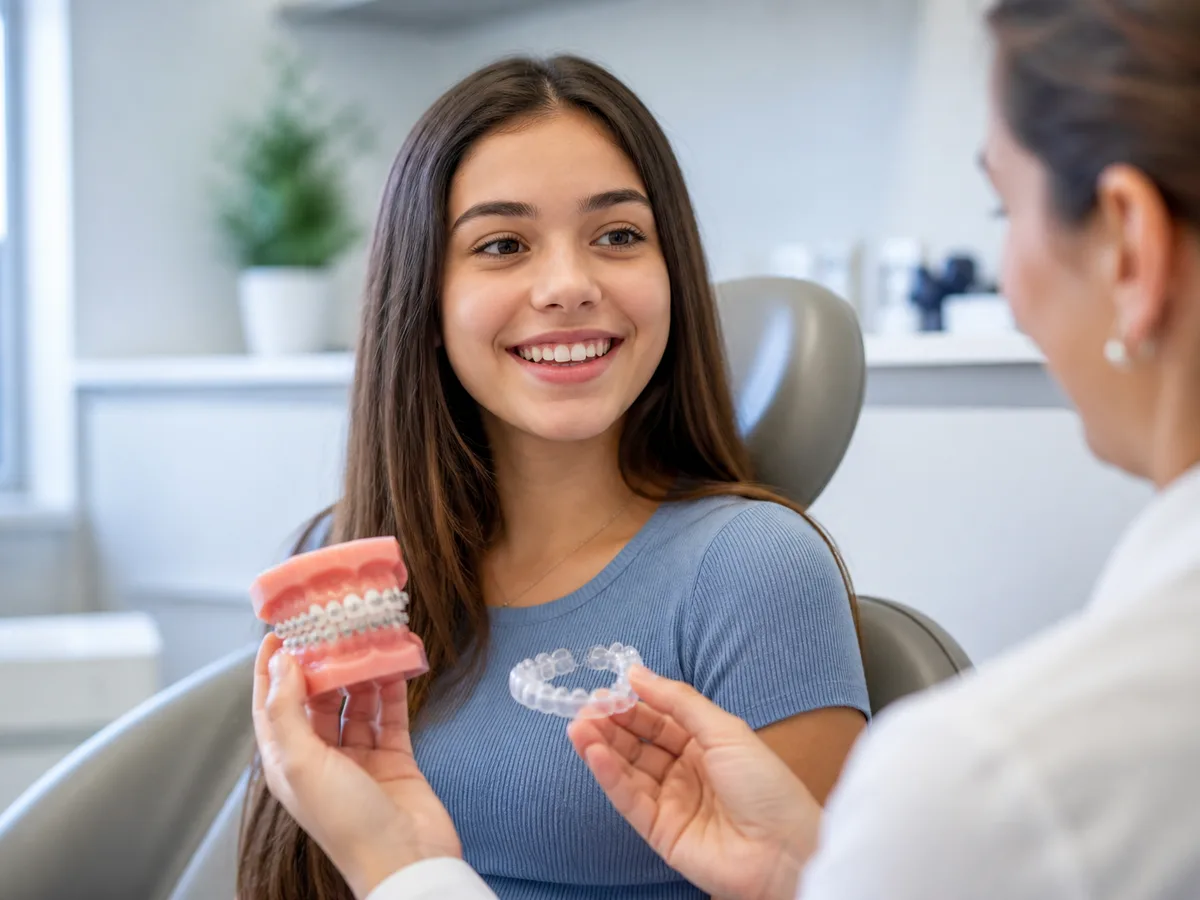 Looks and finish both count.
Finish with a written plan
Leave with the recommended appliance, estimated months, and what happens if tracking fails. Aesthetic preference is valid; it is one input among several. When you want a supervised consult that weighs looks and bite together, use Find a Dentist and mention you are comparing Invisalign brand aligners with ceramic braces. The better-looking choice is the one that still finishes the bite you need. Ask for the plan in writing so brochure names do not replace diagnosis.
Ceramic braces and Invisalign can both look subtle in the right case. Choose after you see your predicted attachments or bracket layout—not after a single influencer clip. Reassess if staining, speech, or tracking becomes the real daily annoyance.
Related articles
Keep exploring related topics from Dental Country.
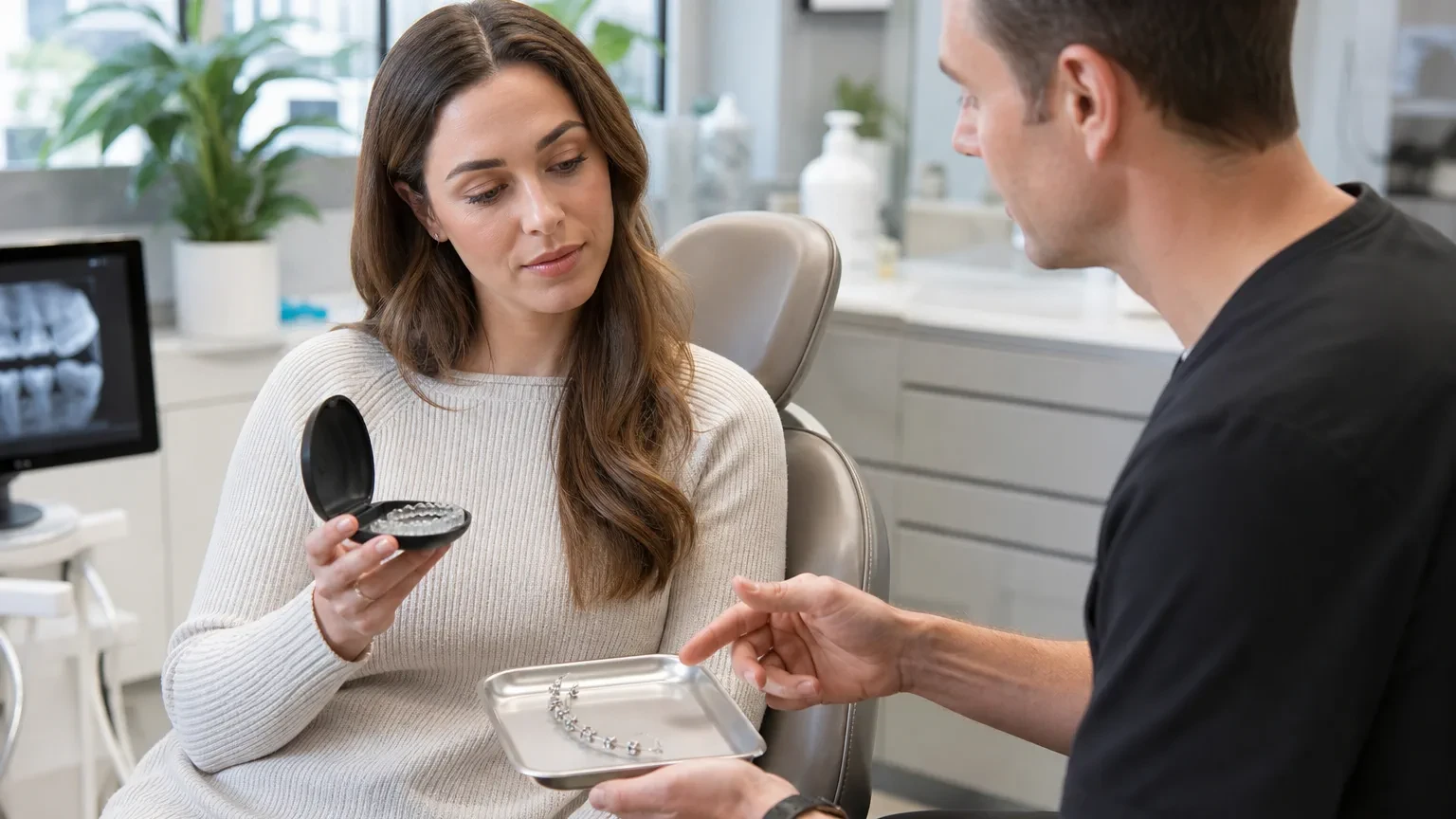
Invisalign Vs Braces: Which Is Right For Me?
Invisalign is one clear-aligner brand; braces are fixed appliances. The better option depends on your bite, compliance, hygiene habits, and what your orthodontist can predictably move—not on which ad looks cleaner.
Read article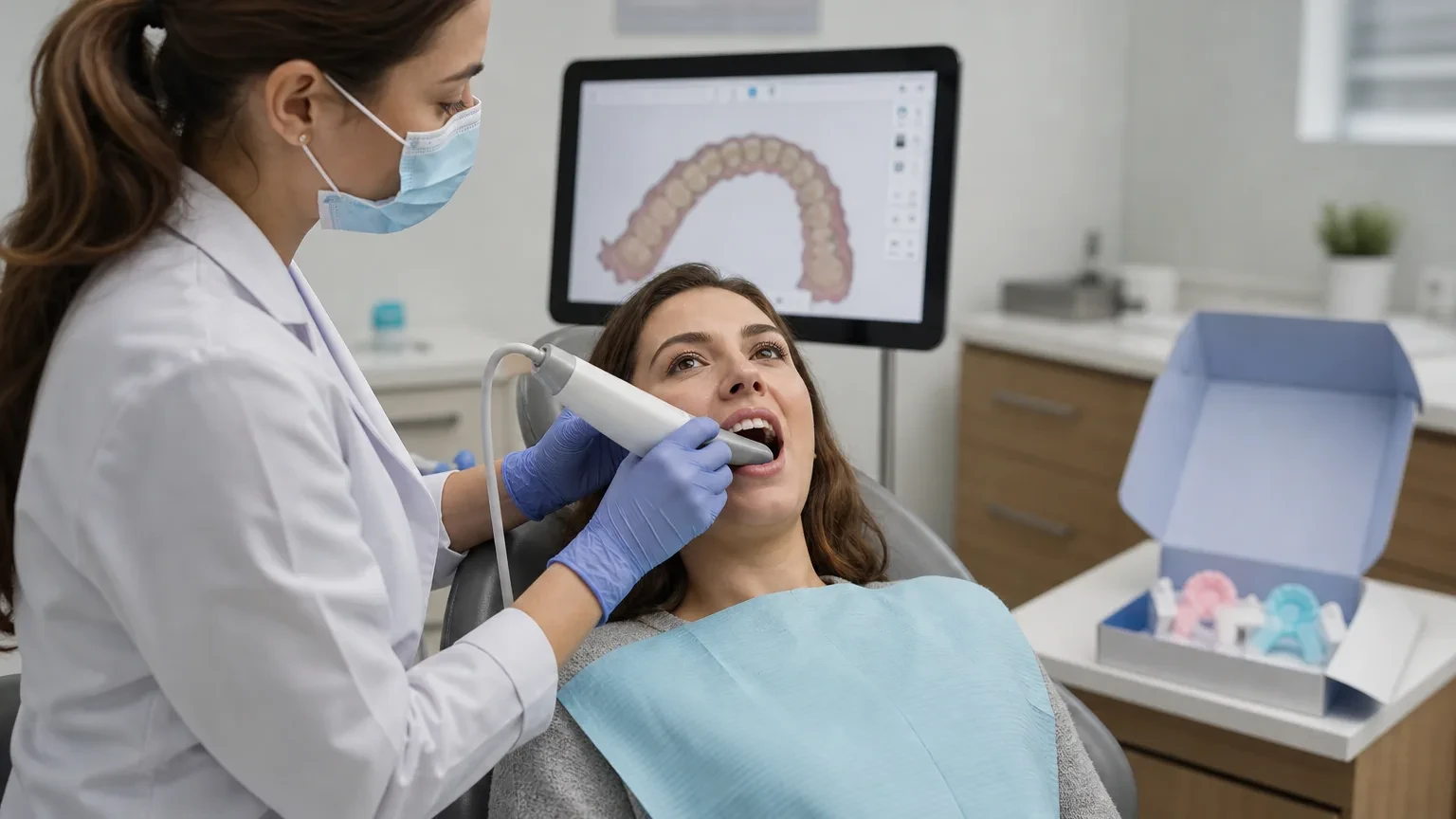
Invisalign Vs SmileDirectClub: What's The Difference?
Invisalign care is typically planned and monitored in a dental or orthodontic office; SmileDirectClub was a direct-to-consumer aligner model with remote oversight. The difference that matters most is clinical examination and ongoing in-person judgment—not tray clarity.
Read article
What Are Invisalign Refinements?
Invisalign refinements are additional trays ordered after a progress check when teeth have not fully reached the planned positions. They are common in supervised care and do not automatically mean treatment failed.
Read article
Invisalign Express Vs Comprehensive: What's The Difference?
Express-style Invisalign packages are aimed at shorter, limited movements; Comprehensive covers a wider range of tooth and bite changes. The label matters less than whether your diagnosis fits the package limits.
Read article