
Lingual Braces Vs Invisalign: Which Is More Discreet?
Lingual braces sit on the tongue side of teeth; Invisalign trays are clear and removable. Compare discretion, speech effects, and which cases each fits.

Reviewed by Dr. Sean Myran, DMDDoctor of Dental Medicine, University of Pennsylvania
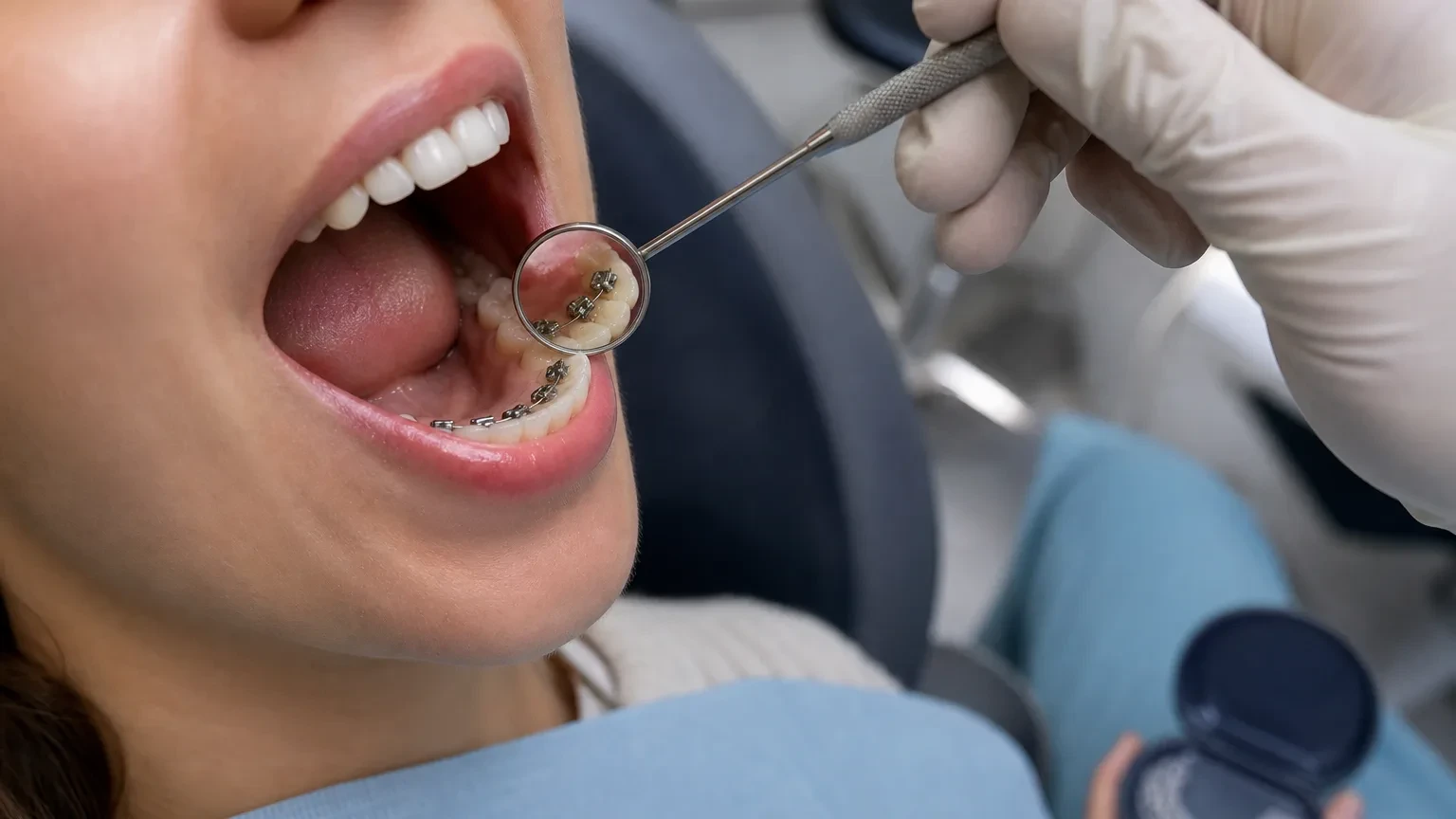
“More discreet” depends on where you hide the hardware and how you live day to day. Lingual braces are fixed brackets bonded to the tongue side of teeth. Invisalign is a brand of clear aligners that cover the visible faces of teeth but can be removed. From across a room, both can be subtle. Up close, lingual gear is often invisible from the front, while trays may show edges or attachments. Candidacy still depends on bite complexity and whether you will wear trays as prescribed.
Which option is harder to notice in photos?
Lingual braces usually win front-facing photos because brackets are behind the teeth. Invisalign trays are clear but can catch light; attachments on front teeth can show in flash photography. Ask to see similar cases. Profile photos can still reveal tray edges or a slightly bulkier tongue-side feel that changes lip posture, so review more than one camera angle.
Does speech change more with lingual braces or trays?
Many people lisp for a period with lingual braces as the tongue adapts to brackets. Trays can also affect speech early on, often for a shorter adjustment window. Professional speakers should trial-speak with each option if the office can demonstrate models or temporary setups. Singers, teachers, and call-center workers often care more about week-two speech than week-two Instagram aesthetics.
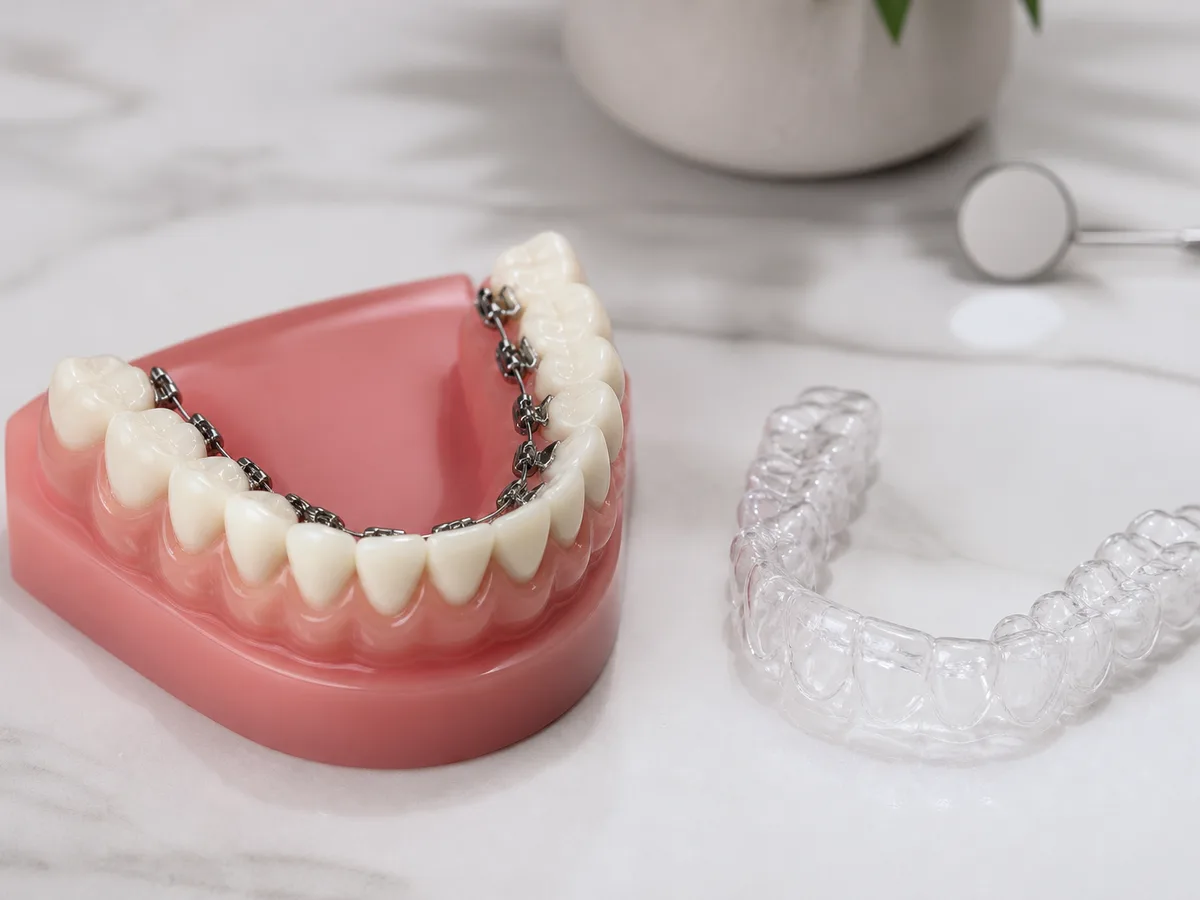 Weigh speech and hygiene too.
Hidden is not hassle-free
Lingual appliances can irritate the tongue, complicate cleaning, and cost more because of custom setups. They stay working without relying on 22-hour wear, which helps if compliance is a concern. Invisalign shifts the burden to wear time and tray discipline. Discretion you cannot clean around or speak with comfortably is a poor trade. Ask how the office manages tongue sores and whether wax or polishing protocols are routine after bonding.
Which cases favor each approach?
Complex bite correction may favor fixed braces—lingual or labial—over removable trays. Mild-to-moderate alignment with good compliance often suits Invisalign brand aligners. Some offices decline lingual braces for certain bites or hygiene levels. Alternatives vary by clinician training. Short clinical crowns, heavy bite forces, or limited access for bonding can also steer the recommendation away from tongue-side brackets.
How do I compare costs fairly?
Include lab fees, emergency visits, refinement or wire repair policies, and retainers. A cheaper tray plan that cannot finish your bite is not discreet—it is unfinished. Pair this read with Invisalign versus ceramic braces and choosing between Invisalign and braces. Ask whether ceramic labial braces would meet your discretion goals at a different fee if lingual systems are not offered.
Hygiene reality checks help. Lingual braces demand careful cleaning behind the teeth where plaque is easy to miss. Invisalign demands cleaning teeth before trays return so sugars are not sealed against enamel. If either routine sounds unlikely for your schedule, say so—candidacy includes behavior, not only anatomy.
 Match discretion to daily life.
Test real-life discretion
Bring your priorities: podcasts, sales calls, wind instruments, or contact sports. Ask how often each appliance needs visits and what downtime looks like after adjustments. For clinicians experienced with both lingual systems and supervised Invisalign, use Find a Dentist and say discretion and speech matter equally. The quietest smile is the one you can maintain through the full plan. Request before-and-after speech expectations in plain language, not only smile photos.
Lingual braces and Invisalign hide treatment differently. Choose after you compare speech, hygiene, case fit, and realistic photos—not after a single “invisible” slogan. Revisit the choice if early speech or tongue irritation is severe enough to threaten completion.
Related articles
Keep exploring related topics from Dental Country.

Invisalign Vs Braces: Which Is Right For Me?
Invisalign is one clear-aligner brand; braces are fixed appliances. The better option depends on your bite, compliance, hygiene habits, and what your orthodontist can predictably move—not on which ad looks cleaner.
Read article
Invisalign Vs SmileDirectClub: What's The Difference?
Invisalign care is typically planned and monitored in a dental or orthodontic office; SmileDirectClub was a direct-to-consumer aligner model with remote oversight. The difference that matters most is clinical examination and ongoing in-person judgment—not tray clarity.
Read article
Invisalign Vs Ceramic Braces: Which Looks Better?
“Looks better” depends on distance, lighting, attachments, and how your case moves. Invisalign trays and ceramic braces both aim for discretion, yet they hide hardware in different ways—and neither is purely cosmetic.
Read article
What Are Invisalign Refinements?
Invisalign refinements are additional trays ordered after a progress check when teeth have not fully reached the planned positions. They are common in supervised care and do not automatically mean treatment failed.
Read article