
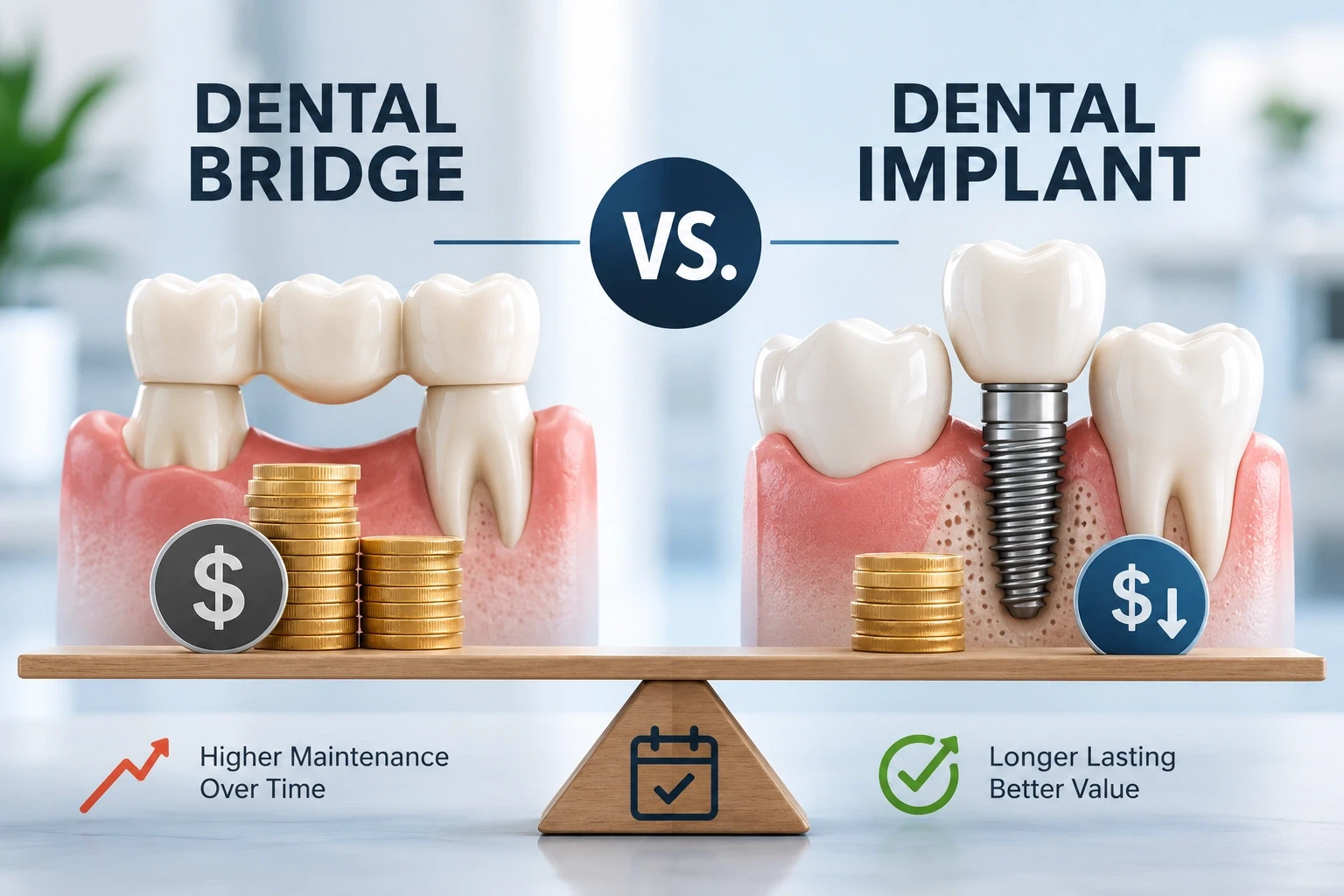
Dental Bridge vs. Implant: The Long-Term Cost Difference.
Compare dental bridges and implants on upfront cost, longevity, bone health, and neighboring teeth. See which tooth-replacement path fits your case.

Reviewed by Dr. Sean Myran, DMDDoctor of Dental Medicine, University of Pennsylvania
Dental Bridge or Implant: Which Costs Less Long Term?
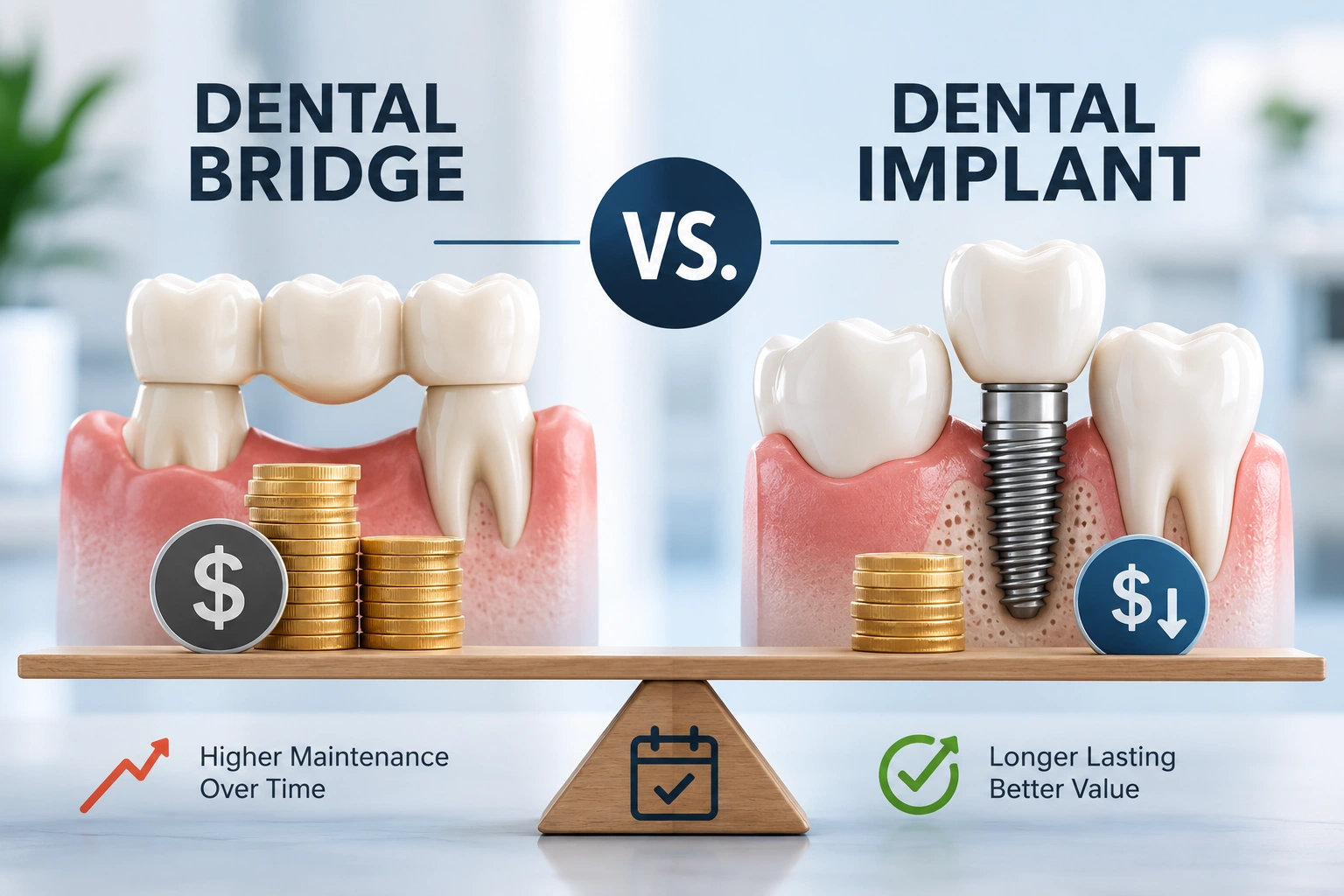
A dental bridge replaces a missing tooth by joining crowns to neighboring teeth. An implant replaces the root with titanium and supports its own crown without drilling down healthy neighbors. Bridges usually cost less up front; implants often win on longevity and bone preservation. This pillar comparison covers fees, timeline, risks, and who is a candidate for each.
Quick Comparison
| Factor | Dental Bridge | Dental Implant |
|---|---|---|
| Upfront cost (single tooth) | Often $2,000–$5,000 | Often $3,000–$6,000+ (implant + abutment + crown) |
| Affects neighboring teeth | Yes — abutments are prepared | No — freestanding when planned well |
| Bone preservation | No implant stimulus under pontic | Helps maintain bone at the site |
| Typical lifespan | 5–15 years common | 25+ years for implant body; crown may need replacement |
| Surgery | Usually none beyond tooth prep | Surgical placement + healing time |
| Time to finish | Often 2–3 weeks | Often 3–6+ months including healing |
Cost and Long-Term Math
Bridges look cheaper on day one, especially if insurance covers major restorative percentages. Implants cost more initially and may be labeled “not covered,” yet avoiding remakes every decade can flip lifetime cost. Ask for fees that include extractions, bone grafts, temporaries, abutments, and the final crown — not just the implant fixture.
Procedure and Timeline
Bridges need healthy or restorable abutment teeth, precise impressions or scans, a temporary, then cementation of the final prosthesis. Implants need adequate bone (or grafting), osseointegration time, then an abutment and crown. Immediate-load protocols exist for select cases but are not automatic.
Risks and Maintenance
Bridges can decay at abutment margins and need floss threaders or water flossers under the pontic. Implants can develop peri-implantitis if cleaning slips or bite forces overload the site. Smokers and uncontrolled diabetes raise implant risk. Night grinding may call for a guard with either option.
The Case for a Dental Bridge
Pros
- Faster completion — Weeks instead of months in many cases.
- Lower upfront cost — Helpful when surgery is not an option.
- No implant surgery — Avoids graft/healing steps when abutments are strong.
Cons
- Prepares neighboring teeth — Irreversible enamel reduction.
- Does not stop bone loss under the gap — Ridge can shrink over time.
- Remakes are common — Abutment decay or porcelain fracture ends many bridges.
The Case for a Dental Implant
Pros
- Protects adjacent teeth — No need to crown healthy neighbors.
- Bone-friendly — Fixture helps maintain the ridge.
- Long service life — Fixtures often last decades with healthy gums.
- Cleanable like a single tooth — Floss around one crown, not under a pontic.
Cons
- Higher upfront investment — Surgery plus parts plus crown.
- Healing time — Patience required before the final tooth.
- Medical/bone requirements — Not every site or patient qualifies immediately.
Who Should Choose Which?
- Choose a bridge if neighboring teeth already need crowns, surgery is contraindicated, or you need a faster non-surgical replacement.
- Choose an implant if adjacent teeth are healthy, bone volume is adequate (or graftable), and you want the longer-term freestanding option.
- Compare both written plans including timelines, warranties, and what happens if a piece fails.
Special Situations Worth Asking About
If the teeth next to a gap already need crowns, a bridge can solve multiple problems in one prosthesis. If those neighbors are virgin enamel, many dentists prefer an implant to avoid crowning healthy teeth. Anterior aesthetic zones may need provisional teeth, soft-tissue shaping, or pink porcelain/composite to disguise gum gaps — ask to see similar before-and-after cases.
Medical factors such as active periodontal disease, poorly controlled diabetes, heavy smoking, or certain medications can delay implants. In those seasons of care, a well-designed bridge or temporary partial can stabilize the smile while health foundations improve.
Temporary Teeth During Healing
Implant patients often need a flipper, essix retainer with a pontic, or a temporary bridge while fixtures integrate. Factor that temporary into comfort and cost. Bridge patients usually leave with a temporary bridge the same day preparations are done. Knowing how you will look and chew during the middle weeks prevents unwelcome surprises.
How to Decide
Think in decades, not only this month’s invoice. If abutments are already compromised, a bridge can be efficient. If neighbors are pristine, an implant usually protects more biology long term — provided healing and hygiene are realistic for you.
For neutral background before your visit, review MouthHealthy bridges overview and MouthHealthy implants overview.
Need a shorter answer first? See our FAQ: Dental bridge vs implant: which is better?.
Related comparisons: Dental implants vs. dentures | Dental implants cost guide | Dental implant vs bridge FAQ.
When you are ready for a case-specific recommendation, find a dentist near you through Dental Country and ask which option fits your diagnosis, timeline, and budget.
Frequently Asked Questions
Is a bridge cheaper than an implant?
Usually at first. Lifetime cost depends on how often the bridge must be remade and whether implant parts or crowns need replacement later.
Can you get an implant years after a tooth was pulled?
Often yes, though bone may have shrunk and grafting can be needed. A 3D scan shows whether the site is ready.
How do you clean under a bridge?
Use floss threaders, super floss, or a water flosser to clean the gum under the false tooth daily — plaque left there causes odor and decay on abutments.
Does insurance cover implants?
Many plans still limit or exclude implants while covering bridges partially. Always verify frequency limits and waiting periods in writing.
Related articles
Keep exploring related topics from Dental Country.
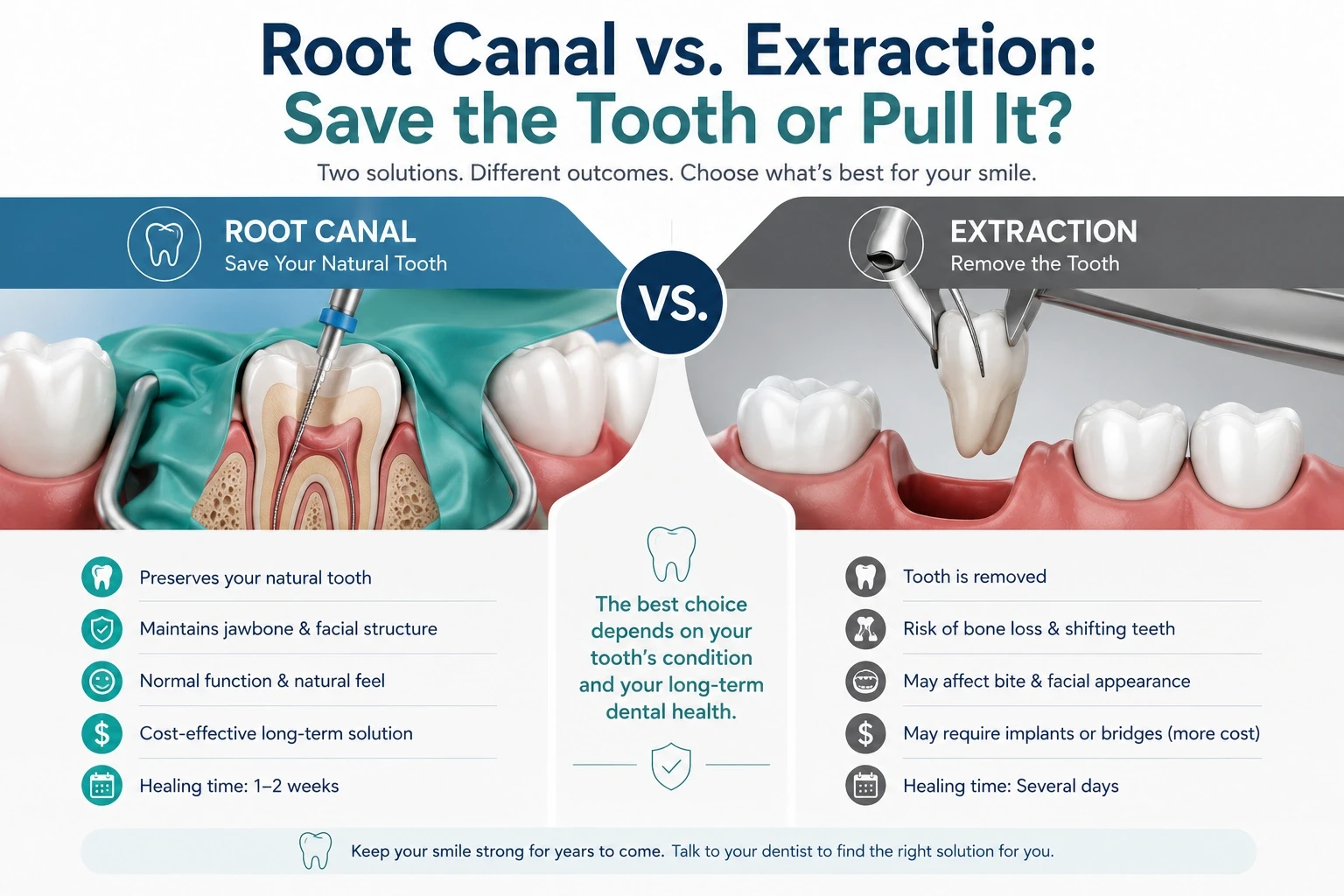
Root Canal vs. Extraction: Save the Tooth or Pull It?
Should you save a damaged tooth with a root canal or have it pulled? Weigh cost, recovery, prognosis, and replacement needs before you decide.
Read article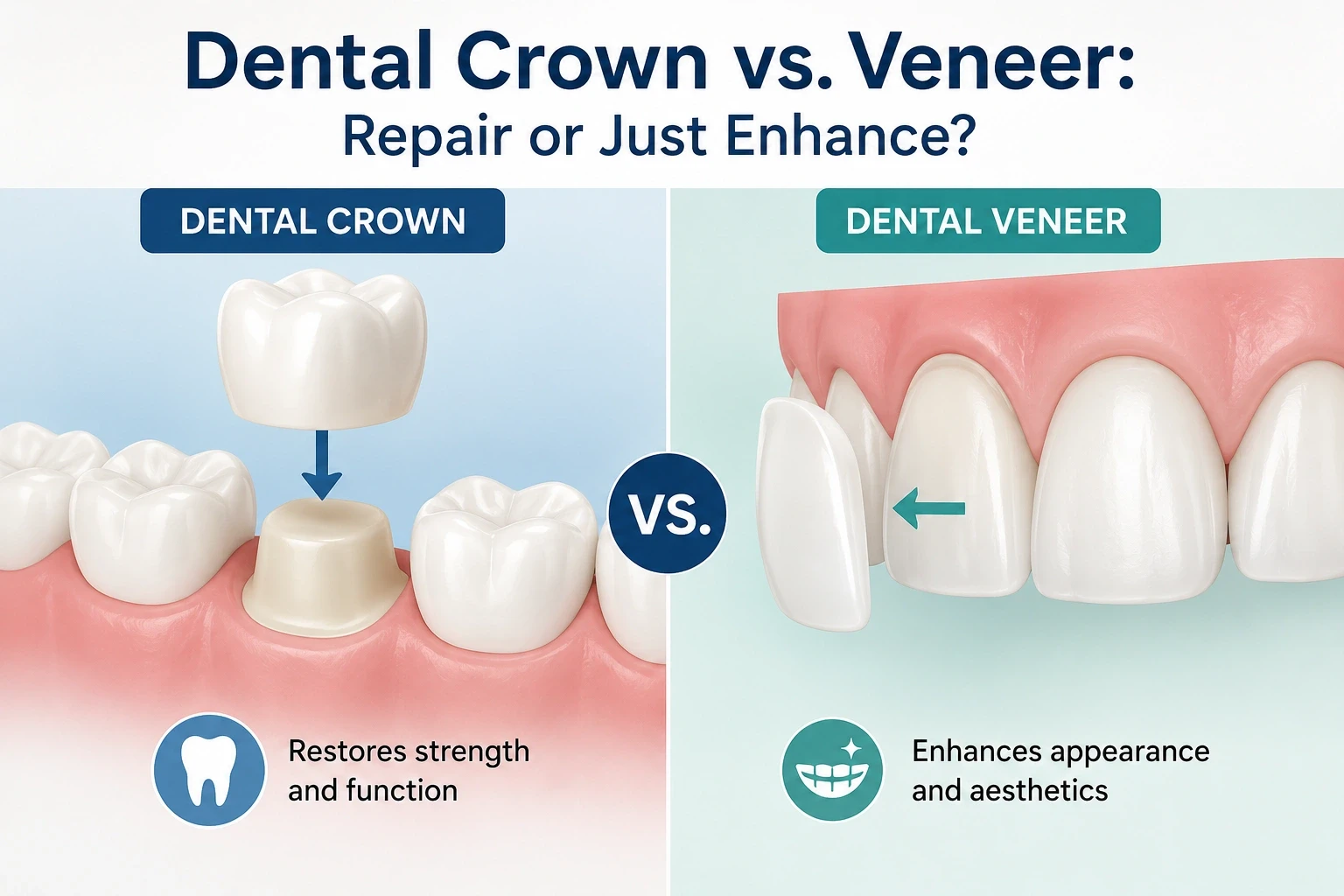
Dental Crown vs. Veneer: Repair or Just Enhance?
Crowns restore damaged teeth; veneers enhance healthy ones. Compare cost, tooth preparation, durability, and which cosmetic or restorative path fits.
Read article
Composite vs. Amalgam Fillings: Tooth-Colored or Silver?
Tooth-colored composite or durable silver amalgam? Compare cost, lifespan, appearance, bonding, and safety so you can choose the right filling material.
Read article
Invisalign vs. Traditional Braces: Cost, Comfort & Speed
Clear aligners or metal braces? Compare Invisalign and traditional braces on cost, treatment time, comfort, compliance, and which cases each option handles best.
Read article