
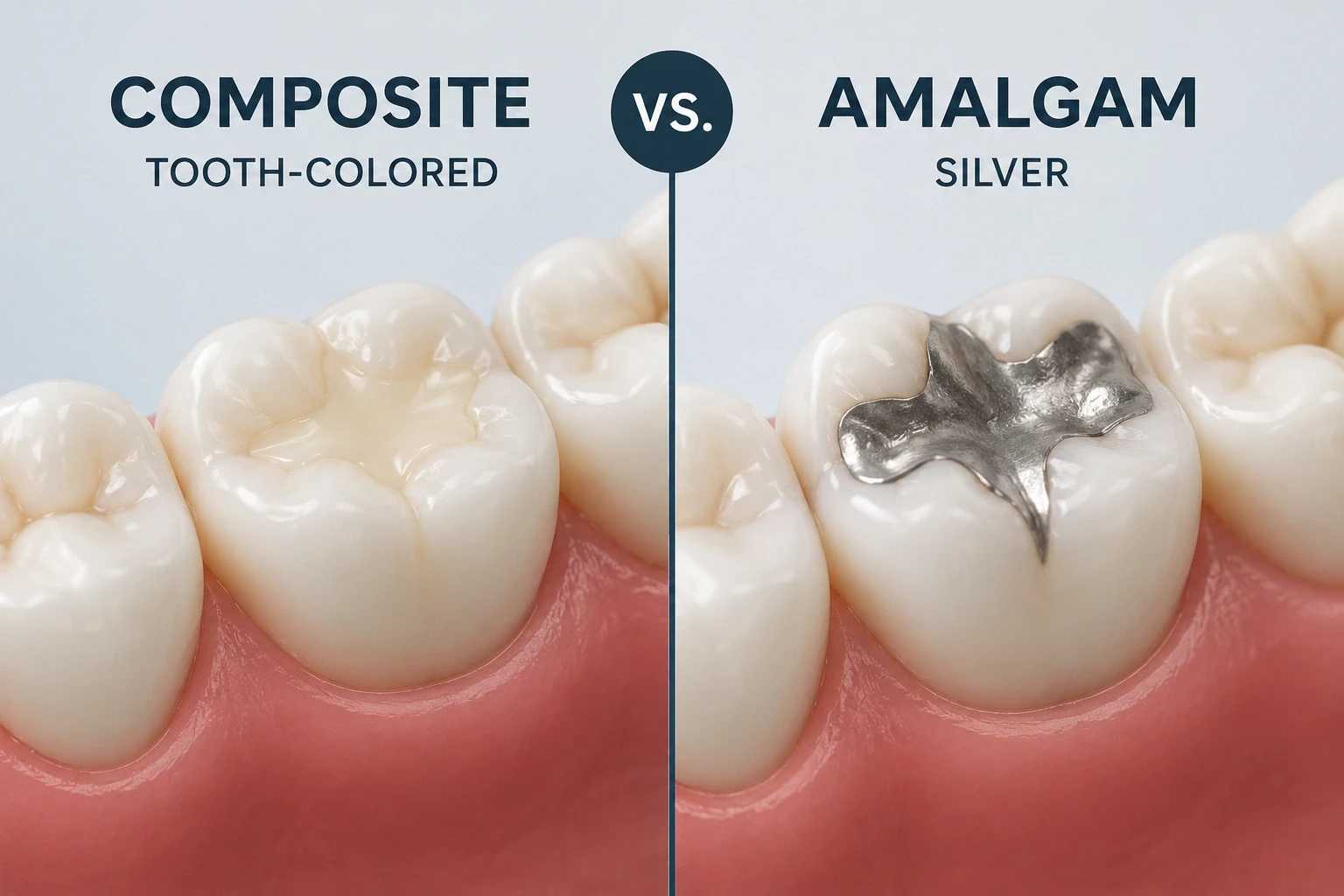
Composite vs. Amalgam Fillings: Tooth-Colored or Silver?
Compare composite and amalgam fillings on looks, cost, longevity, and safety. See which material fits front teeth, molars, and your insurance rules.

Reviewed by Dr. Sean Myran, DMDDoctor of Dental Medicine, University of Pennsylvania
Composite or Amalgam Fillings: Which Should You Choose?
Tooth-colored composite and silver amalgam both restore teeth after decay removal, but they differ in appearance, longevity in large bites, cost, and how much healthy tooth structure the dentist must prepare. Most modern offices default to composite for visible teeth; amalgam still appears in some high-load back teeth or when moisture control is difficult. Compare the trade-offs before you say yes in the chair.
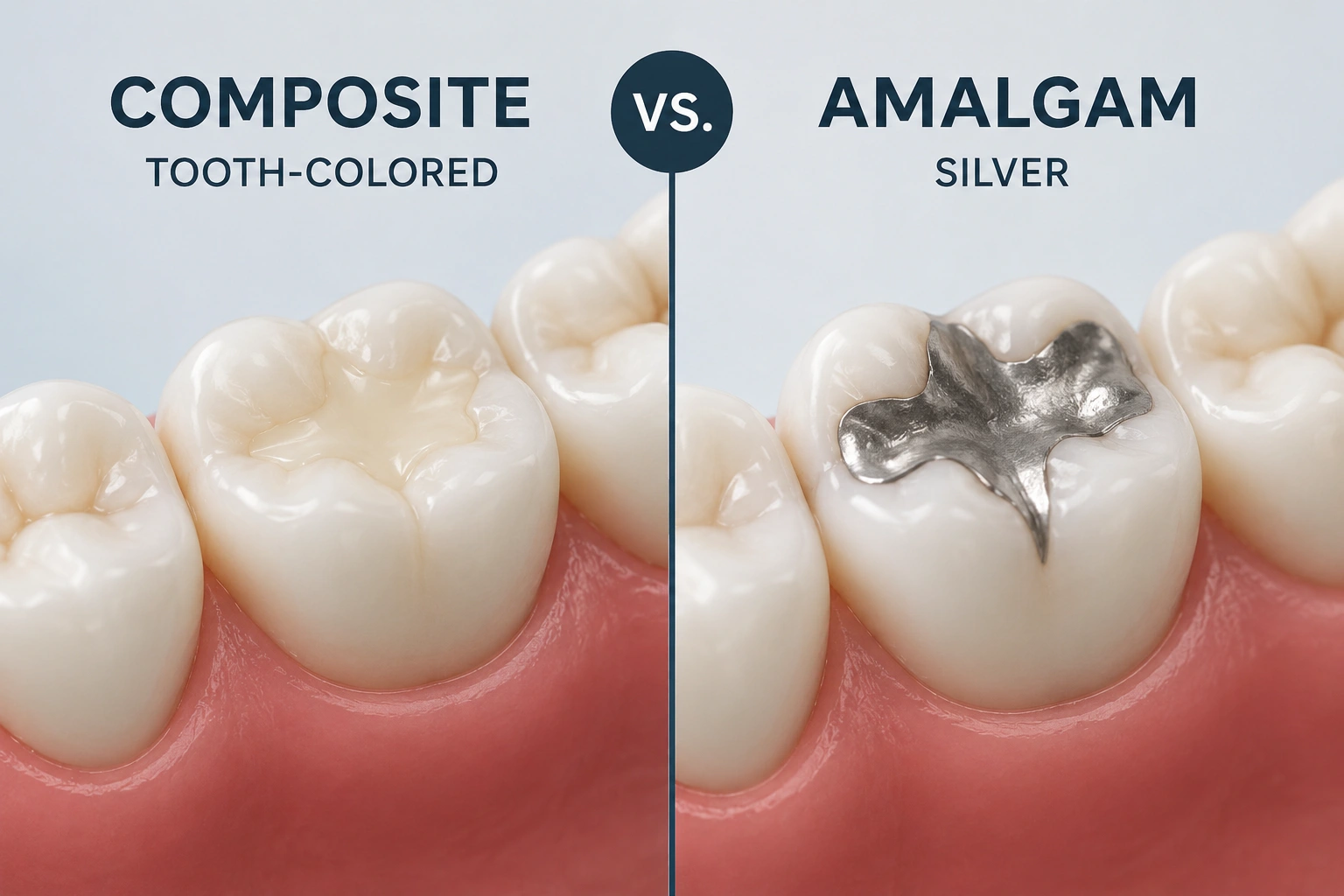
Quick Comparison
| Factor | Composite (Tooth-Colored) | Amalgam (Silver) |
|---|---|---|
| Appearance | Matches tooth shade | Metallic silver |
| Typical cost | Higher per surface | Often lower |
| Bonding | Adhesive bond to enamel/dentin | Mechanical retention in prepared form |
| Best for | Front teeth, small–moderate cavities | Large load-bearing areas in some cases |
| Moisture sensitivity | Needs a dry field | More forgiving in wet fields |
| Longevity | Excellent when well placed; technique sensitive | Long track record in large restorations |
Cost and Insurance Notes
Plans sometimes reimburse amalgam rates for back teeth and ask you to cover the composite upgrade difference. Ask for a pre-treatment estimate that lists surfaces and materials. Replacing intact amalgam “only for looks” is a cosmetic decision and may remove extra tooth structure — weigh that carefully.
Procedure and Longevity
After decay removal, composite is layered and light-cured; polish determines the final blend. Amalgam is condensed into a retentive preparation and hardens over time. Either filling fails sooner with open margins, heavy grinding, sugar-frequent diets, or skipped cleanings. Night guards help if you clench.
Safety and Risks
Composite is mercury-free and aesthetic, but technique errors can leave gaps. Amalgam contains mercury bound in an alloy; major health organizations consider existing amalgam fillings safe for most people, while some patients prefer to avoid new placement. Sensitivity after either filling usually settles; persistent bite pain needs adjustment.
The Case for Composite Fillings
Pros
- Natural look — Blends with enamel on smile teeth.
- Conservative bonding — Can preserve more tooth in many cavities.
- Mercury-free — Preferred by patients avoiding amalgam.
- Repairable — Small chips can sometimes be patched.
Cons
- Technique sensitive — Moisture control matters.
- Higher fee — Especially multi-surface restorations.
- Stain over time — Margins can pick up coffee/tea pigment.
The Case for Amalgam Fillings
Pros
- Durable under heavy bite force — Long clinical history in molars.
- Lower material cost — Budget-friendly in some plans.
- Moisture tolerance — Useful when isolation is difficult.
Cons
- Visible metal color — Not cosmetic.
- More tooth preparation in some designs — Needs mechanical shape.
- Thermal sensitivity — Metal conducts temperature changes.
Who Should Choose Which?
- Choose composite if the tooth shows when you smile, the cavity is small to moderate, and isolation is reliable.
- Discuss amalgam if your dentist recommends it for a large molar restoration, cost constraints, or challenging moisture control — and you are comfortable with the look.
- Replace old fillings when they leak, fracture, or have recurrent decay — not only because they are silver.
When Replacement Makes Sense
Old fillings earn replacement when margins leak, decay returns, the restoration fractures, or a crack threatens the tooth. Shiny silver alone is not a medical emergency. If you dislike the look of amalgam in a visible zone, ask whether a bonded composite or onlay can redesign the tooth without unnecessary drilling. Large failing fillings sometimes graduate to crowns because there is not enough healthy wall left for another direct filling.
Discuss bite forces and grinding. A beautiful composite in a heavy molar contact can wear or chip sooner if you clench — a night guard may protect both tooth-colored and metal restorations.
Front Teeth Versus Back Teeth
Smile-zone cavities almost always favor tooth-colored composite for obvious reasons. Large distal-molar restorations require an honest talk about isolation, bite force, and whether an indirect onlay or crown would outlast another giant filling. Location on the tooth matters as much as the brochure material name.
Ask your dentist to show the cavity on the radiograph or intraoral photo and explain why the recommended material fits that hole’s depth, width, and location. A one-sentence “we only do white fillings” policy is fine — just confirm the fee and warranty expectations before anesthesia starts.
Children’s primary teeth sometimes use different materials based on how long the tooth will remain; that pediatric decision tree is separate from adult permanent-tooth cosmetics.
How to Decide
Material choice should follow cavity size, bite force, cosmetics, and your dentist’s ability to place the restoration well. Ask why a material is recommended for your specific tooth, how long it should last, and what the backup plan is if the filling fails.
For neutral background before your visit, review MouthHealthy fillings overview and FDA dental amalgam information.
Related comparisons: Why regular dental checkups matter | Dental crown vs. veneer | Crown vs filling FAQ.
When you are ready for a case-specific recommendation, find a dentist near you through Dental Country and ask which option fits your diagnosis, timeline, and budget.
Frequently Asked Questions
How long do composite fillings last?
Many last 5–10+ years depending on size, bite, and hygiene. Small bonded fillings in low-stress areas often outlast large multi-surface ones.
Should you remove amalgam for detox?
Intact, well-sealed amalgam is usually left alone. Removal creates temporary mercury vapor exposure and should be done only when clinically needed, with proper isolation.
Why is my new filling sensitive?
Mild sensitivity to cold can last days to weeks. A high bite, cracked tooth, or deep cavity near the nerve needs a follow-up if pain worsens or lingers.
Can a filling fix a cracked tooth?
Small cracks may do well with bonded composite; larger structural cracks often need a crown. An exam and bite check decide which repair is safe.
Related articles
Keep exploring related topics from Dental Country.
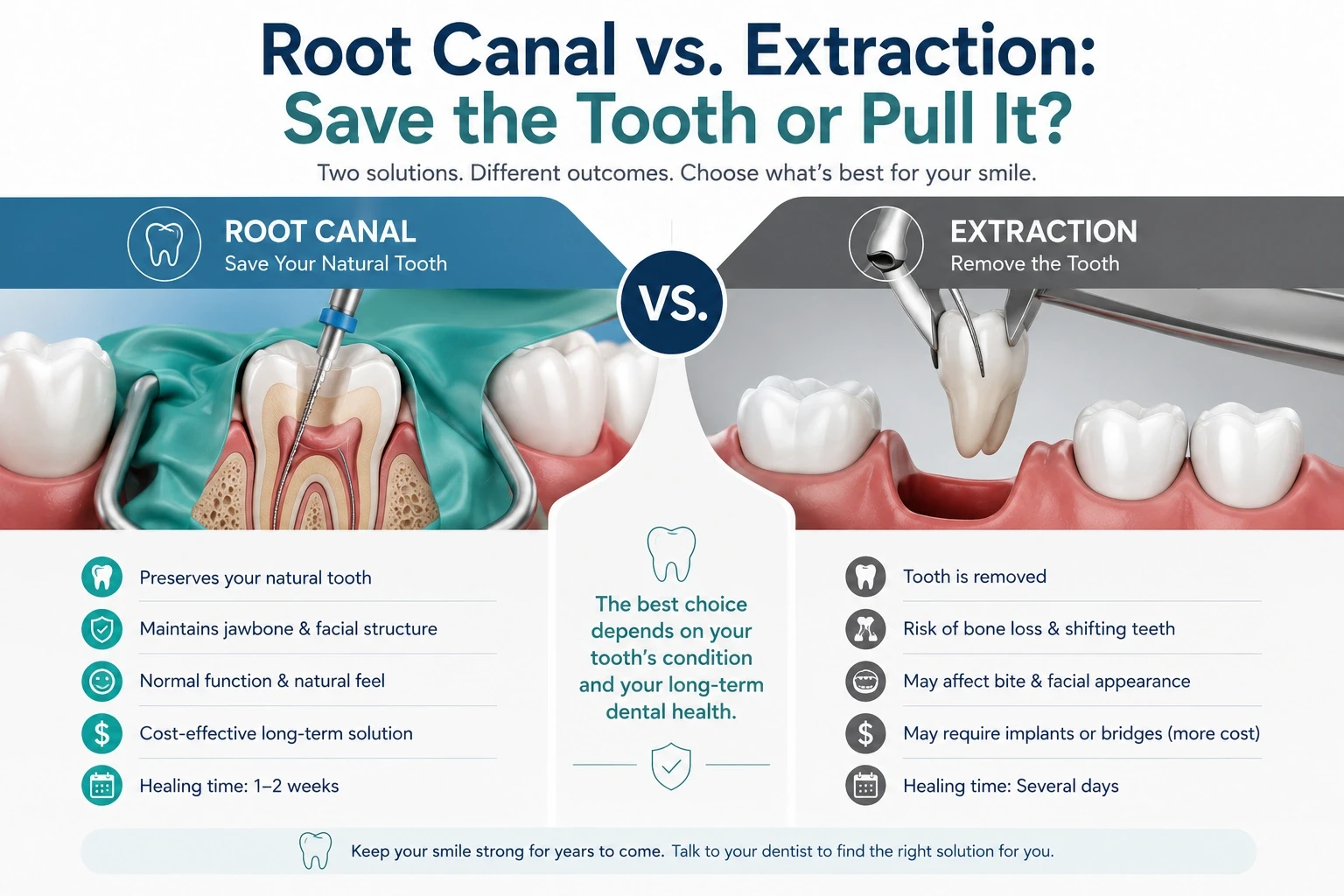
Root Canal vs. Extraction: Save the Tooth or Pull It?
Should you save a damaged tooth with a root canal or have it pulled? Weigh cost, recovery, prognosis, and replacement needs before you decide.
Read article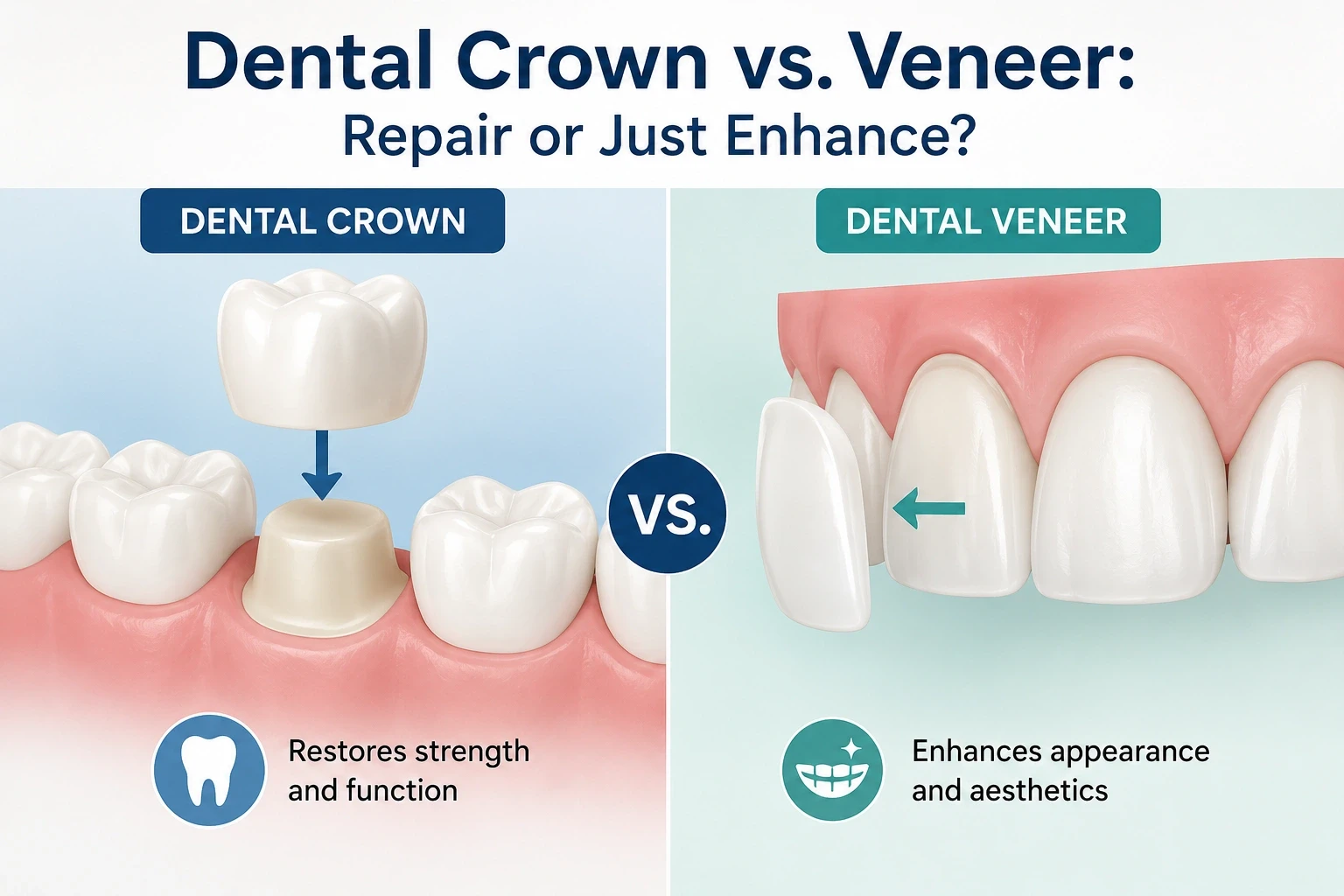
Dental Crown vs. Veneer: Repair or Just Enhance?
Crowns restore damaged teeth; veneers enhance healthy ones. Compare cost, tooth preparation, durability, and which cosmetic or restorative path fits.
Read article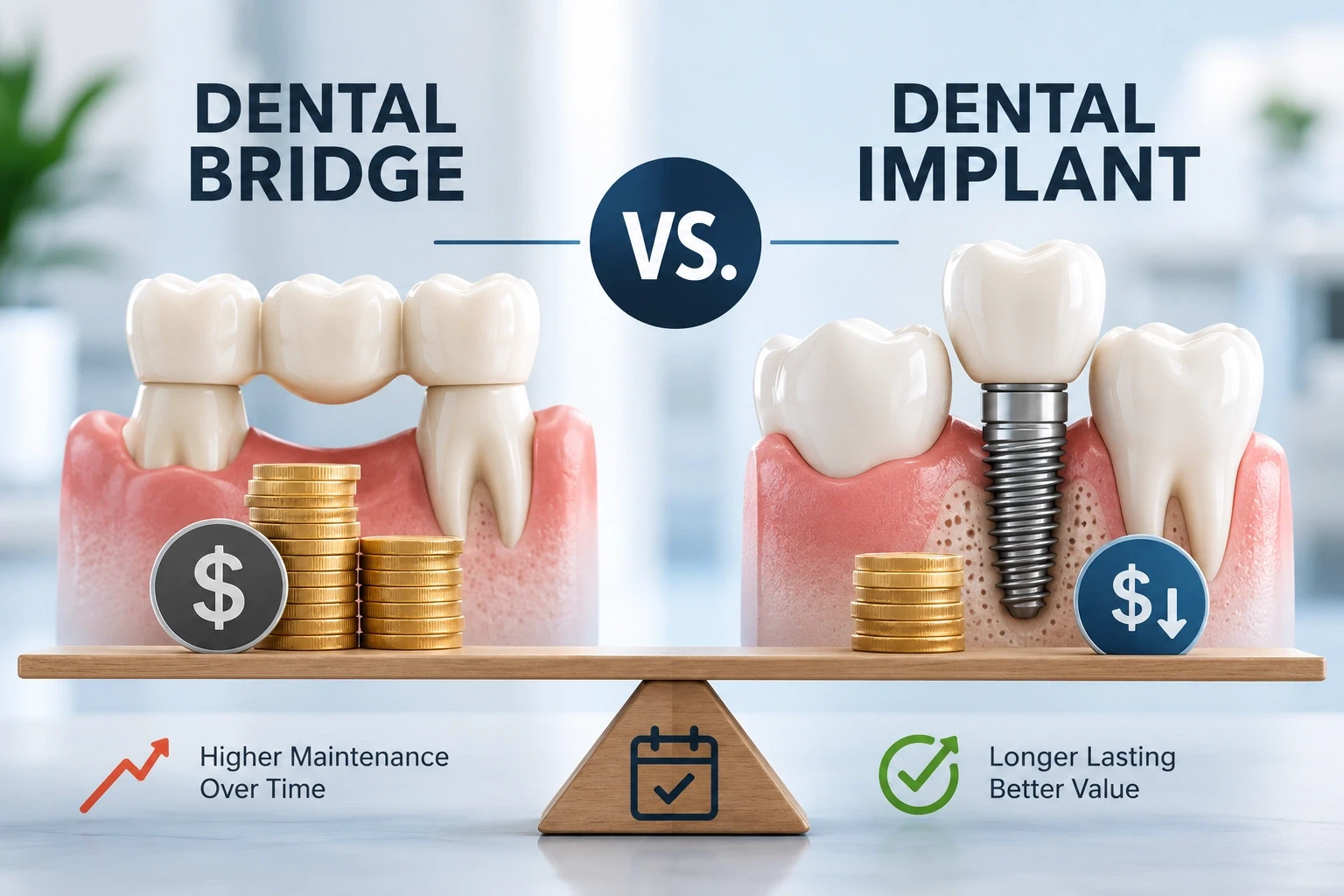
Dental Bridge vs. Implant: The Long-Term Cost Difference
A dental bridge costs less upfront, but an implant can last decades and spare neighboring teeth. Compare price, longevity, surgery, and candidacy.
Read article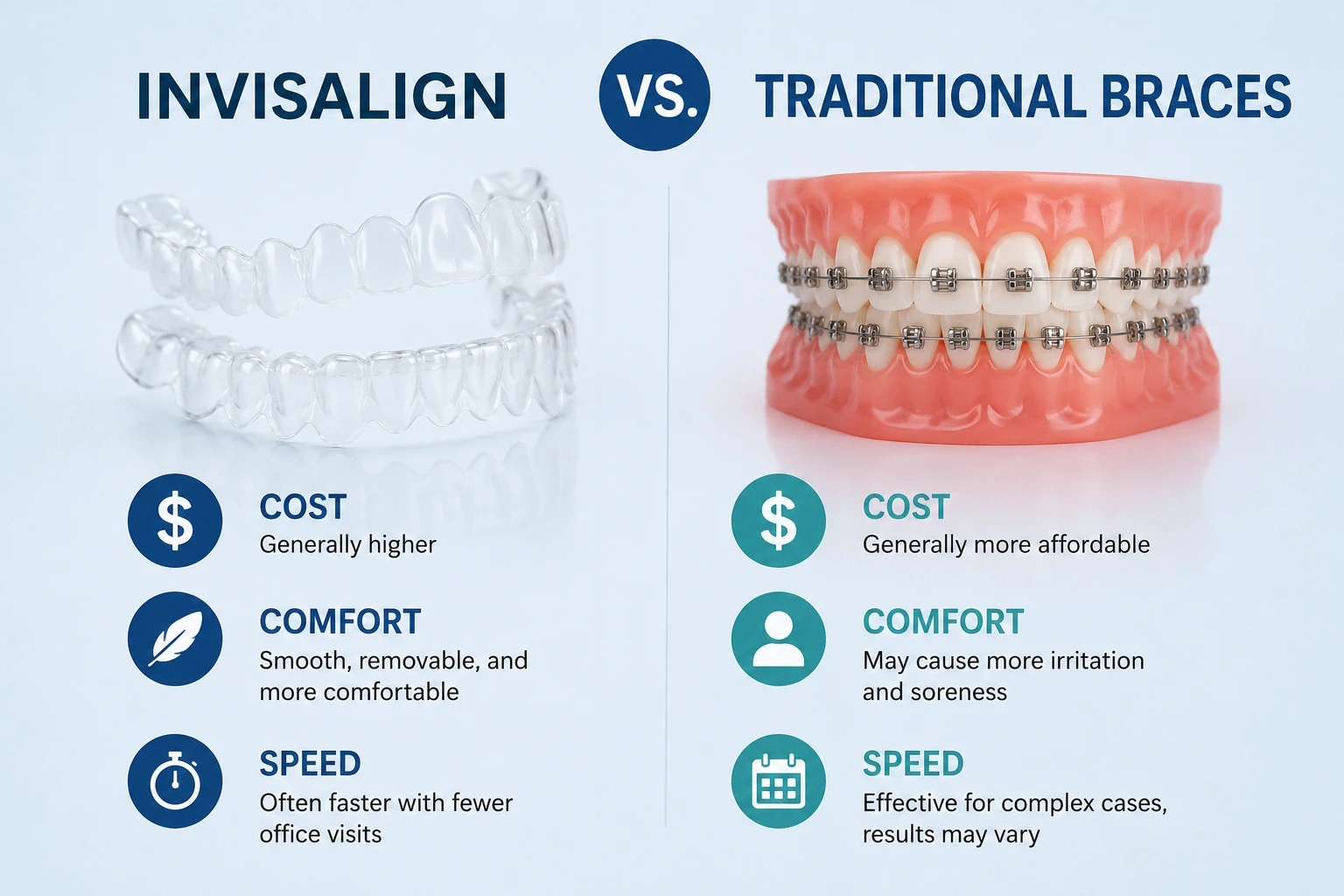
Invisalign vs. Traditional Braces: Cost, Comfort & Speed
Clear aligners or metal braces? Compare Invisalign and traditional braces on cost, treatment time, comfort, compliance, and which cases each option handles best.
Read article