
Crown Vs Filling: How Do Dentists Decide?
Dentists choose crowns or fillings by tooth structure, crack risk, cavity size, bite forces, gum access, and whether the tooth needs reinforcement.

Reviewed by Dr. Sean Myran, DMDDoctor of Dental Medicine, University of Pennsylvania
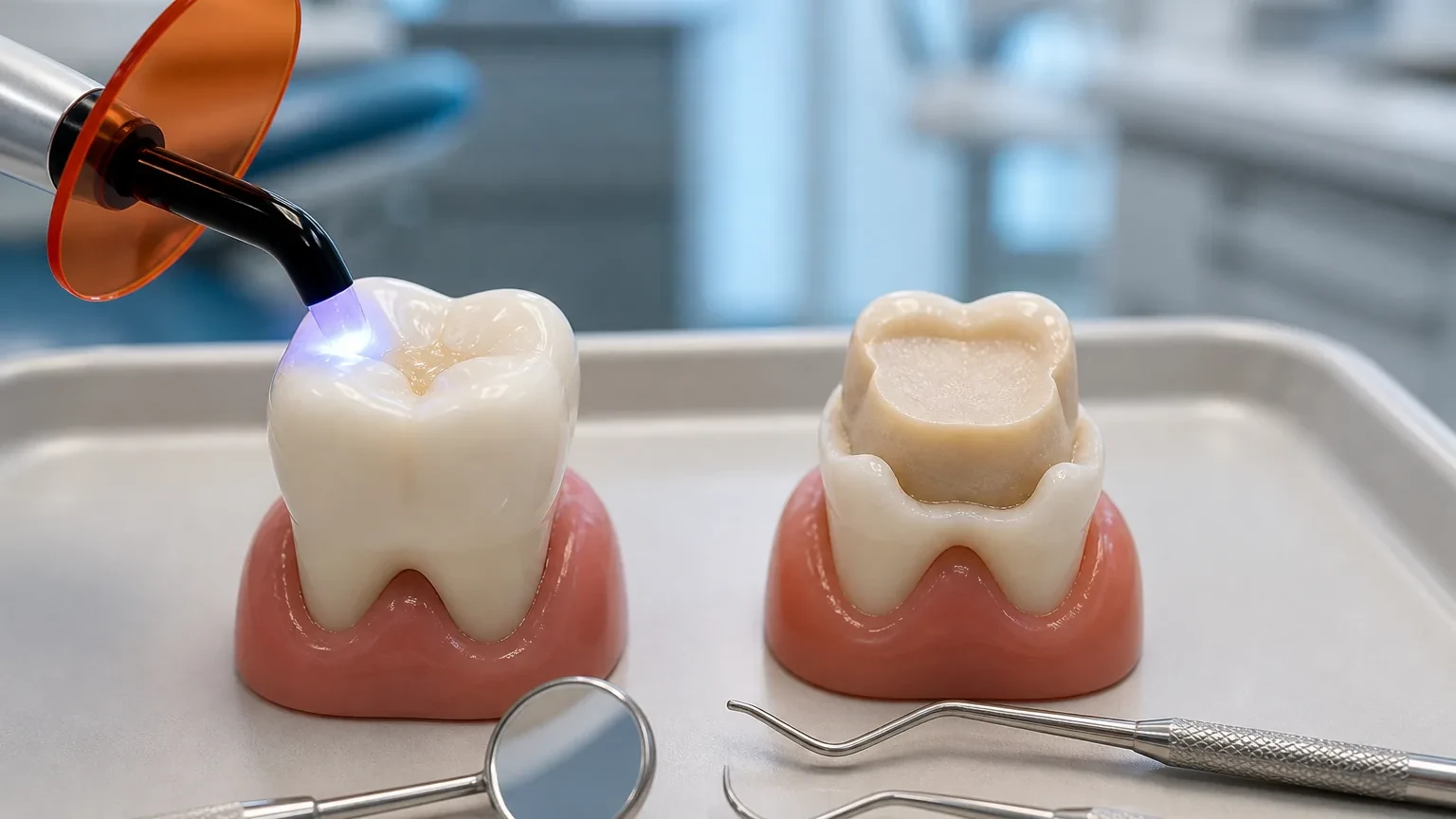
Dentists usually choose between a crown and a filling by asking whether the tooth needs repair alone or reinforcement. A filling replaces a smaller missing area inside a tooth. A crown covers the tooth so weakened walls are held together under chewing forces. MouthHealthy describes crowns as covers for teeth that restore strength and shape. The decision is less about the label and more about how much reliable tooth is left.
Crown And Filling Compared
| Question | Filling | Crown |
|---|---|---|
| How much tooth is missing? | Small to moderate area | Large area or missing cusp |
| What does it do? | Seals and rebuilds the cavity | Covers and reinforces the tooth |
| Crack risk | Lower when walls are thick | Higher when walls are thin or fractured |
| Typical preparation | More conservative | More tooth reshaping and lab work |
| Best fit | Solid tooth with contained damage | Weak tooth that needs coverage |
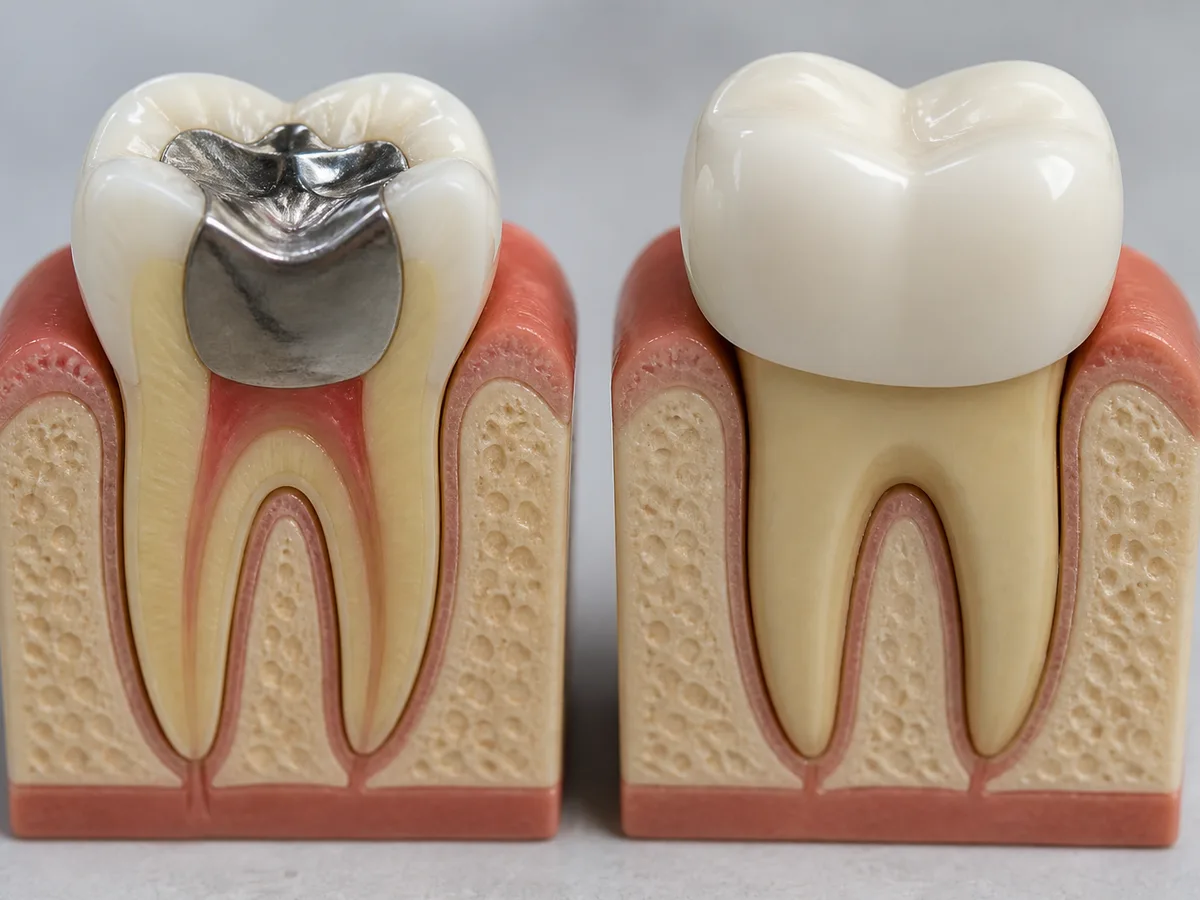 The remaining walls decide the risk.
Size is only part of the answer
A large filling is not automatically wrong, and a crown is not automatically overtreatment. The key is whether the remaining cusps can flex, crack, or split when normal chewing returns.
Where The Choice Gets Close
The difficult cases are not tiny cavities or teeth that have obviously broken apart. The close call is a tooth with an old filling that still works but leaves thin enamel around the edges. If removing decay or old material would undermine a cusp, the dentist may recommend a crown, onlay, or other indirect restoration before the tooth breaks in a worse direction.
Cracks change the conversation. A tooth can have a modest filling size but still need coverage if a crack runs through a chewing cusp. Bite pain on release, a line seen with magnification, or a history of repeated broken fillings can move the plan toward a crown. If you are trying to decide whether symptoms fit crown territory, see When Do You Need A Dental Crown?.
Cost and speed can make fillings tempting, but a filling that fails by splitting the tooth may create a more expensive problem later. On the other hand, a crown on a tooth that could predictably hold a filling removes more structure than needed. Good dentistry lives in that balance: conserve tooth when possible, cover it when the structure asks for help.
Photos can make the decision easier to follow. Ask to see the tooth before and after old filling material is removed, especially if the recommendation changes during the visit. A dentist may start with a filling plan and discover a hidden crack, soft dentin, or unsupported cusp that changes the risk. That does not automatically mean anything went wrong. It means the final choice should match the tooth that is actually present after damaged material is cleaned away.
When you compare estimates, make sure both dentists are describing the same tooth condition. A filling quote before old material is removed may not include what is found underneath, while a crown quote may assume a larger structural problem. Ask what would change the plan during treatment and how you would be told.
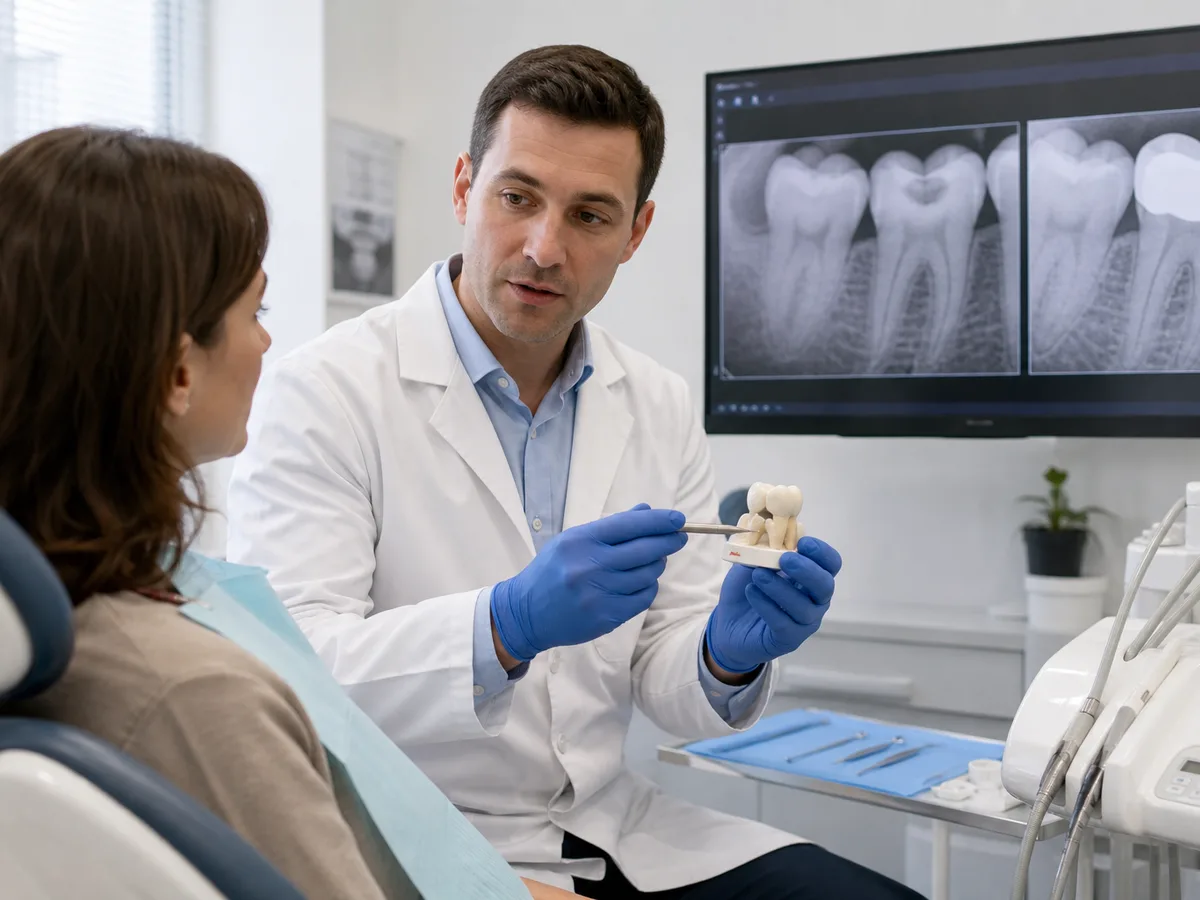 Evidence makes the tradeoff clearer.
Ask what the filling would rely on
A useful question is, "What would support the new filling after the old one and decay are removed?" If you want another estimate, use find a dentist and bring recent X-rays or photos if you have them.
Questions For The Visit
Ask whether the tooth has cracks, how many walls remain, whether an onlay is an option, and what failure would look like if you choose a filling first. Also ask about material, temporary steps, and aftercare if a crown is chosen. For longer planning, compare How Long Do Dental Crowns Last? and How Long Does It Take To Get A Crown?.
Related articles
Keep exploring related topics from Dental Country.
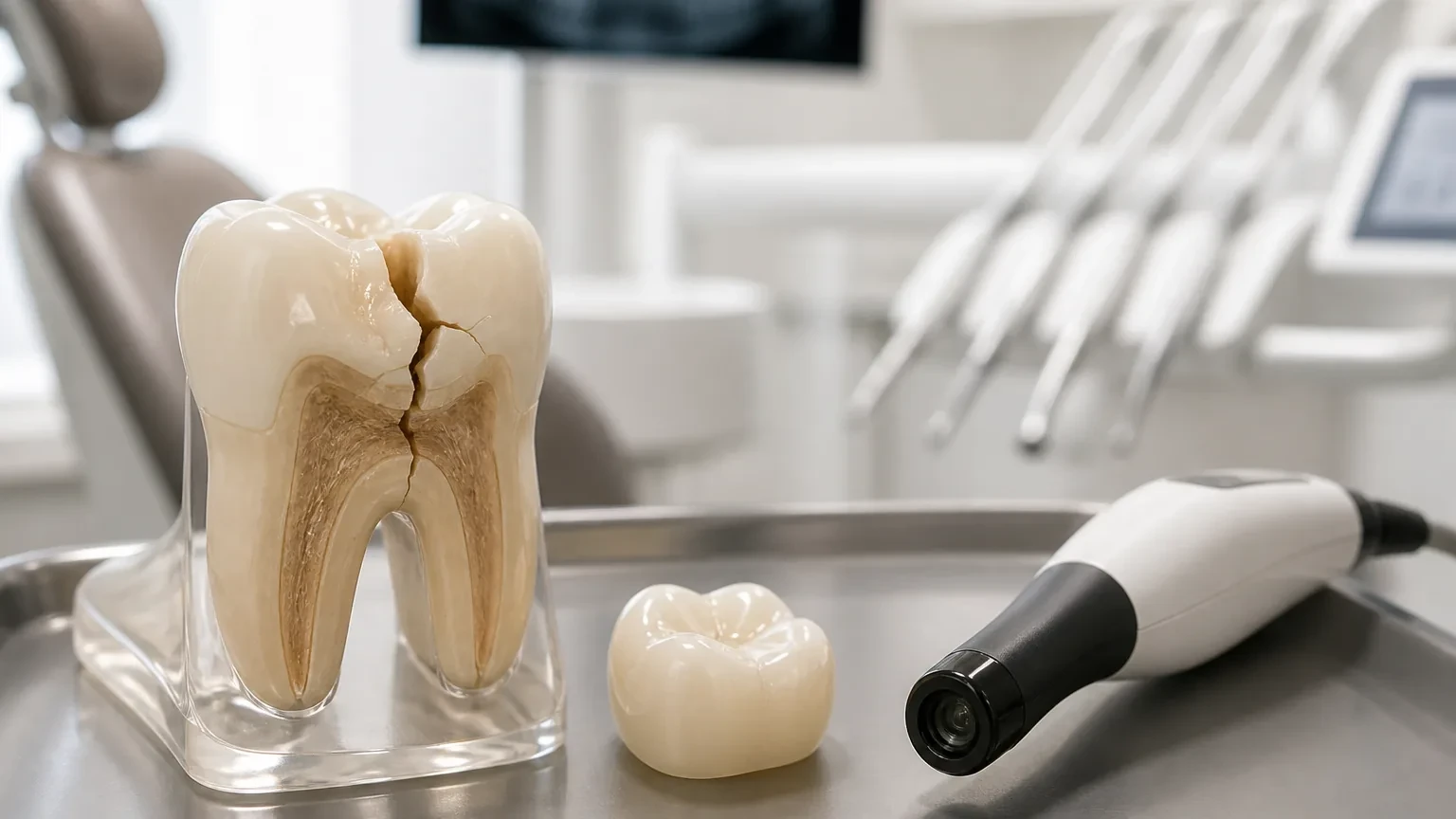
When Do You Need A Dental Crown?
A crown recommendation usually means the tooth needs reinforcement, not just a patch. The deciding clues are cracks, walls, bite, and remaining enamel.
Read article
How Long Do Dental Crowns Last?
Crown lifespan is not a fixed warranty. The tooth underneath, the bite around it, and the edge where plaque collects decide much of the outcome.
Read article
What Is A Dental Bridge?
A dental bridge fills a tooth gap with an artificial tooth supported by neighboring teeth or implants, but the anchors and cleaning plan matter.
Read article
Dental Bridge Vs Implant: Which Is Better?
Bridges and implants both replace missing teeth, but they ask different things from bone, neighboring teeth, timeline, surgery, and maintenance.
Read article