
What Is A Dental Bridge?
A dental bridge replaces one or more missing teeth by anchoring artificial teeth to crowns or implants. Learn parts, steps, cleaning, and limits.

Reviewed by Dr. Sean Myran, DMDDoctor of Dental Medicine, University of Pennsylvania
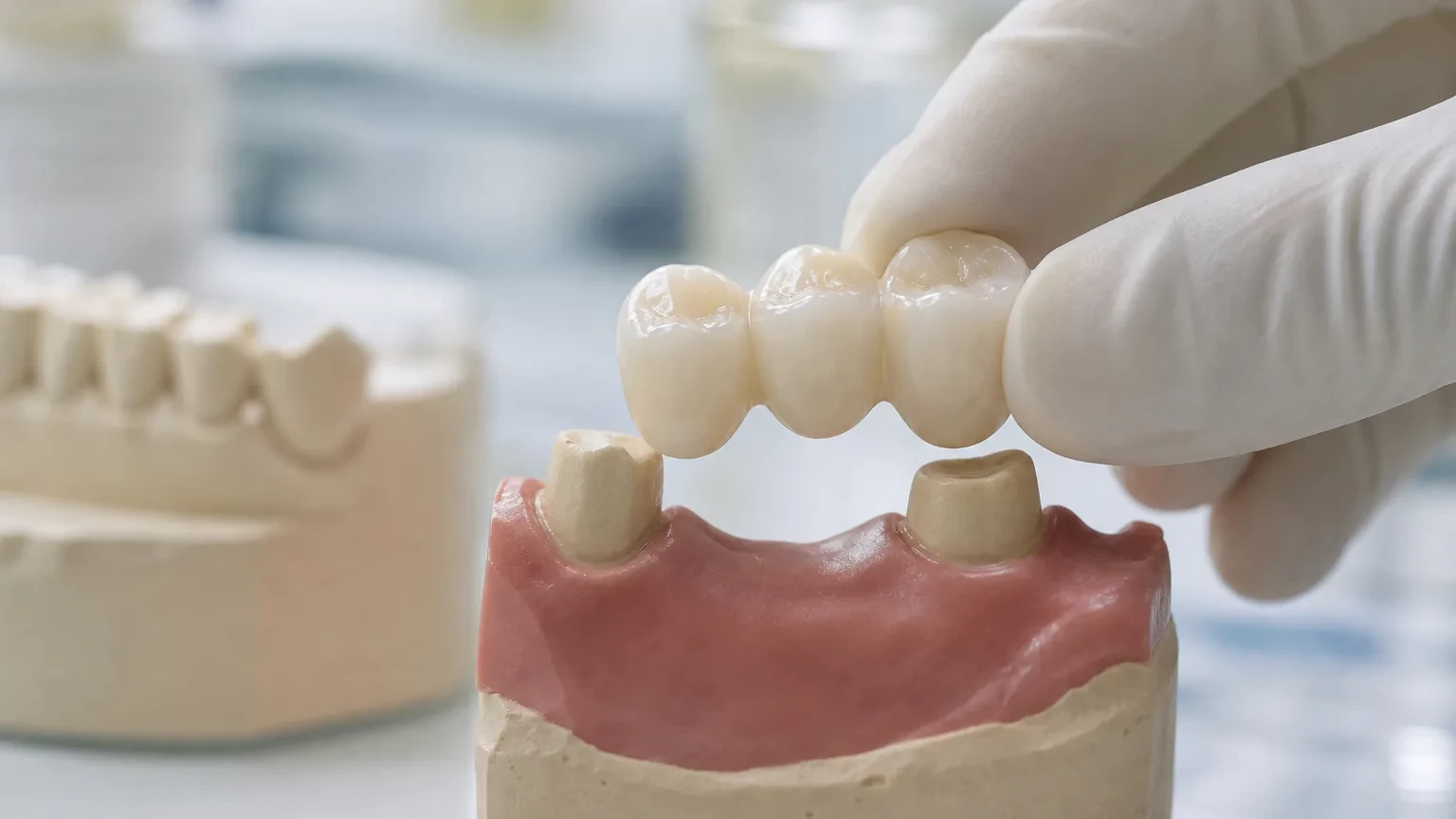
A dental bridge is a fixed restoration that replaces one or more missing teeth. The replacement tooth, called a pontic, is connected to supports on each side. Those supports may be crowns on natural teeth, implants, or a combination in selected cases. MouthHealthy explains that bridges replace missing teeth by anchoring artificial teeth to nearby teeth or implants. Unlike a removable partial denture, a traditional bridge is cemented or attached so you do not take it out at night.
The Main Parts Of A Bridge
- Abutments: the supporting teeth or implants that hold the bridge.
- Pontic: the artificial tooth that fills the visible and chewing gap.
- Connectors: the sections that join the pontic to the supports.
- Margins: the edges where crowns meet natural tooth structure or implant parts.
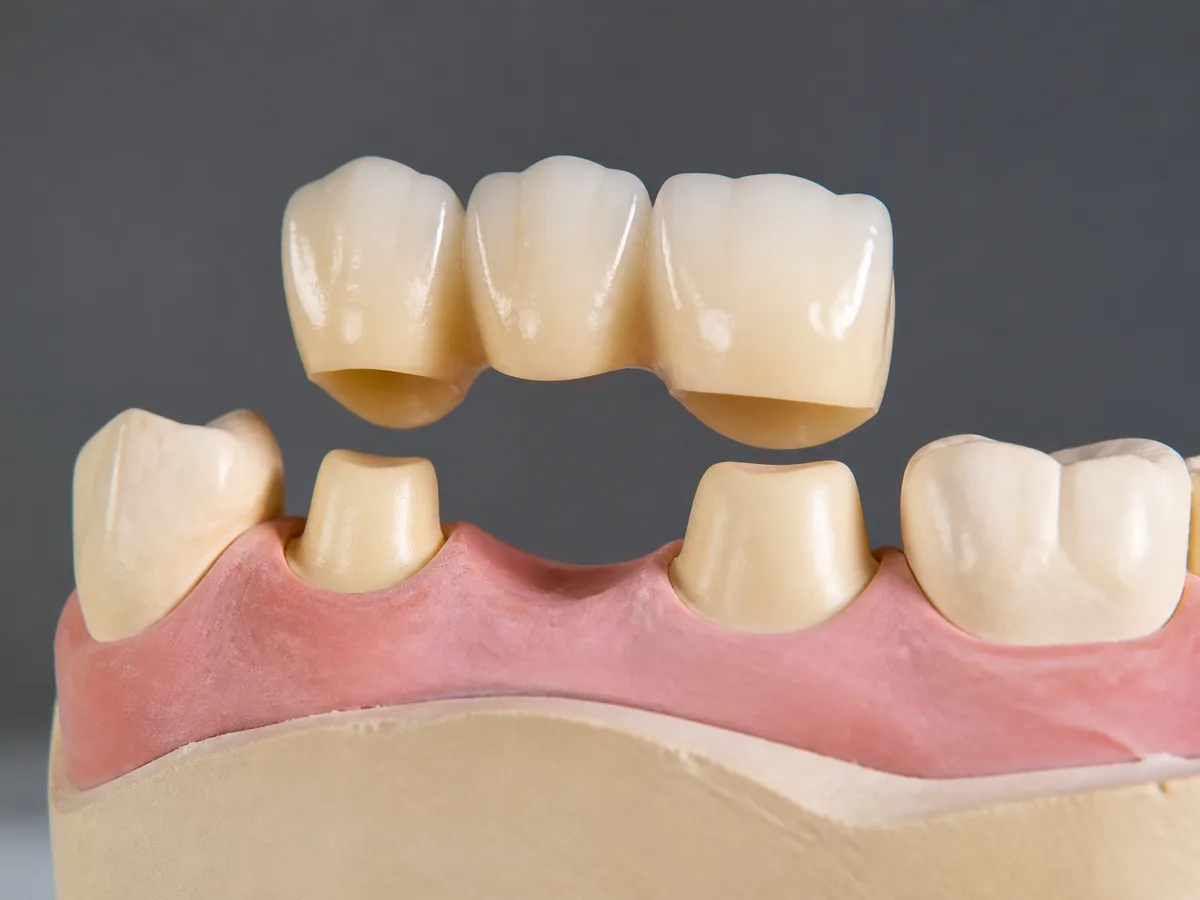 The anchor teeth matter as much as the gap.
A bridge is a connected system
The pontic fills the space, but the supports carry the load. That is why dentists evaluate the teeth next to the gap, gum health, bite pressure, and bone shape before recommending a bridge.
How A Traditional Bridge Works
For a traditional bridge, the teeth next to the missing tooth are shaped for crowns. An impression or digital scan records the area. A lab designs a single connected restoration with crowns on the anchor teeth and a pontic in the middle. A temporary bridge may protect the prepared teeth while the final bridge is made. At the delivery visit, the dentist checks fit, bite, shade, gum contact, and cleanability before cementing.
A bridge can restore chewing contact, keep nearby teeth from drifting, support speech, and improve smile appearance. It can also solve more than one problem when the neighboring teeth already need crowns. The tradeoff is that healthy adjacent teeth may need reshaping. That is one reason implants are often compared with bridges when the support teeth are untouched. For that decision, see Dental Bridge Vs Implant: Which Is Better?.
Cleaning is different because the pontic is connected. You cannot floss straight down between the joined units like separate teeth. Most people need floss threaders, super floss, interdental brushes, or a water flosser to clean under the pontic and around the abutments. Decay or gum inflammation around an anchor tooth can threaten the entire bridge.
Bridge design is also shaped by the gum ridge under the missing tooth. Some pontics lightly touch the gum for appearance. Others leave more space for cleaning. Front bridges may need careful shaping so speech sounds natural and the tooth seems to emerge from the gum. Back bridges may focus more on strength and food control. A bridge that looks good but traps food every day will become frustrating, so comfort, speech, cleaning, and appearance should all be checked before final approval.
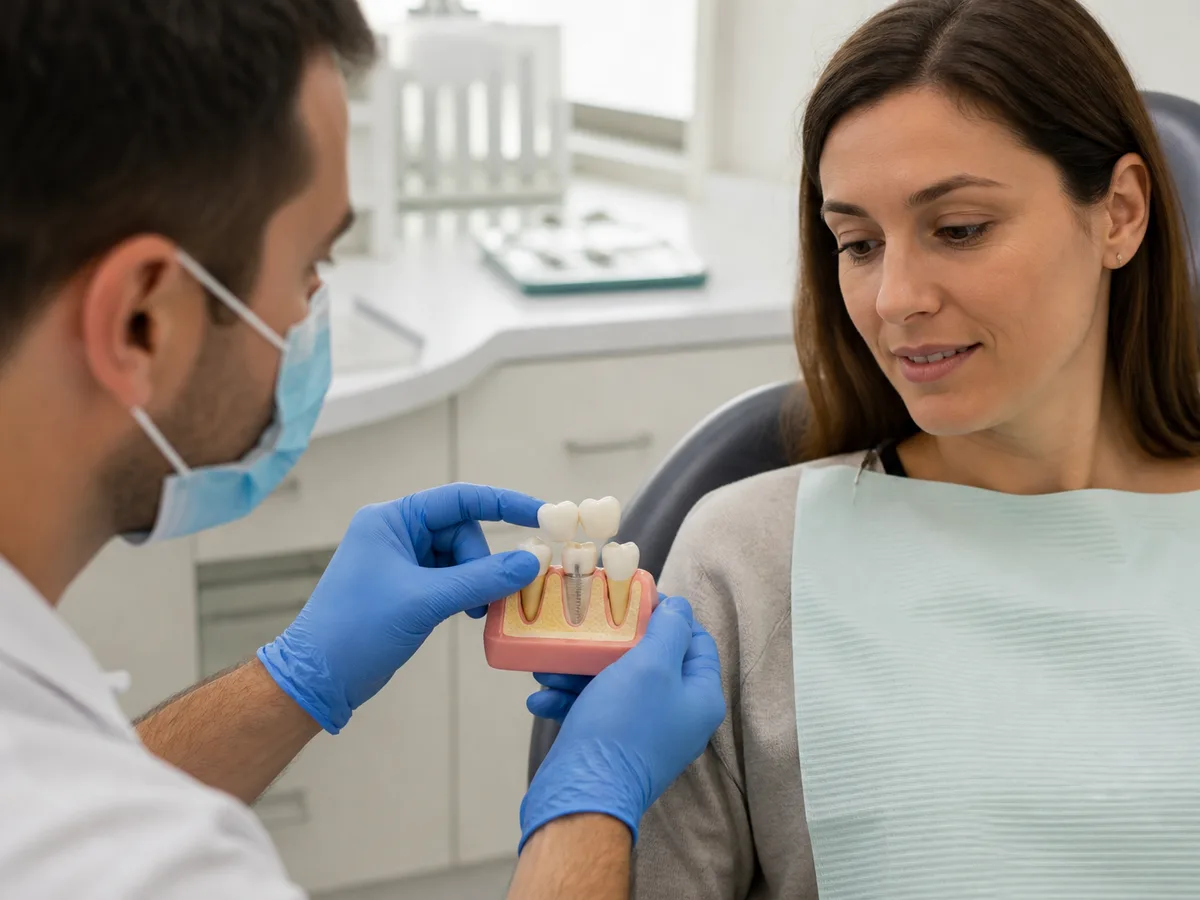 A bridge should be designed for daily cleaning.
Plan the cleaning before cementation
Ask the dental team to show exactly how to clean under your bridge before you leave with the final restoration. To find an office that can evaluate a missing tooth space, use find a dentist and mention whether the neighboring teeth already have crowns.
When A Bridge May Not Be Ideal
A bridge may be less predictable if the support teeth are weak, short, mobile, badly decayed, or surrounded by active gum disease. A long span can create leverage. A heavy bite can overload connectors. If the gap is large or the anchor teeth are pristine, an implant, partial denture, orthodontic space plan, or no replacement may deserve discussion. For care habits after treatment, compare How Do You Care For A Dental Crown? and Can A Dental Crown Fall Off?.
Related articles
Keep exploring related topics from Dental Country.
When Do You Need A Dental Crown?
A crown recommendation usually means the tooth needs reinforcement, not just a patch. The deciding clues are cracks, walls, bite, and remaining enamel.
Read article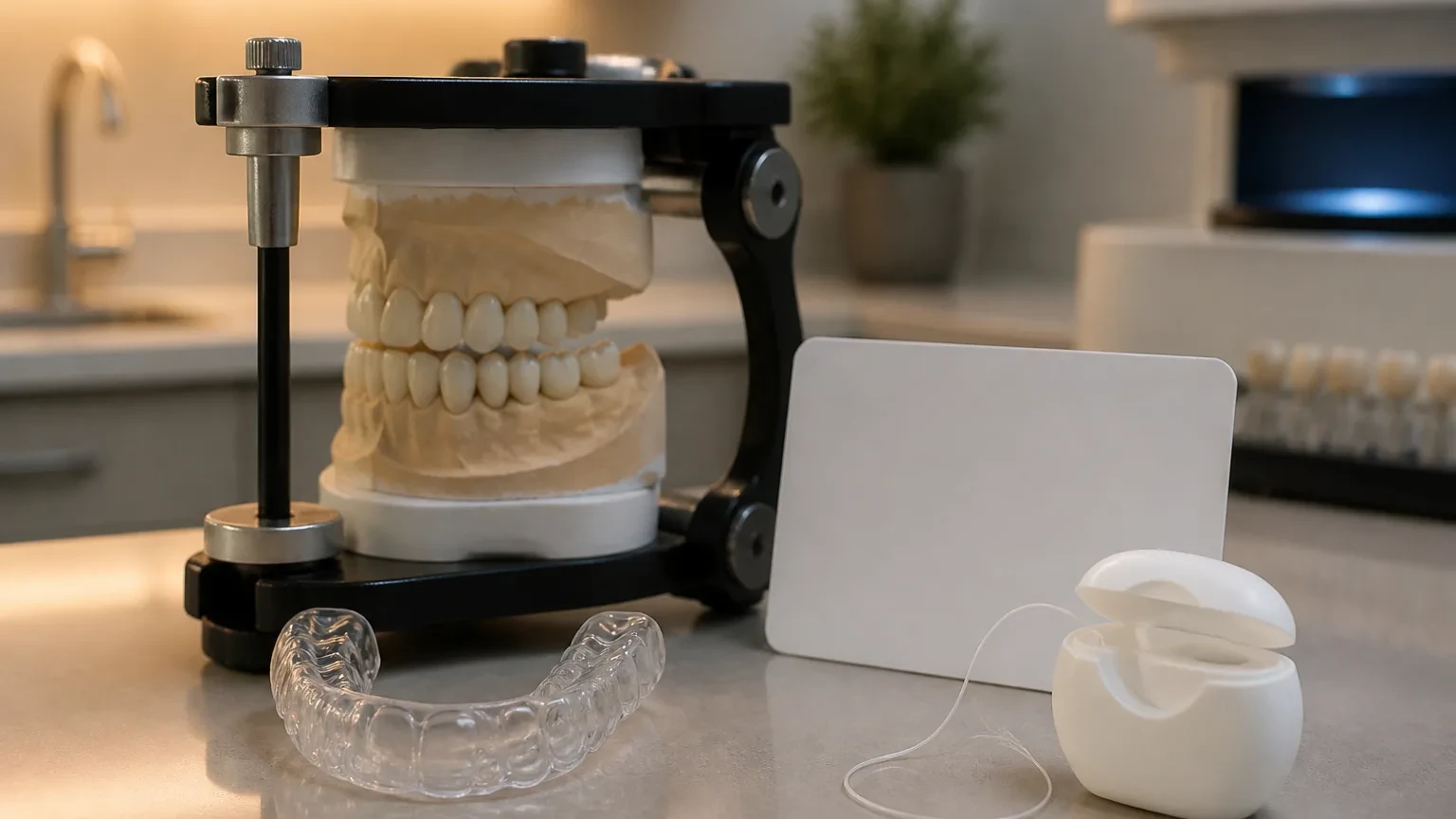
How Long Do Dental Crowns Last?
Crown lifespan is not a fixed warranty. The tooth underneath, the bite around it, and the edge where plaque collects decide much of the outcome.
Read article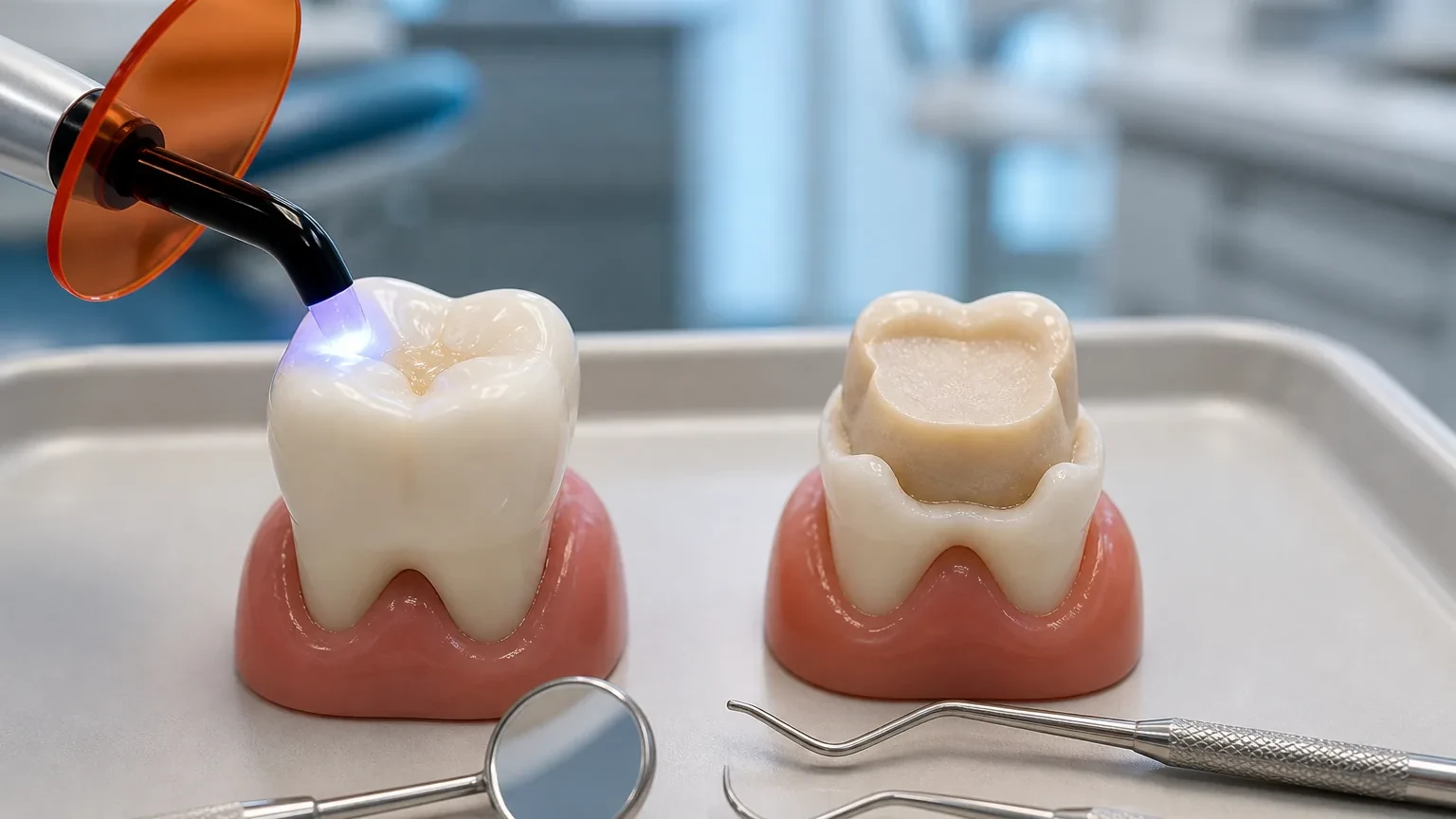
Crown Vs Filling: How Do Dentists Decide?
A filling replaces missing tooth. A crown protects what is left. The right choice depends on structure, cracks, bite, and how much tooth remains.
Read article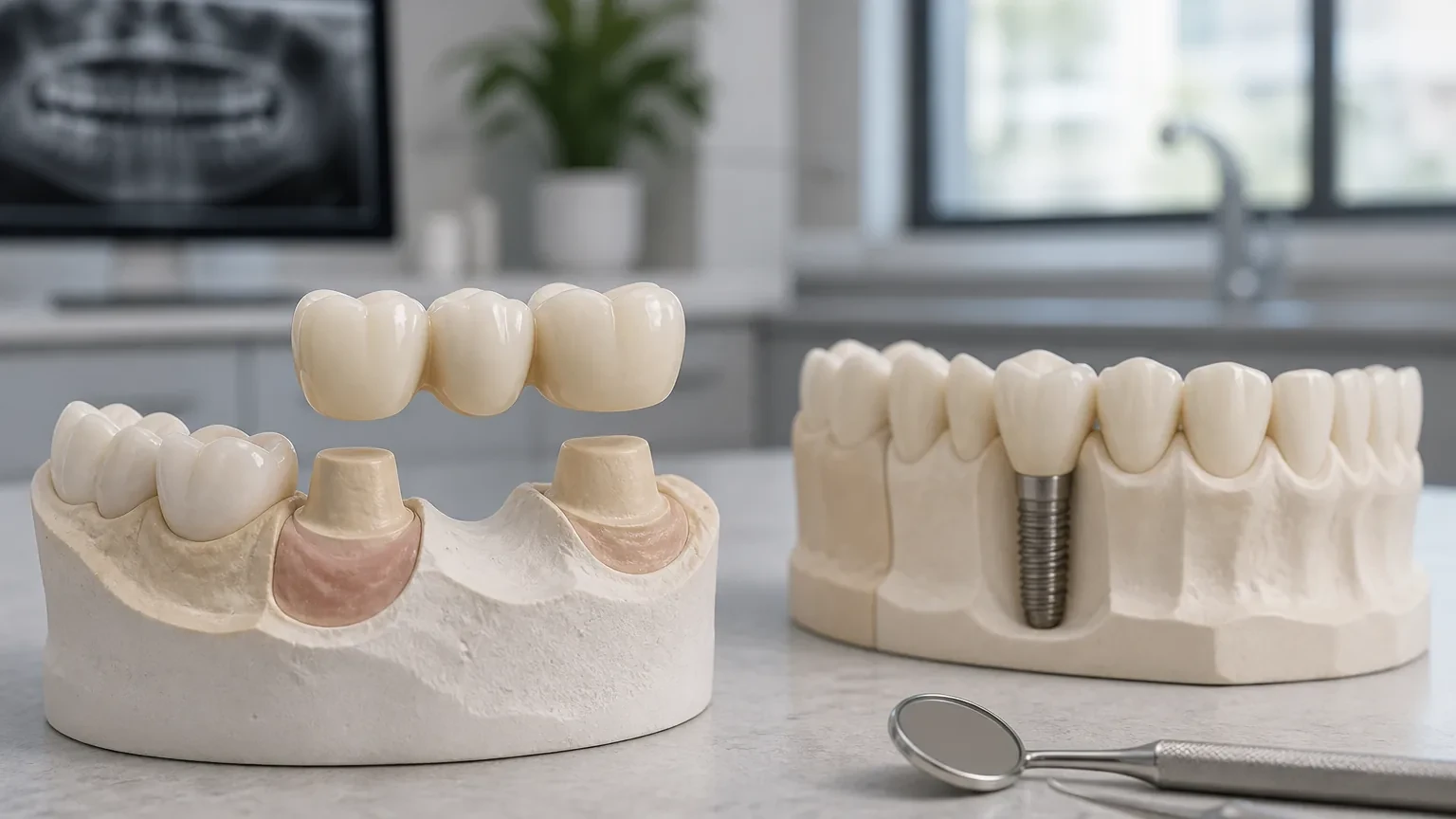
Dental Bridge Vs Implant: Which Is Better?
Bridges and implants both replace missing teeth, but they ask different things from bone, neighboring teeth, timeline, surgery, and maintenance.
Read article