
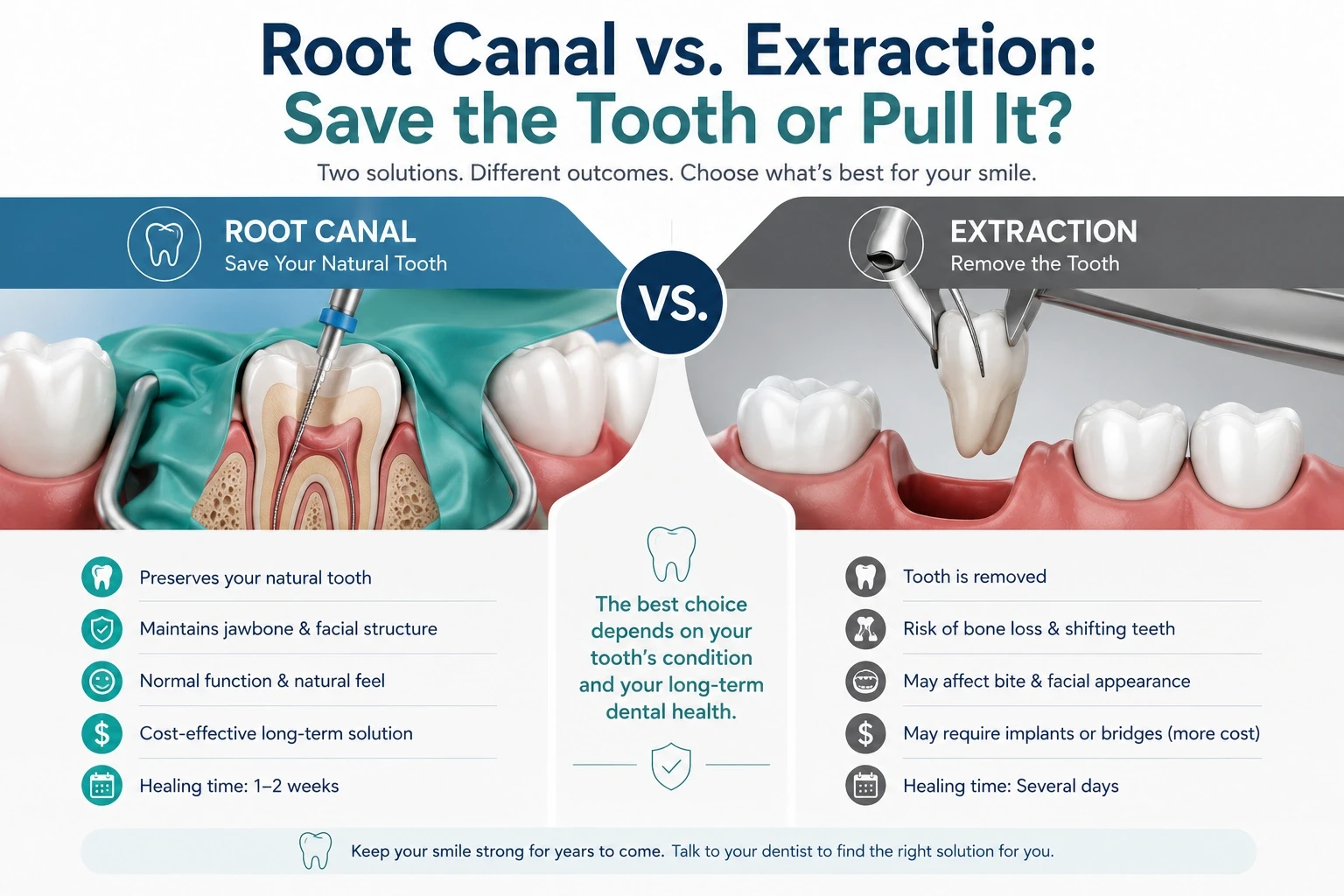
Root Canal vs. Extraction: Save the Tooth or Pull It?
Compare root canal treatment and extraction on cost, recovery, and long-term tooth replacement needs. Learn when saving the tooth is worth it.

Reviewed by Dr. Sean Myran, DMDDoctor of Dental Medicine, University of Pennsylvania
Root Canal or Extraction: Should You Save the Tooth?
A root canal removes infected or inflamed pulp so you can keep your natural tooth. Extraction removes the tooth entirely and shifts the problem to how you will replace — or live without — that space. Saving the tooth is often best when the root and remaining structure are restorable; extraction may win when cracks, bone loss, or cost make retention unpredictable. Compare both paths before pain forces a rushed choice.
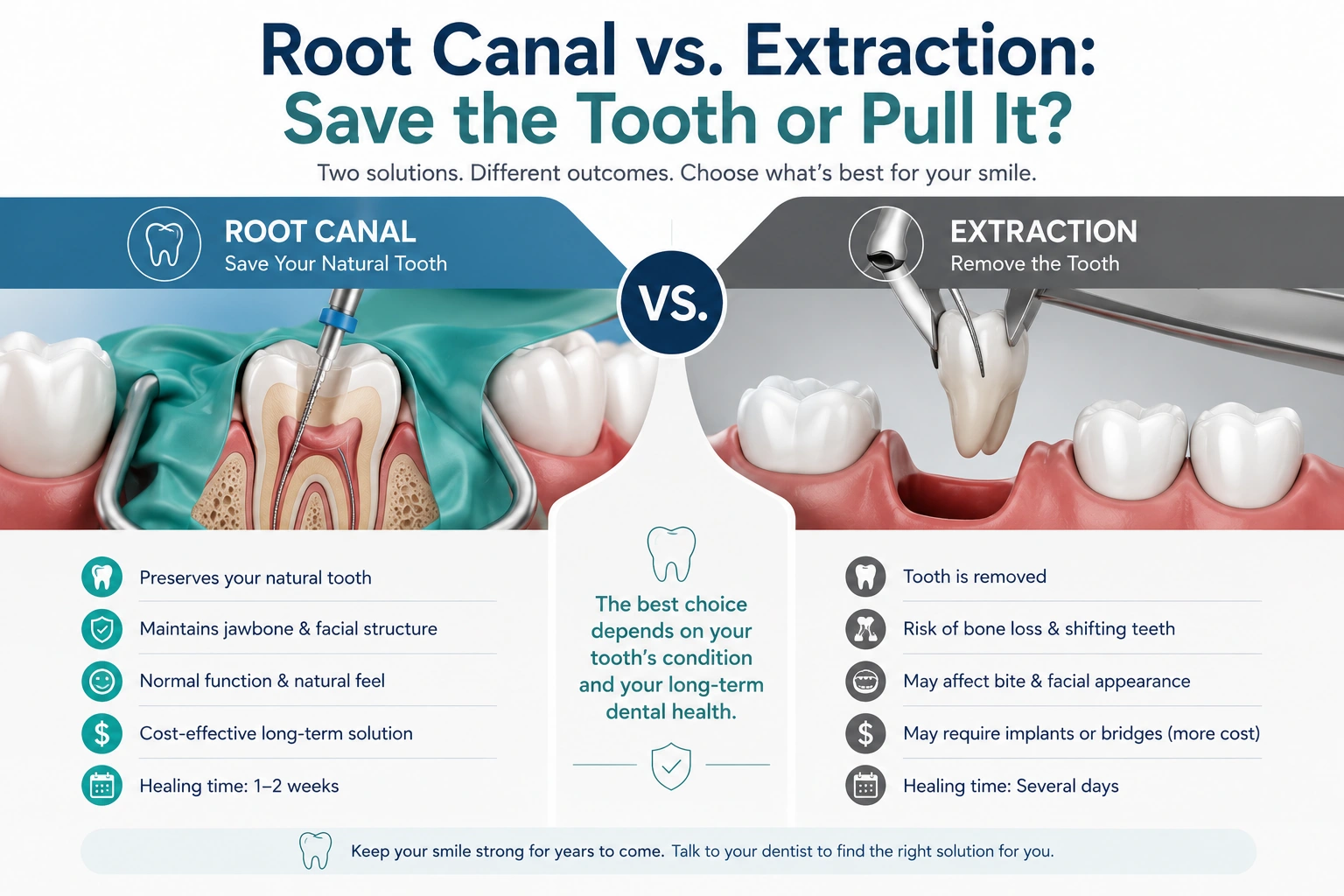
Quick Comparison
| Factor | Root Canal + Restoration | Extraction (± Replacement) |
|---|---|---|
| Goal | Keep the natural tooth | Remove the tooth |
| Typical tooth fee | $700–$1,500+ before crown | $150–$650 extraction alone |
| Follow-up cost | Crown often required | Bridge, implant, or partial adds substantial cost |
| Appointments | 1–2 endodontic visits + crown work | Extraction day; replacement timeline varies |
| Bone/space impact | Preserves the root in the jaw | Socket heals; bone can shrink without implant |
| Best when | Restorable tooth, treatable canals | Fractured beyond repair, poor periodontal support |
Cost Reality Check
“Just pull it” looks cheap until you price the replacement. An implant or bridge can exceed the combined cost of root canal plus crown. If you will leave a visible gap, also weigh chewing changes and shifting teeth. Insurance may cover endodontics and crowns differently than extractions — request a written breakdown for both plans.
Procedure, Pain, and Recovery
Modern root canals are performed under local anesthetic and feel like a longer filling for many patients; mild soreness afterward is common. Extractions teeth need clot protection, soft foods, and careful rinsing. Dry socket risk rises with smoking. Either option should include a plan for the final tooth shape — temporary or permanent — so you are not surprised mid-treatment.
Risks of Each Path
Root canals can fail if canals are complex, cracks extend, or crowns leak. Retreatment or surgery sometimes follows. Extractions sites can develop infection, and neighboring teeth may tip into the space. Wisdom teeth and non-functional thirds are judged differently than a first molar you chew on every meal.
The Case for a Root Canal
Pros
- Keeps your natural tooth — Best bite feel for many patients.
- Preserves the root and bone — Avoids an empty socket.
- Stops the infection source — When canals can be cleaned and sealed.
- May cost less than extract + implant — Especially for a strategic molar.
Cons
- Often needs a crown — Extra fee and appointments.
- Not possible for every crack — Vertical root fractures may doom the tooth.
- Small retreatment risk — Biology and sealing are not perfect.
The Case for an Extraction
Pros
- Removes hopeless teeth cleanly — When structure or bone support is gone.
- Lower immediate fee — If you truly will not replace the tooth.
- Faster end to acute infection in some cases — When retention is futile.
Cons
- Creates a space problem — Shifting, bite collapse, or aesthetics.
- Replacement is expensive — Implant/bridge/partial adds up.
- Surgical healing required — Activity and smoking restrictions matter.
Who Should Choose Which?
- Choose root canal if the tooth can be sealed, crowned, and maintained with healthy bone support.
- Choose extraction if the tooth is fractured below the gum, has failed prior treatment with a poor prognosis, or periodontal support is inadequate.
- Get a second opinion on strategic teeth before extracting — irreversible decisions deserve clear imaging.
Reading the Prognosis Honestly
Good candidates for root canal therapy usually have adequate remaining tooth structure, negotiable canals, and enough bone support. Red flags include deep vertical cracks, severe periodontal bone loss on the same tooth, or prior treatments that already failed twice. Endodontists handle complex anatomy, calcified canals, and retreatments that general offices refer out.
If extraction is chosen, decide the replacement plan before the tooth comes out when possible. Immediate implant placement, socket preservation grafts, and temporary flippers are timing decisions — not afterthoughts you want to improvise while numb and stressed.
Emergency Visits Versus Planned Care
Severe swelling, fever, or difficulty swallowing needs urgent attention beyond a routine elective comparison. Antibiotics and drainage may stabilize you, but they do not finish the tooth’s story. Once you are out of acute danger, revisit the save-versus-extract decision with radiographs and a clear restorative plan rather than choosing solely based on which appointment was available first.
How to Decide
Save the tooth when the prognosis is honest and restorable. Extract when keeping it only delays a more predictable plan. Ask for success odds, crown necessity, and replacement quotes before you choose.
For neutral background before your visit, review MouthHealthy root canal overview and AAE patient root canal explainer.
Need a shorter answer first? See our FAQ: Root canal vs extraction: which should I choose?.
Related comparisons: Root canal pain myths | Dental bridge vs. implant | Do you need a crown after a root canal?.
When you are ready for a case-specific recommendation, find a dentist near you through Dental Country and ask which option fits your diagnosis, timeline, and budget.
Frequently Asked Questions
Is a root canal more painful than an extraction?
With proper anesthesia, both are manageable. Post-op tenderness differs by case; many patients report root canal recovery feels easier than expected.
Do you always need a crown after a root canal?
Back teeth usually need crowns for strength. Some front teeth with enough structure may use a conservative restoration — your dentist should explain why.
What if I extract and never replace the tooth?
Some sites are left alone intentionally, but gaps can change chewing and tooth positions. Discuss consequences for your specific tooth number.
Can antibiotics alone fix the tooth?
Antibiotics may calm spread of infection temporarily but do not remove diseased pulp tissue. Definitive dental treatment is still required.
Related articles
Keep exploring related topics from Dental Country.
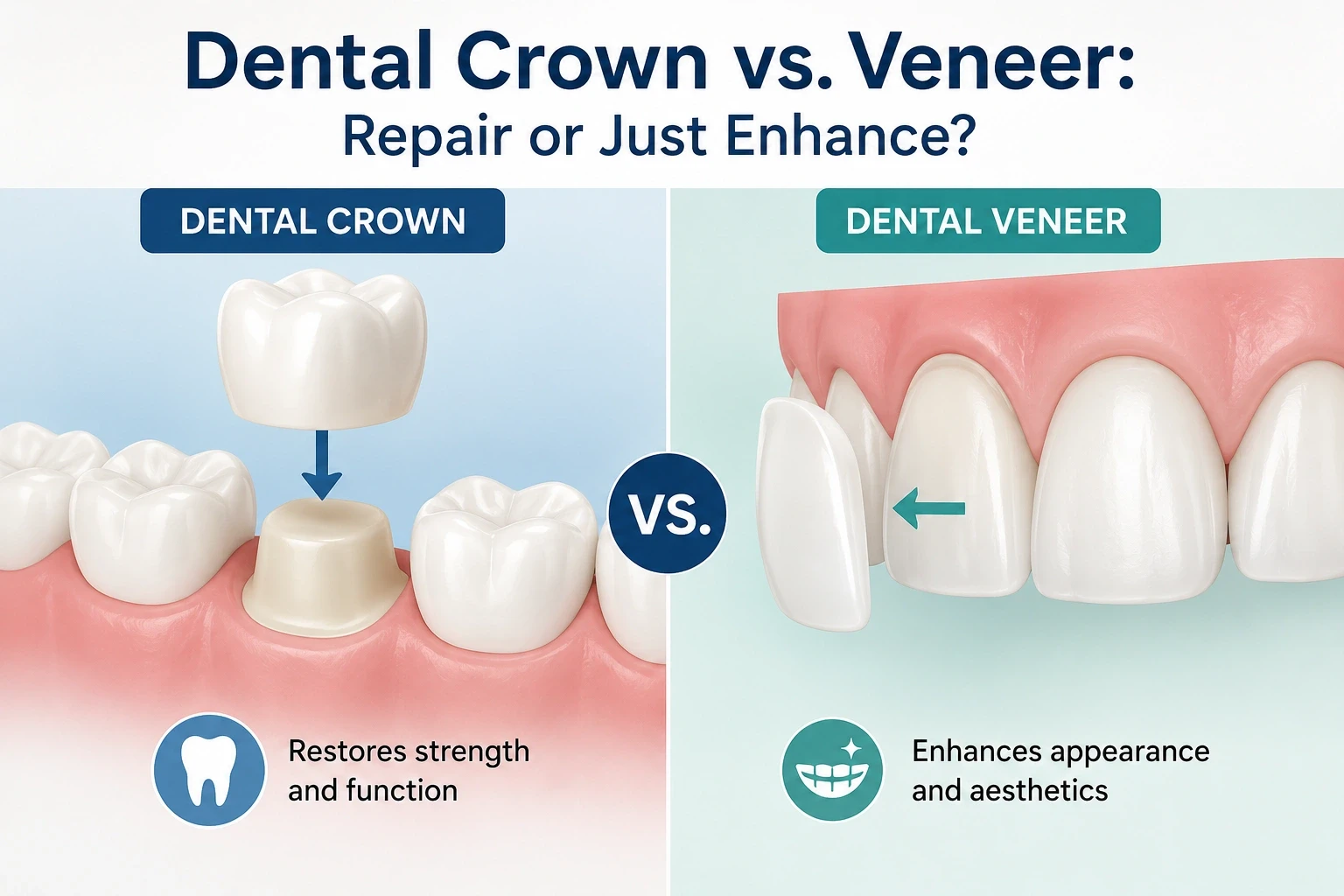
Dental Crown vs. Veneer: Repair or Just Enhance?
Crowns restore damaged teeth; veneers enhance healthy ones. Compare cost, tooth preparation, durability, and which cosmetic or restorative path fits.
Read article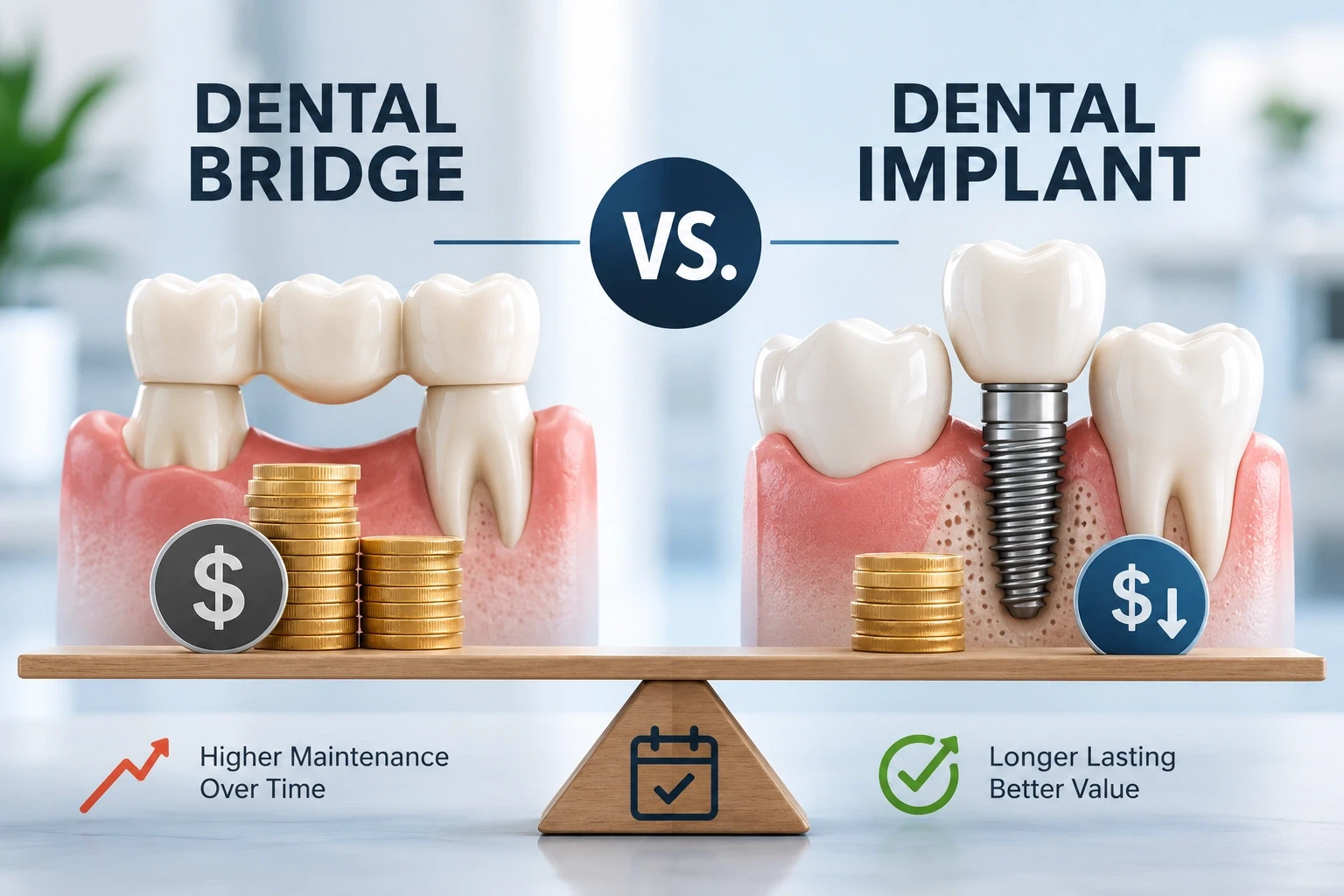
Dental Bridge vs. Implant: The Long-Term Cost Difference
A dental bridge costs less upfront, but an implant can last decades and spare neighboring teeth. Compare price, longevity, surgery, and candidacy.
Read article
Composite vs. Amalgam Fillings: Tooth-Colored or Silver?
Tooth-colored composite or durable silver amalgam? Compare cost, lifespan, appearance, bonding, and safety so you can choose the right filling material.
Read article
Invisalign vs. Traditional Braces: Cost, Comfort & Speed
Clear aligners or metal braces? Compare Invisalign and traditional braces on cost, treatment time, comfort, compliance, and which cases each option handles best.
Read article