

Root Canal Vs Extraction: Which Should I Choose?
Compare root canal treatment and extraction by tooth condition, cost, timing, recovery, and replacement needs so you can discuss options clearly.

Reviewed by Dr. Sean Myran, DMDDoctor of Dental Medicine, University of Pennsylvania
Root canal treatment tries to keep your natural tooth by removing infected or inflamed pulp, sealing the canals, and restoring the tooth. Extraction removes the tooth and shifts the next decision to replacement, such as an implant, bridge, or partial denture. Neither option is automatically best. The deciding question is whether the tooth can be cleaned, sealed, restored, and used without creating a bigger risk. MouthHealthy describes root canals as a way to save a damaged or infected tooth, but saving only makes sense when the remaining tooth is restorable.
Root Canal And Extraction Compared
| Factor | Root Canal | Extraction |
|---|---|---|
| Main goal | Keep the tooth in place | Remove the source tooth |
| Best fit | Restorable tooth with enough healthy structure | Split, nonrestorable, or severely compromised tooth |
| Next step | Permanent filling or crown | Healing plus replacement discussion |
| Cost view | Treatment plus restoration | Extraction plus possible implant, bridge, or denture |
| Risk of delay | Infection and fracture can worsen | Bone and bite changes can follow missing teeth |
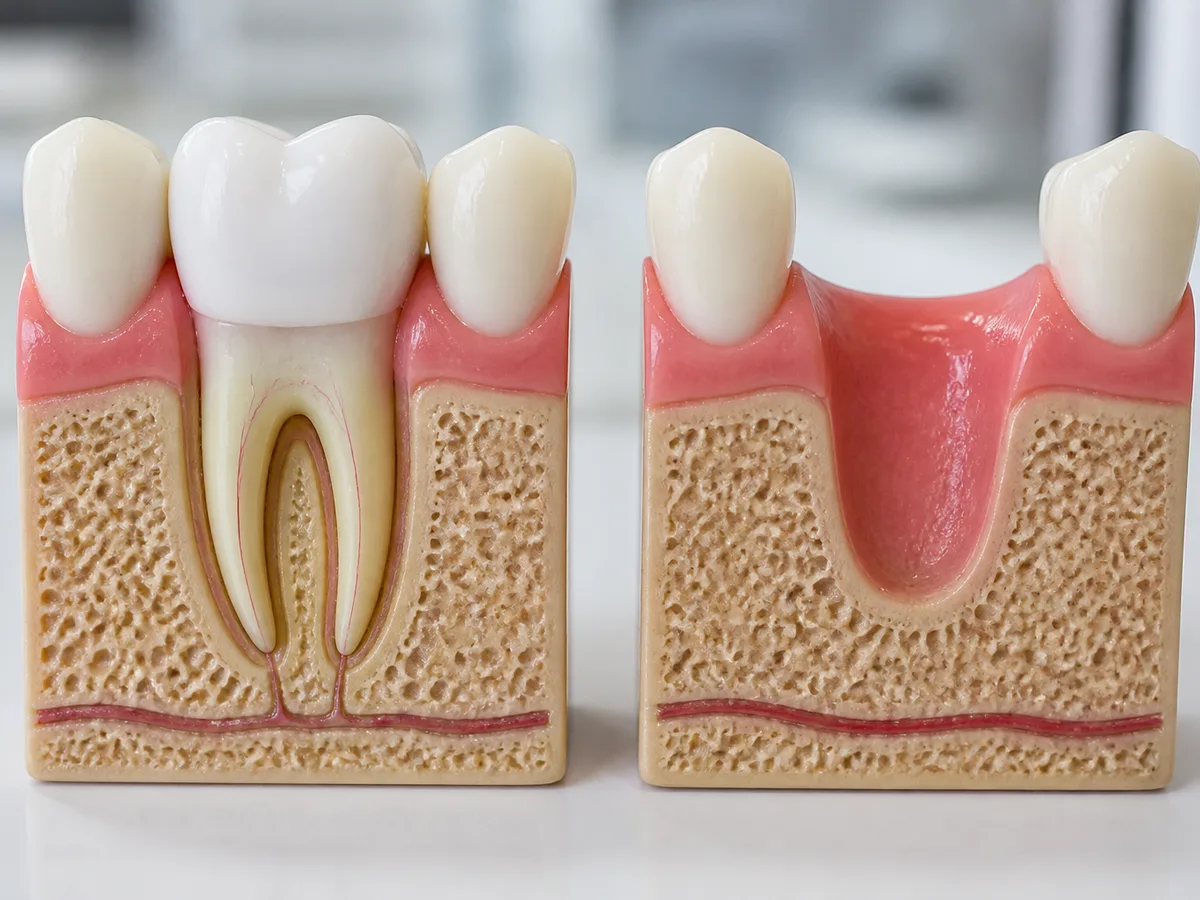 The right option depends on the tooth that remains.
Restorability is the central test
A tooth may have treatable nerve infection but too little structure to hold a crown. Another tooth may look badly decayed on the surface yet still have enough sound walls for a predictable restoration. X-rays, bite tests, periodontal measurements, crack evaluation, and the amount of remaining tooth all shape the recommendation. Ask the dentist to show what they are trying to save, not just name the procedure.
Cost Is More Than The First Bill
Extraction often looks cheaper at the first visit. That comparison can be misleading if you want to replace the tooth later. Implants, bridges, grafting, temporary appliances, and extra visits can change the total. Root canal treatment also has layered costs because the crown, buildup, or post may be billed separately. For a more detailed fee conversation, read How Much Does A Root Canal Cost?.
There are times when extraction is the kinder answer: a vertical root fracture, severe bone loss, decay below the bone, an unrestorable crown margin, or repeated infection in a tooth with poor prognosis. There are also times when extraction creates a long chain of new decisions. If the tooth anchors your bite or smile, replacement planning should happen before the tooth comes out whenever possible.

Think one step past pain relief
Pain relief is urgent, but the long-term plan decides whether the choice feels successful six months later. Ask what happens if you keep the tooth, what happens if you remove it, and what replacement would be recommended. If you need another clinician to review the X-ray and restoration plan, find a dentist and request a second-opinion consultation.
Questions That Clarify The Choice
Useful questions include: Is the crack visible? How much tooth is left above the gum? What is the chance I will still need extraction later? What would replace the tooth if it is removed? How soon would I need the crown after root canal treatment? The answer should connect diagnosis, prognosis, cost, and time, not pressure you with a single word.
Also ask how the choice affects neighboring teeth. A missing tooth can let teeth drift, change chewing patterns, or overload the opposite tooth. A saved tooth can still be a poor choice if gum support is weak or the crack pattern is unfavorable. The comparison should include function, not only whether pain stops this week.
If both options are reasonable, ask which choice the dentist expects to be more predictable five years from now.
If fear of treatment is pushing you toward removal, first read Does A Root Canal Hurt?. If restoration is the sticking point, Do You Need A Crown After A Root Canal? explains why protection after treatment matters.
Related articles
Keep exploring related topics from Dental Country.

Does A Root Canal Hurt?
Modern root canal treatment is built around numbness and control. The ache that brings you in is often worse than the appointment itself.
Read article
How Long Does A Root Canal Take?
Root canal timing depends on the tooth, the infection, and the final seal. A front tooth and a molar are not the same appointment.
Read article
Do You Need A Crown After A Root Canal?
A crown after a root canal is not just cosmetic. It is often the part that keeps a weakened back tooth from cracking under normal chewing.
Read article
How Much Does A Root Canal Cost?
The root canal fee is only one line of the plan. Tooth location, complexity, insurance, and the final crown can change the real total.
Read article