
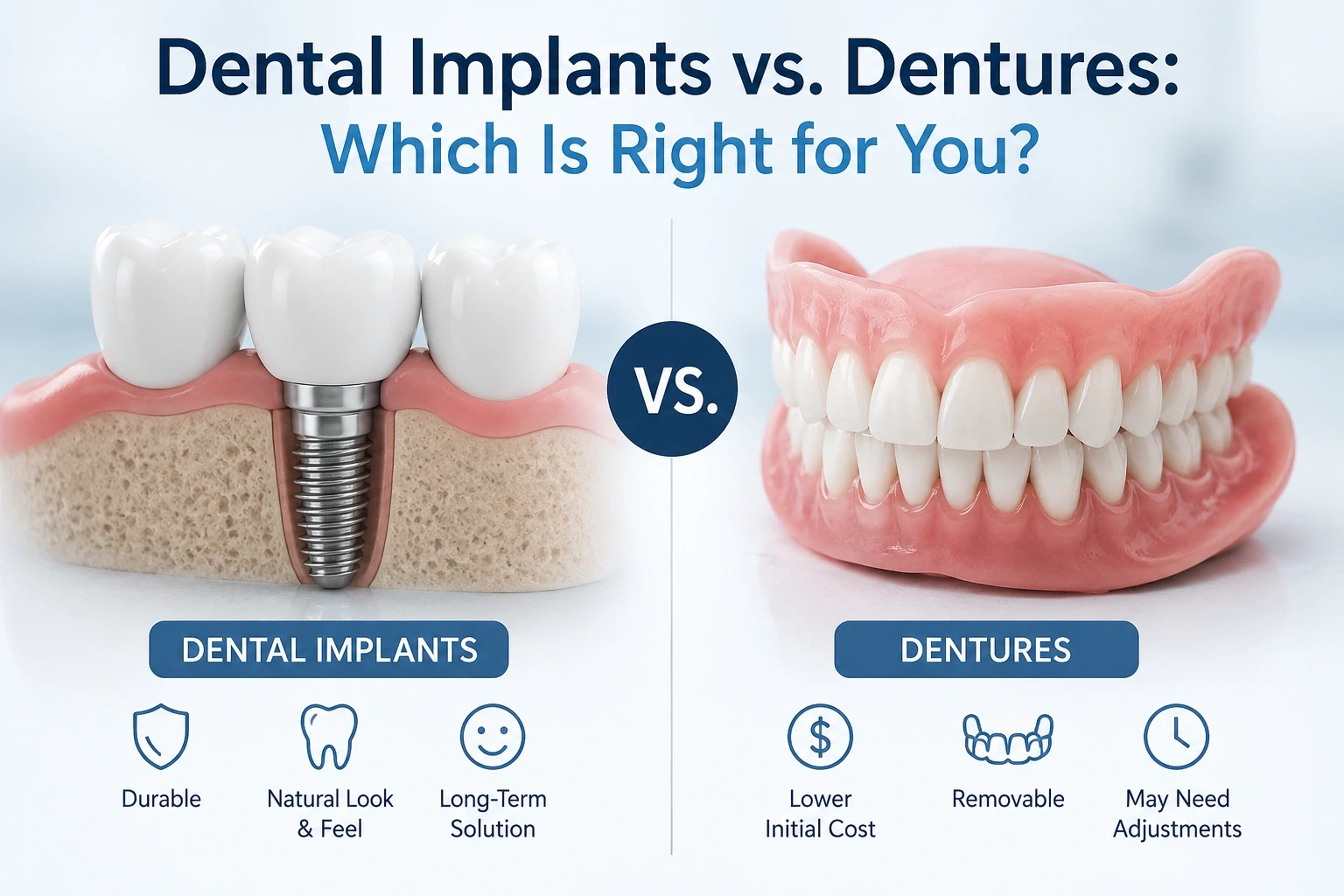
Dental Implants vs. Dentures.
Compare dental implants and dentures on cost, comfort, bone health, and timeline. See when implant-supported dentures bridge the gap between both options.

Reviewed by Dr. Sean Myran, DMDDoctor of Dental Medicine, University of Pennsylvania
Dental Implants or Dentures: Which Is Right for You?
If you have lost teeth, dentures and dental implants are the two headline replacement paths — with implant-supported dentures sitting in between. Implants feel and function closest to natural teeth and help preserve jawbone, but they cost more and require surgery. Dentures restore a smile faster and cheaper, yet they rest on gums and do not stop bone shrinkage. Use this guide to compare cost, comfort, longevity, and candidacy.
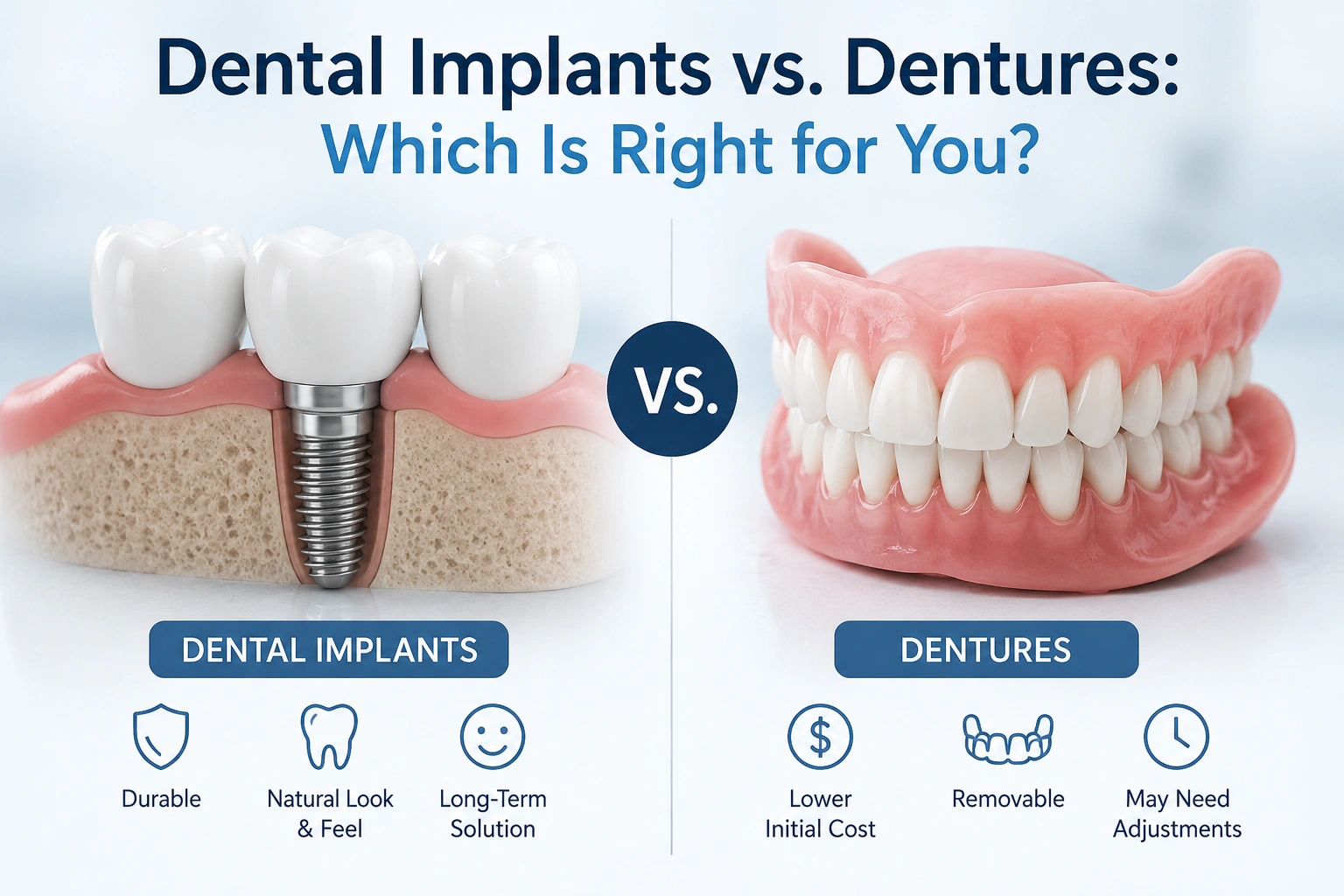
Quick Comparison
| Factor | Dental Implants | Dentures |
|---|---|---|
| Cost (single tooth) | $3,000–$5,000+ | $300–$1,500 (partial) |
| Cost (full arch options) | $15,000–$60,000+ depending on plan | $1,500–$8,000 conventional full set |
| Longevity | 25+ years for many fixtures | 5–10 years before remake/reline common |
| Bone preservation | Yes — stimulates jawbone | No — ridge resorption continues |
| Eating ability | Closest to natural teeth | Reduced bite force; learning curve |
| Maintenance | Brush and clean like teeth (plus interdental aids) | Daily removal, brushing, overnight soaking |
| Surgery required | Yes | No for conventional dentures |
| Time to complete | Often 3–6+ months | Often 2–6 weeks |
Cost, Insurance, and Financing
Implants are frequently excluded or capped by dental plans even when dentures are partially covered. Compare lifetime cost: dentures may need relines and remakes as bone changes, while implant crowns or overdenture parts also need maintenance. Ask about staged treatment, implant-retained overdentures, and medical history factors that change surgical fees.
Procedure and Timeline
Implants need imaging, possible extractions or grafts, fixture placement, healing for osseointegration, then abutments and teeth. Dentures need impressions or scans, wax try-ins, and delivery; immediate dentures can be placed the day teeth are removed with more follow-up adjustments. Neither path is truly “one and done.”
Comfort, Longevity, and Risks
Loose dentures affect speech and diet; adhesives are a workaround, not a cure. Implants can fail or develop peri-implant disease without hygiene and healthy habits — smoking is a major risk factor. Facial support differs too: long-term denture wear without implants can deepen a collapsed look as bone shrinks.
The Case for Dental Implants
Pros
- Look and feel like natural teeth — Stable chewing without a plastic palate in many designs.
- Preserve jawbone — Fixture loads the bone and helps limit resorption.
- No daily removal for single implants — Clean around the crown like a tooth.
- Long service life — Fixtures often last decades with healthy gums.
- Neighbor teeth stay independent — No need to prepare adjacent teeth as with some bridges.
Cons
- High upfront cost — Especially full-arch reconstruction.
- Surgery and healing time — Not ideal for every medical situation.
- Bone and health requirements — Grafts or delayed plans may be needed.
- Insurance gaps — Patients often self-fund a large share.
The Case for Dentures
Pros
- Affordable entry point — Replace many teeth for less than full implants.
- No implant surgery required — Helpful when surgery is risky.
- Faster smile restoration — Weeks instead of months in many cases.
- Often better insurance support — Partial coverage is more common than for implants.
Cons
- Bone loss continues — Fit changes as the ridge shrinks.
- Movement and adhesives — Stability varies by anatomy and design.
- Lower bite force — Tough foods stay difficult for many wearers.
- Remakes and relines — Budget for maintenance over the years.
Implant-Supported Dentures: The Middle Path
If full individual implants are out of reach but traditional dentures feel too loose, implant-supported overdentures use a smaller number of implants to snap or bar-retain a denture. You gain stability and some bone stimulus for less than a fully fixed full-arch bridge, while still removing the prosthesis to clean in many designs. Costs commonly land between conventional dentures and fixed full-arch implants.
Who Is a Good Candidate for Each?
Choose dental implants if you:
- Have adequate bone (or will accept grafting)
- Are healthy enough for surgery and committed to hygiene
- Want maximum chewing confidence long term
- Are replacing one tooth or investing in a fixed full-arch plan
Choose dentures if you:
- Need a budget-first or faster non-surgical solution
- Have medical limits that postpone implants
- Are open to adhesives, relines, and eventual remakes
- Want to stage toward implants later
How to Decide
Budget, bone, medical history, and how much stability you need day to day should drive the choice. Consult an implant-capable surgeon or periodontist and a restorative dentist or prosthodontist so surgical and tooth-design plans match before you commit.
For neutral background before your visit, review MouthHealthy dentures overview and MouthHealthy implants overview.
Need a shorter answer first? See our FAQ: What are implant-supported dentures?.
Related comparisons: Dental bridge vs. implant | Dental implants guide | How to care for dentures | What is an oral surgeon?.
When you are ready for a case-specific recommendation, find a dentist near you through Dental Country and ask which option fits your diagnosis, timeline, and budget.
Frequently Asked Questions
Are implant-supported dentures better than regular dentures?
For most people who qualify, yes — they move less and chew with more confidence. They still cost more and require implant maintenance.
Can you switch from dentures to implants later?
Often yes, though delayed implants may need grafting after bone shrinks. Keeping dentures clean and attending checkups keeps future options open.
How long do implants last versus dentures?
Implant fixtures can last decades; denture bases and teeth wear and loosen sooner as the jaw changes. Both need professional follow-up.
Do implants hurt?
Placement is done with anesthesia; soreness afterward is expected for several days. Sedation options exist for anxious patients — ask during consult.
Related articles
Keep exploring related topics from Dental Country.
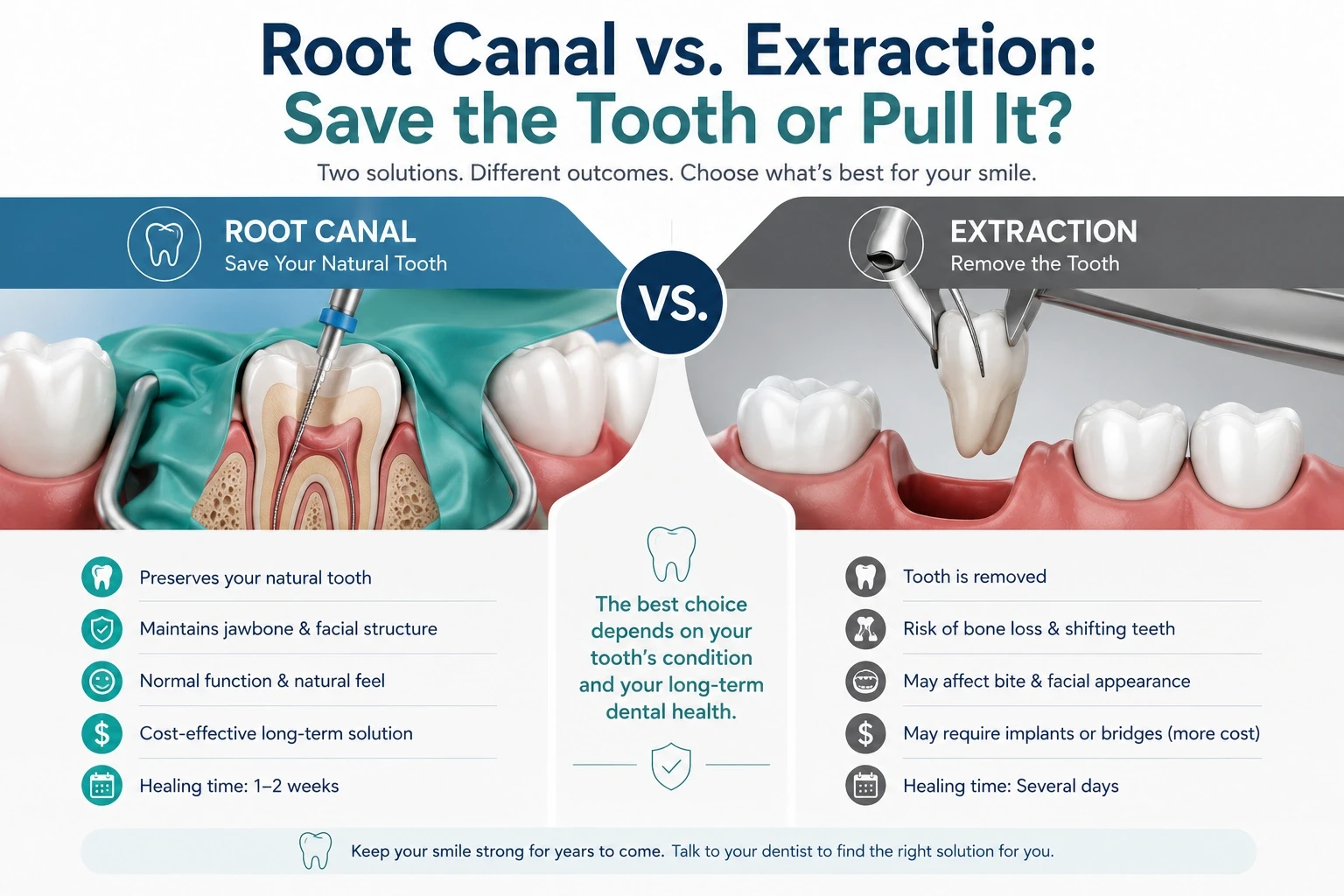
Root Canal vs. Extraction: Save the Tooth or Pull It?
Should you save a damaged tooth with a root canal or have it pulled? Weigh cost, recovery, prognosis, and replacement needs before you decide.
Read article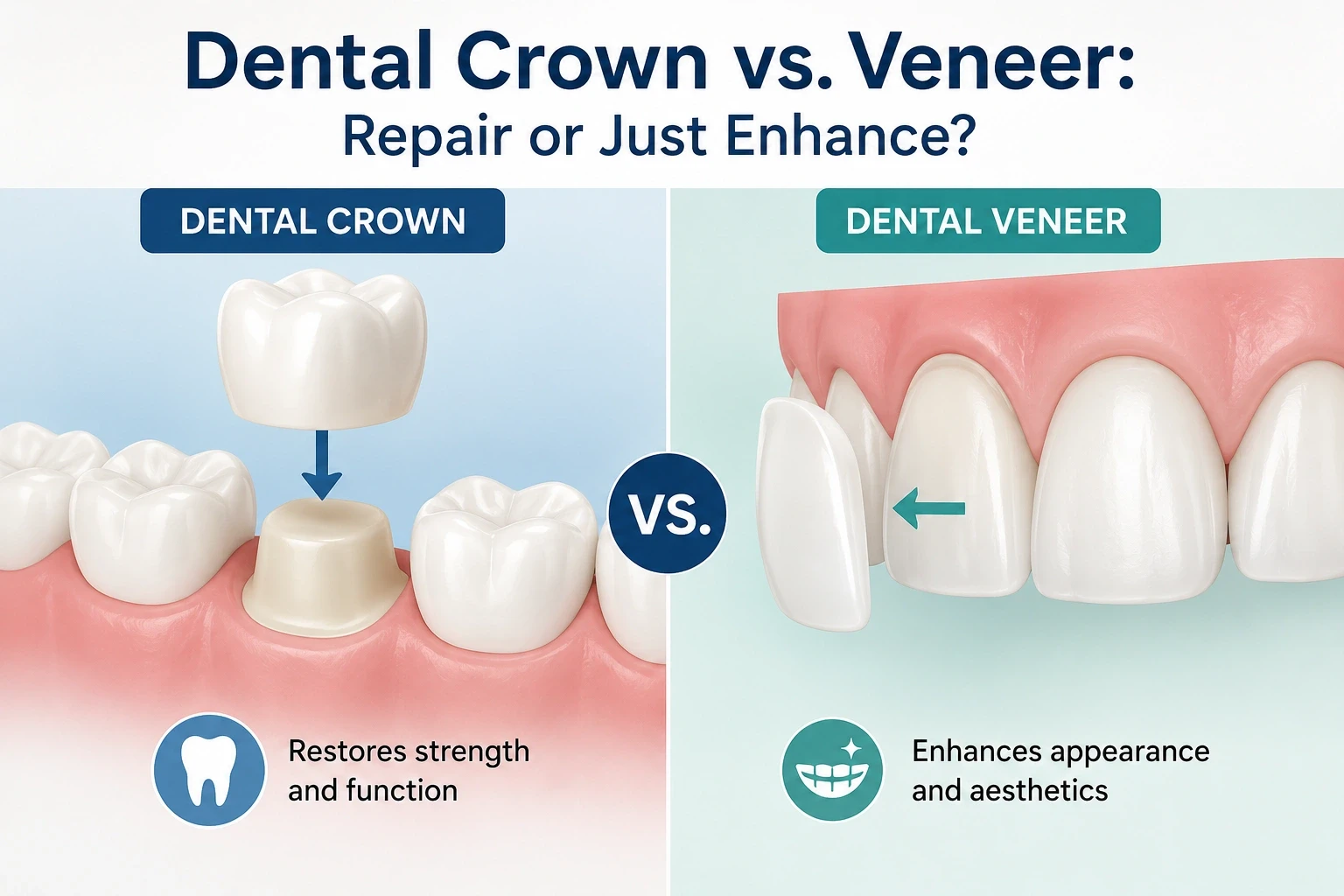
Dental Crown vs. Veneer: Repair or Just Enhance?
Crowns restore damaged teeth; veneers enhance healthy ones. Compare cost, tooth preparation, durability, and which cosmetic or restorative path fits.
Read article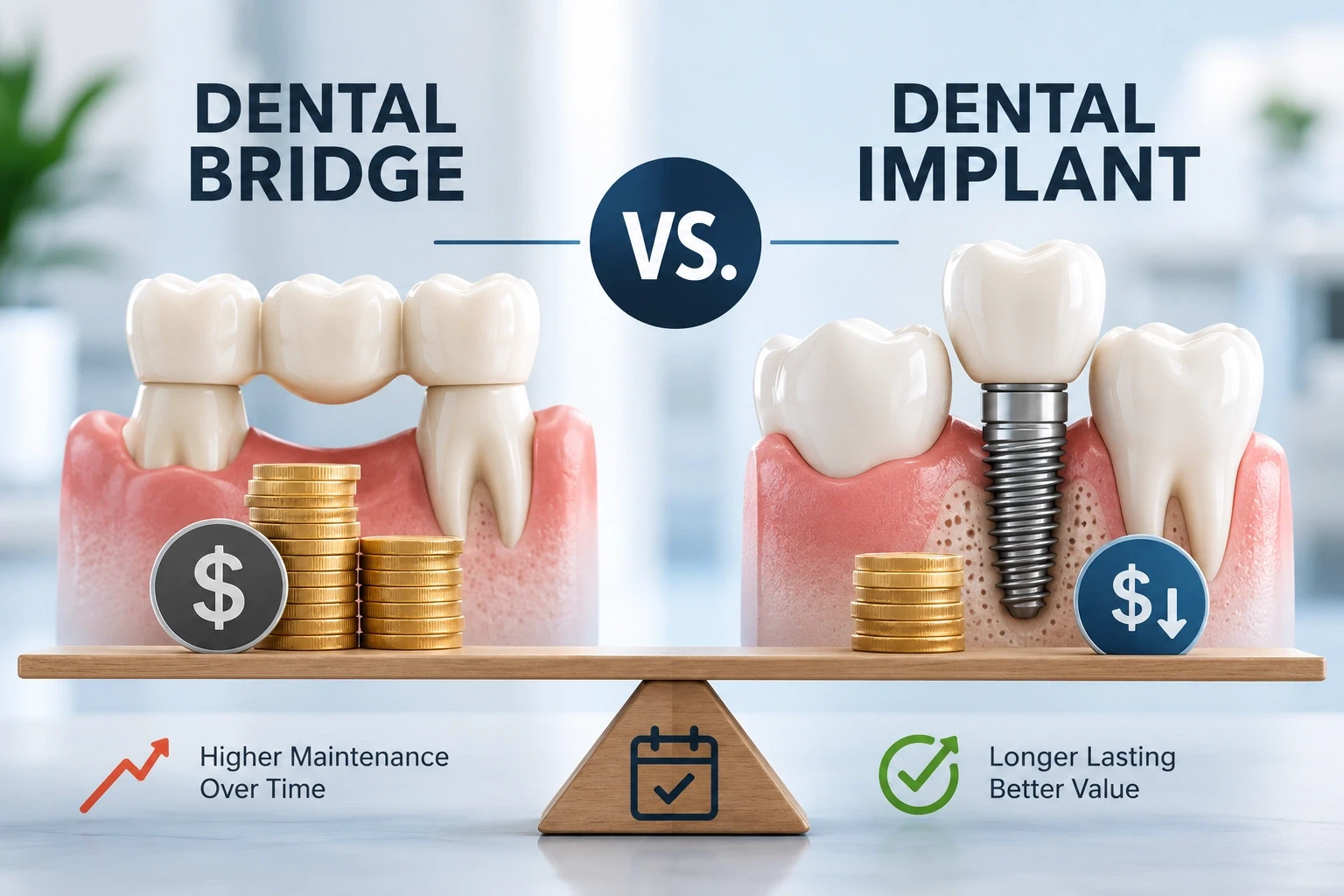
Dental Bridge vs. Implant: The Long-Term Cost Difference
A dental bridge costs less upfront, but an implant can last decades and spare neighboring teeth. Compare price, longevity, surgery, and candidacy.
Read article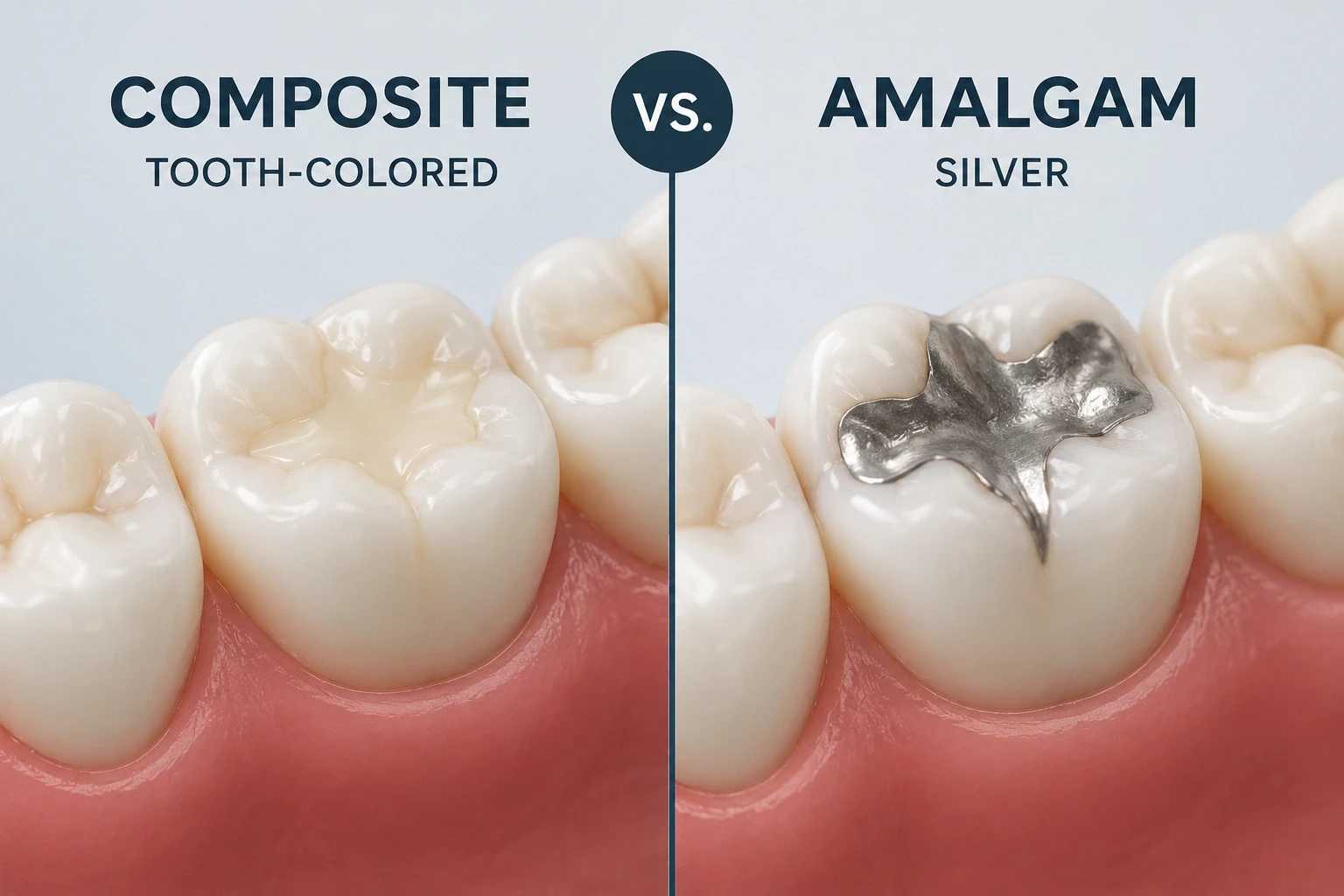
Composite vs. Amalgam Fillings: Tooth-Colored or Silver?
Tooth-colored composite or durable silver amalgam? Compare cost, lifespan, appearance, bonding, and safety so you can choose the right filling material.
Read article