
What Are Implant-Supported Dentures?
Implant-supported dentures attach to dental implants for more stability than traditional plates alone. Learn how they work, candidacy, and trade-offs.

Reviewed by Dr. Sean Myran, DMDDoctor of Dental Medicine, University of Pennsylvania
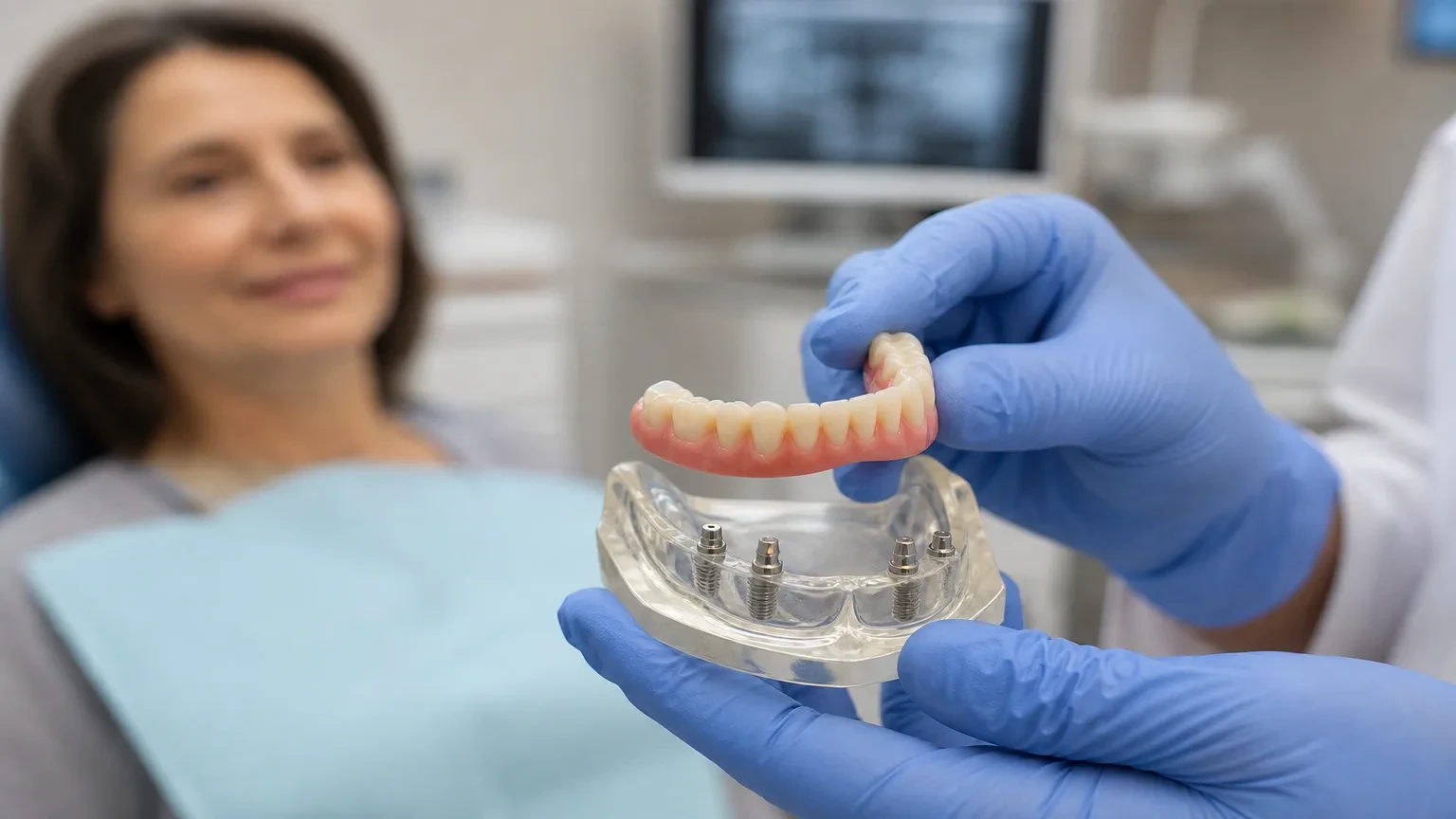
Implant-supported dentures are dentures that attach to dental implants placed in the jaw rather than relying only on gums and suction. The implants act like anchors, so the prosthesis moves less while chewing and speaking. MouthHealthy describes implant-supported options as dentures that attach to implants for a more secure fit. They can be removable overdentures that snap on, or more fixed designs depending on the plan.
Stability is the main reason people explore this path. A conventional lower denture can float because the tongue and a narrow ridge fight suction. Anchors reduce that motion, which often means less adhesive, clearer speech, and more confident biting—provided bone, healing, and maintenance line up.
Expect a staged timeline: consult and imaging, implant placement, healing while bone integrates, then attachment and denture delivery. Some plans use a temporary denture during healing; others modify your current plate. Healing length varies by site, bone quality, and whether grafting was needed, so ask for a calendar you can plan meals and time off around.
Attachments wear with daily snap cycles. Nylon inserts, clips, or bar sleeves are meant to be replaced on a maintenance schedule. Budget for those visits the same way you budget for the implants themselves, or retention can fade even when the implants remain healthy.
How The System Works
- Implants: titanium posts integrate with bone after placement and healing.
- Attachments: locators, bars, or other connectors link implants to the denture.
- Denture base: still replaces teeth and some gum contours, but with more retention.
- Maintenance: hygiene around implants and attachment wear still matter; nylon inserts and clips are wear parts.
Removable overdentures typically snap off for cleaning, which many patients like. Fixed or fixed-removable designs may feel closer to permanent teeth but need different hygiene tools and professional maintenance. Ask which design your mouth, budget, and dexterity support before focusing on a brand name you saw online.
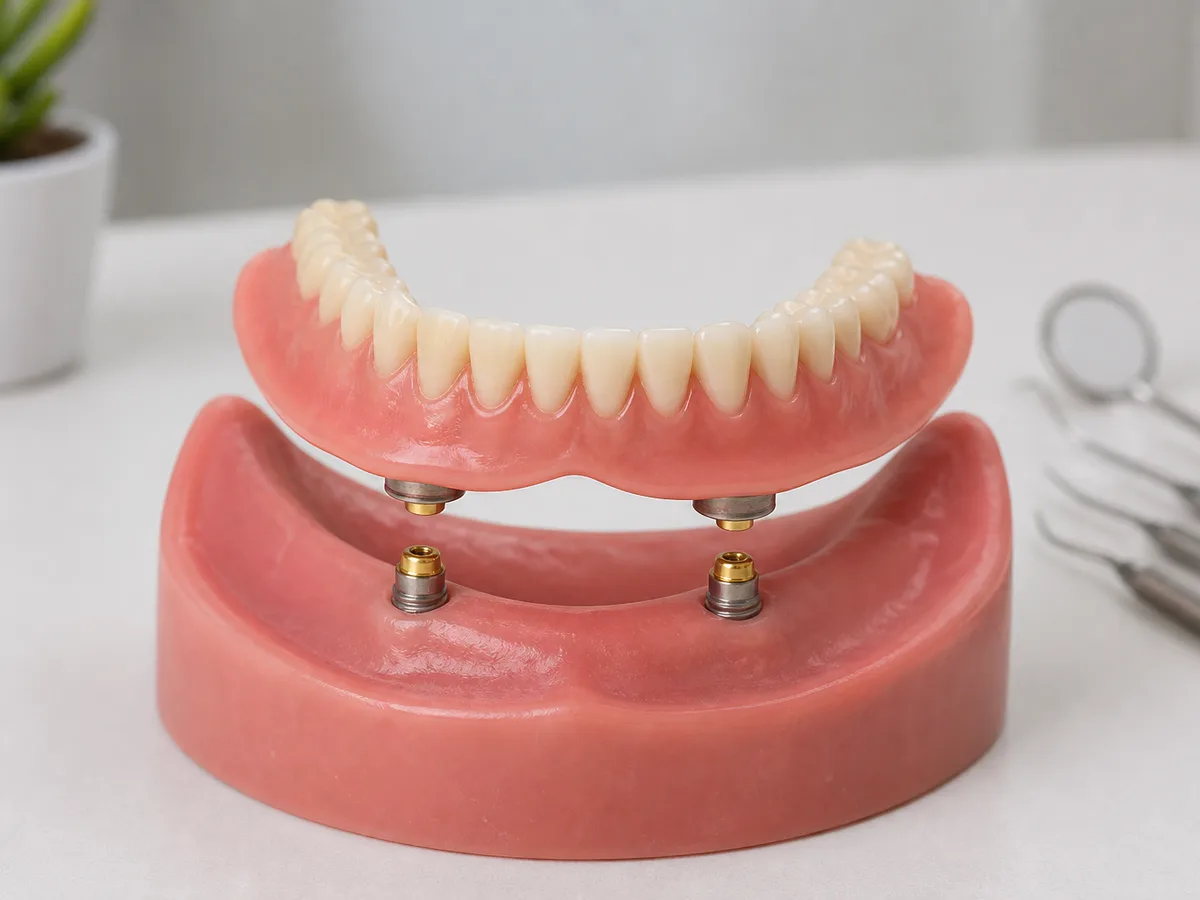 Fewer floats, more confidence.
Anchors reduce rocking on the ridge
Traditional lower dentures often feel less stable because the tongue and narrow ridge fight suction. Even two well-placed implants can transform retention for many patients. Upper designs vary more; some people keep a palate-covered plate while others qualify for palate-reduced designs when implants provide enough hold.
Who May Be A Candidate
- Bone volume: imaging shows whether implants can be placed safely or whether grafting enters the plan.
- Gum and medical health: healing capacity and medications affect planning and timing.
- Habits: grinding, smoking, and hygiene influence long-term success around the implants.
- Goals: removable convenience versus a more fixed feel changes the design and cost.
- Existing denture: sometimes a current plate can be modified; other times a new prosthesis is wiser.
Implants do not make maintenance optional. You still need cleaning routines similar to daily denture care, plus special attention to attachment sites. Cost is higher than a conventional plate; compare that with typical denture cost ranges and staged treatment timelines. If you are still early in denture wear, adjustment habits still apply while temporary teeth or healing dentures are in place.
 Retention should feel intentional.
Stability changes daily confidence
People often notice easier biting into sandwiches, clearer speech with less clicking, and less adhesive use. Those gains depend on implant health and a well-made prosthesis. Report looseness, bleeding around implants, or a denture that no longer snaps the same way—attachment parts wear and are meant to be serviced.
Questions To Ask
Ask how many implants are recommended, whether a temporary denture is needed during healing, how often attachments are replaced, and what happens if an implant fails. Also ask how this compares with improving a conventional denture through fit adjustments alone, and whether your medical history suggests staging surgery. Browse Find a Dentist for offices that plan implant dentures with restorative follow-through, not only surgical placement.
Related articles
Keep exploring related topics from Dental Country.

How Long Does It Take To Get Used To Dentures?
Denture adjustment is gradual: speech softens first, chewing improves next, and comfort follows as sore spots are refined at follow-up visits.
Read article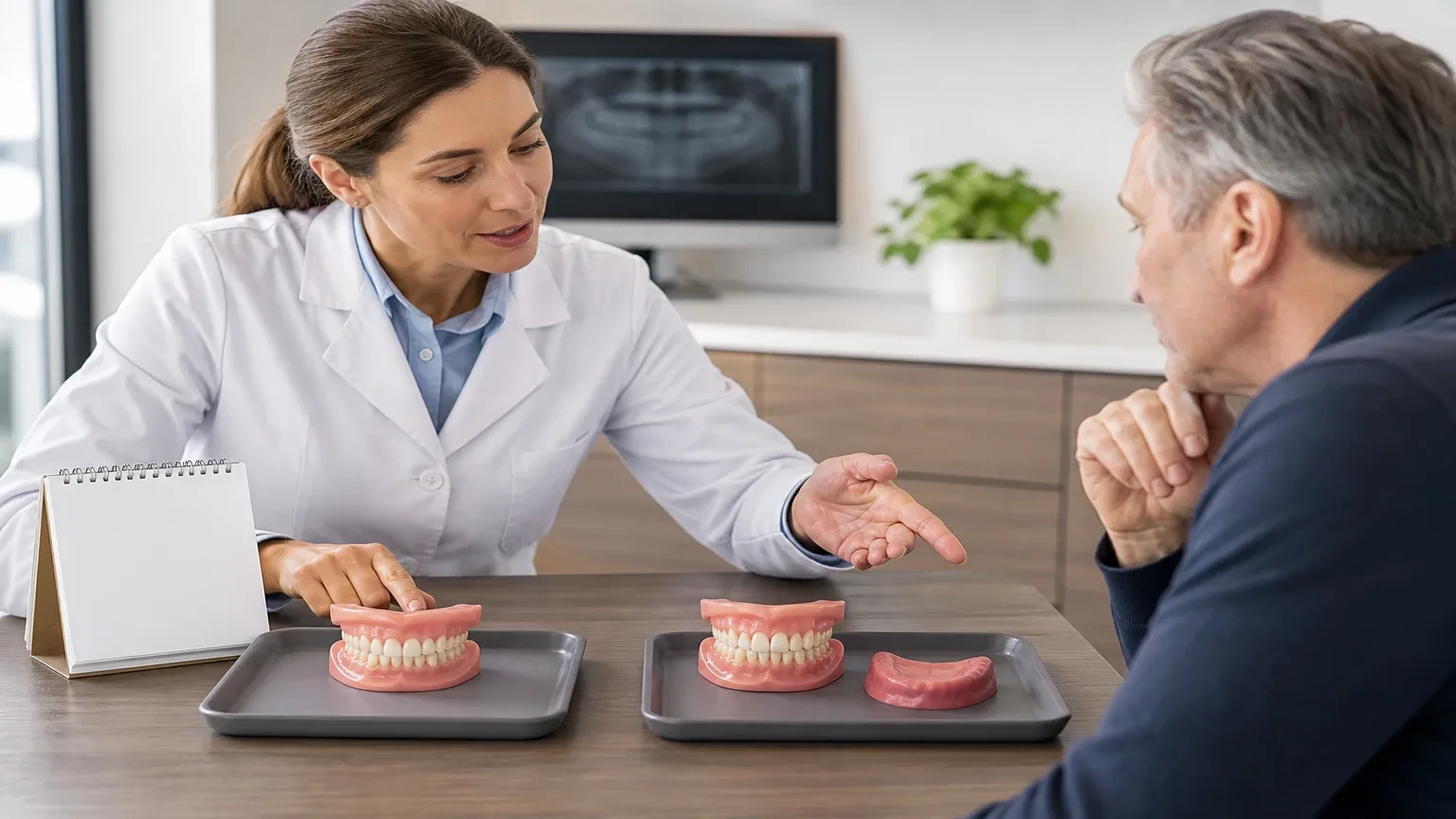
Immediate Dentures Vs Conventional Dentures: What's The Difference?
Immediate dentures protect appearance after extractions, while conventional dentures are fitted after healing for a more stable starting shape.
Read article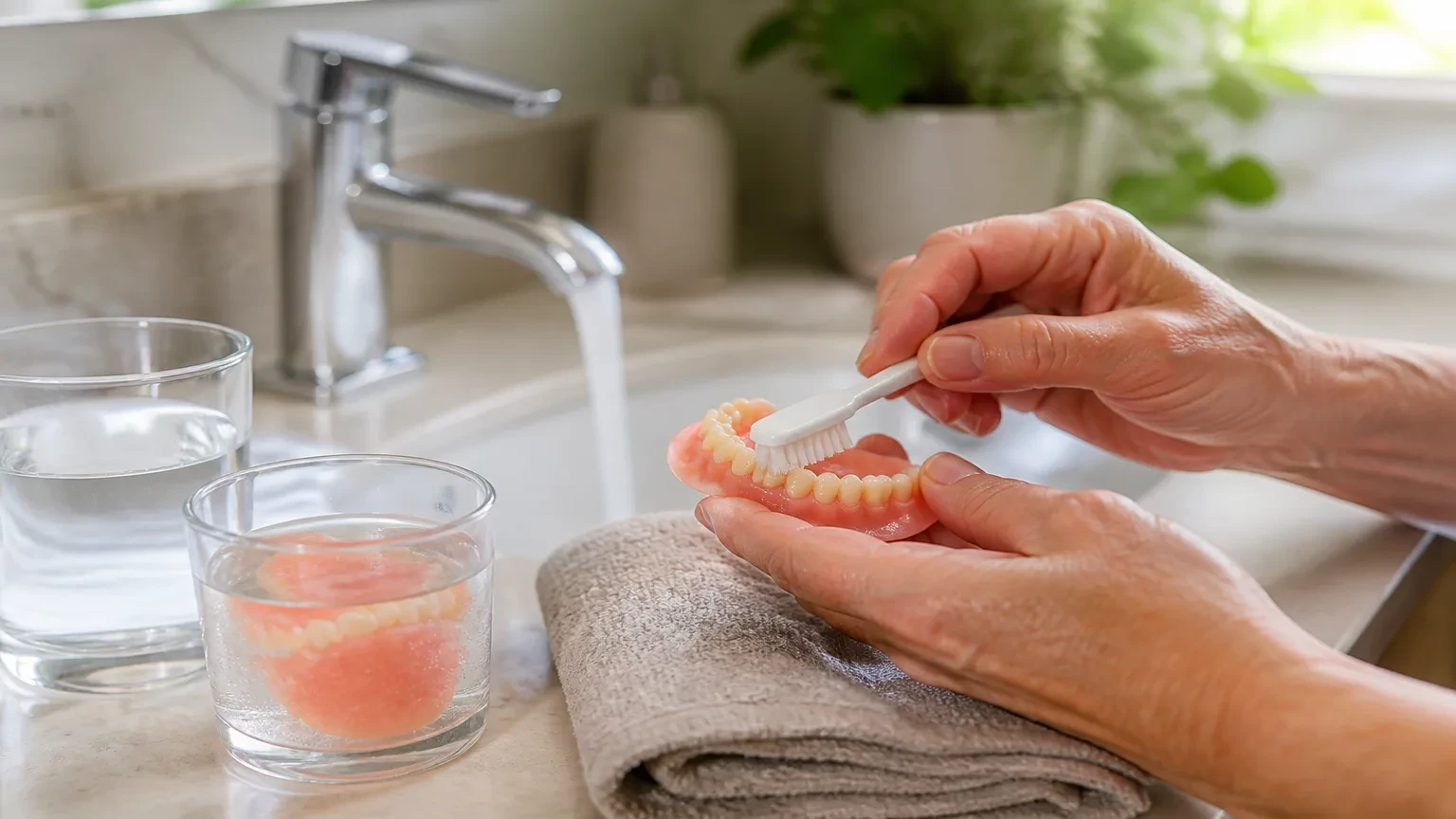
How Do You Clean Dentures?
Denture cleaning is a daily hygiene habit: brush the prosthesis, rinse thoroughly, soak as directed, and care for the gums and any remaining teeth.
Read article
Can You Sleep With Dentures In?
Sleeping in dentures every night can stress gums and raise infection risk. Nightly removal is the usual advice unless a dentist sets a short exception.
Read article