
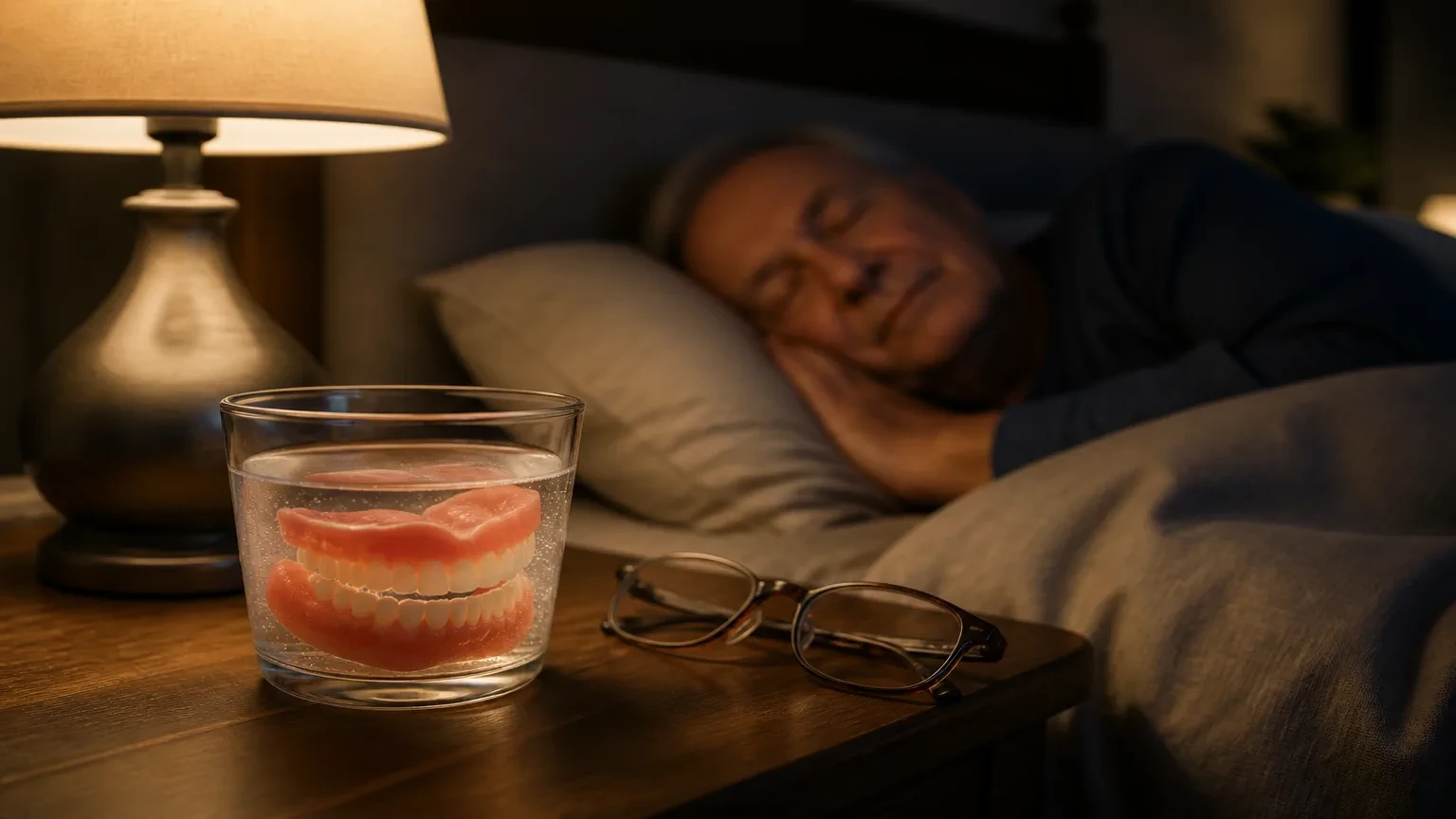
Can You Sleep With Dentures In?
Most people should remove dentures at night so gums can rest, unless a dentist advises otherwise. Learn myths, exceptions, and safer overnight habits.

Reviewed by Dr. Sean Myran, DMDDoctor of Dental Medicine, University of Pennsylvania
You can sleep with dentures in for short periods if a dentist recommends it, but most people should remove them at night so gums can rest and saliva can clean the tissues. Continuous wear keeps pressure on soft tissue and can trap plaque against the ridge. MouthHealthy advises removing dentures at night to give gums a rest. The healthier default is out at bedtime, stored moist, then cleaned before morning wear.
Overnight habits matter as much as daytime cleaning. Tissue that never gets a break can stay red, tender, or prone to yeast-related irritation. For many wearers, the simplest upgrade is not a stronger adhesive—it is a nightly rest plus a clean storage routine. Caregivers helping an older adult should know the same rule: clean, moist storage at night unless a dentist wrote a temporary exception after surgery.
If you share a bathroom with children or travel often, treat the case like a medical device—rinse it, keep it labeled, and never wrap dentures in a tissue that can be thrown away. A lost plate overnight turns a simple rest habit into an emergency remake.
Myths And Facts About Overnight Wear
- Myth: Dentures must stay in all night or the face will collapse.
- Fact: overnight removal is normal; facial support returns when dentures go back in the morning.
- Myth: Leaving them in keeps the bite from changing.
- Fact: bone and gum change over years whether dentures stay in or come out; fit still needs checkups.
- Myth: Adhesive makes 24-hour wear safe.
- Fact: adhesive does not replace tissue rest or cleaning, and leftover paste can irritate ridges.
- Myth: Only full dentures need night removal.
- Fact: many partials also benefit from nightly rest unless clasps or treatment plans say otherwise.
- Myth: If they feel fine, nightly wear is harmless forever.
- Fact: problems can build quietly; redness, bad taste, or morning soreness are reasons to revisit the habit.
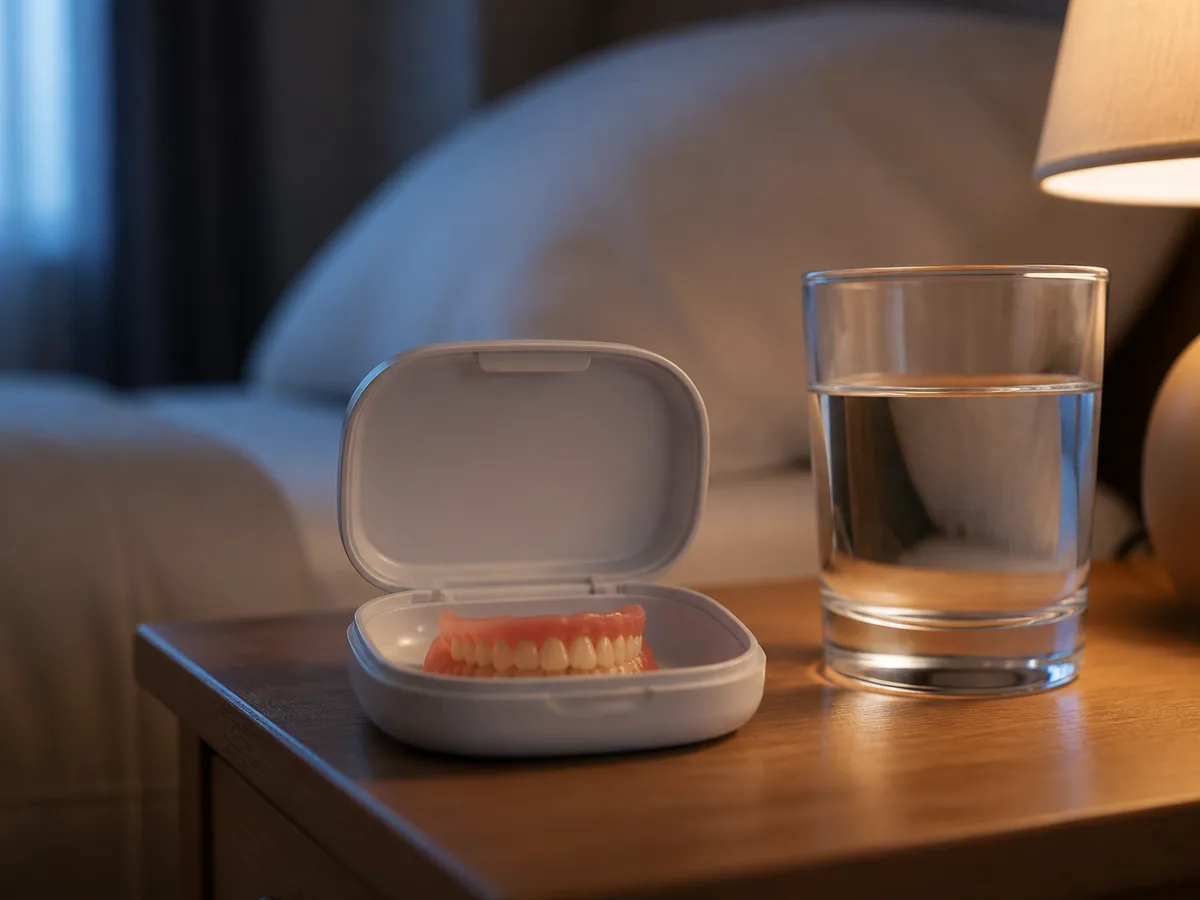 Rest the tissues every night.
Gums need hours without constant pressure
Tissue under a denture is still living tissue. A nightly break improves circulation and lowers the chance of chronic redness. Store dentures moist so acrylic does not warp from drying. Use a labeled case if you share a household so the prosthesis is not mistaken for trash.
Exceptions Your Dentist May Discuss
- Immediate dentures after extractions: short-term continuous wear may protect blood clots until the first adjustment; follow the written post-op sheet exactly.
- Social events: occasional overnight wear is different from every night for years.
- Medical guidance: rare cases may need a custom plan; ask rather than guess, especially if you have dry mouth or a history of oral yeast infections.
- Travel nights: if you must wear them longer one evening, resume nightly removal as soon as you can and inspect gums the next morning.
If you wake with sore ridges, bad taste, or white patches, overnight wear may be part of the problem. Review denture cleaning and why dentures can hurt before adding more adhesive. Persistent tissue irritation needs an in-person look. People still learning daytime wear should also revisit the denture adjustment timeline so temporary post-surgery instructions are not confused with lifelong habits.
 Symptoms deserve a checkup.
Redness after nights in is a warning sign
Chronic overnight wear can contribute to inflamed tissue and yeast overgrowth in some mouths. Early evaluation is easier than waiting for widespread soreness. Bring your storage case and cleanser to the visit if you want product advice tailored to metal clasps or implant attachments.
Ask your dentist for a clear rule: out every night, out most nights, or temporary continuous wear after surgery. Write that rule down next to your cleaning steps so caregivers or family helpers follow the same plan. If you need a local provider, use Find a Dentist and bring your current dentures to the visit so tissue under the base can be checked with the prosthesis in hand.
Related articles
Keep exploring related topics from Dental Country.

How Long Does It Take To Get Used To Dentures?
Denture adjustment is gradual: speech softens first, chewing improves next, and comfort follows as sore spots are refined at follow-up visits.
Read article
Immediate Dentures Vs Conventional Dentures: What's The Difference?
Immediate dentures protect appearance after extractions, while conventional dentures are fitted after healing for a more stable starting shape.
Read article
How Do You Clean Dentures?
Denture cleaning is a daily hygiene habit: brush the prosthesis, rinse thoroughly, soak as directed, and care for the gums and any remaining teeth.
Read article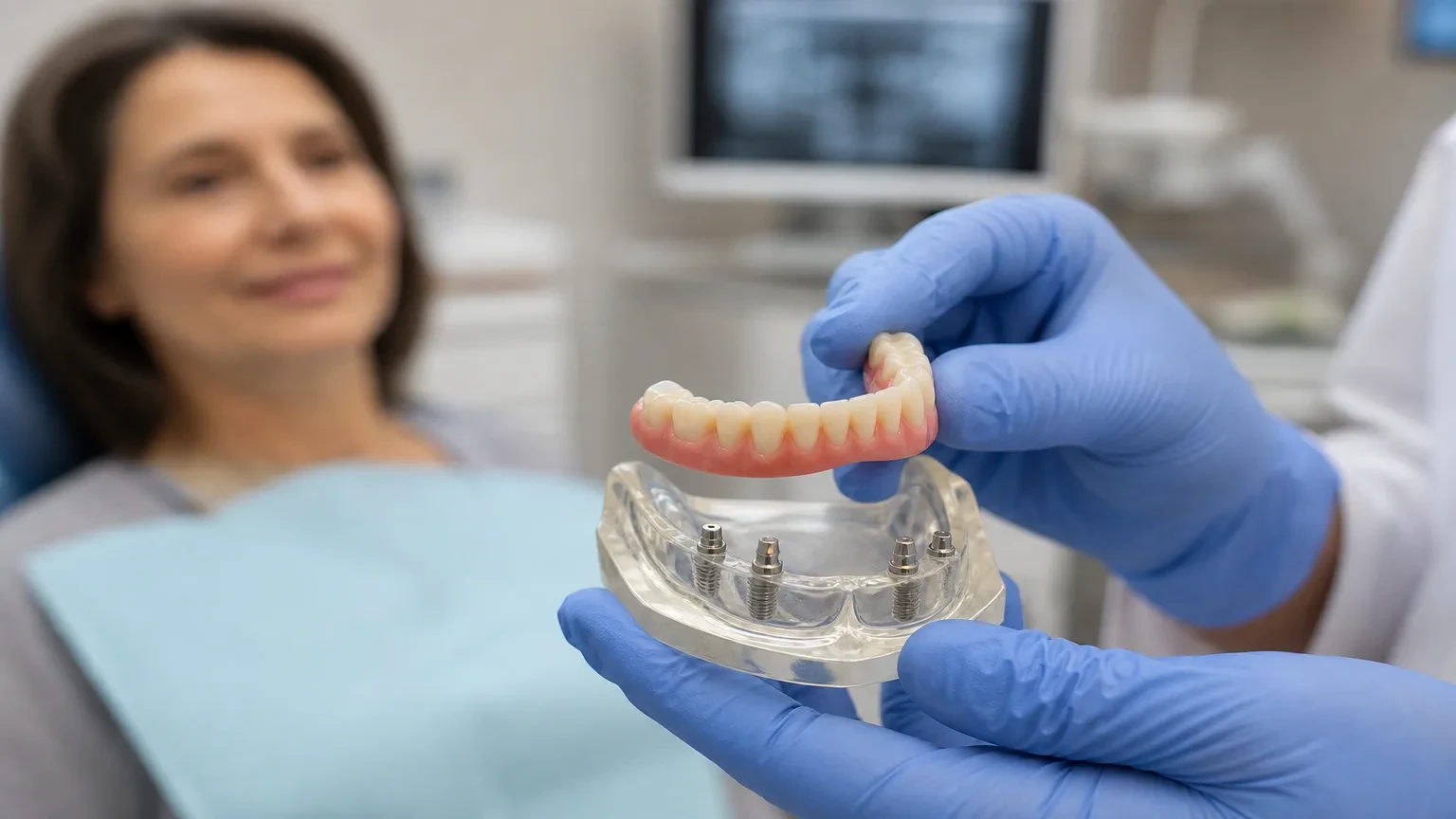
What Are Implant-Supported Dentures?
Implant-supported dentures use implants as anchors so the prosthesis feels more secure for chewing and speaking than a loose tissue-supported plate.
Read article