
Why Do Dentures Hurt?
Dentures hurt from sore spots, uneven bite, dry mouth, infection, or a base that no longer fits. Learn common causes and when to seek care soon.

Reviewed by Dr. Sean Myran, DMDDoctor of Dental Medicine, University of Pennsylvania
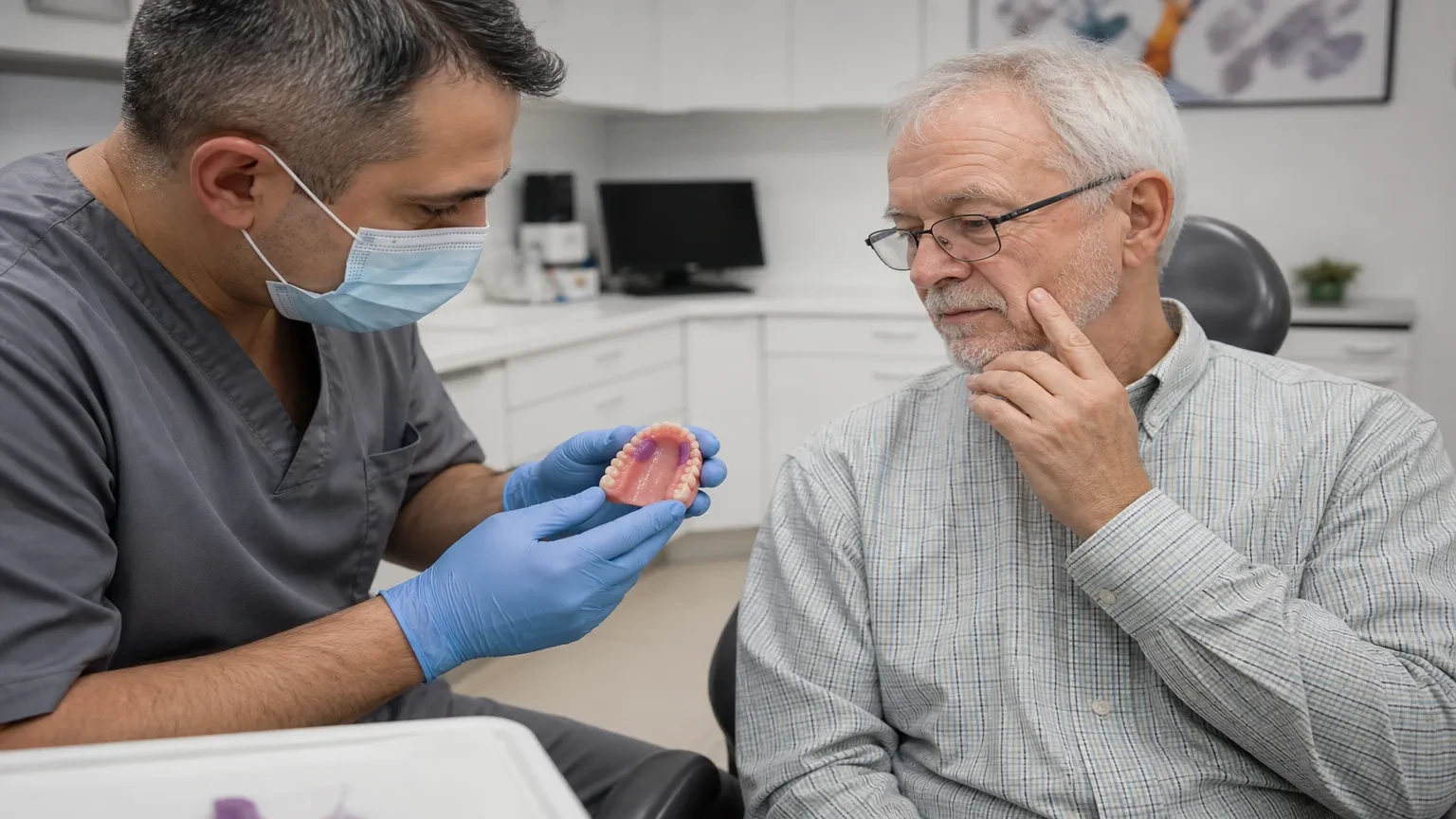
Dentures hurt when the base rubs, the bite hits unevenly, gums are inflamed, the mouth is dry, or the fit no longer matches a changing ridge. Mild tenderness can appear while you are getting used to new dentures, but sharp hotspots or ulcers that worsen are not something to tough out. MedlinePlus explains that dentures may need adjustment if they cause sore spots. Pain is information about pressure and tissue health.
Adhesive, numbing gels, and skipping meals can hide a problem for a few days. They do not correct a high acrylic spot or a bite that lands on one side first. The faster you describe when pain starts—on insertion, after an hour, only while chewing, or overnight—the faster a dentist can choose adjustment, reline, infection care, or another path.
New dentures and older ones hurt for overlapping reasons. Early on, borders and bite often need fine-tuning while tissues adapt. Years later, ridge shrinkage can turn a once-comfortable plate into a rocker that pinches the same spot repeatedly. Weight loss, a new CPAP mask habit, or a cracked tooth under a partial clasp can also change pressure overnight.
Dry mouth deserves its own look. Without a saliva film, acrylic drags and heat from spicy foods feels sharper. Ask whether sugar-free lozenges, hydration timing, or a medication review with your physician might help alongside a denture adjustment.
Common Pain Triggers
- Sore spots: a high spot on the acrylic rubs one area raw.
- Uneven bite: one side contacts first and overloads tissue or joints.
- Loose fit: rocking concentrates force on a smaller footprint.
- Dry mouth: less saliva means more friction under the base; many medicines contribute.
- Infection or yeast: red, burning tissue may need medical or dental treatment.
- Overextended borders: edges that are too long can pinch during speech or smiling.
 Adjust the cause, not just the symptom.
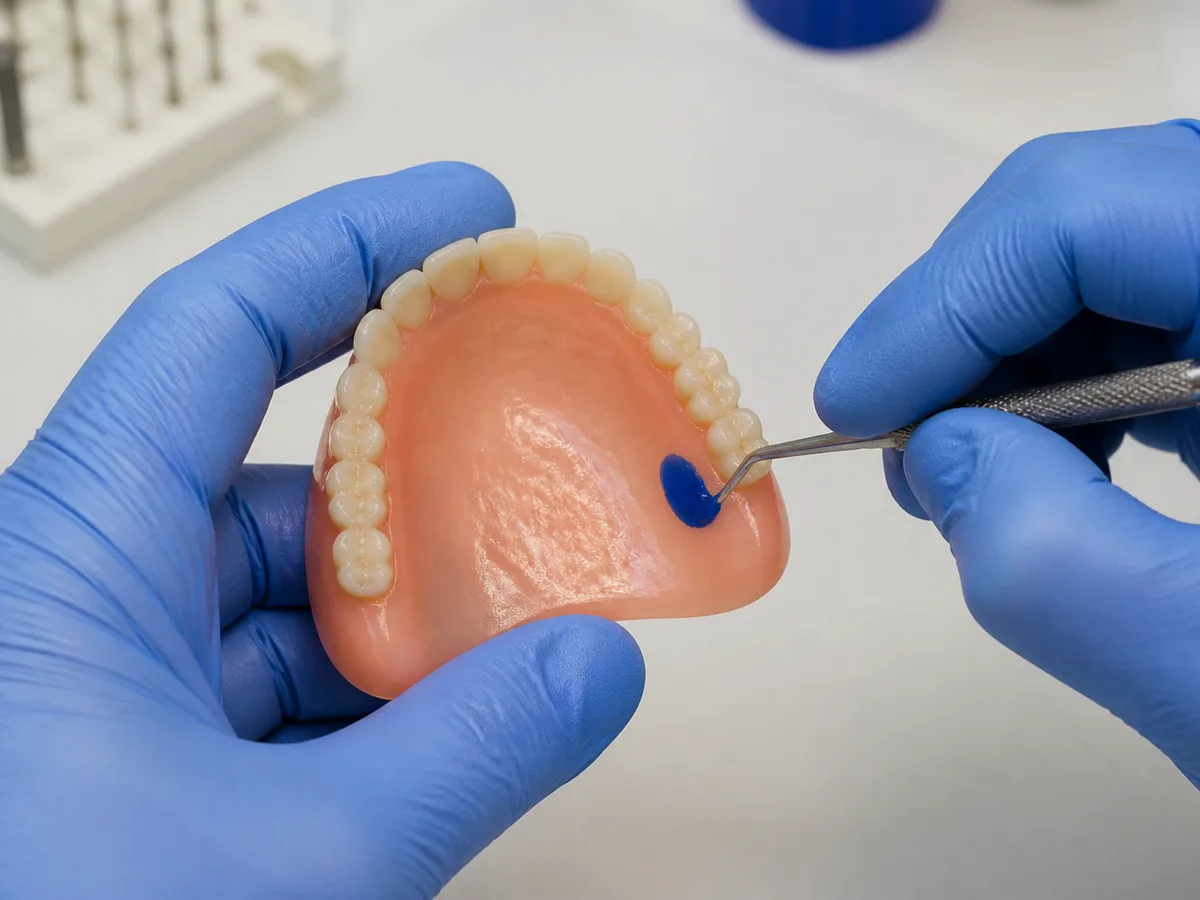
A tiny high spot can feel huge
Dentists often use marking paste to see exactly where the base scrapes. Removing a small amount of acrylic in the right place usually brings quick relief. Wear the dentures for a few hours before the visit when asked, so the sore spot is visible and not temporarily calmed by overnight rest alone.
When To Seek Care Promptly
- Ulcers that deepen instead of improving after a day or two of rest.
- Swelling, fever, or spreading redness around the ridges or face.
- Sudden looseness after weight loss, healing, or a long gap since the last reline.
- Pain with speaking that suggests borders are overextended.
- Burning that persists even when the denture is out, which can point beyond simple friction.
Extra adhesive is a weak fix for a poor fit. If you also struggle with meals, revisit eating with dentures after the pain source is corrected. Nightly tissue rest from removing dentures at night can help inflamed gums recover between visits. Cleaning still matters: trapped debris under a rocking plate can make sore spots worse, so pair adjustments with thorough brushing of the tissue side every day.
 Details speed the diagnosis.
Describe when the pain starts
Note whether pain appears on insertion, after an hour of wear, only while chewing, or overnight. Timing clues help separate bite problems from border irritation or infection. Mention new medications, recent weight change, or a cracked tooth on a partial—those details change the exam.
Do not file dentures at home with nail files or sandpaper. That can ruin the bite and create sharper edges. Book an adjustment and use Find a Dentist if you need a nearby office that services sore dentures quickly and can check for infection when redness does not match a simple rub spot. Bring a short pain diary if symptoms come and go—patterns help more than a single sore moment in the chair.
Related articles
Keep exploring related topics from Dental Country.

How Long Does It Take To Get Used To Dentures?
Denture adjustment is gradual: speech softens first, chewing improves next, and comfort follows as sore spots are refined at follow-up visits.
Read article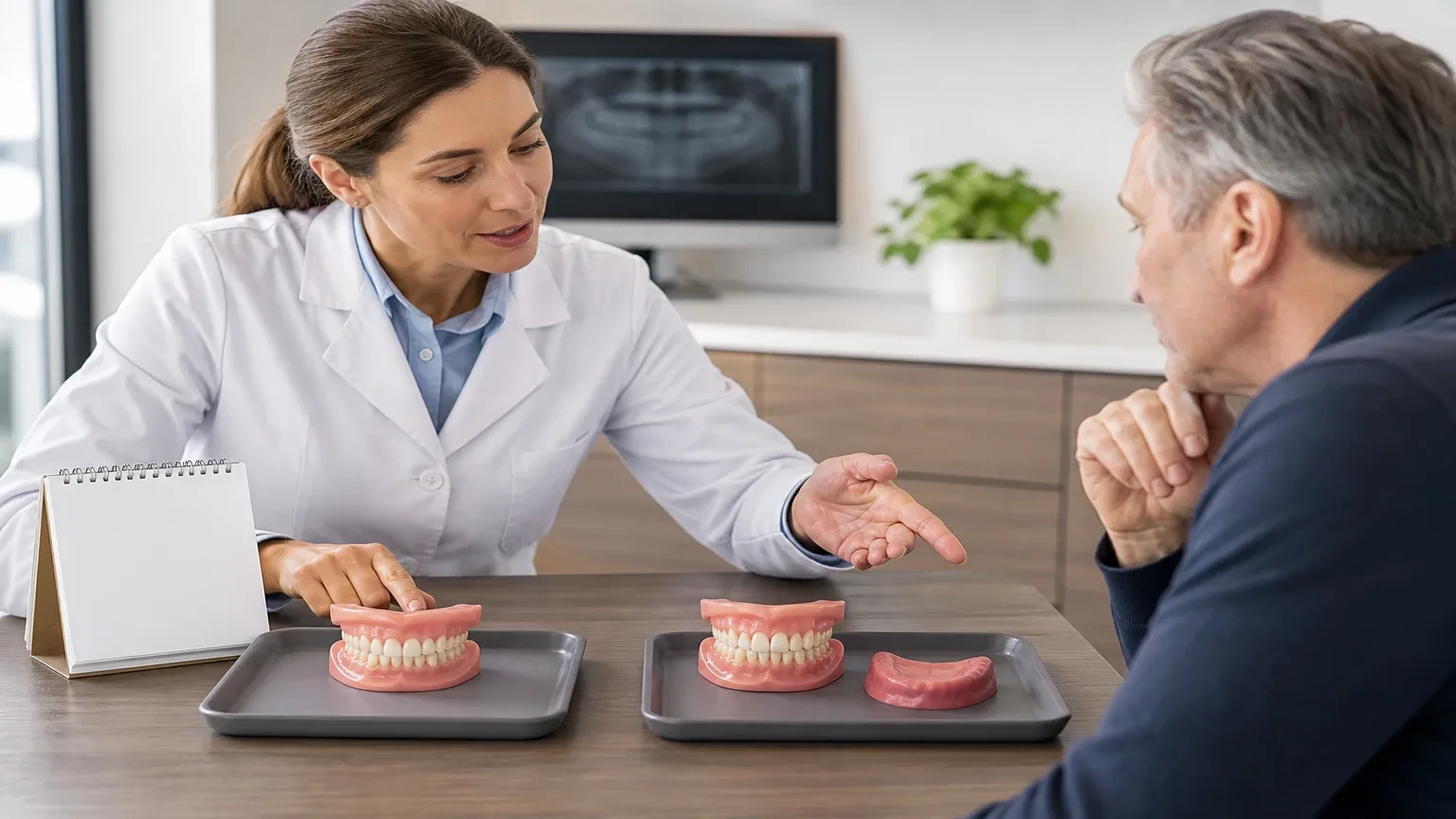
Immediate Dentures Vs Conventional Dentures: What's The Difference?
Immediate dentures protect appearance after extractions, while conventional dentures are fitted after healing for a more stable starting shape.
Read article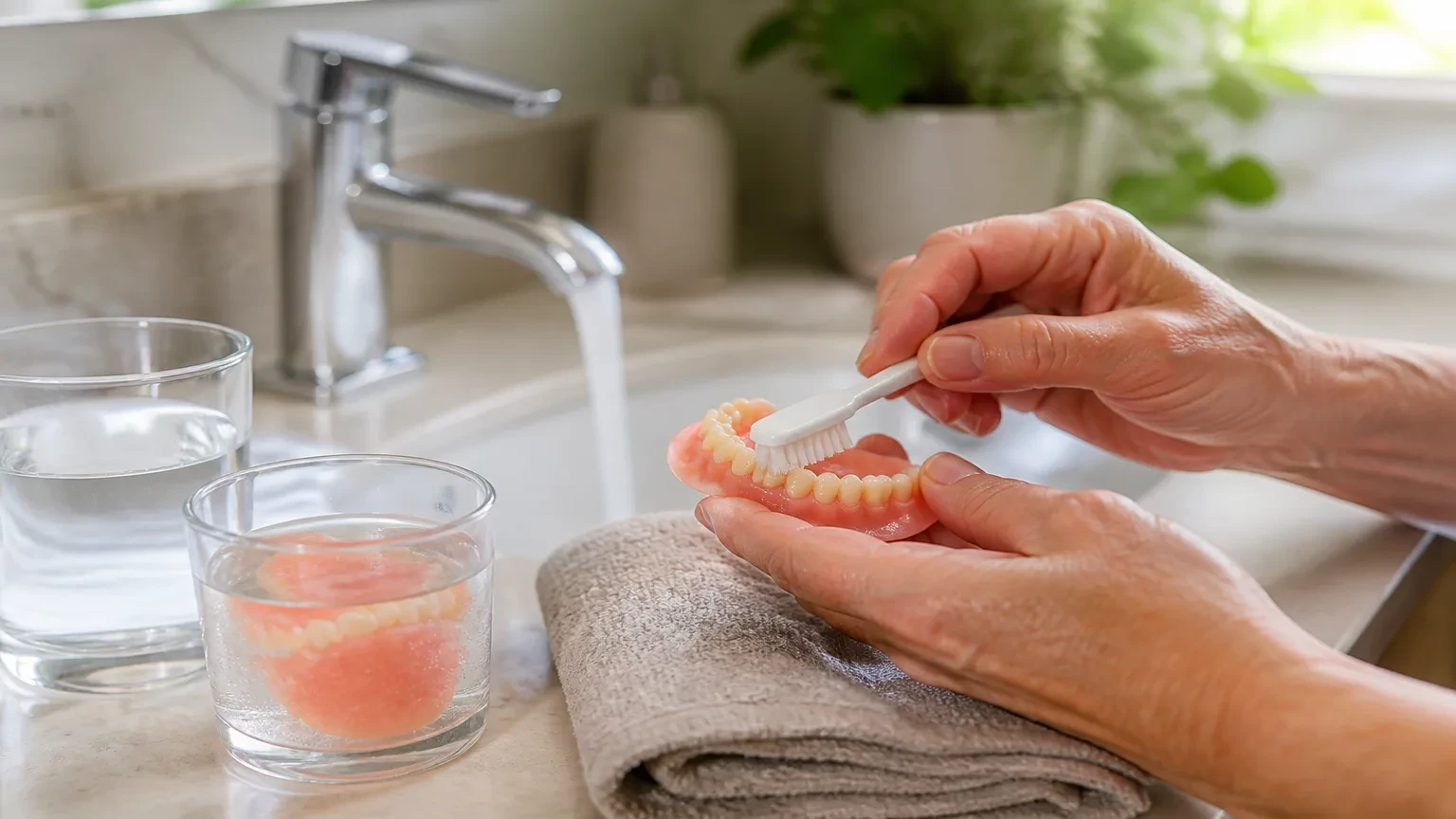
How Do You Clean Dentures?
Denture cleaning is a daily hygiene habit: brush the prosthesis, rinse thoroughly, soak as directed, and care for the gums and any remaining teeth.
Read article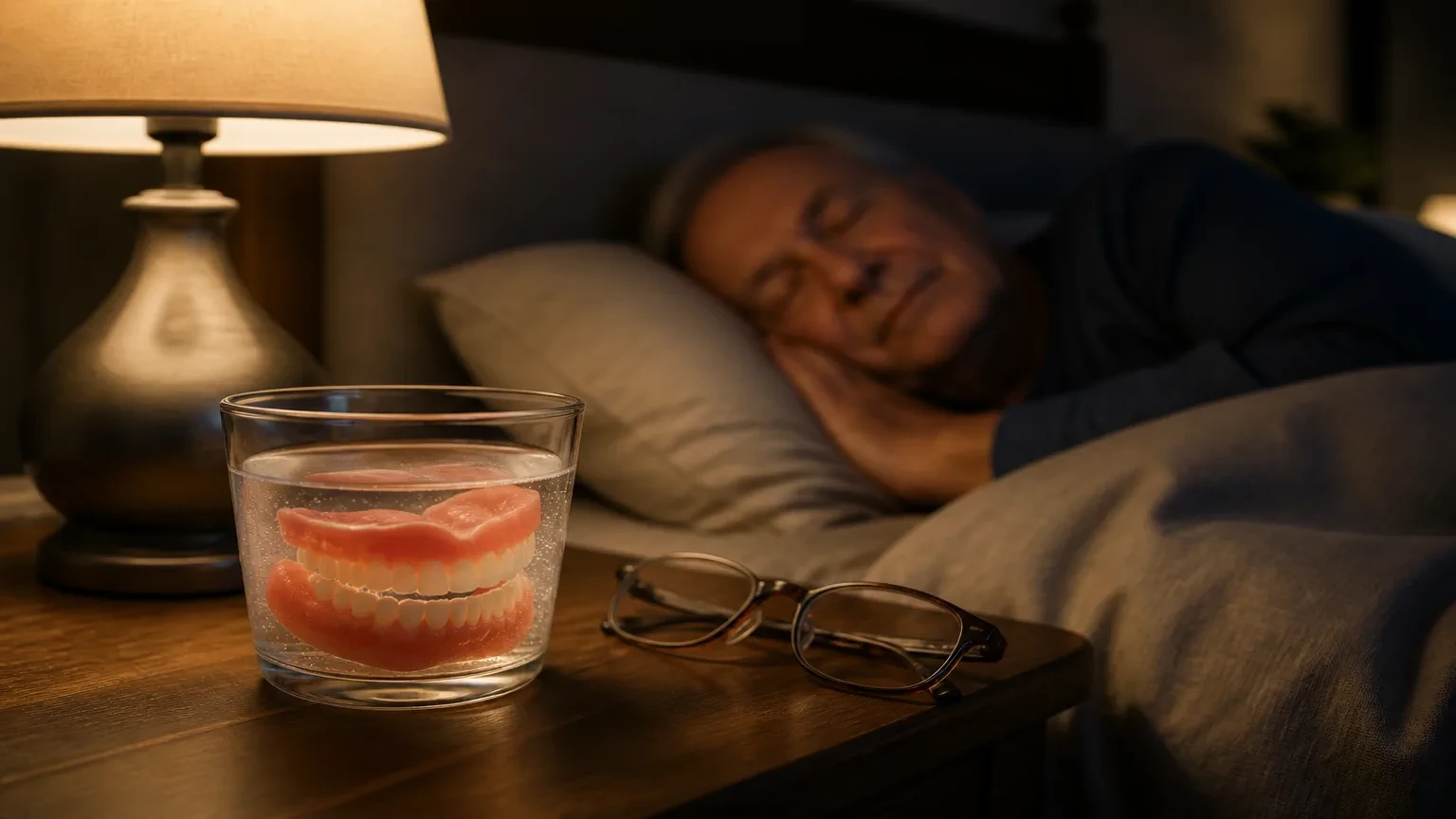
Can You Sleep With Dentures In?
Sleeping in dentures every night can stress gums and raise infection risk. Nightly removal is the usual advice unless a dentist sets a short exception.
Read article