

How Long Does It Take To Get Used To Dentures?
Most people need several weeks to get used to dentures as speech, saliva, and chewing adapt. Learn a day-by-day adjustment timeline and tips.

Reviewed by Dr. Sean Myran, DMDDoctor of Dental Medicine, University of Pennsylvania
Most people need a few weeks to get used to new dentures, and some need longer if gums are still healing or the bite needs more refining. Early days often feel bulky because the tongue, cheeks, and lips must learn a new shape. MouthHealthy explains that dentures take time to get used to and may need adjustment. The goal is not instant comfort on day one. It is steady progress with follow-up visits when sore spots appear.
Adaptation is both physical and practical. Muscles relearn how to hold the base, saliva volume often rises at first, and your brain remaps where the teeth sit for speech sounds like “s,” “f,” and “th.” Patience helps, but so does a plan: soft meals, short speech drills, and prompt adjustments instead of hoping friction will vanish on its own.
A Practical Adjustment Timeline
- Days 1 to 3: extra saliva, lisp-like speech, and careful soft foods are common. Wear the dentures as directed so tissues begin adapting; remove them for cleaning and for the nightly rest your dentist recommends.
- Week 1: speech practice helps; small sore spots may show where the base rubs. Schedule the first refinement visit rather than sanding acrylic at home.
- Weeks 2 to 4: chewing becomes more coordinated if the fit is refined. You may add firmer textures gradually while still cutting food small.
- After one month: many people feel more natural, though skill keeps improving for months as confidence and muscle control catch up.
Healing after extractions stretches this timeline. Swelling that drops week by week changes how a plate seats, so an immediate denture path often needs more early visits than a conventional set made on settled ridges. That is expected biology, not a sign you chose poorly.
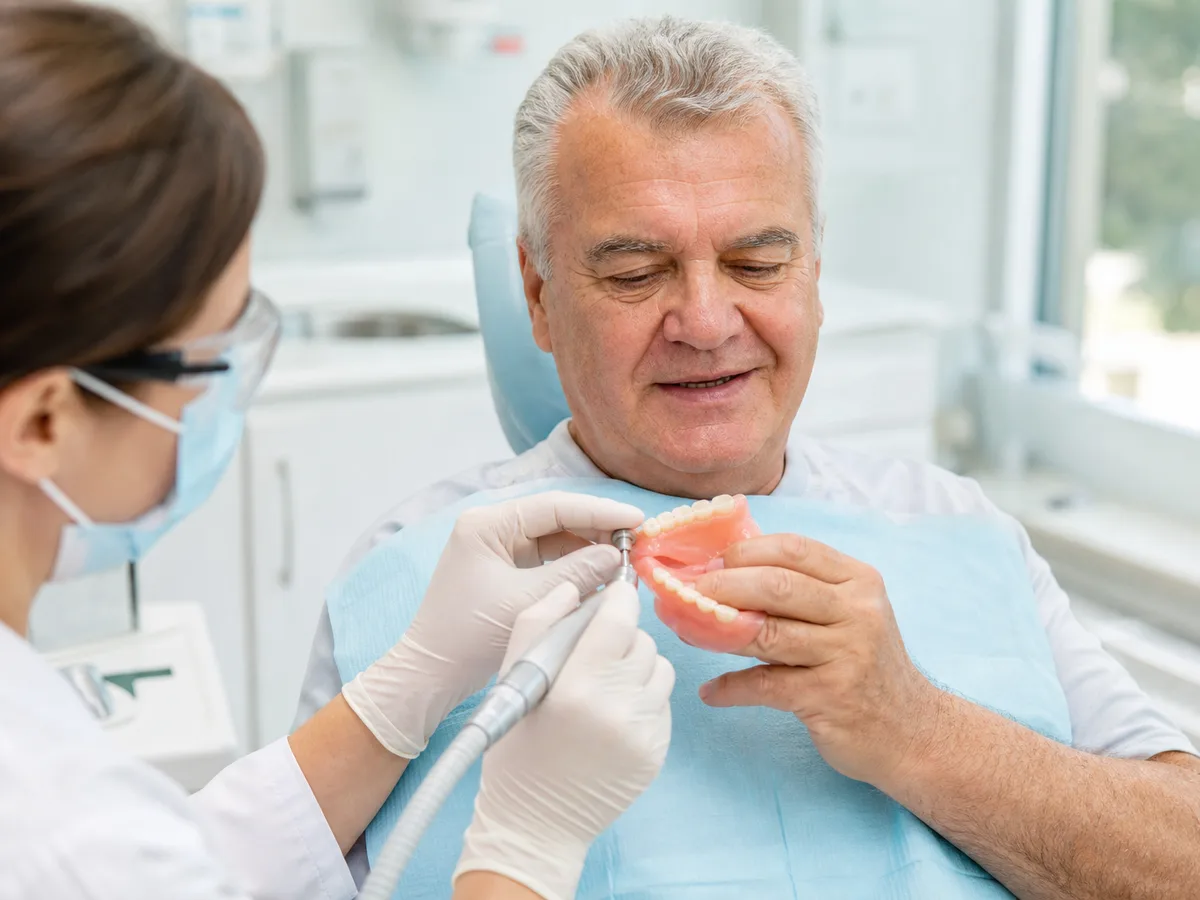 Early refinements protect healing gums.
Sore spots are feedback, not failure
Mild friction is expected while tissues adapt, but a sharp hotspot that lasts should be adjusted rather than endured. Do not sand the denture yourself. A small chairside change often restores comfort quickly. Mark the painful area with a photo or a note about which food triggered it so the visit stays efficient.
What Helps Adaptation
- Read aloud: short practice sessions train tongue placement for clearer speech. Newspapers, song lyrics, or phone notes all work if you repeat daily.
- Start soft: scrambled eggs, yogurt, fish, and cooked vegetables before tougher textures like crusty bread or steak.
- Cut food small: chew on both sides when possible to keep the denture steadier and reduce tipping.
- Keep follow-ups: fit changes as swelling settles and chewing patterns evolve; skip visits and small problems can become ulcers.
- Use adhesive carefully: a thin, dentist-approved amount can help during learning, but thick layers that mask a rocking base delay a needed reline.
If eating still feels hard after the first weeks, review how eating with dentures usually progresses and ask whether adhesive, a rebase, or implant support would help stability. Persistent rocking is a fit problem, not something to ignore. People comparing pathways should also understand immediate versus conventional timing, because healing under an immediate plate changes how “used to them” feels in month one.
 Practice short and often.
Speech usually improves before tough chewing does
Many people notice clearer speech after a week of practice even while chewing is still careful. That sequence is normal. Confidence grows as the denture feels less foreign and the bite is balanced. If certain sounds stay trapped, ask whether tooth position or thickness at the palate needs a design tweak at a try-in or remake stage.
When To Call Sooner
Call sooner for ulcers that worsen, dentures that click or drop while talking, gagging that does not settle, or pain that keeps you from eating soft meals. A dentist can check the bite, borders, and whether healing after extractions is changing the fit. Sudden looseness after a cold, weight change, or a long gap since delivery also deserves a look before you rely on more cream.
Getting used to dentures is a process with checkpoints, not a single finish line. Keep notes on sore spots and meals that feel unstable so each adjustment visit is efficient. Use the Find a Dentist directory if you need a local office that handles denture adjustments and will see you promptly when a hotspot appears.
Related articles
Keep exploring related topics from Dental Country.
Immediate Dentures Vs Conventional Dentures: What's The Difference?
Immediate dentures protect appearance after extractions, while conventional dentures are fitted after healing for a more stable starting shape.
Read article
How Do You Clean Dentures?
Denture cleaning is a daily hygiene habit: brush the prosthesis, rinse thoroughly, soak as directed, and care for the gums and any remaining teeth.
Read article
Can You Sleep With Dentures In?
Sleeping in dentures every night can stress gums and raise infection risk. Nightly removal is the usual advice unless a dentist sets a short exception.
Read article
What Are Implant-Supported Dentures?
Implant-supported dentures use implants as anchors so the prosthesis feels more secure for chewing and speaking than a loose tissue-supported plate.
Read article