
How Do You Clean Dentures?
Clean dentures daily with a soft brush, nonabrasive cleanser, and careful rinsing. Learn a simple routine that protects fit, stain control, and gums.

Reviewed by Dr. Sean Myran, DMDDoctor of Dental Medicine, University of Pennsylvania
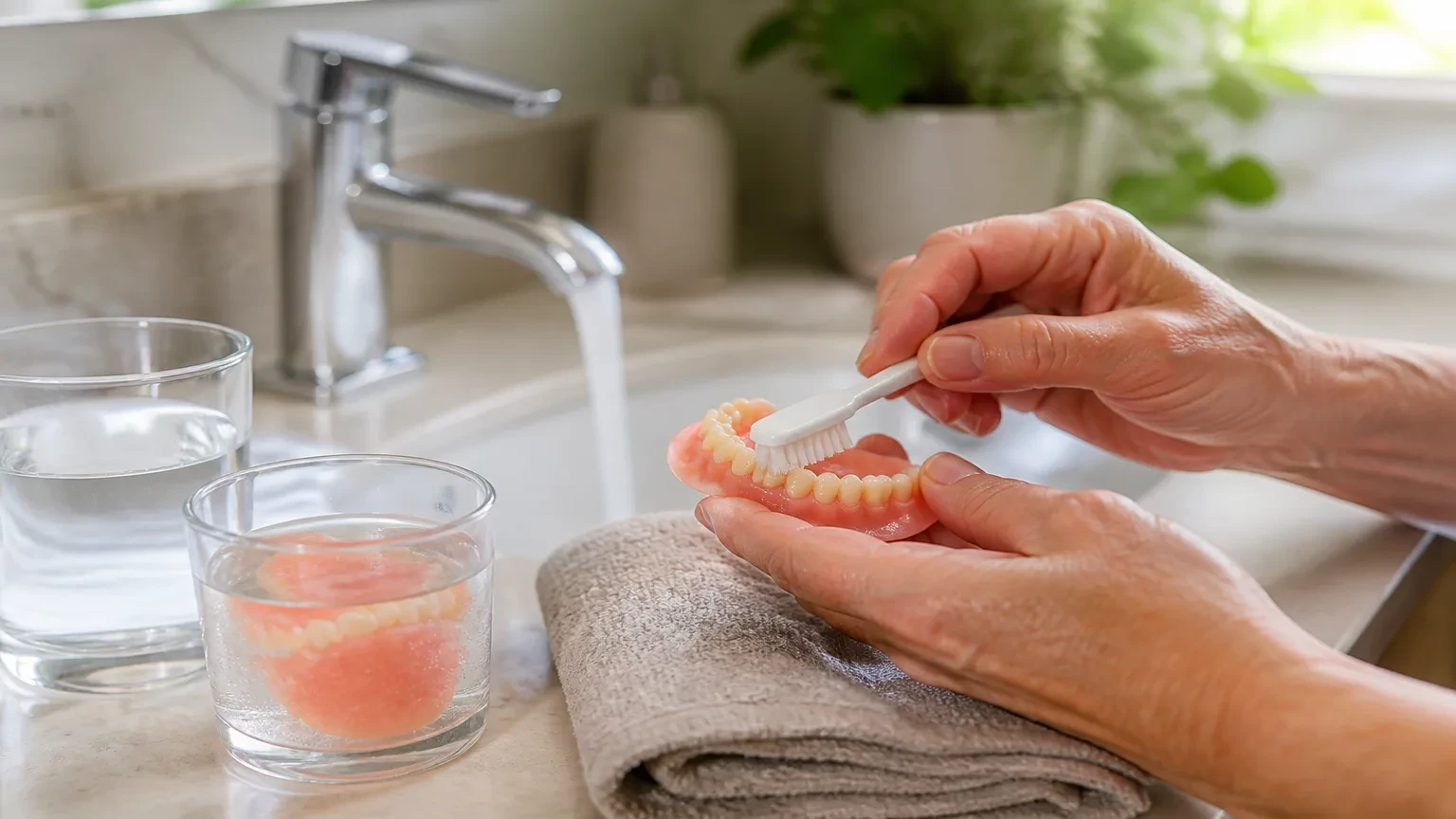
You clean dentures by brushing them daily with a soft brush and a cleanser made for dentures, then rinsing thoroughly before putting them back in. Ordinary toothpaste can be too abrasive for acrylic. MouthHealthy recommends cleaning dentures daily and handling them carefully over a sink of water or a towel. The goal is plaque control without scratching the surface that sits against soft tissue.
Biofilm forms on dentures much like it does on natural teeth. Left alone, it contributes to odor, stain, and irritated ridges. Partials need the same diligence on clasps and connectors, plus careful cleaning of the natural teeth that hold them. A routine that is boring and consistent beats an occasional deep scrub after problems show up.
A Simple Daily Cleaning Routine
- Remove dentures over a soft landing: a towel or water-filled sink cushions drops that can crack teeth or the base.
- Rinse food debris: use warm water, not scalding hot water that can warp acrylic.
- Brush all surfaces: outer teeth, inner base, polished flanges, and any clasps on a partial.
- Use denture cleanser: follow soak times on the product label; more time is not always better.
- Rinse again before wear: leftover cleanser should not stay against tissue.
- Clean the mouth: brush gums, tongue, palate, and remaining teeth with a soft brush even where no teeth remain.
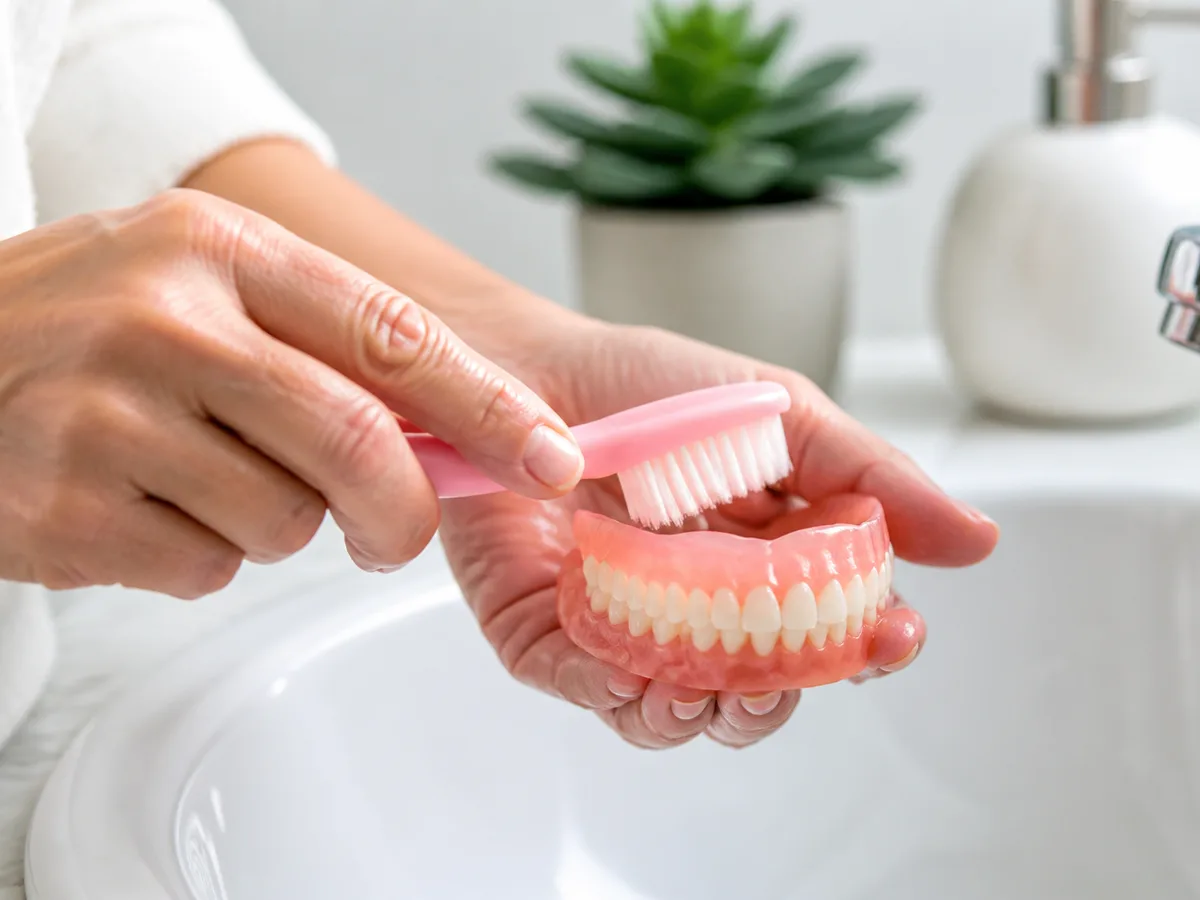 Gentle tools protect the finish.
Brush the base, not just the teeth
Plaque collects on the tissue side as well as on the chewing surface. A soft brush reaches grooves without grinding acrylic dull. Scratches hold stain and odor over time. Hold the denture securely; a dropped plate is a common reason for emergency repairs.
What To Avoid
- Harsh toothpaste: whitening pastes can abrade acrylic and dull polish.
- Boiling water: heat can distort the fit so the plate no longer matches the ridge.
- Bleach on metal clasps: some solutions corrode metal parts on partials; ask which products are safe for your materials.
- Skipping gum care: brush gums, tongue, and remaining teeth even without natural teeth in that area.
- Ultrasonic shortcuts alone: home baths can help, but they do not replace daily brushing of the tissue surface.
Overnight storage usually means soaking in water or the solution your dentist recommends so acrylic does not dry out. That pairs with guidance on whether sleeping in dentures is wise. If odor returns quickly, ask whether calculus has built up and whether a professional clean or polish is needed. People who also notice rubbing after meals should check whether debris or fit problems are the real source.
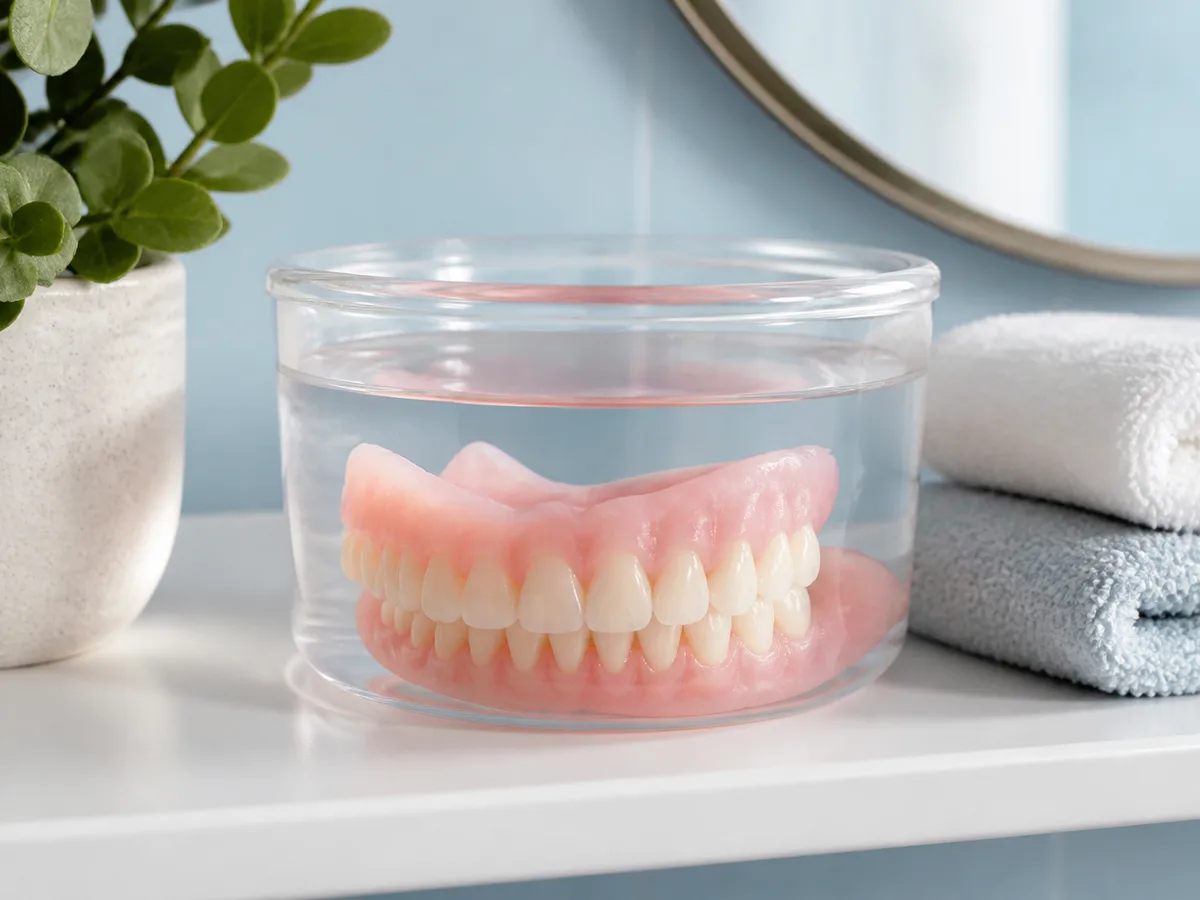 Brush first, then soak.
Soaking is not a substitute for brushing
Cleansing tablets help with stains and film, but biofilm still needs mechanical brushing. Combine both for better freshness and a smoother surface against the gums. Change soak water daily and rinse the storage case so it does not become its own source of film.
When Cleaning Is Not Enough
Bring dentures to checkups if they smell despite good care, feel rough, or collect hard deposits. A dentist can also check whether sore spots relate to fit rather than hygiene alone, and whether stained teeth signal diet habits, smoking, or a surface that needs professional polishing. Travel days are when routines slip—pack a brush, travel soak tablets if approved, and a rigid case so the prosthesis is not wrapped in a napkin and thrown away by mistake.
Good cleaning supports comfort and appearance, but it cannot fix a base that no longer matches the ridge. If looseness or rocking persists after thorough hygiene, ask about a reline and review longer-term options. Use Find a Dentist to locate an office that services full and partial dentures and can demonstrate cleaning technique in person if your hands or vision make home care hard.
Related articles
Keep exploring related topics from Dental Country.

How Long Does It Take To Get Used To Dentures?
Denture adjustment is gradual: speech softens first, chewing improves next, and comfort follows as sore spots are refined at follow-up visits.
Read article
Immediate Dentures Vs Conventional Dentures: What's The Difference?
Immediate dentures protect appearance after extractions, while conventional dentures are fitted after healing for a more stable starting shape.
Read article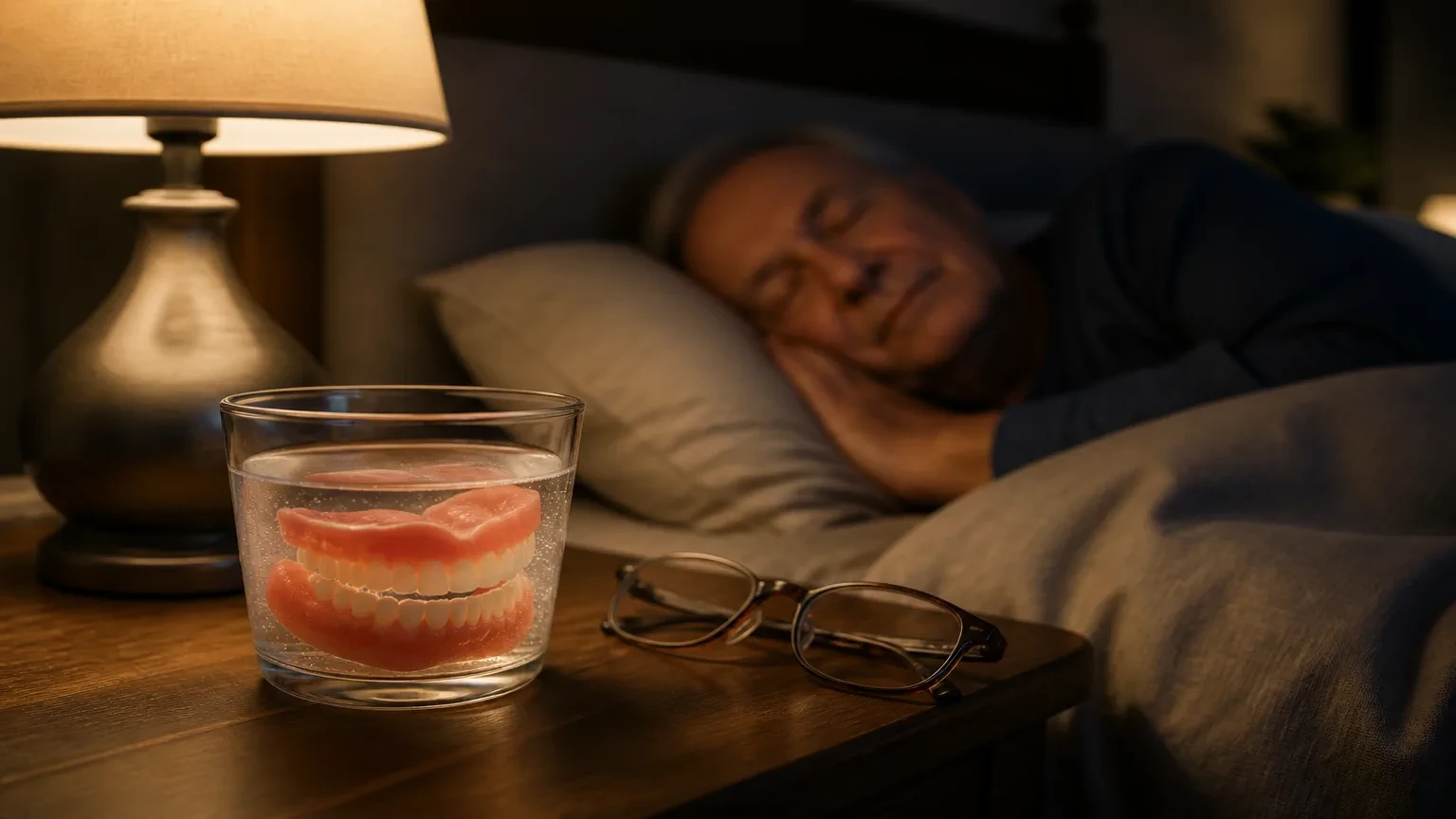
Can You Sleep With Dentures In?
Sleeping in dentures every night can stress gums and raise infection risk. Nightly removal is the usual advice unless a dentist sets a short exception.
Read article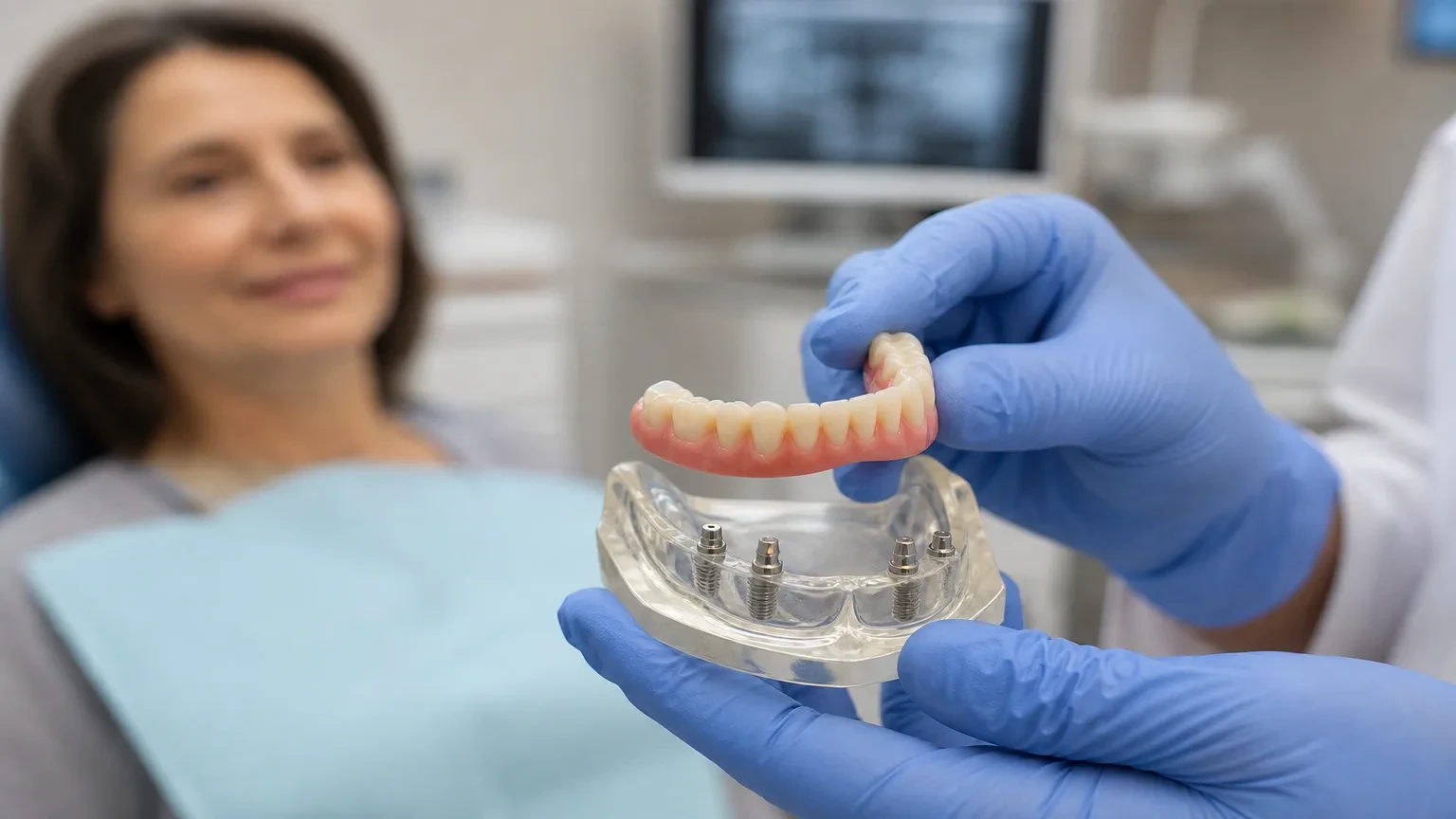
What Are Implant-Supported Dentures?
Implant-supported dentures use implants as anchors so the prosthesis feels more secure for chewing and speaking than a loose tissue-supported plate.
Read article