
Dental Implant Vs Bridge: Which Is Better?
Compare dental implants and bridges for a missing tooth: bone, neighboring teeth, timeline, cost, cleaning, and which option fits different clinical situations.

Reviewed by Dr. Sean Myran, DMDDoctor of Dental Medicine, University of Pennsylvania
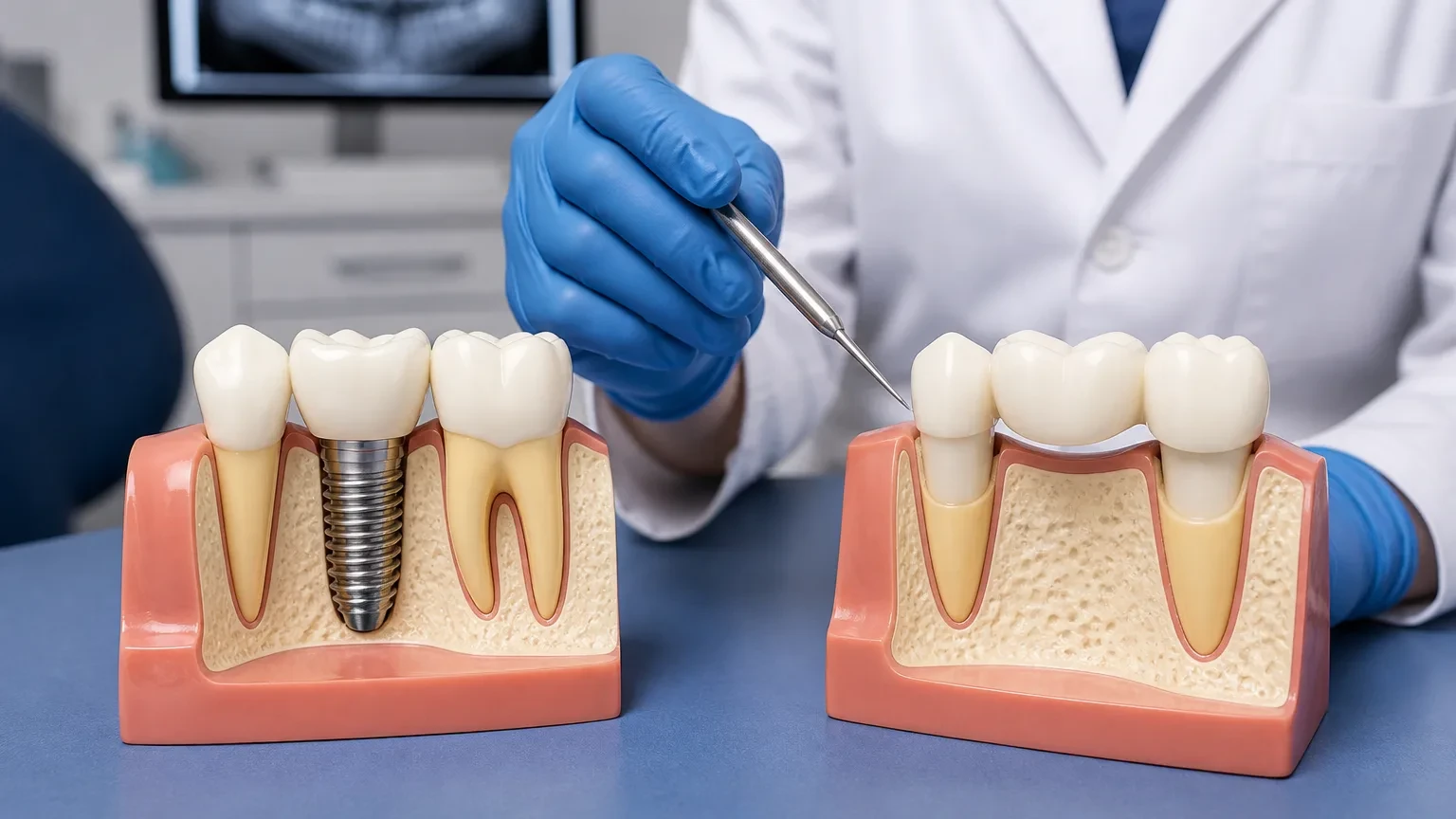
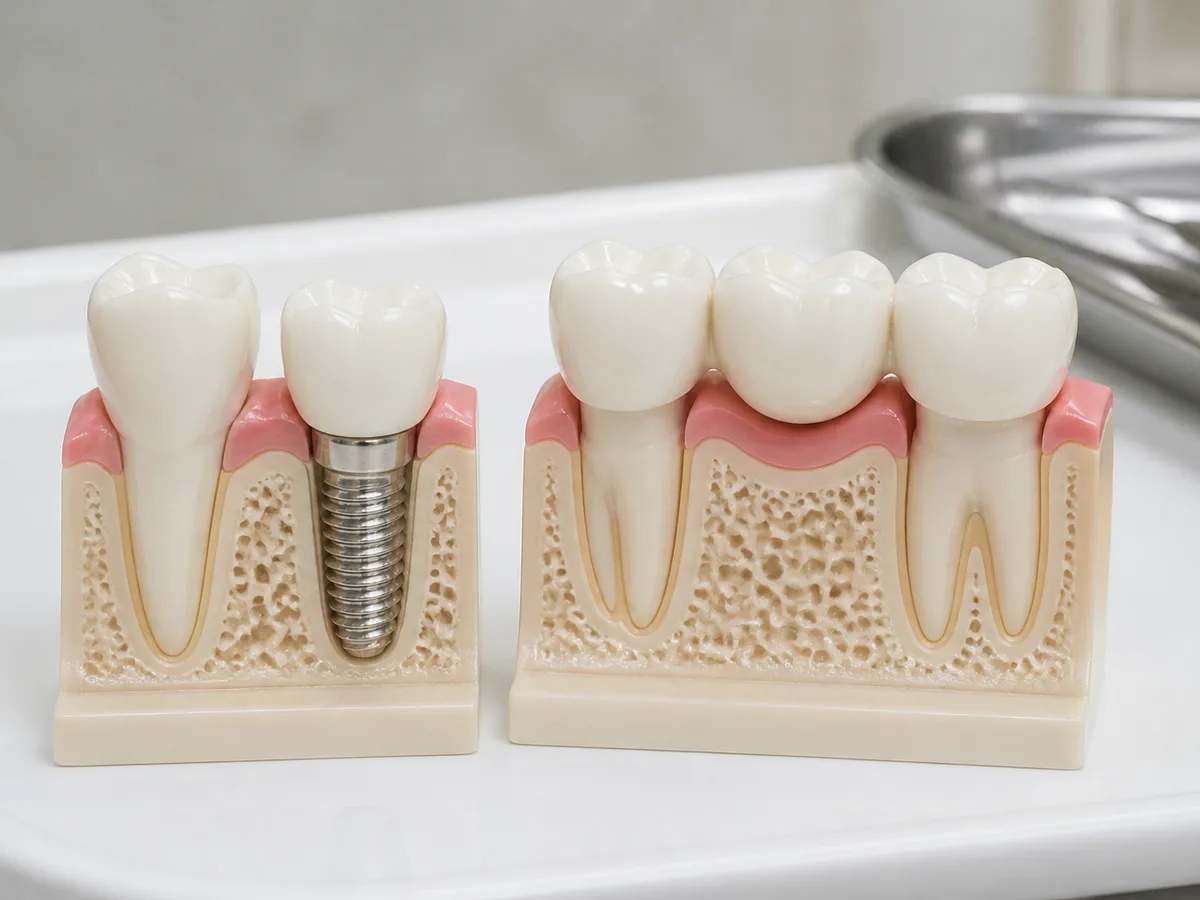
For a single missing tooth, both a dental implant crown and a traditional fixed bridge can restore chewing and appearance. An implant replaces the root in bone and stands alone. A bridge uses crowns on the teeth next to the gap to carry a false tooth between them. “Better” depends on bone volume, the health of neighboring teeth, timeline, budget, and how diligently you will clean under or around the restoration.
Side-By-Side Comparison
| Factor | Dental implant | Fixed bridge |
|---|---|---|
| Neighboring teeth | Usually left intact | Prepared (crowned) for support |
| Bone in the gap | Stimulated by the implant | May continue to shrink under the pontic |
| Typical timeline | Months (healing before final tooth) | Often weeks |
| Cleaning | Brush and clean around the implant collar | Floss threaders or water floss under the pontic |
| Upfront cost | Often higher | Often lower initially |
| Repair path | Crown may be remade; implant can remain | Whole bridge may need replacement later |
When an implant usually has the edge
If the teeth on either side of the gap are untouched and healthy, many dentists prefer an implant so those enamel surfaces are not ground down for bridge retainers. Implants also help maintain bone height in the edentulous site. Mayo Clinic’s overview of dental implant surgery underscores the role of bone integration—something a pontic sitting on gum tissue cannot provide.
When A Bridge Still Makes Sense
Choose a bridge—or at least keep it on the shortlist—when bone is too limited for an implant and grafting is not desired, when medical risk makes surgery unwise, when you need a faster fixed tooth, or when the neighboring teeth already need full crowns. A bridge can be an excellent restoration in the right mouth. It is not a “compromise prize”; it is a different engineering solution.
Cost and healing questions sit next to this decision: How Much Do Dental Implants Cost? and How Long Does Dental Implant Healing Take? If bone volume is the blocker, What Is A Dental Implant Bone Graft? helps you weigh grafting versus accepting a bridge.

Decide with maintenance in mind
Ask to see how you would clean either option. Some patients hate floss threaders under a pontic; others dislike interdental brushes around an implant. The restoration you will actually maintain beats the one that looks perfect in a case study. For a personalized comparison after imaging, find a dentist who restores both implants and bridges and can price them side by side.
Long-Term Maintenance Stories Differ
An implant concentrates risk at one site. If peri-implant disease develops, treatment targets that fixture. A bridge links teeth: decay or fracture under a retainer crown can force replacement of the entire span, even if the pontic looked fine. Patients with a high decay rate sometimes do better with an implant that leaves neighbors alone—or sometimes worse if their hygiene will not protect an implant collar either. Honest hygiene assessment belongs in the decision, not after cementation.
Esthetic zones in the front teeth add gum-display considerations. Implant crowns need adequate soft-tissue thickness to avoid gray show-through. Bridges can mask ridge defects with pink porcelain in some cases, though that is an artistic compromise. Ask to see close-up cases in mouths that resemble yours, including lip line at full smile.
If you already have a failing bridge, the conversation resets. Removing old retainers may reveal unrestorable abutments, suddenly making implants necessary under more than one tooth. Budget emotional energy for plan changes after demolition radiographs, not only for the brochure comparison.
A Simple Decision Frame
If neighboring teeth are pristine and bone is adequate, lean implant. If neighbors already need crowns or surgery is off the table, lean bridge. If both are viable, let timeline, budget, and cleaning preference break the tie—not social media before-and-after photos.
Related articles
Keep exploring related topics from Dental Country.
Am I A Candidate For Dental Implants?
Implant candidacy hinges on bone, gums, and overall health—not age alone. Here’s how dentists decide, and what that means before you commit.
Read article
How Long Do Dental Implants Last?
The implant post can last decades; crowns and hygiene decide how long the whole restoration feels “done.” Here’s what actually drives longevity.
Read article
Do Dental Implants Hurt?
Most people feel pressure during placement, not sharp pain—then a few days of soreness. Walk through what comfort usually feels like before, during, and after.
Read article
How Much Do Dental Implants Cost?
Implant pricing is a package, not a single sticker. Break down what you are buying—and the questions that keep quotes comparable.
Read article