
What Is A Dental Implant Bone Graft?
A dental implant bone graft rebuilds jaw volume so an implant can sit securely. Learn why grafts are used, common types, healing time, and recovery basics.

Reviewed by Dr. Sean Myran, DMDDoctor of Dental Medicine, University of Pennsylvania
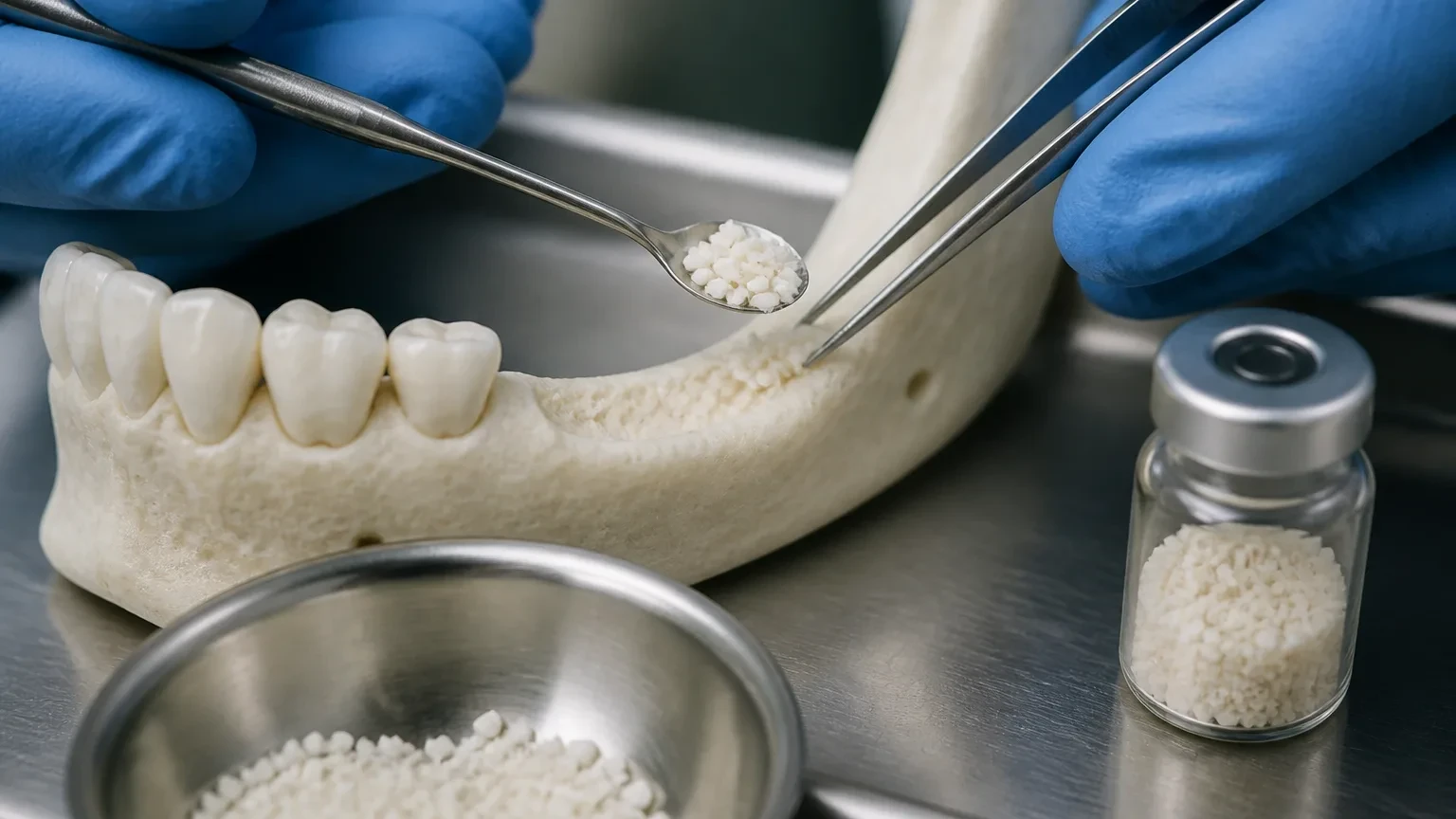
A dental implant bone graft is a procedure that adds or rebuilds bone in the jaw so an implant post has enough solid volume to hold. After a tooth is lost, the ridge often shrinks. Infection, dentures, and time can accelerate that loss. Grafting fills or widens the site with bone from your own body, a processed donor/animal source, a synthetic material, or a combination—then the area heals before (or sometimes at the same time as) implant placement.
A Familiar Scenario
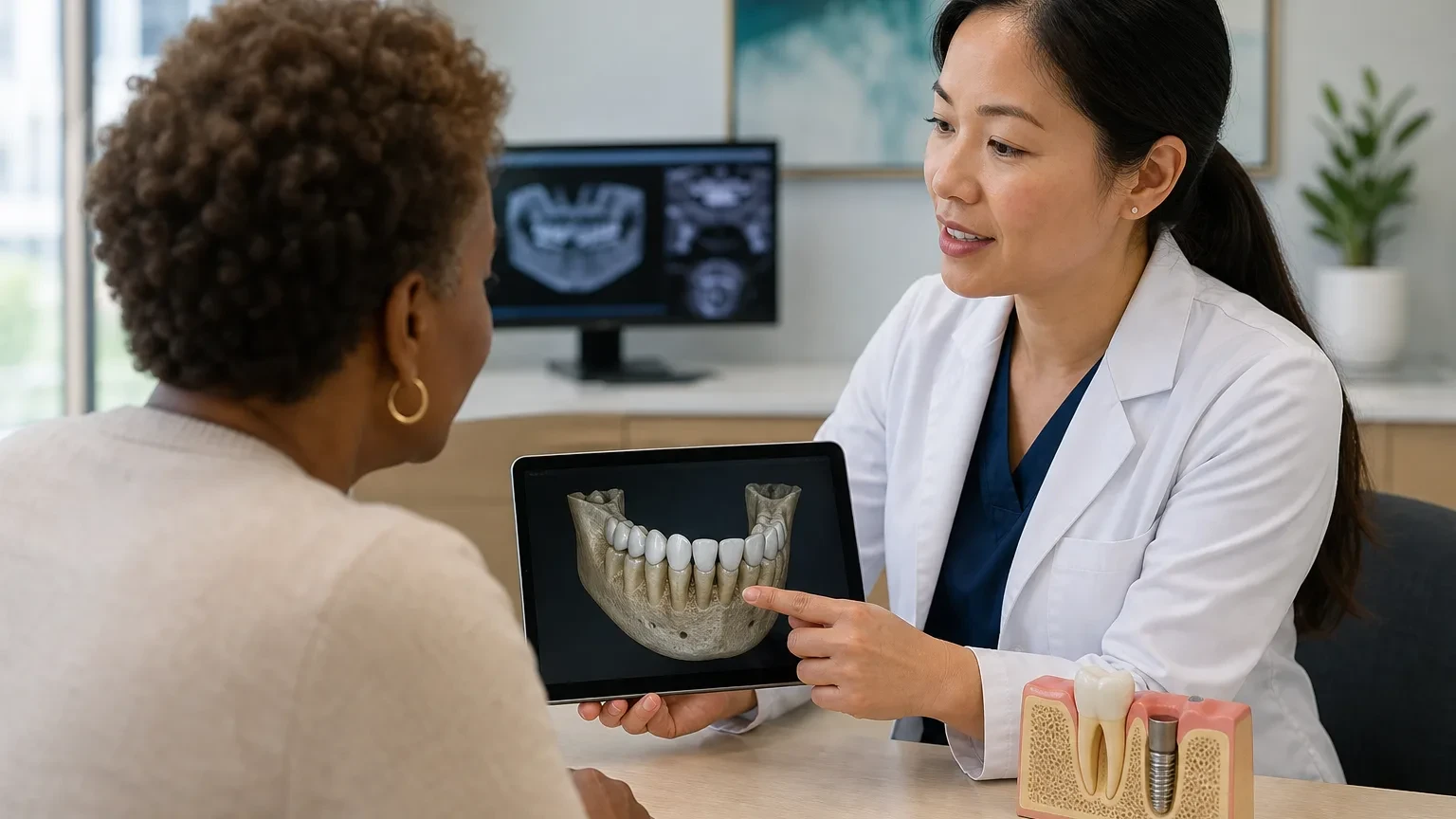
You lost a molar five years ago. A flipper kept the space looking okay. At the implant consult, the CBCT shows a narrow ridge and a sinus floor that sits close to where the implant needs to go. Rather than forcing a short implant into thin bone, your surgeon recommends a graft—and possibly a sinus lift in the upper jaw—so the final post can be longer, wider, and more stable. That detour adds months, but it is often the difference between a compromised placement and a foundation built for chewing.
What the graft is trying to accomplish
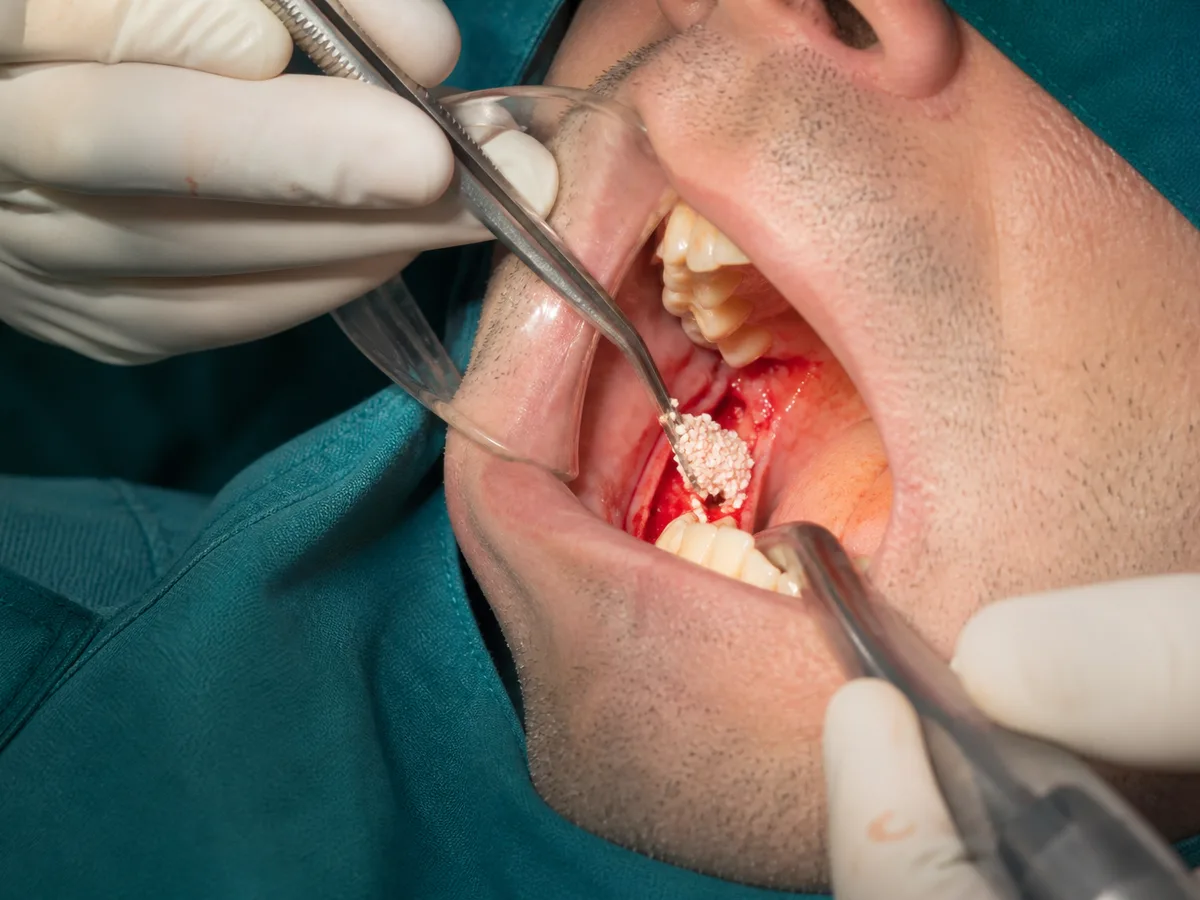
Bone needs width and height, and the implant needs safe distance from nerves and sinus cavities. Grafting rebuilds the envelope so the planned tooth position matches the bite—not just whatever bone happens to remain. AAOMS educational material on implant surgery emphasizes careful site preparation; grafting is one of the tools that makes “careful” possible when anatomy is deficient. See their patient-facing implant resources via MyOMS dental implant surgery pages.
Common Graft Approaches You May Hear
- Socket graft: Placed when a tooth is extracted to preserve the ridge.
- Ridge augmentation: Builds out a thin or low ridge before implants.
- Sinus lift: Adds bone below the sinus in the upper back jaw.
- Block or particulate grafts: Different shapes/materials depending on defect size.
Healing after a graft often runs a few months before the implant is placed, though some sites allow simultaneous placement when stability allows. Swelling can outpace a simple implant-only surgery. For overall candidacy context, revisit Am I A Candidate For Dental Implants? Timeline questions pair with How Long Does Dental Implant Healing Take? Cost impact shows up in How Much Do Dental Implants Cost?
Recovery habits that protect the graft
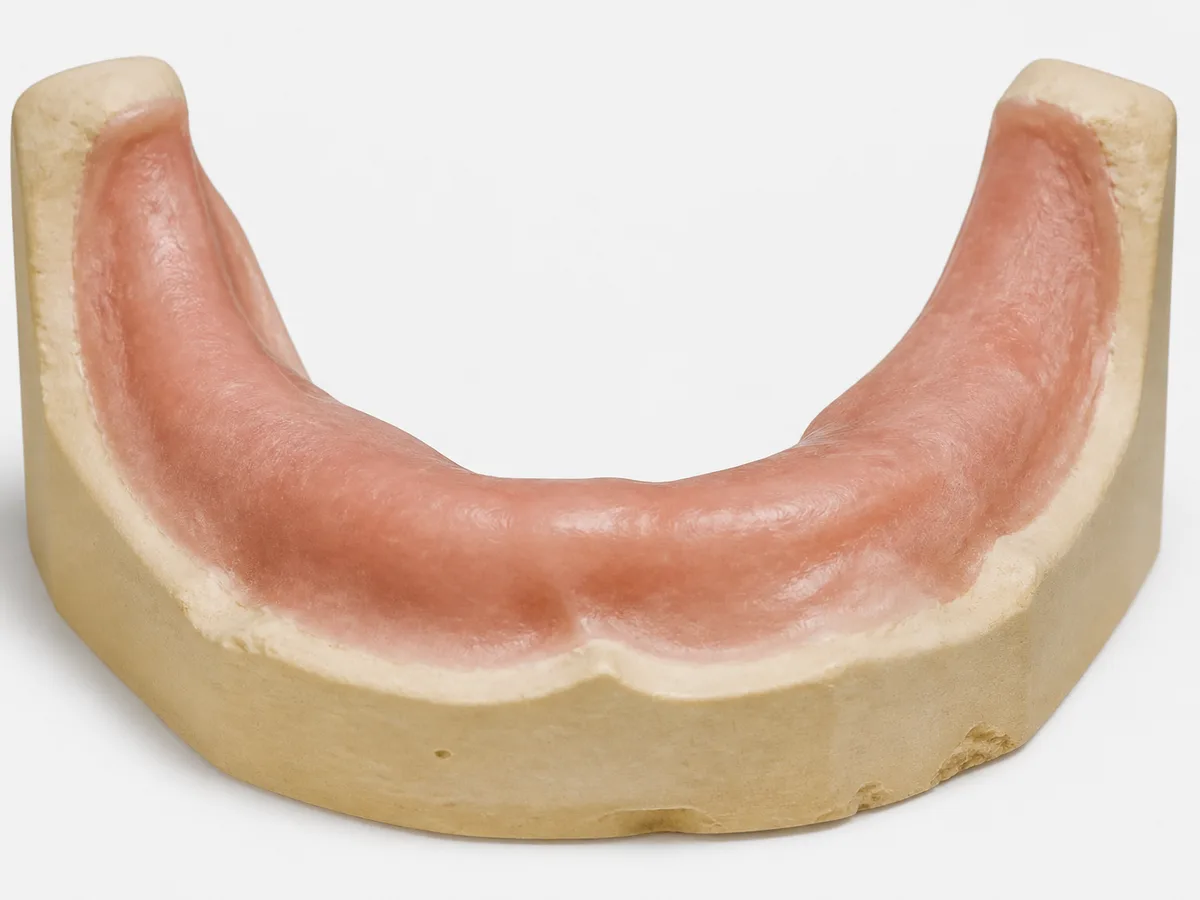
Avoid smoking, poking the site with your tongue, and chewing hard foods on that side until cleared. Take medications as prescribed. Soft-tissue opening over a graft or sinus precautions (no forceful nose blowing after a sinus lift) are worth reading twice on your instruction sheet. If something feels off—fever, increasing pain, granules in your mouth—call promptly. Ready for a site-specific plan? Find a dentist who routinely grafts for implants and can show you your CBCT slices.
Materials Without The Marketing Fog
Autograft uses your own bone and remains a gold-standard reference for regenerative potential, with a second surgical site as the tradeoff. Allograft and xenograft products avoid that second site and have long track records in ridge preservation. Synthetics fill selected defects. Membranes may cover particulate grafts to guide healing. Your surgeon chooses based on defect shape, not social media branding. Ask which material is planned and why it fits your scan.
Sinus lifts deserve special mention. Creating space beneath the sinus membrane lets taller implants engage the upper molar region. Temporary congestion, nose-blowing rules, and rare membrane complications should be explained before you consent. If you have chronic sinus disease, mention it early.
Not every graft looks dramatic from the outside. Some socket grafts feel like a normal extraction aftermath. Larger augmentations swell more and need longer before implants. Judge success at the integration scan, not at the seventy-two-hour selfie.
Is Grafting Always Required?
No. Plenty of implant sites have enough native bone. Grafting enters the plan when imaging says the foundation is short, thin, or poorly shaped for the tooth you want. Skipping a needed graft to save time is how implants end up poorly angled or under-supported. Ask to see the deficiency on the scan so the recommendation feels concrete, not upsold.
Related articles
Keep exploring related topics from Dental Country.
Am I A Candidate For Dental Implants?
Implant candidacy hinges on bone, gums, and overall health—not age alone. Here’s how dentists decide, and what that means before you commit.
Read article
How Long Do Dental Implants Last?
The implant post can last decades; crowns and hygiene decide how long the whole restoration feels “done.” Here’s what actually drives longevity.
Read article
Do Dental Implants Hurt?
Most people feel pressure during placement, not sharp pain—then a few days of soreness. Walk through what comfort usually feels like before, during, and after.
Read article
How Much Do Dental Implants Cost?
Implant pricing is a package, not a single sticker. Break down what you are buying—and the questions that keep quotes comparable.
Read article