
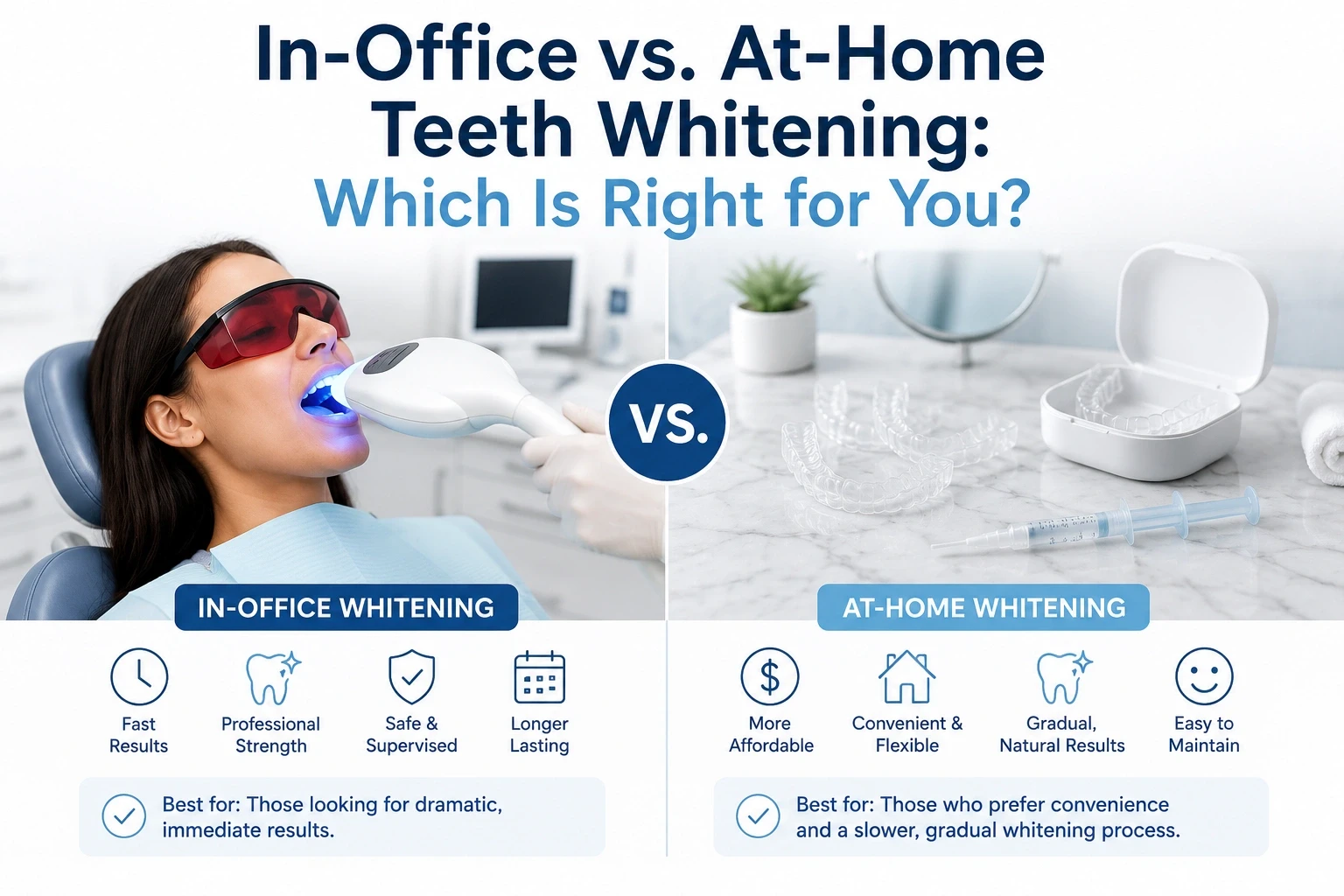
In-Office vs. At-Home Teeth Whitening: What Works Faster?
Compare in-office and at-home teeth whitening on speed, cost, sensitivity, and results. Learn which option fits your timeline before you bleach.

Reviewed by Dr. Sean Myran, DMDDoctor of Dental Medicine, University of Pennsylvania
In-Office or At-Home Whitening: Which Works Faster?
Professional in-office whitening delivers a faster, more dramatic shade jump under controlled conditions. At-home trays or strips cost less and whiten gradually with more control over sensitivity. Neither option changes crowns, veneers, or bonding the way it changes natural enamel — so restorations may need a color plan afterward. Use this comparison to match speed, cost, and sensitivity to your goals.
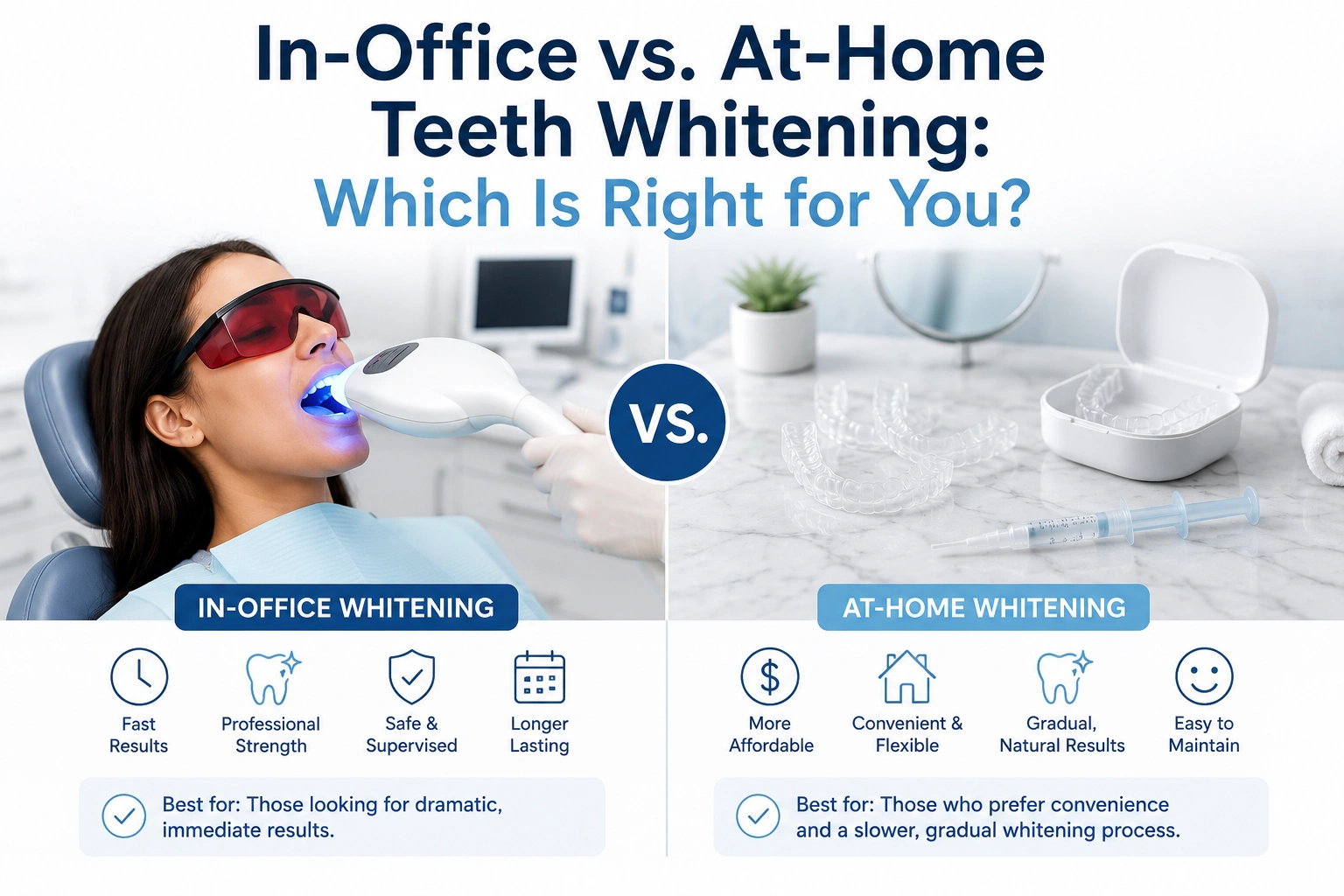
Quick Comparison
| Factor | In-Office Whitening | At-Home Whitening |
|---|---|---|
| Speed of results | Often 1 shade band in a single visit | Days to weeks of nightly or daily use |
| Typical cost | $300–$1,000+ per visit | $20–$400 depending on kit/custom trays |
| Strength | Higher peroxide under supervision | Lower concentration, longer contact time |
| Sensitivity risk | Can spike after treatment | Usually milder; easier to pause |
| Best for | Events, stubborn stains, supervised jumps | Budget pacing, maintenance, mild staining |
| Custom fit | Isolated in clinic | Custom trays beat one-size strips |
Cost, Insurance, and Value
Whitening is usually elective, so insurance rarely pays. In-office fees buy speed and supervision. Dentist-made take-home trays sit in the middle: higher than drugstore strips, lower than repeated chair visits, with better gel placement. Factor maintenance — coffee, tea, wine, and smoking reverse gains unless you touch up.
Procedure and Timeline
In-office visits clean and isolate teeth, apply higher-strength gel, and may use light systems depending on the product. At-home routines use custom trays or OTC strips for shorter daily wear over one to two weeks. Yellow extrinsic stains respond better than gray intrinsic stains; tetracycline banding and trauma discoloration may need veneers or bonding instead.
Sensitivity, Risks, and Limitations
Temporary zingers are common. Gum burn from poorly fitting trays or excess gel is avoidable with good technique. Overusing OTC products can irritate tissue without lasting benefit. Whitening will not match existing porcelain — plan restorative shade decisions before major cosmetic dentistry when possible.
The Case for In-Office Whitening
Pros
- Fast visible change — Helpful before weddings, photos, or big events.
- Supervised strength — Soft tissue is isolated and monitored.
- Professional diagnosis first — Rules out decay, leaks, or unrestorable stains.
Cons
- Higher cost per visit — Touch-ups still cost money later.
- Sensitivity spikes — Some patients need desensitizing recovery time.
- Not permanent — Diet and habits fade results without maintenance.
The Case for At-Home Whitening
Pros
- Lower upfront cost — Especially OTC strips for mild stains.
- Gradual control — Pause if teeth get sensitive.
- Custom dentist trays — Strong middle option for even gel coverage.
Cons
- Slower payoff — Requires nightly consistency.
- OTC fit varies — Poor contact means blotchy results.
- Easy to overuse — More product is not always safer or whiter.
Who Should Choose Which?
- Choose in-office if you want the quickest supervised change and your enamel is a good candidate.
- Choose at-home if you prefer lower cost, gradual change, or dentist-guided trays for maintenance.
- Ask first if you have crowns, veneers, recession, or pregnancy — product choice and timing may change.
Stain Types and Realistic Expectations
Extrinsic stains from coffee, tea, red wine, and smoking usually respond best to bleaching gels. Intrinsic stains from aging, trauma, or certain medications may lighten less or unevenly. Grayish discoloration and fluorosis banding often need bonding or veneers instead of peroxide alone. A shade guide photo before and after keeps expectations honest — “Hollywood opaque white” is not a healthy enamel goal for every face.
Pregnancy, untreated decay, leaking fillings, and active gum disease are reasons to pause whitening until your dentist clears you. If you already have veneers on some teeth, bleach the natural teeth first or accept that porcelain will not match a new shade without replacement.
Maintenance After You Reach Your Shade
Once you like your color, shift from active bleaching to maintenance: rinse after dark drinks, use a straw when practical, and ask about periodic low-frequency tray nights instead of restarting a full kit every month. Professional cleanings remove surface stain that bleaching alone should not have to fight. If shades rebound quickly, review smoking and dietary habits before buying stronger peroxide.
If sensitivity is your main fear, ask about lower-concentration gels, shorter wear times, desensitizing toothpaste before treatment, and fluoride varnish after a chairside session. Slow and comfortable usually beats a single aggressive bleach day you regret.
How to Decide
Pick the path that matches your timeline and sensitivity tolerance, then protect the result with stain-aware habits. A quick dental exam before whitening prevents bleaching over decay or expecting enamel results on porcelain.
For neutral background before your visit, review MouthHealthy whitening overview and ADA whitening topic summary.
Need a shorter answer first? See our FAQ: Professional vs OTC teeth whitening: which works better?.
Related comparisons: Encyclopedia of teeth whitening | Dental crown vs. veneer | Can you whiten crowns or veneers?.
When you are ready for a case-specific recommendation, find a dentist near you through Dental Country and ask which option fits your diagnosis, timeline, and budget.
Frequently Asked Questions
How long does whitening last?
Often months to a couple of years depending on diet, smoking, and touch-ups. Maintenance trays or periodic in-office boosts keep shades stable.
Does whitening damage enamel?
Used as directed, professional and ADA-accepted products are considered safe for healthy teeth. Overuse, high acidity, and ignoring sensitivity are the bigger risks.
Can you whiten crowns or veneers?
Bleaching gels do not change porcelain the way they change natural enamel. Shade-match restorations after you reach your target color when possible.
Is drugstore whitening worth it?
For mild coffee or tea stains, quality strips can help. Stubborn or uneven discoloration usually responds better to dentist-guided options.
Related articles
Keep exploring related topics from Dental Country.
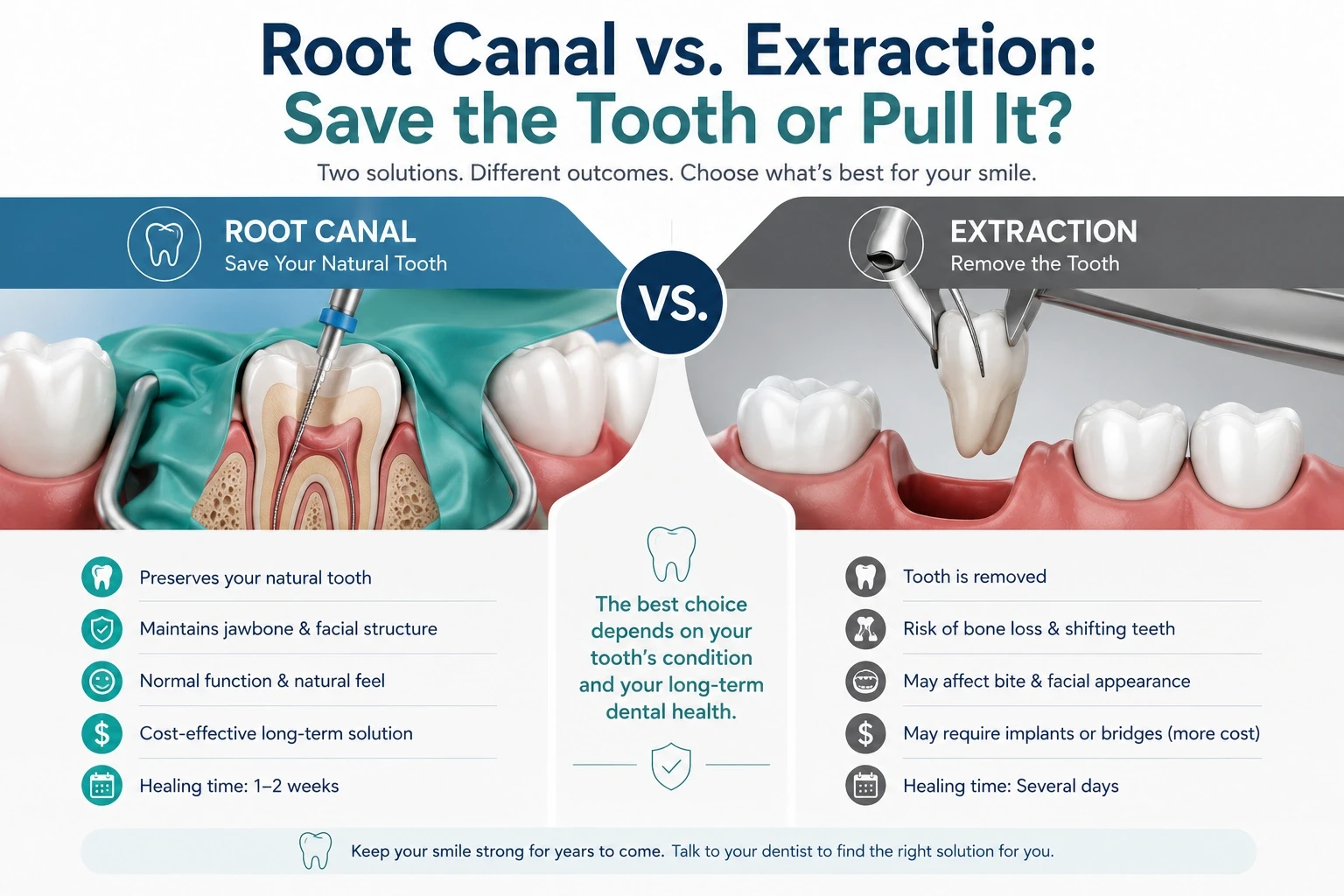
Root Canal vs. Extraction: Save the Tooth or Pull It?
Should you save a damaged tooth with a root canal or have it pulled? Weigh cost, recovery, prognosis, and replacement needs before you decide.
Read article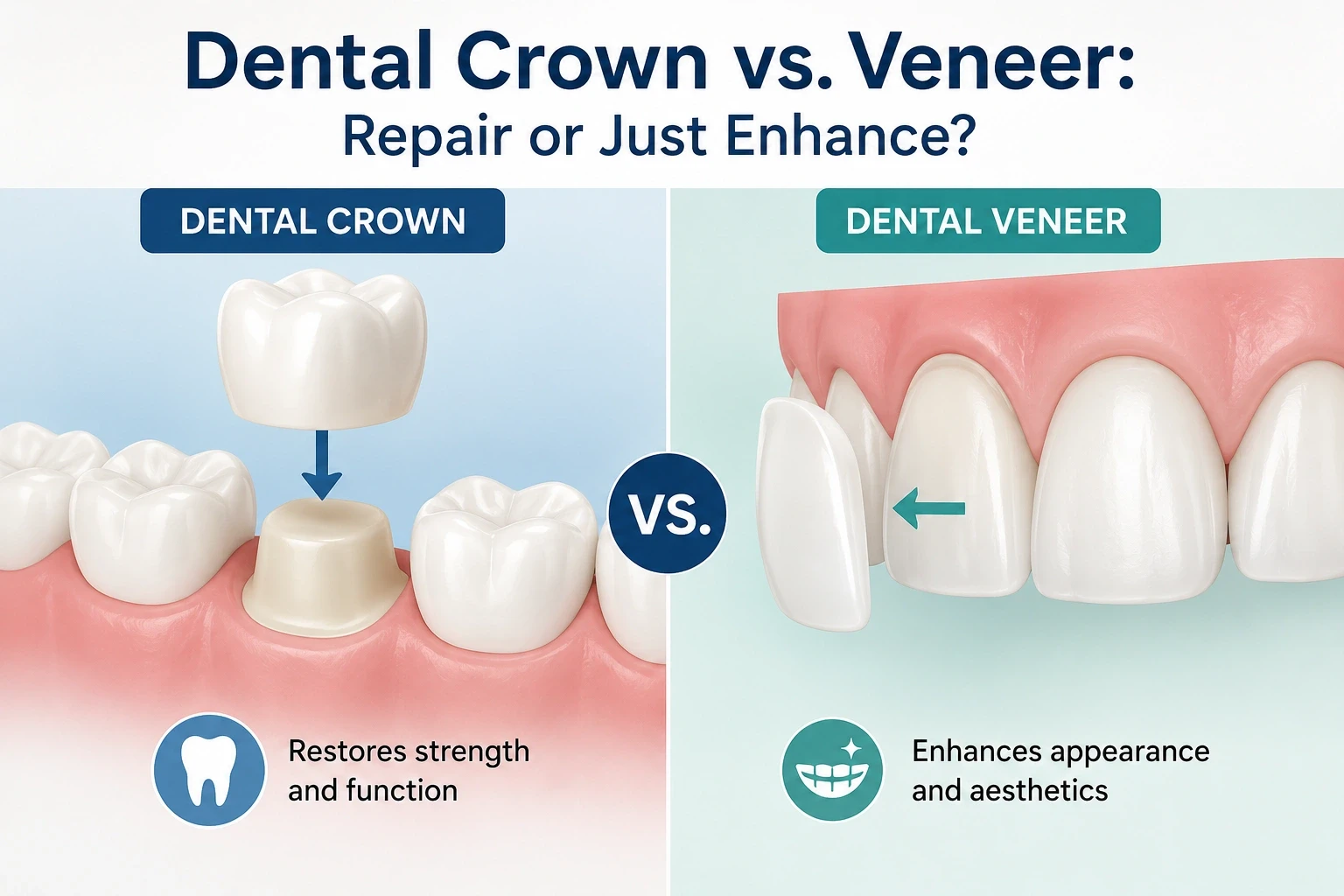
Dental Crown vs. Veneer: Repair or Just Enhance?
Crowns restore damaged teeth; veneers enhance healthy ones. Compare cost, tooth preparation, durability, and which cosmetic or restorative path fits.
Read article
Dental Bridge vs. Implant: The Long-Term Cost Difference
A dental bridge costs less upfront, but an implant can last decades and spare neighboring teeth. Compare price, longevity, surgery, and candidacy.
Read article
Composite vs. Amalgam Fillings: Tooth-Colored or Silver?
Tooth-colored composite or durable silver amalgam? Compare cost, lifespan, appearance, bonding, and safety so you can choose the right filling material.
Read article