
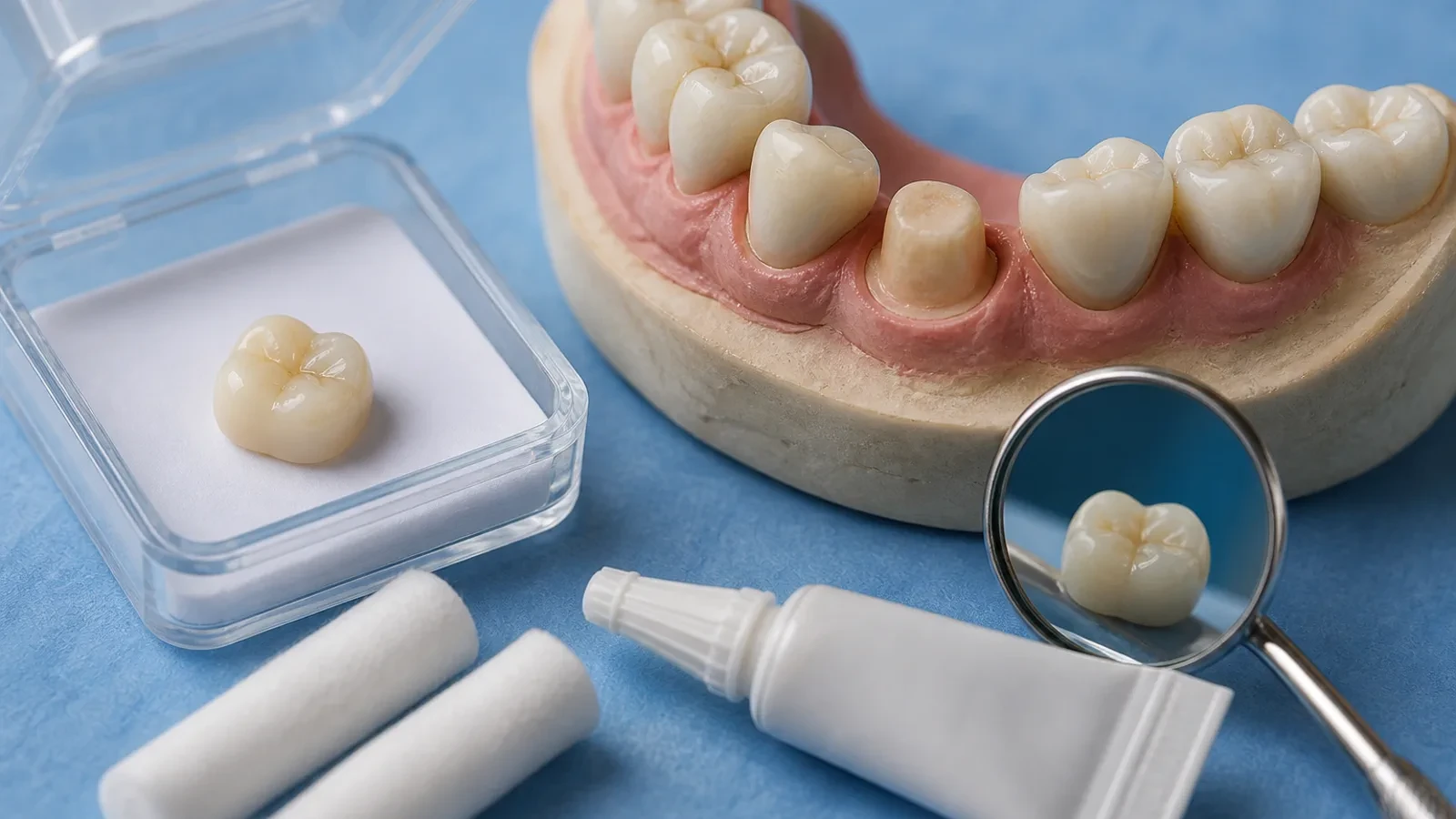
What Should You Do If A Crown Falls Off?
When a dental crown falls off, save it and protect the tooth. Learn temporary steps, what not to use, and questions to ask before recementing.

Reviewed by Dr. Sean Myran, DMDDoctor of Dental Medicine, University of Pennsylvania
If a crown falls off, save it, keep the tooth clean, avoid chewing on that side, and call your dentist promptly. The uncovered tooth may be sensitive or fragile, and the crown may have come loose because cement washed out, decay formed underneath, the bite was heavy, or the tooth fractured. MedlinePlus describes dental care as treatment for problems such as decay and injury; a lost crown can involve both, so use professional guidance rather than guessing from fit alone: dental health information.
Questions To Ask When You Call
- Should I bring the crown even if it looks damaged?
- Is temporary cement reasonable for my situation?
- How soon should I be seen if the tooth is sensitive?
- What symptoms mean calling back sooner?
- Should I avoid eating until the appointment?
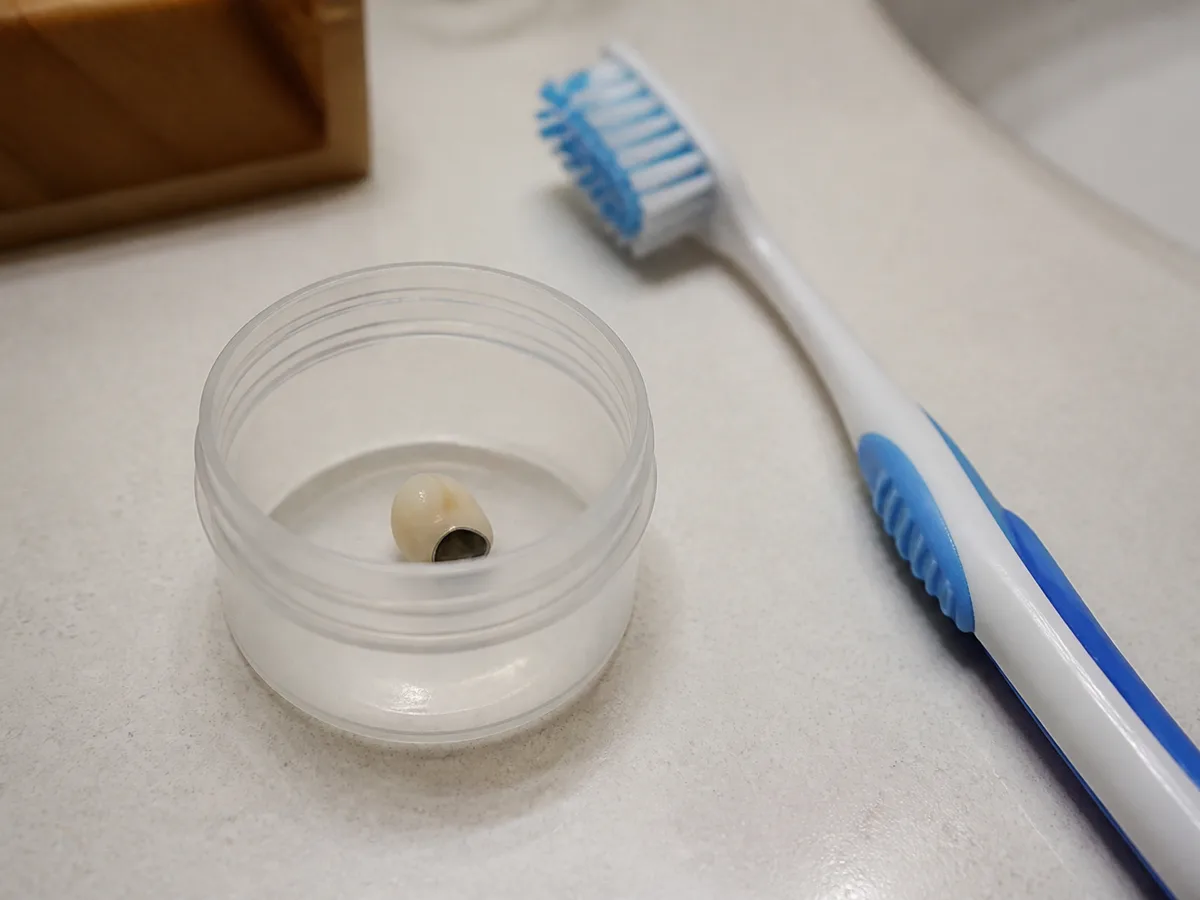 A loose crown should never become a chewing test.
Bring the crown, but do not force it
Store the crown in a small bag or container and bring it to the visit. If it slips on easily and the tooth is not painful, pharmacy temporary cement may protect the tooth briefly when used exactly as directed. If the crown rocks, feels high, smells bad, or will not seat fully, leave it out. Biting on a high crown can crack the tooth underneath.
What Not To Use
Do not use superglue, craft glue, nail adhesive, or epoxy in your mouth. These products can irritate tissue, lock the crown in the wrong position, and make repair harder. Do not pack aspirin or cotton into the tooth. Keep the area clean with gentle brushing and rinsing, then eat soft foods on the other side until the office tells you otherwise.
At the appointment, the dentist checks whether the crown still fits, whether decay is present, whether the tooth fractured, and whether the bite caused the failure. A simple recement is possible only when the tooth and crown are sound. Otherwise, treatment may involve a filling core, root canal treatment, a new crown, or extraction if the remaining tooth cannot support restoration.
A crown that has been off for even a short time can let teeth shift slightly, especially if you keep chewing around the space. The exposed tooth may also collect plaque along margins that are difficult to clean. If scheduling is delayed, ask the office how to keep the tooth clean and whether temporary cement is appropriate for your exact crown. A quick phone photo of the crown and tooth can help the team judge urgency. Ask about bite pressure too.
Related Problems To Sort Out
If the tooth underneath has sharp crack-like pain, read What Should You Do For A Cracked Tooth?. If part of the tooth broke away with the crown, see What Should You Do For A Broken Tooth?. A lost filling has a similar short-term protection problem; What Should You Do If You Lose A Filling? explains that path. If you need a local appointment, find a dentist and tell the office the crown is off, not merely loose.
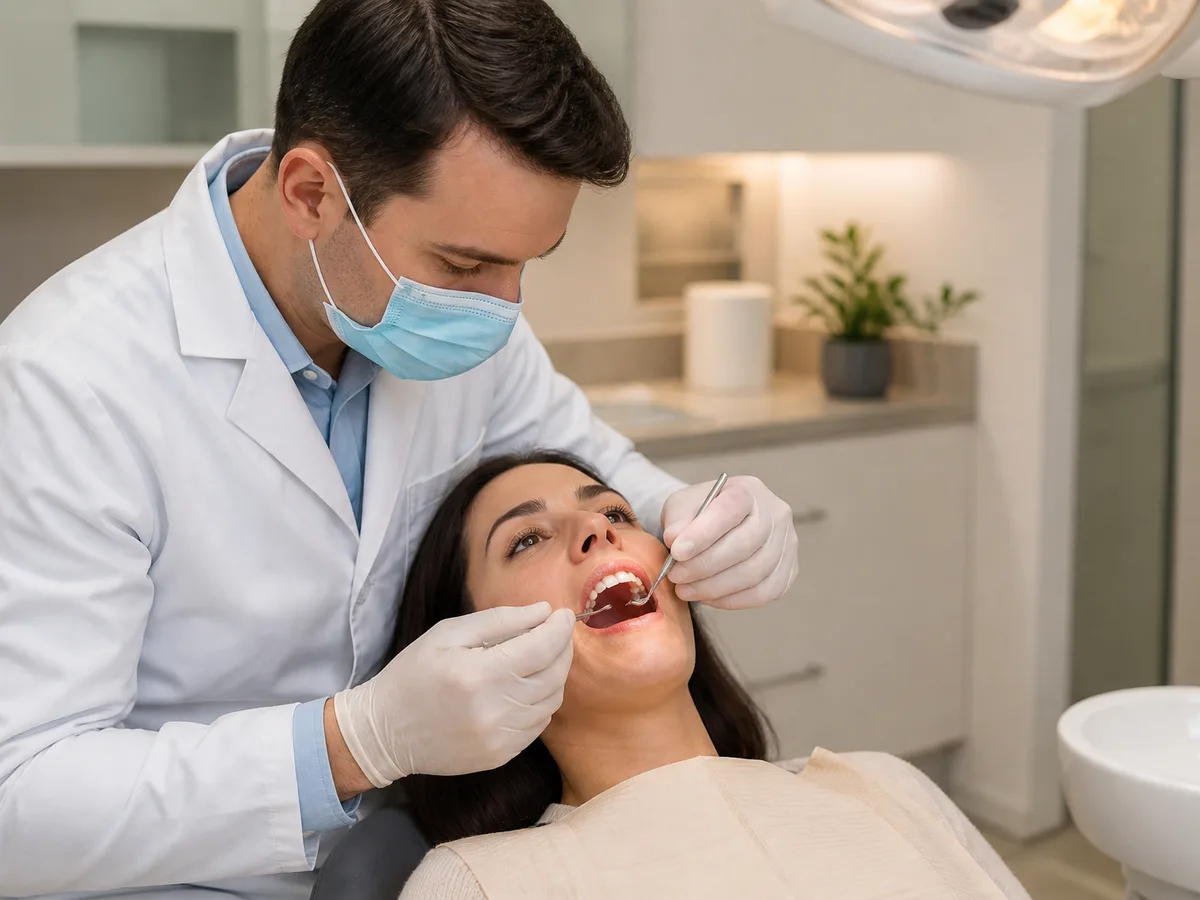
The cause decides the fix
A crown that fell off cleanly may be recemented. A crown with decay inside tells a different story. A crown that came off repeatedly may point to bite stress or a short remaining tooth. Ask what caused the failure, not only whether the crown can go back on today. That answer helps prevent the same emergency from repeating next month.
Practical Takeaway
A lost crown should be protected and evaluated soon, even without severe pain. Save the crown, avoid chewing there, skip household adhesives, and let the exam decide whether recementing is safe.
Related articles
Keep exploring related topics from Dental Country.
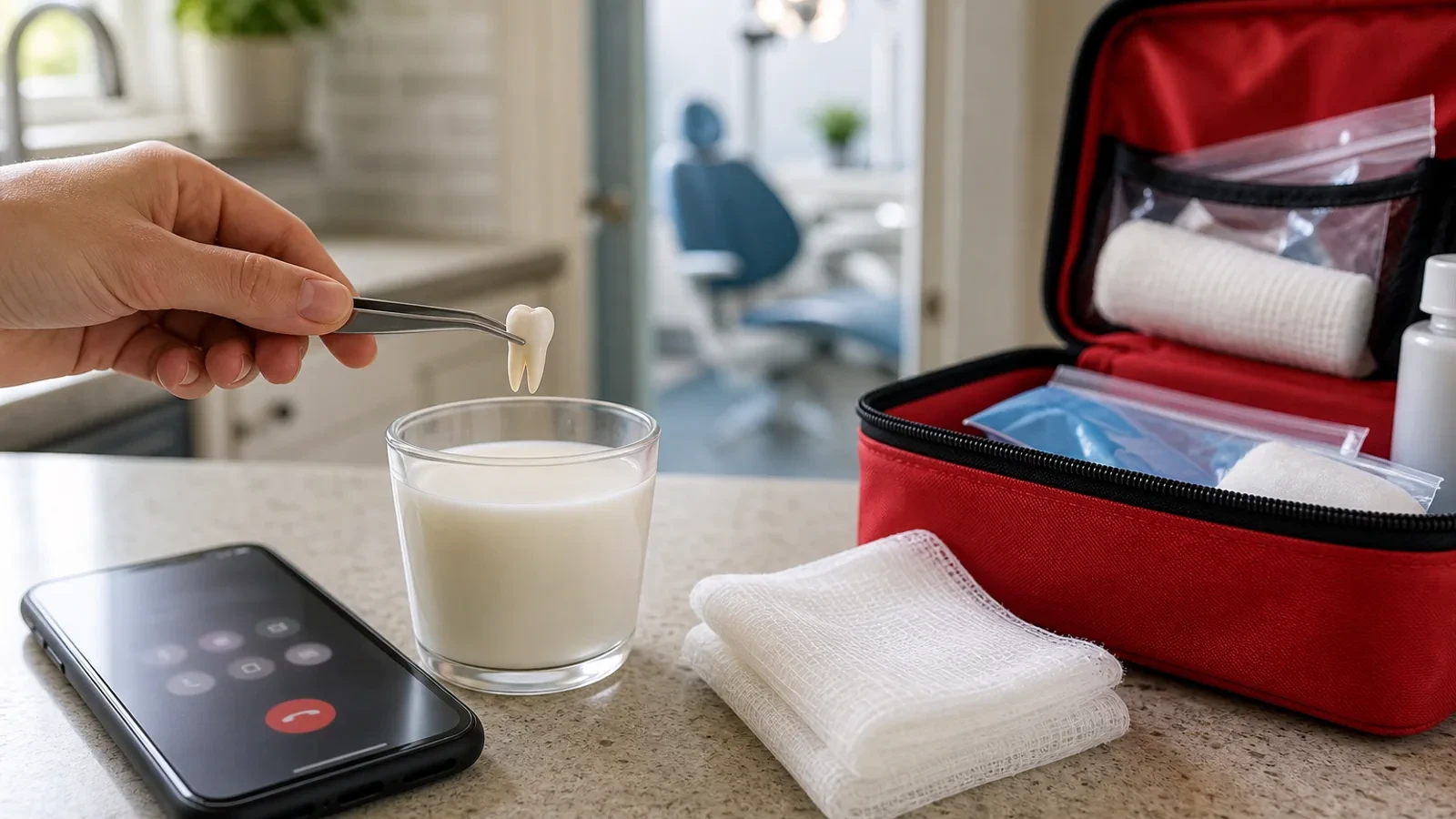
What Should You Do If You Knock Out A Tooth?
A knocked-out permanent tooth is one of the few dental emergencies where minutes change the odds. Handle the root gently and keep the tooth moist.
Read article
What Counts As A Dental Emergency?
Not every dental problem needs the ER, but some should not wait for a routine appointment. Use symptoms, speed, and risk to triage the next step.
Read article
How Do You Stop A Toothache Until The Dentist?
Toothache first aid is about reducing irritation without masking danger. The goal is a calmer wait, not a home cure for decay or infection.
Read article
What Should You Do For A Cracked Tooth?
A cracked tooth often hurts in flashes, not constantly. Stop flexing it, protect the edge, and let a dentist identify how deep the crack runs.
Read article