
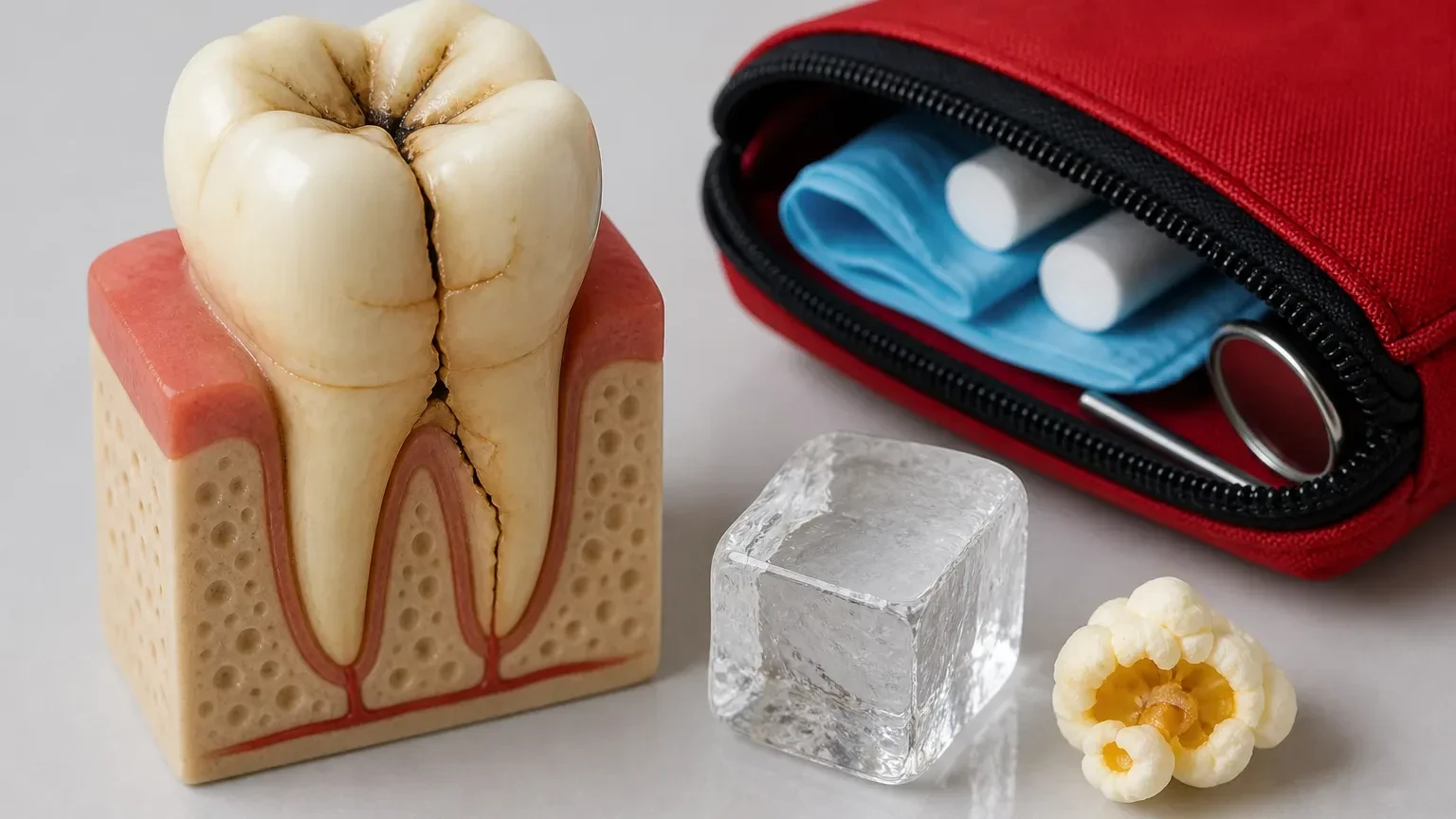
What Should You Do For A Cracked Tooth?
A cracked tooth can deepen with chewing. Learn likely causes, short-term protection steps, symptoms to report, and how dentists decide treatment.

Reviewed by Dr. Sean Myran, DMDDoctor of Dental Medicine, University of Pennsylvania
If you think a tooth is cracked, stop chewing on that side, rinse gently, save any broken pieces, and call a dentist. Cracks are deceptive because symptoms can come and go. A tooth may hurt only when you release a bite, only with cold, or only on one tiny cusp. MouthHealthy includes cracked and broken teeth in dental emergency guidance, especially when pain, trauma, swelling, or a sharp edge is involved.
Why Teeth Crack
Common causes include biting hard foods, old large fillings, grinding, trauma, untreated decay, and temperature stress on weakened enamel. Some cracks are shallow craze lines. Others run through dentin, into the nerve, or down the root. The depth and direction decide treatment more than the size you can see in a mirror. A tiny-looking line can be serious if biting flexes the tooth or bacteria reach the pulp.
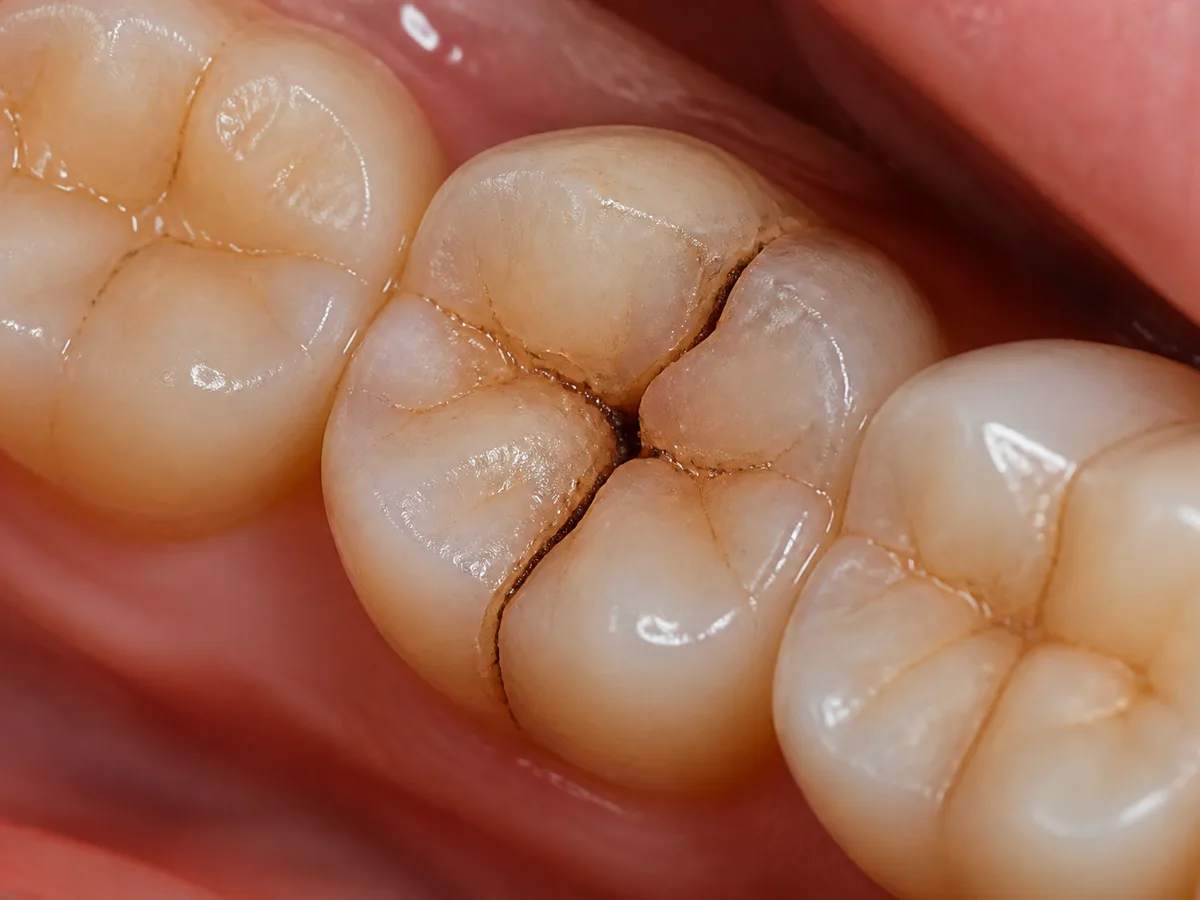 Less force can preserve more tooth structure.
Reduce flex until the exam
Cracked teeth often worsen because the two sides flex under chewing. Until you are seen, avoid nuts, ice, hard bread, sticky candy, and testing the tooth with your finger or tongue. Orthodontic wax can cover a sharp edge briefly. Do not use household glue, nail tools, or a file. A dentist needs the crack pattern intact enough to read it.
What Helps By Situation
| What You Notice | Helpful Next Step |
|---|---|
| Sharp edge cutting tongue | Cover with dental wax and schedule promptly. |
| Pain on bite release | Avoid chewing there; ask for crack and bite testing. |
| Cold pain that lingers | Call sooner; the nerve may be irritated. |
| Swelling or bad taste | Treat as urgent because infection may be involved. |
Treatment can range from smoothing or bonding to an onlay, crown, root canal, or extraction. A crown can hold a cracked tooth together when the crack has not split the root. Root canal treatment may be needed when the pulp is inflamed or infected. If the tooth is split vertically below the gumline, saving it may not be predictable.
Do not be surprised if the dentist recommends a temporary plan first. A sedative filling, bite adjustment, or temporary crown can reduce symptoms while the tooth declares itself. Cracks are sometimes diagnosed by patterns over time, not a single dramatic X-ray. Photograph any visible line or chipped edge before swelling or food debris obscures it. Ask what finding would move the plan from monitoring to crown, root canal, or removal. That answer gives you a clear reason to call if pain changes.
How This Differs From A Broken Tooth
A broken tooth has missing structure you can often see. A cracked tooth may look intact while pain points to a hidden fracture. If a piece is gone, read What Should You Do For A Broken Tooth?. If a crown came off and the tooth underneath feels weak, see What Should You Do If A Crown Falls Off?. If swelling appears, What Are Signs Of A Dental Abscess? explains why waiting can be risky. Use find a dentist when you need an office that can evaluate bite pain soon.

Diagnosis may take more than one clue
Cracks may not show clearly on standard X-rays. Dentists often combine magnification, bite sticks, transillumination, cold testing, gum measurements, and bite marks to decide what is happening. Tell the office exactly which foods trigger pain and whether release hurts more than biting down. Those details can save time and spare the wrong tooth from treatment.
The Repair Window
A cracked tooth is not always doomed, but it is vulnerable. Protect it from chewing forces and get a diagnosis before a repairable crack becomes a split tooth or infection.
Related articles
Keep exploring related topics from Dental Country.
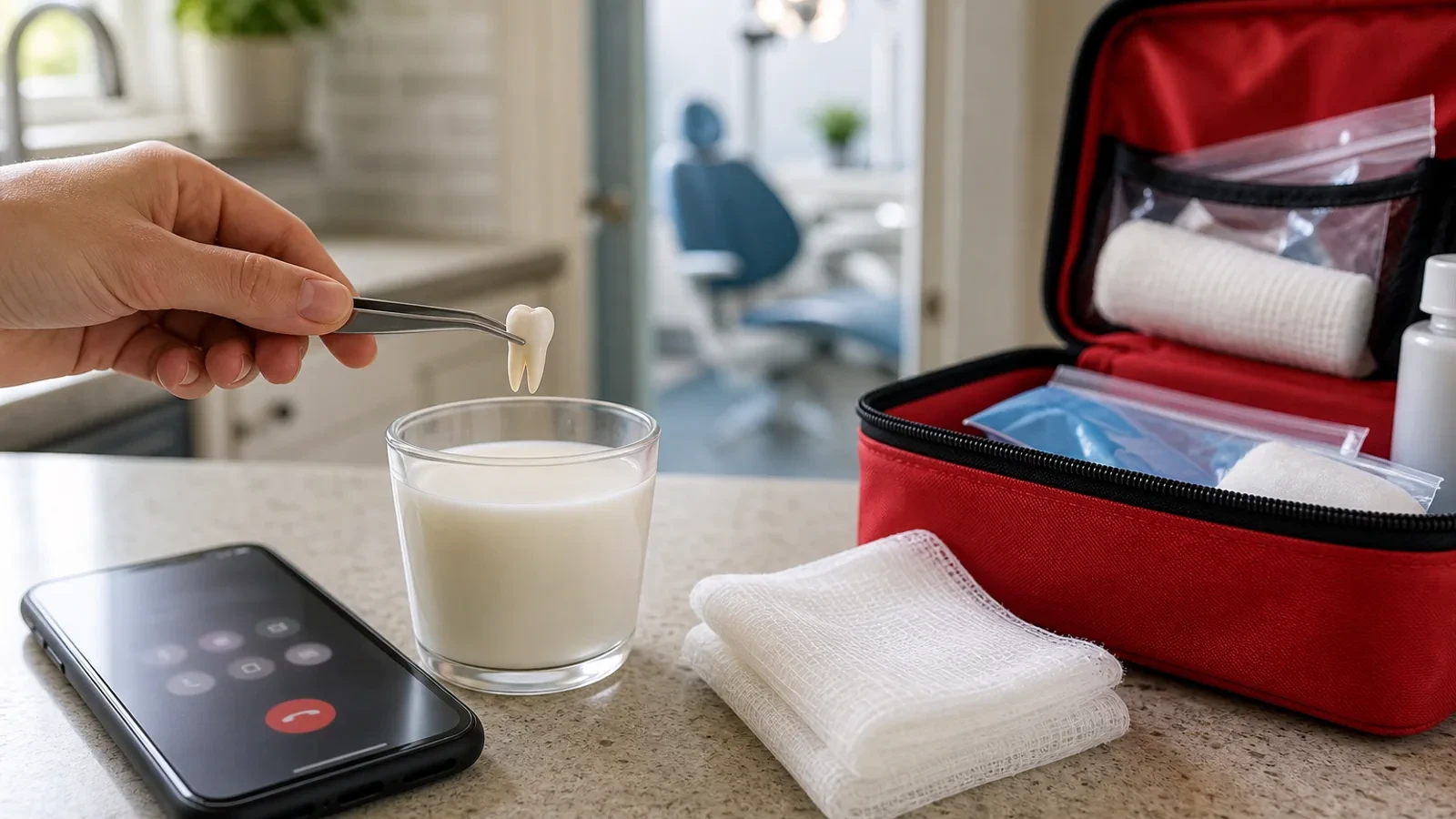
What Should You Do If You Knock Out A Tooth?
A knocked-out permanent tooth is one of the few dental emergencies where minutes change the odds. Handle the root gently and keep the tooth moist.
Read article
What Counts As A Dental Emergency?
Not every dental problem needs the ER, but some should not wait for a routine appointment. Use symptoms, speed, and risk to triage the next step.
Read article
How Do You Stop A Toothache Until The Dentist?
Toothache first aid is about reducing irritation without masking danger. The goal is a calmer wait, not a home cure for decay or infection.
Read article
What Should You Do If A Crown Falls Off?
A fallen crown is not just loose hardware. The tooth underneath may be sensitive, decayed, fractured, or ready to recement only after an exam.
Read article