
What Are Signs Of A Dental Abscess?
Dental abscess signs include throbbing pain, swelling, fever, pus, and bad taste. Learn when infection symptoms need urgent dental or ER care.

Reviewed by Dr. Sean Myran, DMDDoctor of Dental Medicine, University of Pennsylvania
A dental abscess is a pocket of pus caused by bacterial infection. Signs can include throbbing tooth pain, swelling in the gum or face, fever, bad taste, pus, swollen lymph nodes, and pain that worsens with biting. Mayo Clinic describes a tooth abscess as an infection that can spread if untreated. That is why abscess symptoms deserve prompt evaluation, not repeated rounds of pain medicine alone.
Why Dentists Treat Abscesses Seriously
The risk is not only pain. Infection can move through bone and soft tissue, especially when swelling spreads toward the jaw, eye, or neck. Some patients have higher risk because of immune suppression, diabetes, pregnancy, heart conditions, or medications. Antibiotics may be part of care when infection is spreading, but they do not remove a dead nerve, drain every pocket, or repair the tooth. Source control is the goal.
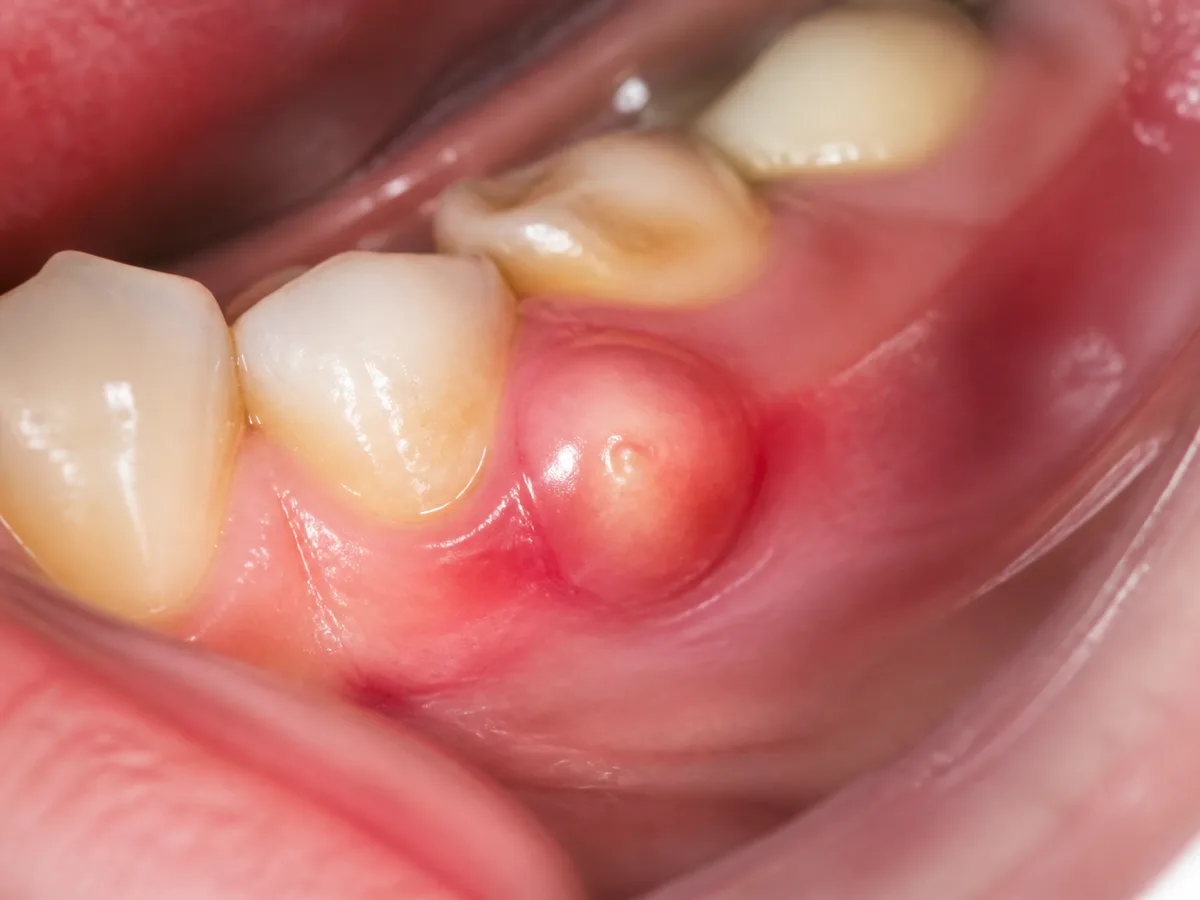 A quieter abscess can still need treatment.
Pain relief can be misleading
An abscess may drain through a gum pimple and suddenly feel better. That does not mean the infection is gone. The pathway may close again, the source may continue leaking bacteria, and swelling can return. Call even if the pressure eases after a bad taste or drainage. The dentist still needs to find whether the source is inside the tooth, around the root, or in the gums.
Urgent Warning Signs
- Swelling spreading into the face, eye area, jaw, or neck
- Fever, chills, weakness, or feeling generally ill
- Trouble swallowing, breathing, opening the mouth, or controlling saliva
- Rapidly worsening pain or swelling after recent dental work
- Confusion, dehydration, or inability to keep fluids down
For breathing, swallowing, neck swelling, or severe illness, choose emergency medical care. For localized pain, gum swelling, or bad taste without airway symptoms, call a dentist urgently. If you are unsure whether hospital care fits, Can You Go To The ER For Tooth Pain? walks through that choice. If pain began as an ache, How Do You Stop A Toothache Until The Dentist? covers short-term comfort while you arrange care.
Avoid squeezing a gum bump, applying heat to the face, or starting leftover antibiotics. Heat can increase throbbing, squeezing can irritate tissue, and the wrong antibiotic choice can muddy the picture without fixing the source. Gentle salt-water rinses and soft foods may help comfort while you are arranging care. If you have a medical condition that raises infection risk, mention it during the first call rather than waiting for the exam. Also mention recent dental injections, deep cleanings, or extractions, because post-treatment timing can change what the dentist suspects first. Bring notes on swelling size and location so changes are easier to compare, and how quickly it changed overnight.
How Treatment Removes The Risk
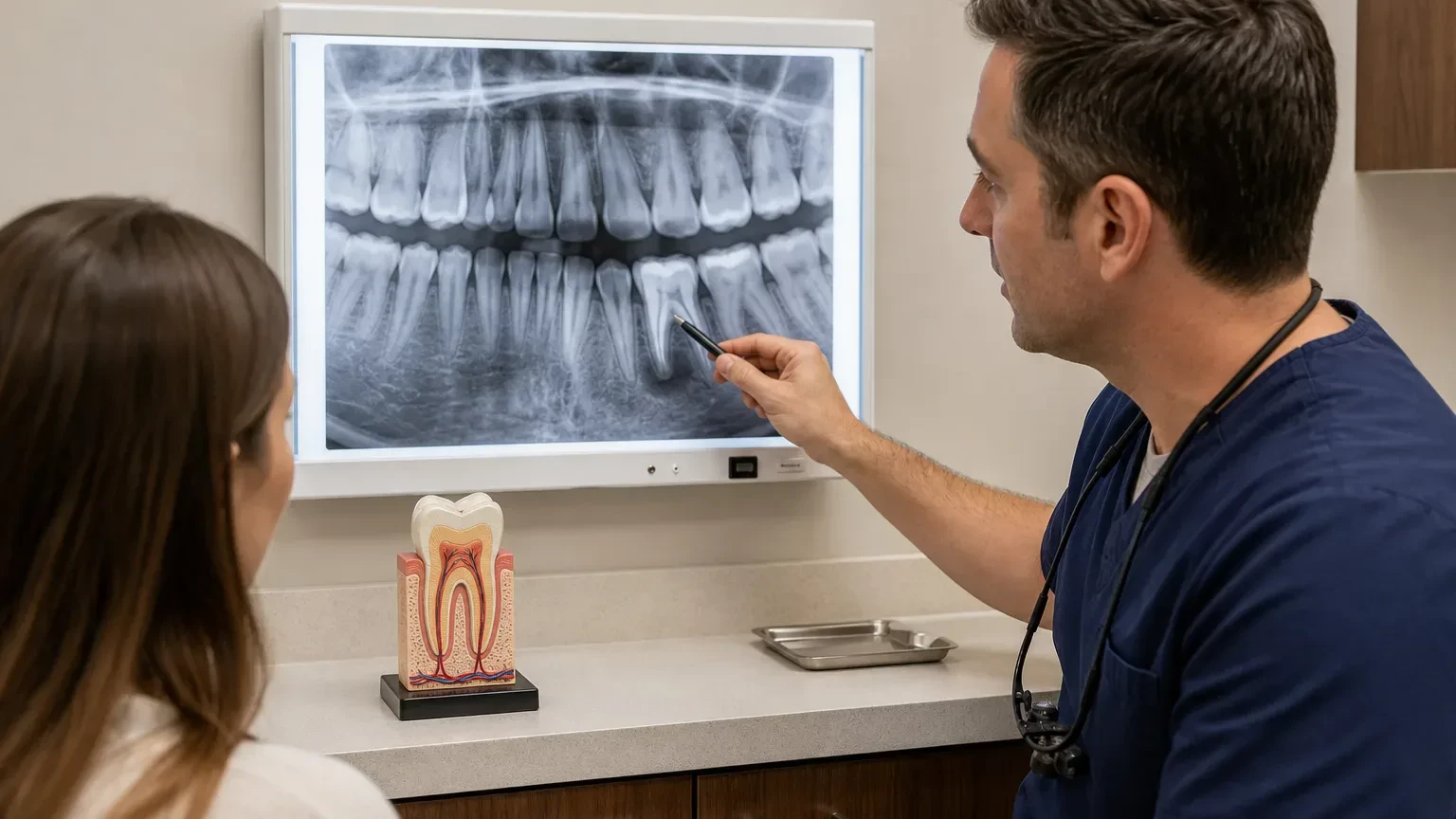
Depending on the source, treatment may include drainage, root canal therapy, extraction, deep cleaning around a gum abscess, and antibiotics when indicated. The dentist may take X-rays, test the tooth, check the bite, and measure the gums. If you need urgent local evaluation, use find a dentist and say you are worried about abscess symptoms so the office can triage appropriately.

The source has to be addressed
Pain medicine can help you function, and antibiotics can help control spread in selected cases, but neither rebuilds tooth structure or cleans an infected canal by itself. Ask what source was found, what treatment removes it, and what symptoms would mean escalation. That clarity matters if the first visit calms swelling but definitive treatment is scheduled later.
Risk-Based Answer
Treat abscess signs as infection signs. Localized symptoms deserve urgent dental care; airway, swallowing, severe illness, or fast-spreading swelling belongs in emergency medical care first.
Related articles
Keep exploring related topics from Dental Country.

What Should You Do If You Knock Out A Tooth?
A knocked-out permanent tooth is one of the few dental emergencies where minutes change the odds. Handle the root gently and keep the tooth moist.
Read article
What Counts As A Dental Emergency?
Not every dental problem needs the ER, but some should not wait for a routine appointment. Use symptoms, speed, and risk to triage the next step.
Read article
How Do You Stop A Toothache Until The Dentist?
Toothache first aid is about reducing irritation without masking danger. The goal is a calmer wait, not a home cure for decay or infection.
Read article
What Should You Do For A Cracked Tooth?
A cracked tooth often hurts in flashes, not constantly. Stop flexing it, protect the edge, and let a dentist identify how deep the crack runs.
Read article