
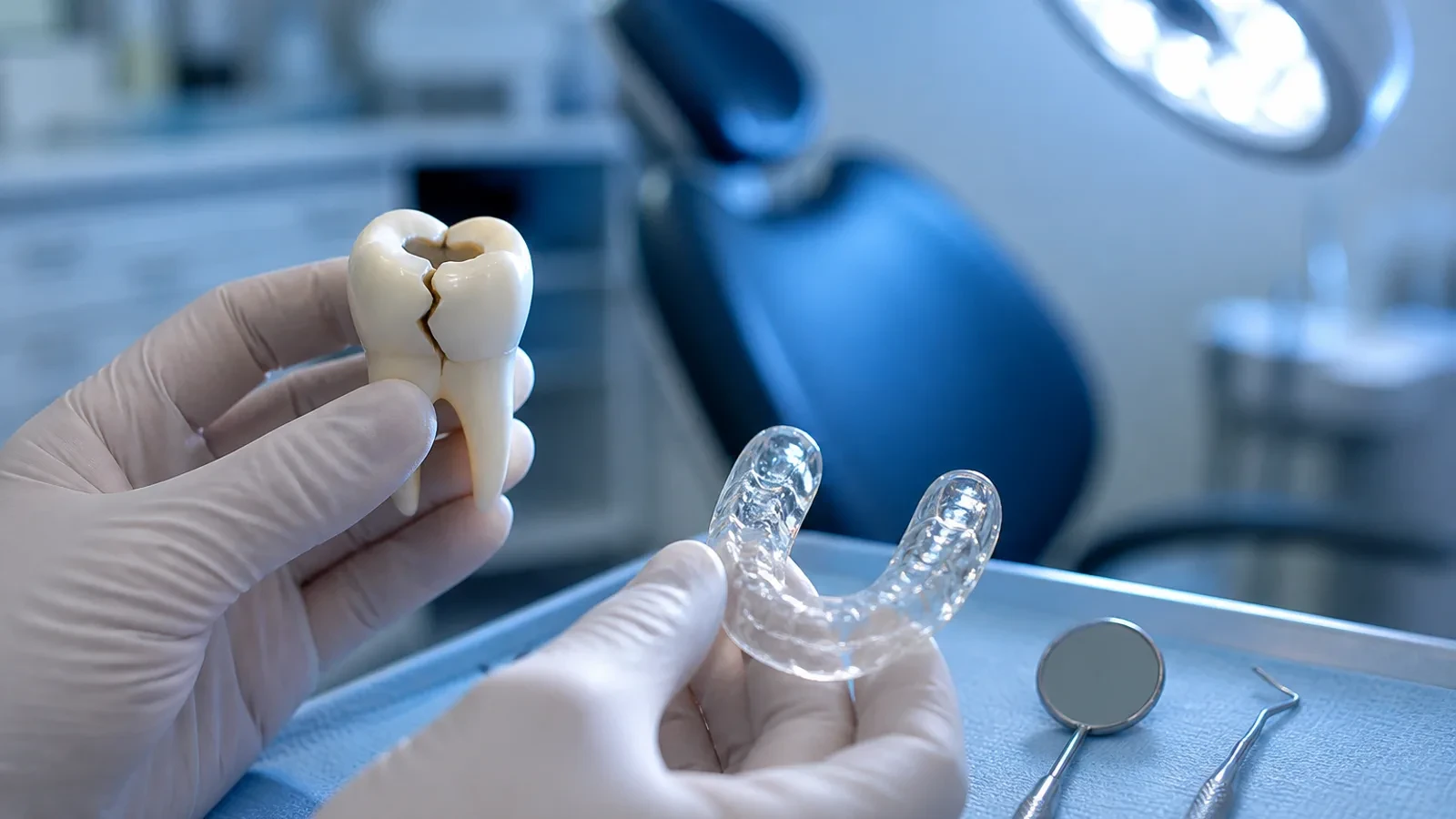
What Should You Do For A Broken Tooth?
A broken tooth needs protection and prompt evaluation. Learn safe first steps, myths to avoid, and symptoms that make the injury urgent now.

Reviewed by Dr. Sean Myran, DMDDoctor of Dental Medicine, University of Pennsylvania
For a broken tooth, rinse your mouth, save any fragments, cover sharp edges if you can, avoid chewing on that side, and contact a dentist promptly. If the break followed a fall, collision, or blow, also consider jaw injury, head injury, deep cuts, and a changed bite. MouthHealthy's dental emergency guidance recommends contacting a dentist for broken teeth, especially when pain, swelling, or injury is involved.
Myths And Facts About Broken Teeth
- Myth: If it does not hurt, it can wait for months.
- Fact: A painless break can still trap plaque, expose dentin, or weaken the remaining tooth.
- Myth: Glue is fine if the piece fits.
- Fact: Household adhesives can irritate tissue and block proper repair.
- Myth: A small chip and deep fracture are basically the same.
- Fact: Depth, nerve exposure, and root involvement decide urgency and treatment.
- Myth: The dentist always has to extract it.
- Fact: Many broken teeth can be restored with bonding, filling, onlay, crown, or root canal treatment.
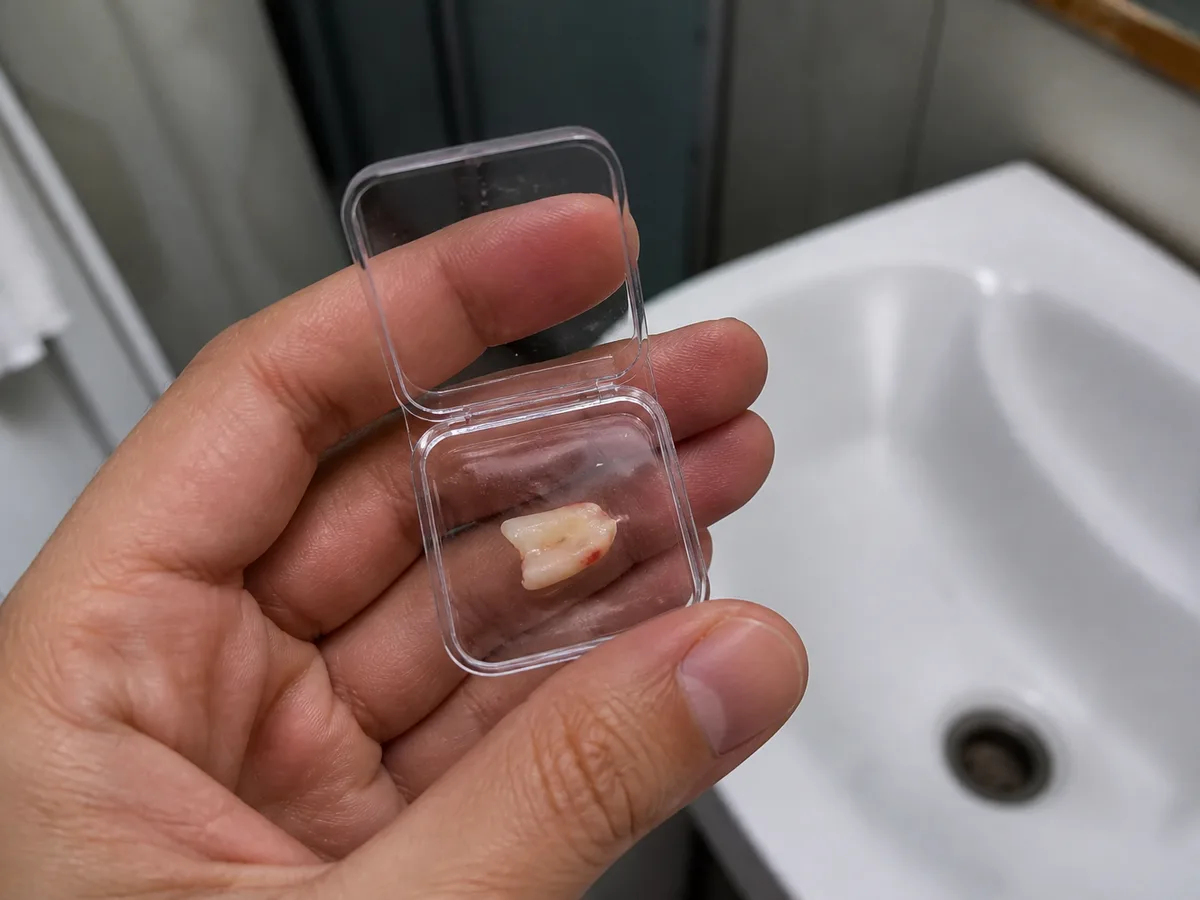 Short-term protection should be reversible.
Protect soft tissue and the remaining tooth
Orthodontic wax or sugar-free gum can cover a sharp edge briefly if it is cutting your cheek or tongue. Eat soft foods, avoid that side, and keep the area clean with gentle brushing. Do not file the edge with a tool. A rough edge may be annoying, but changing the shape yourself can remove structure the dentist could have used for bonding.
When The Break Is Urgent
Call quickly for severe pain, visible pink or red tissue inside the tooth, swelling, fever, bleeding that will not slow, a loose tooth, or a changed bite after trauma. Seek emergency medical care first for head injury symptoms, suspected jaw fracture, deep facial cuts, or trouble breathing or swallowing. A broken tooth can be a dental problem, a trauma problem, or both.
If the tooth seems cracked but not missing a piece, compare symptoms with What Should You Do For A Cracked Tooth?. If the broken area was under a crown, read What Should You Do If A Crown Falls Off?. If jaw impact changed your bite, When Is Jaw Pain A Dental Emergency? helps you decide whether medical evaluation belongs first.
If the break is in a front tooth, protect the fragment from drying and bring it even if it looks too small to matter. If the break is in a back tooth, the missing piece may not be obvious, but the chewing load can keep breaking unsupported walls. Either way, avoid using the tooth as a test surface. The dentist can smooth, seal, or stabilize more predictably when the injury has not been flexed all day.
What The Dentist Decides
The exam looks at how much tooth remains, whether decay was involved, whether the nerve is exposed, and whether the root is cracked. Treatment may be smoothing, bonding, a filling, an onlay, a crown, root canal treatment, or extraction for a non-restorable fracture. If you need care and do not have a regular office, find a dentist and describe pain, swelling, trauma, and whether you saved a fragment.

Fragments can still be useful
Bring any pieces in a small container. They may not be reattached, but they help the dentist understand the fracture and shade. Photos from before the injury can also help when the broken tooth is in the smile zone. Ask what repair is temporary versus definitive, especially if swelling or nerve symptoms require staging.
Myth-Free Bottom Line
A broken tooth deserves prompt evaluation even when pain is mild. Protect it, skip glue and tools, save fragments, and let the exam determine how much of the tooth can be restored.
Related articles
Keep exploring related topics from Dental Country.
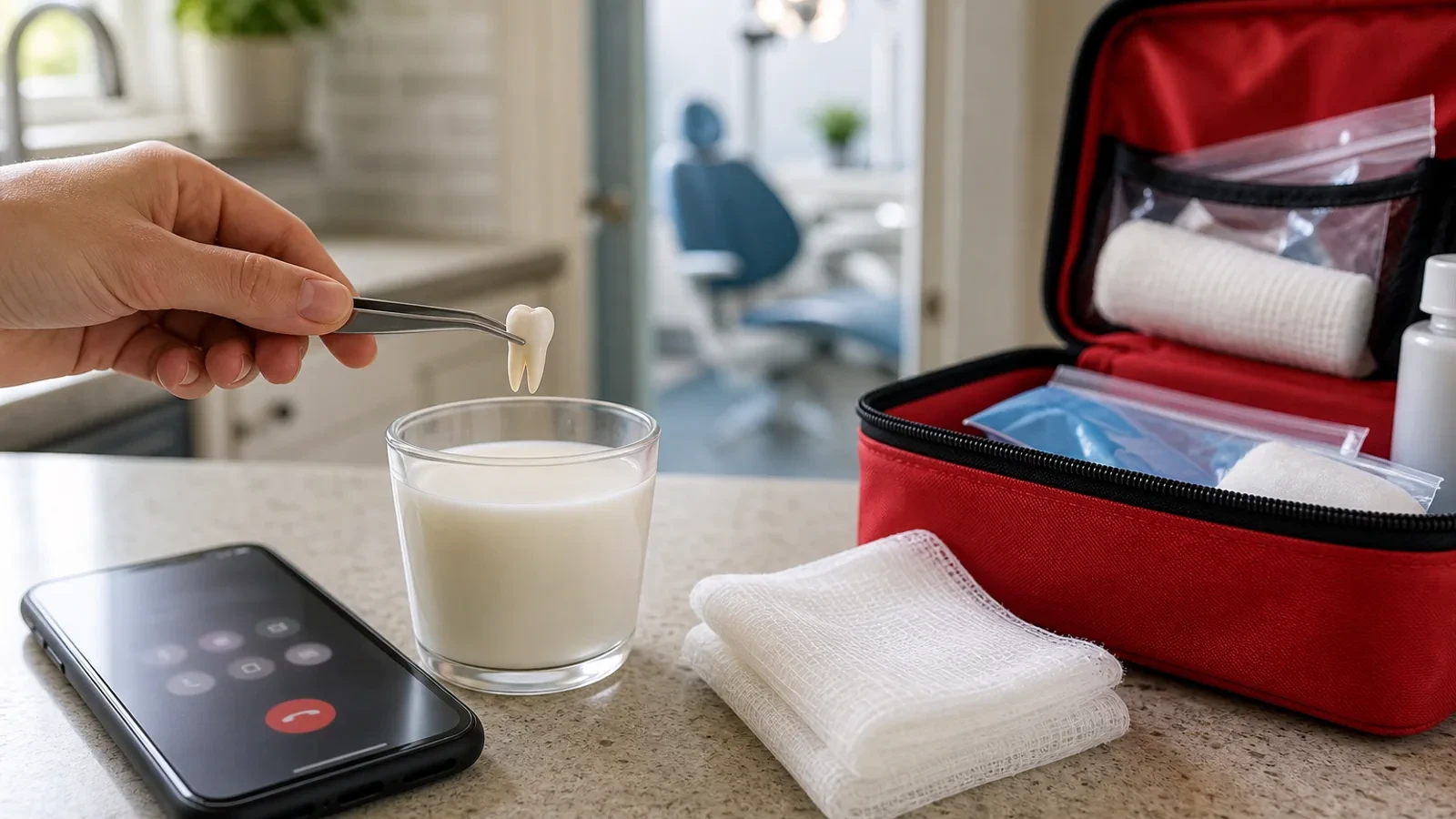
What Should You Do If You Knock Out A Tooth?
A knocked-out permanent tooth is one of the few dental emergencies where minutes change the odds. Handle the root gently and keep the tooth moist.
Read article
What Counts As A Dental Emergency?
Not every dental problem needs the ER, but some should not wait for a routine appointment. Use symptoms, speed, and risk to triage the next step.
Read article
How Do You Stop A Toothache Until The Dentist?
Toothache first aid is about reducing irritation without masking danger. The goal is a calmer wait, not a home cure for decay or infection.
Read article
What Should You Do For A Cracked Tooth?
A cracked tooth often hurts in flashes, not constantly. Stop flexing it, protect the edge, and let a dentist identify how deep the crack runs.
Read article