
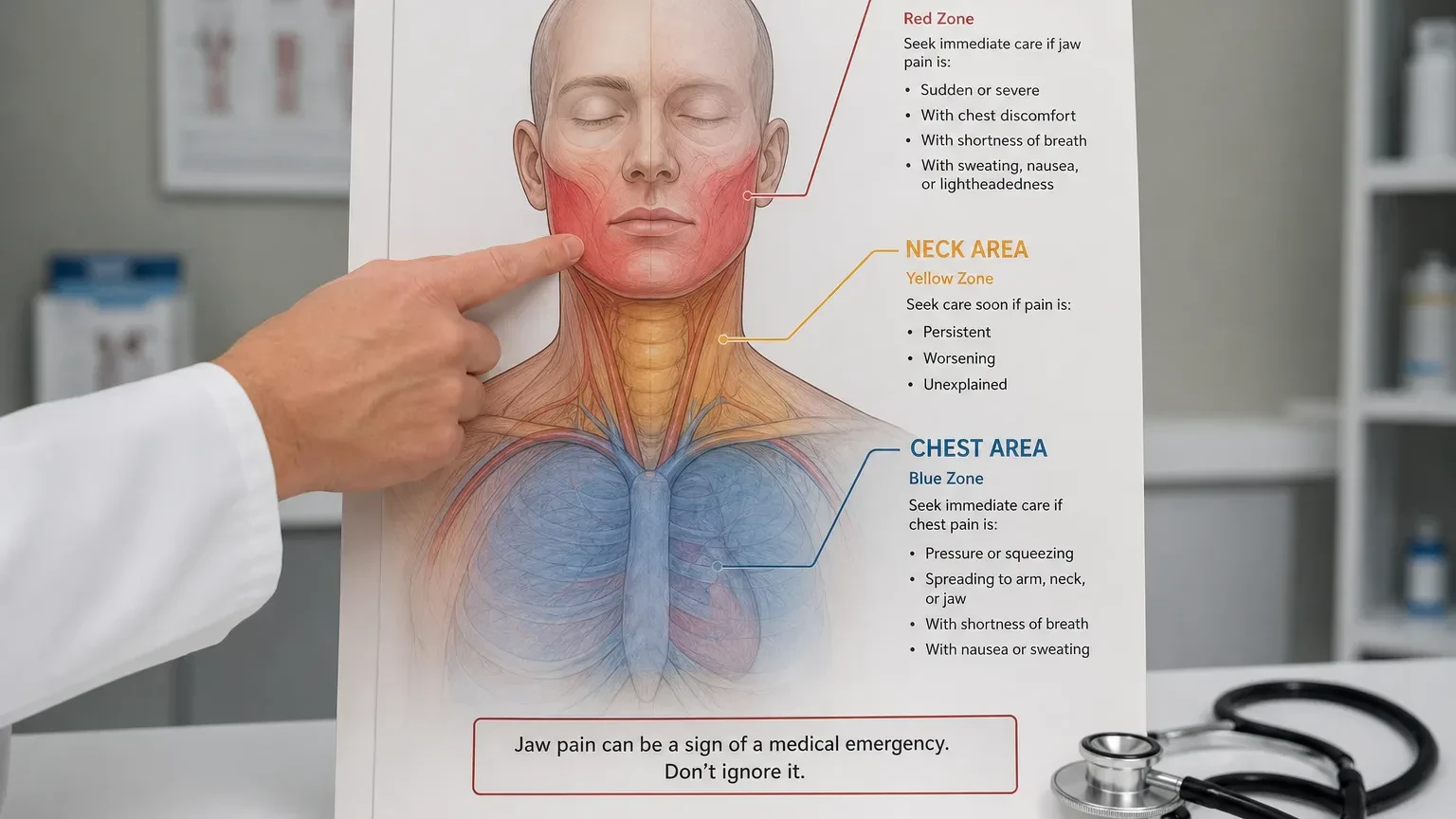
When Is Jaw Pain A Dental Emergency?
Jaw pain can be dental, TMJ-related, traumatic, or medical. Learn emergency warning signs, first steps, and how to recover after triage safely.

Reviewed by Dr. Sean Myran, DMDDoctor of Dental Medicine, University of Pennsylvania
Jaw pain is an emergency when it follows major trauma, your bite suddenly does not fit, you cannot open or close normally, swelling is spreading, or pain appears with chest pressure, shortness of breath, sweating, nausea, or pain moving to the arm, neck, or back. Some jaw pain is dental or TMJ-related, but some needs medical care first. Mayo Clinic notes that tooth abscess complications can involve spreading infection, and swelling with breathing or swallowing trouble should be treated urgently.
First Triage, Then Recovery
Start by sorting danger signs. Trauma with a changed bite, facial deformity, numb chin, heavy bleeding, or inability to open normally deserves urgent evaluation. Swelling with fever or difficulty swallowing can signal infection spread. Jaw pain with chest symptoms is a medical emergency until proven otherwise. Stable soreness from clenching, chewing strain, or a known dental problem can often start with a dental call.
 The cause decides the urgency.
Do not reduce jaw pain to TMJ too quickly
TMJ irritation is common, but it is not the only cause of jaw pain. Abscessed molars, cracked teeth, impacted wisdom teeth, sinus pressure, salivary gland problems, fractures, and medical conditions can overlap. Tell the clinician whether pain began after trauma, whether your teeth meet differently, whether swelling is visible, and whether you have fever, numbness, or chest symptoms.
Recovery Guide After The First Call
- If sent to the ER: bring discharge papers to dental follow-up because medication may not treat the tooth source.
- If scheduled with a dentist: eat soft foods, avoid wide opening, and do not test the bite repeatedly.
- If TMJ strain is suspected: rest the jaw, avoid gum and hard foods, and follow advice about cold or gentle heat.
- If infection is suspected: watch swelling direction and call back for fever, swallowing trouble, or rapid change.
For swelling or pus, read What Are Signs Of A Dental Abscess?. If tooth pain is the main symptom, Can You Go To The ER For Tooth Pain? explains medical versus dental roles. If jaw pain followed a broken tooth, see What Should You Do For A Broken Tooth?. For stable dental evaluation, find a dentist and explain whether trauma, swelling, or bite change is present.
While waiting for guidance, choose low-risk habits: soft foods, smaller bites, no gum, no deliberate popping, and no wide yawning if opening hurts. Use medications only as labeled or prescribed. Do not massage aggressively over swelling, and do not apply heat when infection is possible unless a clinician has advised it. If numbness, weakness, fever, or swelling direction changes, update the office because the triage category may change. Keep notes on opening range, bite feel, and whether pain is muscle-like, tooth-like, or pressure-like, since those clues help separate joint strain from infection or trauma. If you already wear a night guard, ask whether to use it or pause until the bite is checked. Bring that guard to the appointment so the fit can be inspected.

Recovery should match the diagnosis
A jaw sprain may need rest and habit changes. An abscess needs source treatment. A fracture needs medical or surgical management. A cracked tooth needs dental repair. Ask what diagnosis is most likely, what would change the plan, and how long improvement should take. Clear expectations keep you from either ignoring danger or panicking over normal soreness after the first visit.
The Practical Answer
Jaw pain is urgent when it affects airway, swallowing, bite, trauma safety, spreading infection, or possible heart symptoms. Once those are sorted, the recovery plan should follow the specific cause rather than a generic jaw-pain label.
Related articles
Keep exploring related topics from Dental Country.
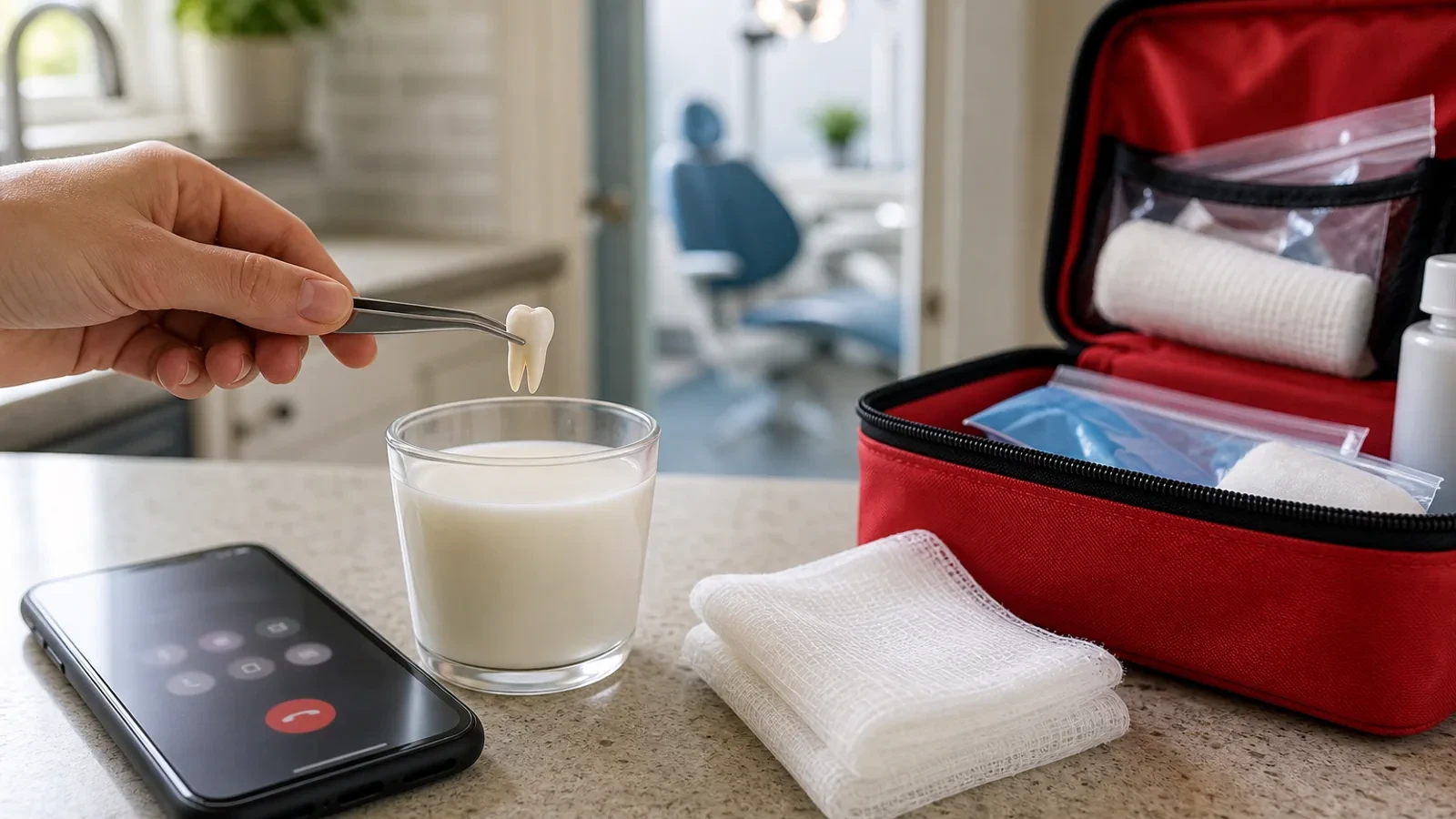
What Should You Do If You Knock Out A Tooth?
A knocked-out permanent tooth is one of the few dental emergencies where minutes change the odds. Handle the root gently and keep the tooth moist.
Read article
What Counts As A Dental Emergency?
Not every dental problem needs the ER, but some should not wait for a routine appointment. Use symptoms, speed, and risk to triage the next step.
Read article
How Do You Stop A Toothache Until The Dentist?
Toothache first aid is about reducing irritation without masking danger. The goal is a calmer wait, not a home cure for decay or infection.
Read article
What Should You Do For A Cracked Tooth?
A cracked tooth often hurts in flashes, not constantly. Stop flexing it, protect the edge, and let a dentist identify how deep the crack runs.
Read article