
Does Teeth Whitening Hurt?
Teeth whitening may cause short-term sensitivity, but sharp or lingering pain needs attention. Follow a practical day-by-day comfort guide safely.

Reviewed by Dr. Sean Myran, DMDDoctor of Dental Medicine, University of Pennsylvania
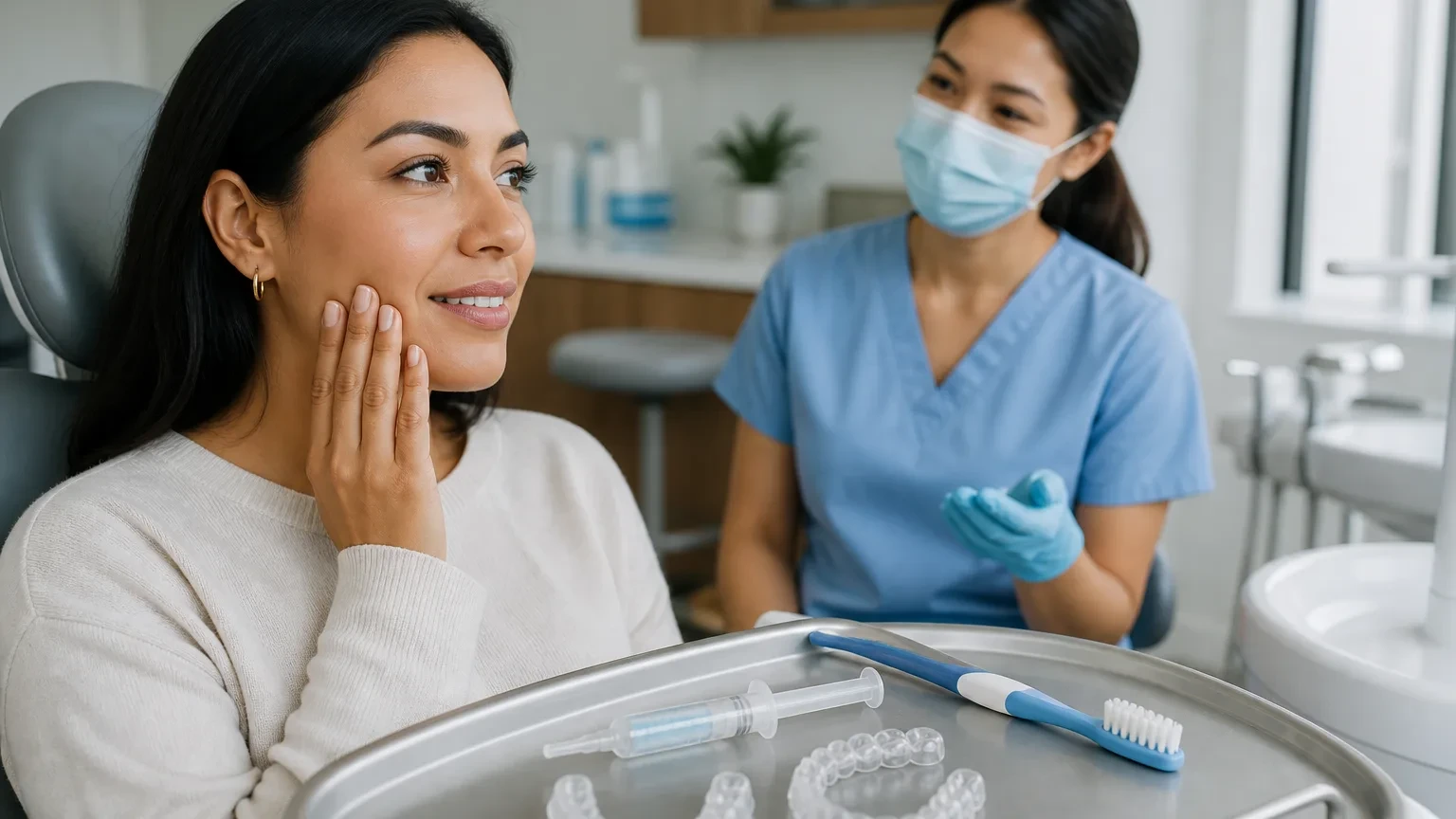
Teeth whitening should not feel like severe pain. The more common complaint is short bursts of cold-like sensitivity, sometimes called zingers, during treatment or for a day or two afterward. Peroxide can temporarily irritate the fluid pathways inside teeth, especially near exposed roots, thin enamel, or recent dental work. MouthHealthy lists tooth sensitivity as a possible whitening side effect, which is why comfort planning belongs in the first conversation.
A Day-By-Day Comfort Guide
- Day 0: During in-office whitening, you may feel warmth, tingling, or brief zaps. Tell the team; they can add barriers or shorten cycles.
- Day 1: Sensitivity often peaks. Use the toothpaste or gel your dentist recommended and avoid very cold drinks.
- Days 2-3: Symptoms should ease. If they build instead, pause whitening and call.
- Days 4-7: Most people return to baseline. Lingering one-tooth pain is not typical whitening sensitivity.
 Comfort is easier to prevent than rescue.
Sensitivity prevention starts before gel
If you already have cold sensitivity, tell your dentist before whitening. A desensitizing toothpaste for two weeks, a fluoride varnish, or a lower-strength gel may make treatment easier. Custom trays can also be trimmed away from recession areas, and in-office cycles can sometimes be shortened before symptoms build. A slower start can still lead to a bright result. Need help finding an office that takes sensitivity seriously? Use find a dentist and ask whether they offer staged whitening rather than one strong appointment for every patient.
What You Can Do During Whitening Week
Brush gently with a soft toothbrush. Skip whitening toothpaste, charcoal, and abrasive powders while bleaching; they can add irritation without improving the result. Avoid icy drinks, citrus, and very hot beverages if they trigger zingers. Do not exceed tray wear time. If you are using strips, keep them off the gums as much as possible and stop if tissue turns white, burns, or peels. Pain relievers may be appropriate for some patients, but follow your dentist or physician's advice if you have medical restrictions.
Comfort Tweaks Dentists May Suggest
Your dentist may have you whiten every other day, use less gel, switch to a lower concentration, or place desensitizing gel in trays between sessions. They may also smooth a rough filling edge or treat exposed root surfaces before you restart. Those changes are not failures. They are how whitening is tailored to a real mouth instead of a perfect brochure model. Comfort adjustments also make it more likely you will finish the plan as directed.
When Pain Is A Warning Sign
Call a dentist if one tooth hurts sharply, pain wakes you up, biting hurts, gums blister, or sensitivity lasts more than a few days after stopping. Whitening can reveal an existing crack, cavity, exposed root, or inflamed nerve. It did not necessarily cause the problem, but continuing to bleach over symptoms can make diagnosis harder. If safety is your bigger concern, see Is Professional Teeth Whitening Safe?. For enamel worries, read Will Whitening Damage Enamel? and How Often Can You Whiten Your Teeth?.
Fit problems can masquerade as sensitivity
Gum burning usually means gel is sitting where it should not. Trays may need trimming, strip placement may need adjusting, or the gel amount may be too generous. More gel does not mean more whitening; it often means more leakage. Show your dentist exactly how you load the tray and where the tissue feels irritated. A thirty-second technique correction can turn a miserable week into a tolerable one, especially when the tray edge is the culprit. That small fix can save the plan.
The Comfort Takeaway
Mild temporary sensitivity is common. Severe, one-sided, or lingering pain is a reason to stop whitening and get checked before continuing. Let symptoms set the pace. A brighter smile is not worth pushing through pain that no longer follows the expected pattern.
Related articles
Keep exploring related topics from Dental Country.
Is Professional Teeth Whitening Safe?
Professional whitening is not a free-for-all with strong gel. Safety comes from exam, isolation, dose, and knowing when your teeth need care first.
Read article
Professional Vs OTC Teeth Whitening: Which Works Better?
Strips, trays, and in-office whitening can all have a place. The difference is how much control you get over fit, strength, timing, and risk.
Read article
How Long Does Teeth Whitening Last?
Whitening lasts longer when you treat it as stain management, not a one-day makeover. Food, habits, enamel, and touch-ups all change the timeline.
Read article
Can You Whiten Crowns Or Veneers?
Whitening brightens natural enamel, not porcelain or composite. The planning challenge is making old dental work and newly whitened teeth agree.
Read article