
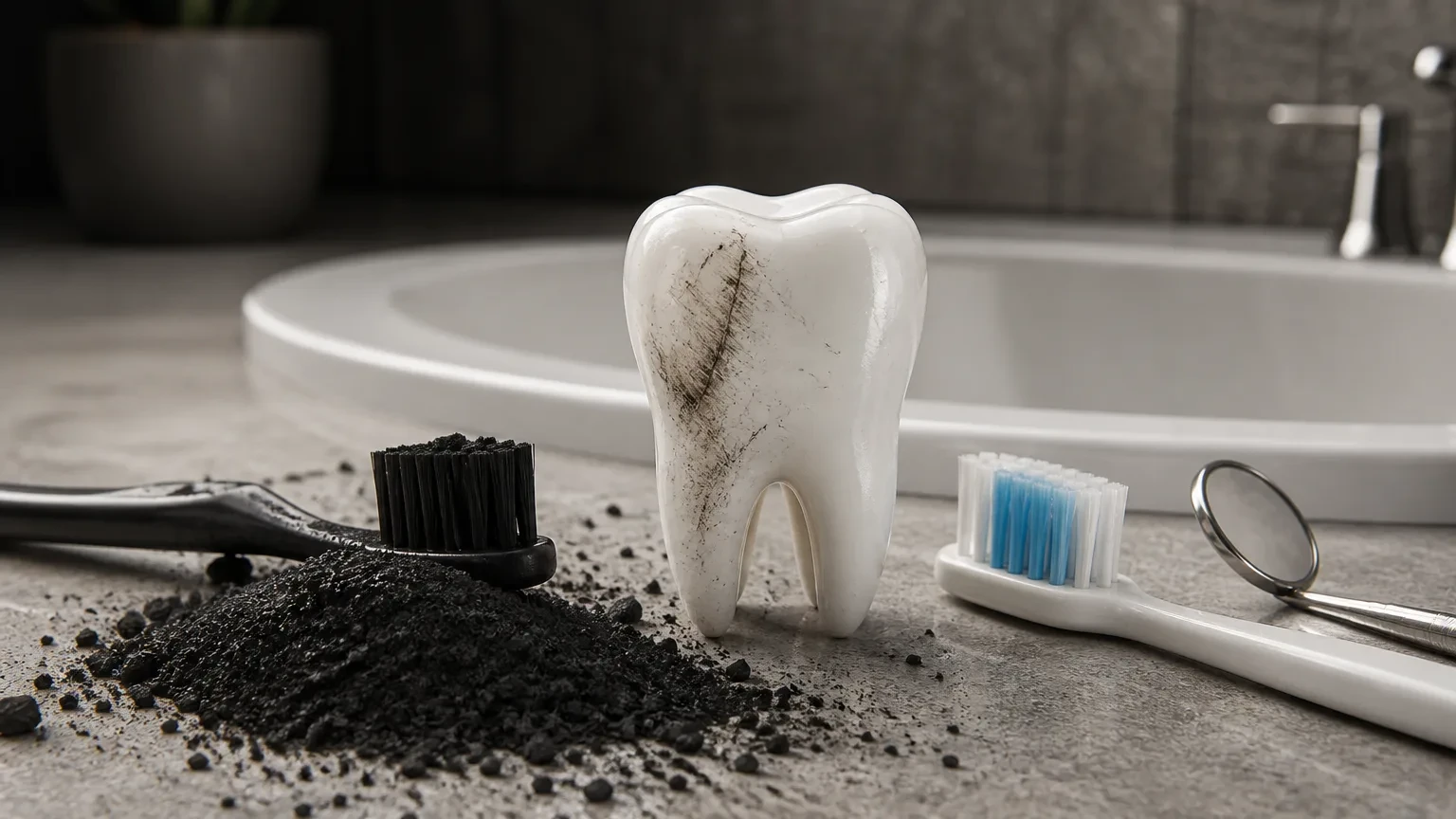
Does Charcoal Toothpaste Whiten Teeth?
Charcoal toothpaste may polish surface stain, but whitening claims often outrun evidence. Learn the enamel, fluoride, and abrasion concerns.

Reviewed by Dr. Sean Myran, DMDDoctor of Dental Medicine, University of Pennsylvania
Charcoal toothpaste may remove some surface stain by abrasion, but it does not reliably whiten teeth the way peroxide bleaching does. The dramatic black foam can make the routine feel powerful while the evidence remains limited. Some formulas also leave out fluoride or use particles that may be too abrasive for daily use. MouthHealthy describes peroxide as the ingredient used in many whitening products; charcoal is a different idea, closer to polishing than bleaching.
Marketing Claim Vs Dental Reality
- Claim: It detoxes teeth.
- Reality: Teeth do not need detoxing. They need plaque control, fluoride, and treatment for disease.
- Claim: It whitens naturally.
- Reality: It may scrub external stain, but it does not predictably change deeper tooth shade.
- Claim: Black paste means stronger cleaning.
- Reality: Color says little about safety, abrasiveness, or cavity prevention.
- Claim: Fluoride-free is cleaner.
- Reality: Fluoride helps prevent decay. Removing it can be a poor trade for a cosmetic promise.
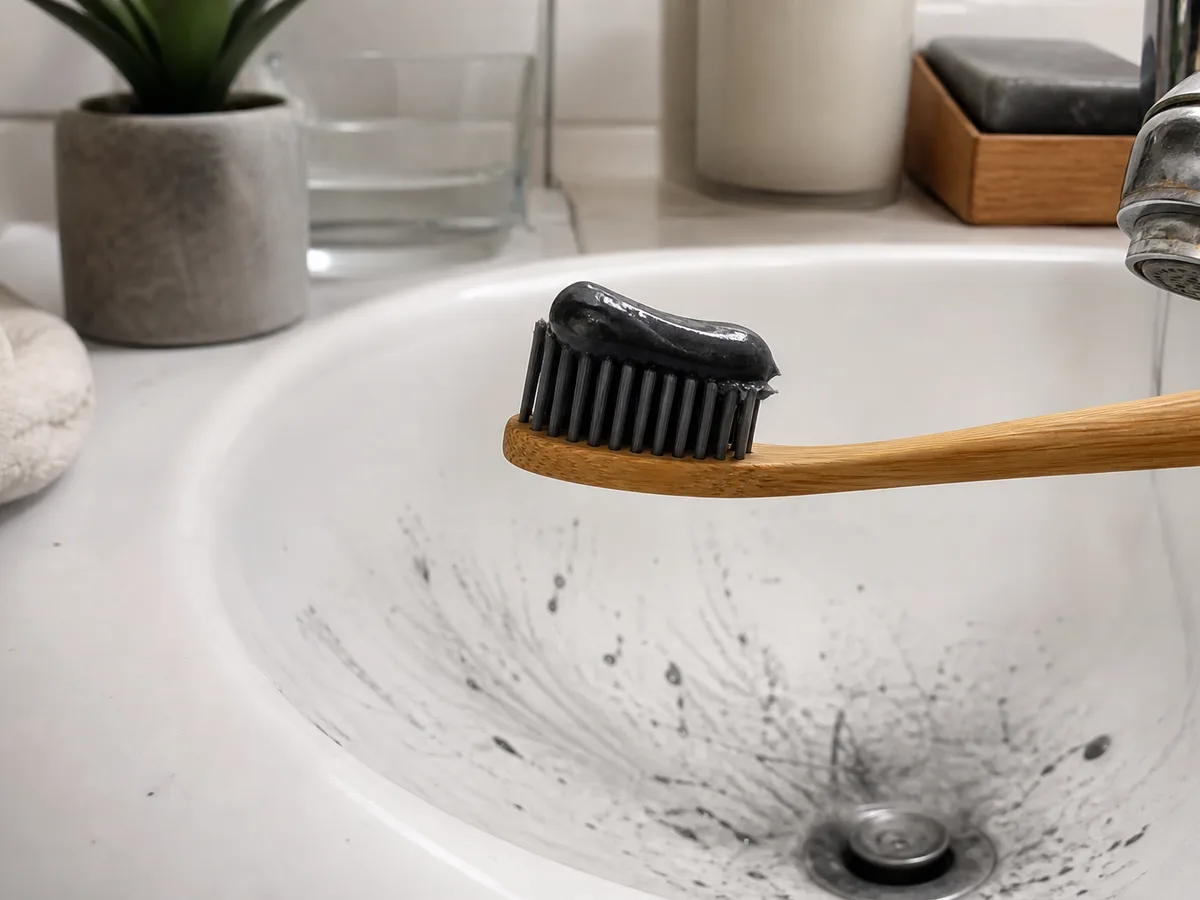 Scrubbing is not the same as safe whitening.
Abrasive brightness can backfire
A gritty paste may make teeth look cleaner at first by removing film. Used hard or often, abrasion can roughen surfaces, expose more yellow dentin near worn areas, and dull composite bonding. Rougher surfaces can also pick up stain faster, so the smile can rebound darker despite all that scrubbing. Ask whether your enamel already shows wear. If you are unsure whether your paste is too abrasive, find a dentist and bring the tube to your hygiene visit for a product review soon.
Where Charcoal Falls Short
Peroxide whitening changes color by breaking apart stain molecules inside tooth structure. Charcoal mainly works at the surface. That means it is unlikely to help yellow dentin showing through thin enamel, medication-related stain, a dark injured tooth, or color trapped under old bonding. It also cannot whiten crowns or veneers. If charcoal seems to help, the improvement may have come from better brushing time rather than the charcoal itself.
Why The Before-And-After Photos Persuade People
A freshly brushed tooth photographed under bright light can look whiter for reasons that have little to do with charcoal. The surface is clean, the mouth may be dry, and the lighting may be cooler. Social media rarely shows whether the product had fluoride, how abrasive it was, or what the teeth looked like months later. A real whitening claim should survive normal lighting, normal saliva, and a dental exam. It should also show comfort over time, not only a dramatic first impression.
Safer Ways To Chase Stain
Use a fluoride toothpaste you tolerate. Keep cleanings on schedule so tartar is not mistaken for yellow enamel. If you want a true shade change, compare strips, custom trays, and in-office whitening instead of adding more abrasive products. Read Professional Vs OTC Teeth Whitening for that comparison, Why Are My Teeth Yellow? for causes, and Will Whitening Damage Enamel? for safety context.
Ask what job the paste is doing
A daily toothpaste should clean plaque and support enamel first. Cosmetic polishing is secondary. Look for fluoride unless your dentist gives a specific reason not to use it, and avoid using multiple whitening products together. If you love the feel of charcoal, consider limiting frequency and watching for sensitivity, recession, or rough-looking bonding. A hygienist can often suggest a less abrasive stain-control option that still leaves your mouth feeling polished after brushing. Your enamel gets the final vote daily long term.
The Evidence-Based Take
Charcoal toothpaste is not the most dependable path to whiter teeth. It may polish some stain, but proven whitening and routine prevention are usually better partners. If the promise sounds effortless, ask what evidence supports it and what enamel pays for it. A cautious product choice is still a cosmetic choice. Daily use deserves more scrutiny than an occasional novelty.
Related articles
Keep exploring related topics from Dental Country.
Is Professional Teeth Whitening Safe?
Professional whitening is not a free-for-all with strong gel. Safety comes from exam, isolation, dose, and knowing when your teeth need care first.
Read article
Professional Vs OTC Teeth Whitening: Which Works Better?
Strips, trays, and in-office whitening can all have a place. The difference is how much control you get over fit, strength, timing, and risk.
Read article
How Long Does Teeth Whitening Last?
Whitening lasts longer when you treat it as stain management, not a one-day makeover. Food, habits, enamel, and touch-ups all change the timeline.
Read article
Does Teeth Whitening Hurt?
Whitening discomfort is usually temporary sensitivity, not true pain. A day-by-day guide helps you know when to pause and when to call.
Read article