
Top 10 Separating Liquid and Foil in Dentistry.
Denture separators: tin-foil substitutes, trial-pack film, real foil, and a debubblizer that is not one.

Reviewed by Dr. Sean Myran, DMDDoctor of Dental Medicine, University of Pennsylvania
How to Choose a Denture Separator or Foil
This list mixes four different lab jobs, and only three of them separate acrylic from stone. A tin-foil substitute (COE-SEP, Patterson Liquid Foil, Liqui-Foil, Foil Cote, Foilcoat, and the unnamed acrylic-plaster separator) is a liquid you paint on a stone cast so denture resin does not bond to it. Plastipac is a plastic sheet for trial packing, not a paint. Buffalo tin foil is the actual metal the liquids replaced. Blue Debubblizer is a surfactant for pouring stone. It will not keep acrylic off a model.
Inside the liquids, the useful differences are how you see coverage, how many coats the instructions demand, and whether the bottle belongs to a larger system. Pink Foil Cote shows where you painted. A one-coat clear foil substitute hides skipped spots. DVA’s separator refill belongs to DVA’s conditioner and VSS workflow, not to a random flask next to a gallon of Patterson Liquid Foil.
Buying criteria that actually change the processed denture
- Job first — flask separation, trial-pack film, burnished tin foil, or debubblizing a pour. Using the debubblizer as a separator is how resin locks onto the cast.
- Film versus foil versus sheet — a painted substitute is fast and only as good as the film. Wrinkled tin foil copies the wrinkle into the denture. Plastipac is for trial packing, where you want the film to stretch and pull off without a lacquer step.
- Coats and color — one-coat clears (the Patterson gallon is sold that way) save time and hide thin spots. A pink separator is easier to audit. A second coat of a one-coat product can wrinkle or pool if the instructions said one.
- Stone condition — alginate-type foil substitutes, including the classic GC COE-SEP approach, want a cast that is prepared the way that bottle says (often soaked or warm, never greasy). A dry, soap-contaminated cast makes any of these films blotchy.
- System lock-in — DVA separator refills are for the DVA conditioner / VSS system. Do not assume they paint and pack like COE-SEP.
| Product | Maker | Form | Actual job | Watch-out |
|---|---|---|---|---|
| COE-SEP | GC America | Paint-on tin-foil substitute | Film on stone so denture resin releases and the surface stays dense | Follow GC’s cast prep. A thick pool is not a smoother denture. |
| Patterson Liquid Foil | Patterson | Clear liquid, 1 gallon, one coat | House-brand acrylic-to-stone separator | Clear film hides skips. One coat means one coat. |
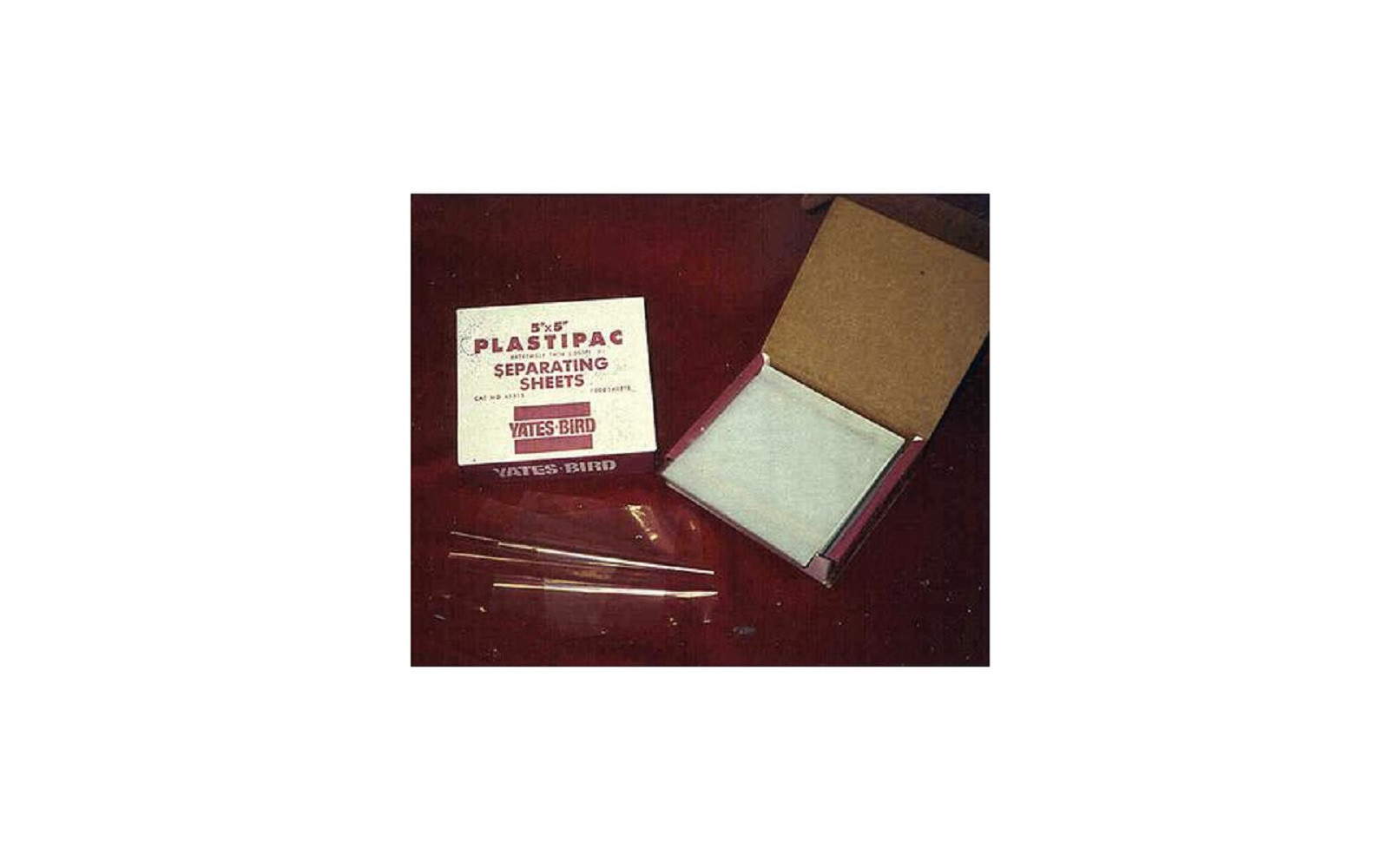
| Plastipac | Yates Motloid | Plastic sheet, 1000/box | Trial packing. Stretches, meant to replace foil and lacquer at that step | Not a painted separator for the final pack. |
| Acrylic and plaster separator | Not named on this SKU | 16 oz liquid | Catalog says it separates acrylic and plaster | Chemistry is not on the listing. Confirm it is a foil substitute before it goes on a master cast. |
| Liqui-Foil | A.D.S. | Liquid tin-foil substitute | Same job as COE-SEP: keep resin off stone | Do not stack it on top of a different substitute unless that bottle says to. |
| Foil Cote | Buffalo Dental | Pink liquid | A tinted separator so coverage is visible | Pink is an indicator, not a stronger film. Thin pink is still a thin film. |
| Blue Debubblizer | See the bottle | Surfactant spray or liquid | Reduces bubbles when pouring stone against impression or wax | Not a flask separator. It will not release acrylic. |
| Tin foil | Buffalo Dental | 6 in roll, 1 lb | Burnished foil, the technique the liquids replaced | Wrinkles telegraph. Slow, and still the right answer when a film keeps failing. |
| DVA separator refill | Dental Ventures of America | System refill | Separator for the DVA conditioner and VSS workflow | Not a general-purpose gallon of foil substitute. |
| Foilcoat | Not named on this SKU | Liquid, 1 gallon | Another foil-substitute gallon | Same job as Patterson Liquid Foil until the label says otherwise. Maker is missing on this row. |
Related lab materials: flasks and presses · denture acrylics
1. COE-SEP™ — GC America

GC America COE-SEP is the tin-foil substitute most labs mean when they say “separator.” Painted on a stone cast, it dries to a film that keeps denture acrylic from bonding to the model and leaves a smoother tissue surface than a dry, unseparated pack. GC’s description is a smooth, glossy, tough film and a closer adaptation of resin to the cast than a sloppy foil job.
The film is only as even as the brush. A soaked or otherwise prepared cast — whatever the current GC directions say for that bottle — matters more than a second heavy coat. Pooled separator copies into the denture as a soft, uneven intaglio.
Who it is for: Denture labs that want the classic painted foil substitute and will follow GC’s cast prep instead of dipping the model.
Tradeoff: COE-SEP does not debubble an impression, and it does not replace Plastipac during trial pack. If the cast is contaminated with soap or grease, no brand of foil substitute will look like the photo on the bottle.
2. Patterson® Liquid Foil, One Coat

Patterson Liquid Foil is a clear, one-coat separator in a one-gallon bottle. The job matches COE-SEP: keep acrylic from sticking to stone. The differences you can verify without a secret formula are the gallon size, the clear color, and the one-coat instruction.
Clear and one-coat is a speed choice. It is also how thin spots get processed, because you cannot see a holiday the way you can with pink Foil Cote. One coat means you do not “improve” it with a second layer that the bottle did not ask for.
Who it is for: Labs already buying Patterson consumables who want a bulk clear foil substitute and will inspect the cast under a light before flasking.
Tradeoff: Private-label gallons change supplier more quietly than a GC brand name. When a new jug behaves differently — slower dry, film that wipes off — stop and read that jug. Do not assume it is COE-SEP in a different color.
3. Plastipac Separating Film — Yates Motloid

Plastipac is not a liquid. Yates Motloid sells it as a box of separating sheets (1000) that stretch over the cast for trial packing. The sheet is supposed to pull without wrinkling and to take the place of tin foil and lacquer at that step, so you can open the flask, remove the film, and see the trial pack.
Use it when the technician is trial packing. Do not paint COE-SEP onto the sheet, and do not leave the sheet in for the final cure unless that workflow says so. A film that separates a trial pack is a different tool from a film that is cured against the resin all night.
Who it is for: Labs that trial pack and want to stop burnishing foil for that step only.
Tradeoff: A torn or wrinkled sheet does the thing the product claims not to do: it prints the wrinkle. It also does not seal a stone cast for final processing. Keep a real foil substitute (COE-SEP, Foil Cote, or a labeled gallon) for the pack that gets cured.
4. Acrylic and Plaster Separator, 16 oz

This 16 oz bottle is labeled as a separator between acrylic and plaster, and the listing does not name a manufacturer or a chemistry. That is enough to tell you the job someone intended — keep resin off a plaster or stone surface — and not enough to tell you whether it is an alginate foil substitute, a silicate, or a plaster-to-plaster separator that will ruin a master cast.
Sixteen ounces is a bench bottle, not a gallon. Use it only after the label in your hand matches the job. If the label is gone, do not guess on a final denture flask.
Who it is for: A lab that already knows this exact bottle and is reordering it, with the label still readable.
Tradeoff: An unnamed separator is how a plaster-separating soap ends up on a denture cast. If you cannot read the chemistry, switch to a named foil substitute such as COE-SEP or Foil Cote.
5. Liqui-Foil — A.D.S.

Liqui-Foil, from A.D.S., is another liquid tin-foil substitute. Same purpose as COE-SEP and Patterson Liquid Foil: a painted barrier so acrylic does not bond to the stone. It is not Plastipac, not metal foil, and not the debubblizer.
Switching to it from GC or Patterson is a technique change even when the marketing words match. Dry time, how many coats, and whether the cast should be warm or soaked are on the A.D.S. bottle. Copying the COE-SEP routine onto Liqui-Foil is how films stay tacky and pull stone.
Who it is for: Labs that have already standardized on A.D.S. Liqui-Foil and want that bottle, not a generic “foil substitute” substitution.
Tradeoff: Do not layer it over a different separator to “be sure.” Two films are a third, unknown film. If coverage is hard to see because this bottle is clear, look at Buffalo’s pink Foil Cote instead of adding coats.
6. Foil Cote — Buffalo Dental

Buffalo’s Foil Cote is a pink liquid separator. The tint is the reason to choose it over a clear gallon. You can see holidays, runs, and double coats before the flask closes. The job is still a tin-foil substitute on stone, from the same company that sells the 6-inch tin foil further down this list.
Pink does not mean a thicker or more heat-stable film. A barely pink wash can be an incomplete coat. A dark pink pool is too much separator, and it will occupy space the acrylic should have filled.
Who it is for: Technicians who want to see the separator under bench light, and who already process with Buffalo’s foil products.
Tradeoff: The color can tint a sloppy film enough that it looks “covered” when it is only stained. Check the surface with a finger the way you would a clear coat: it should be dry and continuous, not sticky and not gritty. Foil Cote does not replace burnished foil when you have decided the liquid film is the thing failing.
7. Blue Debubblizer

Blue Debubblizer does not belong in a separator flask. It is a surfactant. Sprayed or brushed on an impression or a wax pattern, it lowers surface tension so stone flows into detail instead of leaving bubbles. That is a pour problem. Flask separation is a resin-versus-stone problem. They are not the same chemical job.
The blue color makes it easy to see where the impression was treated. It does not form the tough film GC describes for COE-SEP, and it will not release a heat-cured denture from a model.
Who it is for: The pour station, when stone is bubbling against alginate, silicone, or wax — not the packing bench.
Tradeoff: Extra debubblizer pools and can soften or contaminate a surface. Using it because the words “separator” appeared near it on an old list is how a denture sticks to the cast. Keep the bottle at the vibrator, next to the stone, and keep Foil Cote or COE-SEP at the flask.
8. Tin Foil, 6-inch — Buffalo Dental

Buffalo’s 6-inch, 1 lb tin foil is the material the liquid “foil substitutes” are substituting for. Burnished onto a cast, real foil is a physical barrier. Done well, it gives a dense surface and a reliable release. Done with wrinkles, every wrinkle is on the intaglio of the denture.
It still earns a place in the lab for cases where painted films keep failing, for repairs that need a local barrier, and for technicians who were trained on foil and are faster with it than with a brush. The 6-inch width is a packing fact: wider foil wastes less time splicing on a full upper.
Who it is for: Labs that still burnish foil, or that want a fallback when a liquid film is the reason a denture stuck.
Tradeoff: Foil is slow, and it is easy to bridge a frenum or a rugae instead of adapting into it. It is also not Plastipac: you do not trial-pack with a fresh sheet of this foil unless that is already your method. Liquid substitutes exist because most benches will not burnish foil carefully on every case.
9. DVA Conditioner and VSS Separator Refills

Dental Ventures of America’s separator refill belongs to the DVA conditioner and VSS system. It is a reorder for that workflow — the separator used with their stone and conditioner setup — not a drop-in gallon for a lab that has only ever painted COE-SEP.
System refills are how a compatible film stays compatible. Swapping in Patterson Liquid Foil because the DVA bottle ran out, or painting DVA separator on a cast that never saw the DVA conditioner, gives you neither system’s result.
Who it is for: Labs already running DVA’s conditioner and VSS process and replacing the separator that process names.
Tradeoff: If you do not have the rest of the system, this refill is the wrong row. Buy COE-SEP, Foil Cote, or a labeled foil-substitute gallon instead. “Separator” on the invoice is not a shared formula.
10. Foilcoat Liquid Foil Substitute, 1 Gallon

Foilcoat is a one-gallon liquid foil substitute, and this listing does not name the manufacturer. The job is the same family as Patterson Liquid Foil and Liqui-Foil: paint a film so acrylic releases from stone. The gallon is the inventory fact. The missing maker is the clinical risk.
Treat it as a bulk clear or unlabeled foil substitute until you read the jug. Coat count, dry time, and whether the cast should be wet are not something to copy from GC’s COE-SEP page.
Who it is for: A lab reordering a specific Foilcoat gallon they already use and can identify on the label.
Tradeoff: Two “one gallon foil substitute” jugs (this and Patterson) are not automatically the same film. If the label is weak, prefer a named product — GC COE-SEP or Buffalo Foil Cote — over a cheaper anonymous gallon on a final denture.
Frequently Asked Questions
Is a tin-foil substitute the same as tin foil?
No. Substitutes are liquids that dry to a film. Buffalo’s 6-inch roll is the metal. Plastipac is a plastic trial-pack sheet. They all get called “foil” on invoices and they do not interchange in the same step of the pack.
Why is a debubblizer on this list?
Because the old catalog ranking put it here. Blue Debubblizer reduces bubbles in a stone pour. It does not separate acrylic from a model. Leave it at the vibrator.
How do I know the film is thick enough?
It is continuous and dry, not heavy. Pink Foil Cote makes skips obvious. Clear one-coat products need a light at a low angle. Pooled separator is excess, and it steals the space the acrylic should fill.
Can I use the same separator on every flask?
You can if it is a general tin-foil substitute and you follow that bottle. DVA’s refill stays with the DVA system. An unnamed 16 oz “acrylic and plaster” bottle stays on the shelf until the label says it is safe on a master cast.
Read next
Stay on denture processing:
Related articles
Keep exploring related topics from Dental Country.
Top 10 Porcelain Brushes for Dental Labs
Compare Kolinsky, red sable, and synthetic porcelain brushes from Renfert, Dixon, and Patterson for build-up, stain, and glaze.
Read article
Top 10 Dental Flasks & Presses for Labs
Compare denture flasks, hydraulic presses, and pressure pots — Atlas 44 bronze, Handler Big Boy, and Lang Aquapres.
Read article
Top 10 Bottle Cleaners for Dentists
Compare the best Bottle Cleaners for Dentists — our researched Top 10 ranking of the leading brands and options to help you choose the right fit for your practice.
Read article
7 Dental Websites to be Inspired by
Compare the best 7 Dental Websites to be Inspired by, ranked on performance, features, and value to help you choose the right fit for your practice.
Read article