
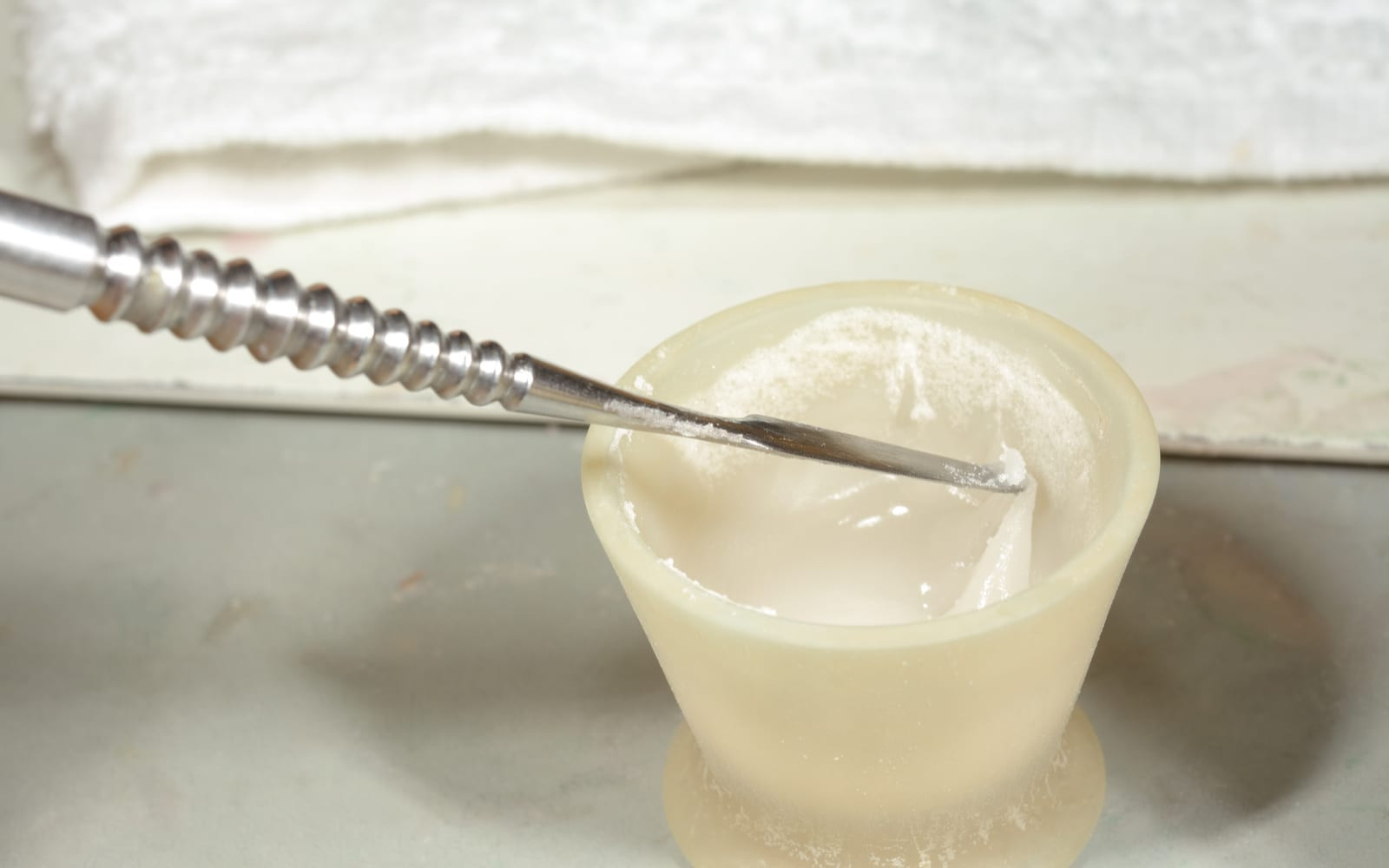
Top 5 Acrylic Resin Brands for Denture Repair.
Denture acrylics by job: Lucitone 199 heat-cure bases, Rebase II chairside relines, and self-cure repair resins.

Reviewed by Dr. Sean Myran, DMDDoctor of Dental Medicine, University of Pennsylvania
How to Choose a Denture Acrylic
These five products do not compete for the same job, even though they are all acrylic. Lucitone 199 is a heat-cure high-impact denture base for a new full or partial denture processed in the lab. Tokuyama Rebase II Fast is a chairside hard reline, not a base resin and not a heat-cure. Nature-Cryl Pour is a fluid self-cure for pour processing and repairs. Unifast Trad and Jet Tooth Shade are self-cure powders for repairs, additions, and provisional crowns — Jet is tooth-colored, so it will not replace pink base.
Start with the broken thing in your hand. A fractured base on a patient who has already broken two dentures is a Lucitone 199 (or another high-impact heat-cure) conversation with the lab, not a chairside sprinkle of repair acrylic. A loose denture with healthy ridges can be a Tokuyama hard reline the same day. A missing denture tooth is Jet or a tooth-shade Unifast, not a pink pour resin. Mixing those up is how a “repair” becomes a remake.
Buying criteria that actually change the outcome
- Heat-cure base vs self-cure repair — high-impact heat-cure (Lucitone 199) is for strength and a new base. Self-cure powders set in the chair or on the bench and are for repairs, additions, and temporaries. They are not interchangeable.
- Reline vs rebase vs repair — Rebase II Fast hard-relines the tissue surface of an existing denture, chairside, in minutes. It does not build a new base from scratch.
- Pour technique vs pack-and-press — Nature-Cryl Pour is fluid so it can be poured into a mold. Lucitone 199 is the classic pack-and-heat base. Pouring is faster; high-impact heat-cure is what you specify when the patient fractures bases.
- Pink base vs tooth shade — Jet Tooth Shade and tooth-shade Unifast repair teeth and make provisionals. Pink powders repair base. A tooth-shade repair in the middle of a flange looks like a mistake because it is one.
- Monomer in the mouth — heat-cure keeps most of the monomer reaction in the lab. Chairside self-cures and hard relines have taste, heat, and allergy issues. Rebase II Fast is marketed as MMA-free with low heat; traditional Jet and Unifast are not that claim.
| Product | Maker | How it cures | Actual job | Watch-out |
|---|---|---|---|---|
| Lucitone 199 | Dentsply Sirona | Heat-cure | High-impact denture base for full and partial dentures | Not a chairside repair powder. Lab process. |
| Rebase II Fast | Tokuyama | Self-cure, intraoral, about five minutes | Hard reline of full and partial dentures | Not a new base. Not a heat-cure, despite older write-ups. |
| Nature-Cryl Pour | GC | Self-cure pour resin | Poured bases, relines, and repairs | Pour convenience is not high-impact heat-cure strength. |
| Unifast Trad | GC | Self-cure powder/liquid | Provisionals, repairs, additions | Traditional MMA self-cure: heat, odor, and shade must match the job. |
| Jet Tooth Shade | Lang | Self-cure tooth-color acrylic | Provisional crowns and denture-tooth repairs | Wrong powder for a pink base repair. |
The lab side of this work: denture flasks and presses · denture liners and conditioners
1. Lucitone® 199 — Dentsply Sirona

Dentsply Sirona Lucitone 199 is a premium heat-cure denture base resin. Dentsply describes it as the high-impact, high-flexural-strength choice for tissue-supported and implant-supported full and partial dentures, with a tissue-like esthetic and a long clinical history. The powder/liquid is processed in a flask with heat. That is a laboratory base, not a chairside sprinkle-on repair.
Specify it when the patient fractures bases, clenches, or is going onto implants where a broken denture is expensive. Impact resistance is the buying criterion Dentsply leads with. There is a separate Lucitone 199 repair material for fixing a Lucitone base later; the jar in this ranking is the denture base itself. A pour acrylic (Nature-Cryl, or Dentsply’s later high-impact pour, Lucitone HIPA) is a different process if the lab needs speed instead of the classic heat-cure.
Who it is for: Dentists and labs prescribing a new full or partial denture base when fracture resistance matters more than a same-day pour.
Tradeoff: Heat-cure means a processing cycle, a flask, and a return visit. It will not reline a sore spot this afternoon — that is Rebase II Fast or a tissue conditioner. Do not call Lucitone 199 a “repair resin” in the chart just because the page title says denture repair.
2. Tokuyama Rebase II Fast

Tokuyama Rebase II Fast is a chairside hard denture reline for full and partial dentures. Tokuyama’s product page describes it as MMA-free, odorless, and low-heat, curing completely in the mouth in about five minutes without an inhibition layer. It is a direct hard reline, including after a soft liner once the tissue has healed. It is not a heat-cure, and it is not a material you pack into a flask to make a new base.
Use it when the denture fits the teeth and the occlusion but the tissue surface has drifted — resorption, a healed extraction site, a liner that has aged out. The patient leaves with the same denture, hard-relined. That is a different appointment from sending Lucitone 199 to the lab, and a different chemistry from a pink self-cure repair of a midline fracture.
Who it is for: Practices that hard-reline complete and partial dentures chairside and want Tokuyama’s low-odor, low-heat intraoral set instead of a lab rebase.
Tradeoff: A hard reline on inflamed tissue locks in a bad impression of that tissue. Treat the mucosa first; Tokuyama lists the healed-ridge case, including after a soft reline. MMA-free is not the same claim as “no allergy to every component.” It will not replace a broken tooth or a fractured midline the way a repair acrylic does.
3. Nature-Cryl® Pour — GC America

GC America Nature-Cryl Pour is a fluid self-cure acrylic for poured denture bases, relines, and repairs. The pour technique — a hydrocolloid or silicone mold instead of pack-and-press — is the reason the resin is runny. GC sells it for offices and labs that want a pour-and-cure base or a repair without a heat-cure cycle.
Fluid resin buys time and a simpler flask. It does not automatically meet the high-impact story Dentsply tells for Lucitone 199. Choose Nature-Cryl when the case is a pour base, a lab reline, or a repair that suits a fluid mix. Choose a high-impact heat-cure when the patient’s history is broken dentures. Shade and fiber, if you use them, still have to match the existing base on a repair; a pour resin in the wrong pink is obvious.
Who it is for: Labs and dentists who pour bases or repairs and want GC’s fluid acrylic rather than a heat-cure pack.
Tradeoff: Pour acrylic can leave voids if the mold is poured too late or too cool, and self-cure bases are a common place to lose the strength you promised a bruxer. Do not describe this jar as a chairside five-minute reline; that procedure is Rebase II Fast. Do not describe it as Lucitone 199.
4. Unifast Trad — GC America

GC America Unifast Trad is a traditional self-cure powder-and-liquid acrylic. “Trad” is the classic cold-cure, as opposed to GC’s later pour or cartridge versions. Labs and dentists use it for provisional crowns and bridges, denture repairs, and additions such as a clasp area or a flange extension. It is available in tooth shades and pink, and the shade is the whole clinical decision.
It belongs in a repair kit, not in the same scoop as a high-impact heat-cure base. Mix ratio, moisture on the denture, and timing decide whether the repair bonds or pops off after a week. Monomer odor and heat are the ordinary self-cure problems; Unifast Trad is not marketed as MMA-free the way Rebase II Fast is. For a hard reline of the entire tissue surface, use a reline system. For a new base on a fractured-prone patient, write Lucitone 199 to the lab.
Who it is for: Clinics and labs that still do powder-liquid repairs and provisionals and want one GC self-cure with both tooth and pink shades.
Tradeoff: Traditional MMA self-cure can sting, smell, and get hot. A pink repair in a tooth, or a tooth-shade repair in a flange, is a shade error, not a brand error. Polymerization shrinkage and a contaminated fracture line are why some “quick fixes” return as lab remakes.
5. Jet® Tooth Shade — Lang Dental

Lang Jet Tooth Shade is a self-cure acrylic in tooth colors, long used for provisional crowns and for repairing or adding denture teeth. The powder/liquid sets on the bench or in a matrix. It is not a pink denture-base resin. If the flange is broken, Jet Tooth Shade is the wrong bottle even though the word “acrylic” is on the label.
The useful distinction from Unifast Trad is focus. Jet Tooth Shade is the tooth-colored provisional and denture-tooth repair acrylic. Stock the shades that match the denture teeth you actually see, not a full prosthetic shade guide you will never open. Self-cure exotherm and leftover monomer are the handling limits; a provisional left thick will cook the pulp and a denture-tooth repair left wet with saliva will debond.
Who it is for: Offices that make chairside provisionals and repair broken denture teeth with a self-cure tooth acrylic.
Tradeoff: No pink. No high-impact base. No five-minute hard reline. Jet will not turn a fractured midline into a Lucitone denture. Match the shade to the denture tooth under the operatory light you will dismiss the patient under, and pressure-pot the repair when the lab step is available if you care about porosity.
Frequently Asked Questions
Is Lucitone 199 a denture repair acrylic?
No. Lucitone 199 is a heat-cure high-impact denture base for fabricating full and partial dentures. Repairs and additions are self-cure acrylics such as Unifast Trad or a tooth-shade Jet, or Dentsply’s separate Lucitone repair material when you are matching a Lucitone base. A hard chairside reline is Tokuyama Rebase II Fast.
Is Rebase II Fast heat-cured?
No. Tokuyama Rebase II Fast is a self-cure chairside hard reline. The manufacturer describes an intraoral set of about five minutes, with low heat and an MMA-free formula. Older descriptions that called it a heat-cure were wrong.
When should I pour a base instead of packing Lucitone 199?
Pour resins such as Nature-Cryl are for labs that want a fluid self-cure in a mold: speed and a simpler process. Specify a high-impact heat-cure like Lucitone 199 when the patient fractures bases or the denture is implant-supported and strength is the prescription. They are different materials, not two brands of the same powder.
Which acrylic repairs a broken denture tooth?
A tooth-shade self-cure: Jet Tooth Shade, or tooth-shade Unifast Trad. Pink base acrylic and pour base resin restore the flange, not the tooth. Match the shade and keep saliva out of the fracture.
Read next
Stay on removable prosthodontics:
Related articles
Keep exploring related topics from Dental Country.
Top 10 Dental Latex Rubber Dam Sheets
Compare latex dental dam sheets by gauge, size, and scent — Coltene Hygenic, Patterson Super Dam, Cranberry, and Medicom.
Read article
Top 10 Hand Waxing Instruments in Dentistry
Compare PK Thomas, LeCron, Roach, Akers, and TiN wax carvers for crown, partial, and denture wax-ups.
Read article
Top 10 Bottle Cleaners for Dentists
Compare the best Bottle Cleaners for Dentists — our researched Top 10 ranking of the leading brands and options to help you choose the right fit for your practice.
Read article
7 Dental Websites to be Inspired by
Compare the best 7 Dental Websites to be Inspired by, ranked on performance, features, and value to help you choose the right fit for your practice.
Read article