
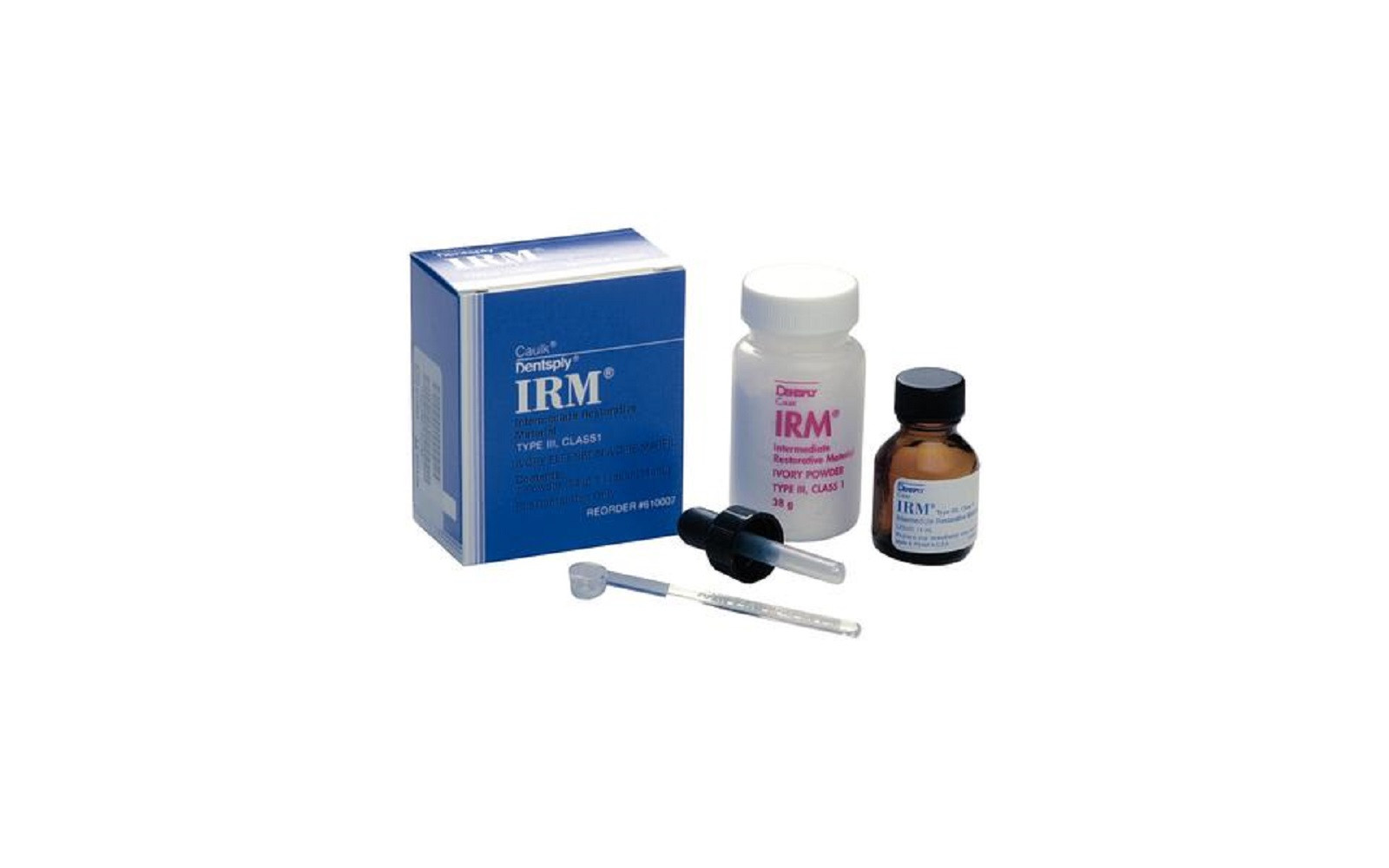
Top 10 Temporary Material for Inlays and Onlays.
Inlay temporaries, not crown bis-acryl: IRM, Fermit N, Clip, DuoTEMP, and Tempit by set and eugenol.

Reviewed by Dr. Sean Myran, DMDDoctor of Dental Medicine, University of Pennsylvania
How to Choose a Temporary for an Inlay or Onlay
This page is not a bis-acryl crown temporary list. Nothing here is a Luxatemp-style paste you trim into a full crown. The products are interim fillings for an inlay or onlay prep, an endodontic access, or a short-term occlusal seal: reinforced zinc-oxide eugenol (IRM), plain ZOE, moisture-set zinc oxide (Tempit), and light-cured or dual-cured resin temporaries (Fermit N, Clip, DuoTEMP, Tempit L/C). Three of the ten rows are IRM refills of the same material.
The split that matters is eugenol, how it sets, and how long it is supposed to last. IRM is Dentsply’s polymer-reinforced ZOE and is indicated as an intermediate restoration lasting up to a year, and as a base under non-resin work. Eugenol interferes with resin bonding, so it is a bad last temporary in a prep you will bond next week. Centrix Tempit Original is a noneugenol, moisture-activated access seal. Tempit L/C, Ivoclar Fermit N, and Voco Clip are light-cured and meant to come out in one piece. Coltene DuoTEMP is eugenol-free and dual-cures with light and saliva. Plain ZOE B&T is softer and shorter-lived than IRM.
Buying criteria that actually change the temporary
- Eugenol — IRM and ZOE B&T contain eugenol. DuoTEMP is eugenol-free. Tempit Original is noneugenol (Centrix sells a separate Tempit-E when you want eugenol). Fermit N and Clip are resin temporaries. If the final cement or the composite bond is next, do not finish on eugenol residue.
- How it sets — powder and liquid (IRM, ZOE) can be mixed wrong. IRM capsules need an amalgamator. Tempit Original sets with moisture from the tooth, on the order of a few minutes. Light-cured materials (Fermit N, Clip, Tempit L/C) set where the light reaches. DuoTEMP is light plus a saliva set, so the floor of a deep inlay is not depending on light alone.
- How it comes out — Fermit N, Clip, and Tempit L/C are designed to be lifted out without cutting the margins. IRM and a hard ZOE often need a bur. A bur in an inlay prep the morning of cementation is how the margins move.
- How long — IRM’s “up to one year” is an intermediate restoration, not a promise that an onlay cusp will look new in a year. Light-cured inlay temporaries are for the days or weeks until the lab work is back. Do not send a Fermit N onlay temporary out as a one-year build-up.
- Refills are not new materials — IRM powder, IRM liquid, and IRM capsules are the same reinforced ZOE. Ordering the liquid because the operatory is “out of temporary material” does not fill a tooth.
| Material | Maker | Chemistry | Set | Watch-out |
|---|---|---|---|---|
| IRM standard package | Dentsply | Polymer-reinforced ZOE, eugenol | Powder 38 g and liquid 14 ml, mixed | Up to a year as an intermediate restoration. Eugenol and a bonded final do not mix. |
| Tempit Original tips | Centrix | Zinc oxide and calcium sulfate, noneugenol | Moisture, prefilled 0.35 g tips | Centrix aims this one at endo access and short-term seals, not at a cusp-covering onlay. |
| IRM powder refill | Dentsply | Same reinforced ZOE powder, 38 g | Needs the eugenol liquid | Not a standalone temporary. |
| IRM liquid refill | Dentsply | Eugenol liquid, 14 ml | Needs the powder | Liquid alone will not restore a prep. |
| IRM capsules | Dentsply | Same IRM, 0.34 g pre-dosed | Triturate, then place | Requires an amalgamator. Still eugenol. |
| Fermit N | Ivoclar | Light-cure resin temporary | Light, 2.5 g syringes | For temporary fillings and temporary inlays. No separate temporary cement. Not a one-year IRM. |
| DuoTEMP | Coltene | Eugenol-free, zinc oxide / zinc sulphate, fluoride | Light, then saliva. Radiopaque | Coltene: load after about 40 seconds of light. Deep boxes still need the self-cure, not a wish. |
| ZOE B&T | Standard ZOE base/temporary | Zinc oxide-eugenol, not polymer-reinforced | Powder and liquid | Softer and shorter-term than IRM. Wears through on an occlusal inlay. |
| Tempit L/C | Centrix | Light-cure resin, 0.25 g tips | Light. Centrix cites about 40–45 seconds | Their inlay/onlay Tempit. Do not use in the presence of eugenol. Methacrylate sensitivity is a contraindication. |
| Clip | Voco | Light-cure resin temporary | Light, about 20–40 seconds | Fluoresces under UV-A so you can find leftovers. Still not a long-term cusp coverage. |
Full-coverage provisionals are a different material class: crown and bridge temporaries.
1. IRM® Standard Package — Dentsply

Dentsply IRM is polymer-reinforced zinc-oxide eugenol. The standard package is one 38 g bottle of powder and one 14 ml bottle of liquid, ivory. Dentsply indicates it for intermediate restorations lasting up to one year and as a base under restorations that are not resin. It is stronger than plain ZOE, which is why it outlasts the B&T row on an occlusal temporary.
Eugenol is the reason not to make it the default inlay temporary when the final is bonded ceramic or composite. Residue in the prep inhibits the bond you will want at cementation. If IRM is what held the tooth together for months, clean the prep as the bonding system requires before you etch and cement. Do not cover fresh IRM with a resin temporary and hope the eugenol stayed put.
Who it is for: Intermediate restorations and endodontic or caries temporaries that must last, when the next material is not a bonded resin.
Tradeoff: Mixing ratio changes strength. The powder and liquid refills below are how you keep this package going, and they are useless alone. Removal usually means a bur, which is acceptable in a large intermediate and risky on a sharp inlay margin the day the onlay is seated.
2. Tempit® Original — Centrix

Centrix Tempit Original is a moisture-activated temporary in prefilled 0.35 g tips. The formula is noneugenol, with calcium sulfate and zinc oxide. It is placed from a Centrix C-R syringe and sets with moisture from the tooth, typically within a few minutes. Centrix positions this tip for endodontic access openings and short-term temporaries, and positions Tempit L/C — item 9 — for inlay and onlay preps.
That split is the useful part of having two Tempits on one list. Original is the access seal between root canal visits: noneugenol, single dose, easy to dig out. It is not a rigid onlay temporary that has to hold a cusp for three weeks.
Who it is for: Endodontic accesses and short-term occlusal seals where you want no eugenol and no mix.
Tradeoff: Moisture-set means a desiccated prep sets it slowly or not at all. It also means saliva contamination of the tip is not “just a handling issue.” Centrix’s eugenol version is Tempit-E, a different product. Do not assume every Tempit tip in the drawer is noneugenol.
3. IRM® Powder Refill, 38 g

This is the powder half of the IRM standard package, 38 g, same polymer-reinforced ZOE. It does not set without the eugenol liquid. It does not become a different temporary because it has its own catalog photo.
Reorder it when the powder bottle is empty and the liquid is still in date. If both are low, the standard package or the capsules are the cleaner purchase.
Who it is for: Practices that already mix IRM and have liquid on the shelf.
Tradeoff: Powder without liquid is not an inventory of temporary material. Eugenol concerns in the standard-package section still apply, because this is the same cement once it is mixed.
4. IRM® Liquid Refill, 14 ml

The 14 ml bottle is IRM’s eugenol liquid. Mixed with the powder, it is IRM. Placed alone, it is a liquid on a prep. The refill exists so a busy operatory does not throw away a full powder bottle when the dropper bottle runs out.
Keep the cap on. Eugenol oxidizes and contaminates the next bonded procedure if it is dripped around the well and left there.
Who it is for: Reordering the liquid side of a working IRM setup.
Tradeoff: This row should never be dispensed to a patient as a temporary filling. If the person ordering “temporary material” buys only the liquid, the drawer is not restocked. Capsules avoid that split.
5. IRM® Capsules, 0.34 g

IRM capsules are the same reinforced ZOE, pre-dosed at 0.34 g, 50 to a package. You triturate them in an amalgamator and place the mixed paste. Ratio errors drop. Waste per small access goes up, because a capsule is a fixed dose.
They suit an operatory that wants IRM without open bottles and already has an amalgamator on the bench. They do not remove eugenol, and they do not change the one-year intermediate indication into a bonded-friendly inlay temporary.
Who it is for: Chairs that place IRM often enough to justify capsules and a triturator, and that do not want powder on the counter.
Tradeoff: No amalgamator, no mixed IRM. A capsule cracked in the well is eugenol on the bracket table. Clean the prep thoroughly before a later resin bond. The machine itself is a separate purchase — see amalgamators.
6. Fermit™ N — Ivoclar

Ivoclar Fermit N is a light-curing, single-component resin for temporary restorations and temporary inlays. Ivoclar’s point is that you do not cement it with a second temporary cement: you place it, cure it, and later remove it. The listing is 2.5 g syringes. It is elastic enough, when it has not been locked into undercuts, to come out without a bur across the margins.
That is the inlay temporary IRM is not. Use it for the weeks the onlay is at the lab, keep contacts clear with a matrix, and cure it the way the IFU says. It is not indicated as a one-year intermediate restoration.
Who it is for: Inlay and onlay preps, and other short-term occlusal temporaries, when you want a light-cure resin and a clean removal.
Tradeoff: Light has to reach the material. A deep, dark box with an under-cured floor will leak even if the occlusal skin is hard. Undercuts turn “lifts out” into “section it.” Eugenol left in the prep from a previous IRM can interfere with the set; clean the prep first.
7. DuoTEMP™ — Coltene

Coltene DuoTEMP is a eugenol-free temporary filling based on zinc oxide and zinc sulphate, with fluoride, and it is radiopaque. It is dual-cure in a specific sense: light, then a continued set with saliva. Coltene says that after about 40 seconds of light the patient can load it, and that a slight expansion supports the marginal seal. Indications they publish include inlay and onlay temporaries, endodontic seals, and temporary Class I and II fillings. One component, no mix.
The saliva set is why it is on an inlay list next to purely light-cured Fermit N and Clip. The floor of a proximal box is where a light-only temporary fails. DuoTEMP still wants the light on the occlusal; the self-cure is the backup, not a reason to skip the lamp.
Who it is for: Inlay, onlay, and endo temporaries when you want eugenol-free material that is not depending on light alone at the base.
Tradeoff: Expansion that seals is still expansion. Follow Coltene’s amount. It is white and radiopaque, so do not confuse it on a later film with a definitive restoration. Easy removal is a claim about a temporary, not about a material you can leave as a one-year IRM substitute.
8. ZOE B&T®

ZOE B&T is a conventional zinc-oxide eugenol base and temporary filling. It is not polymer-reinforced IRM. The mix is softer, more sedative, and easier to wear through. As a base under a non-resin restoration it still has a job. As the only temporary on an onlay prep that has to hold occlusion, it is the weak choice on this page.
Eugenol is present, so the bonding warning on IRM applies here too, with even less strength to justify using it. If the tooth needs a soothing base and the final is amalgam or another non-resin, B&T matches that older workflow. If the final is a bonded inlay, choose a noneugenol or resin temporary.
Who it is for: Short-term, low-stress temporaries and bases where a sedative ZOE is intentional and the final is not bonded resin.
Tradeoff: It will not behave like IRM because both contain eugenol. Patients chew ZOE temporaries out of onlay preps. If you need months, use IRM. If you need a bonded-friendly inlay temporary, use Fermit N, Clip, DuoTEMP, or Tempit L/C.
9. Tempit® L/C — Centrix

Tempit L/C is Centrix’s light-cured Tempit, in 0.25 g tips. Centrix markets it for indirect restorations, inlays, and onlays: it sets firm but flexible, and you pluck it out with an explorer instead of a bur. No etch and no bonding agent. Their directions say to light-cure all surfaces; the page cites on the order of 40 seconds or a minimum of about 45 seconds depending on which instruction block you read. Use the insert in the box. They also flag methacrylate sensitivity and say not to use it in the presence of eugenol.
This is the Tempit that belongs in an inlay prep. Original, above, belongs in an access. Mixing the two tips because both say Tempit is how a moisture-set access material ends up under a cusp, or a light-cure resin ends up in a canal opening nobody cures at the base.
Who it is for: Inlay and onlay temporaries, and jobs like implant-screw access, when you want a unit-dose light-cure that lifts out.
Tradeoff: Uncured material at the gingival floor defeats the seal. Cure every surface the IFU names. Eugenol from an IRM or ZOE that was just removed can affect the set. It is not a long-term reinforced ZOE, and the tip will not express in a C-R syringe you do not own.
10. Clip® — Voco

Voco Clip is a light-curing temporary filling for cavities, especially inlay and onlay temporaries. Voco cites an average cure on the order of 20–40 seconds, syringe delivery, and a set that can be loaded once it is cured. The handling claim is packability plus removal that does not wreck the margins. Clip fluoresces under UV-A light so leftover specks on the prep are visible before you bond the definitive restoration.
Put it next to Fermit N, not next to IRM. Both are light-cured resin temporaries for the laboratory interval. Clip’s fluorescence is the practical difference at removal. Neither one carries Dentsply’s one-year intermediate indication.
Who it is for: Inlay and onlay temporaries in a Voco drawer, when you want to see remnants under a UV-A light before cementation.
Tradeoff: Fluorescence needs that light. If you do not look, the feature does nothing. Undercuts and a short cure cause the same failures as with Fermit N. Do not cover a eugenol temporary with Clip and expect a clean bond the following week.
Frequently Asked Questions
Why are there four IRM rows?
The standard package, the powder, the liquid, and the capsules are one reinforced ZOE sold four ways. Only the standard package and the capsules are complete materials. Powder or liquid alone will not temporize a tooth.
Can I leave IRM in an onlay prep until the ceramic comes back?
You can seal the tooth with it. You should not bond the ceramic on top of eugenol residue. For a short laboratory interval, a noneugenol or resin temporary (DuoTEMP, Fermit N, Clip, Tempit L/C) matches the next appointment better.
Which Tempit is for inlays?
Tempit L/C. Tempit Original is Centrix’s moisture-set tip for endodontic access and short-term seals. The tubes look similar. The set does not.
Where are the bis-acryl crown temporaries?
On the crown and bridge temporary list. Those materials make a full provisional shell. They are the wrong aisle for a small inlay prep.
Read next
Stay on temporization and the cements around it:
Related articles
Keep exploring related topics from Dental Country.
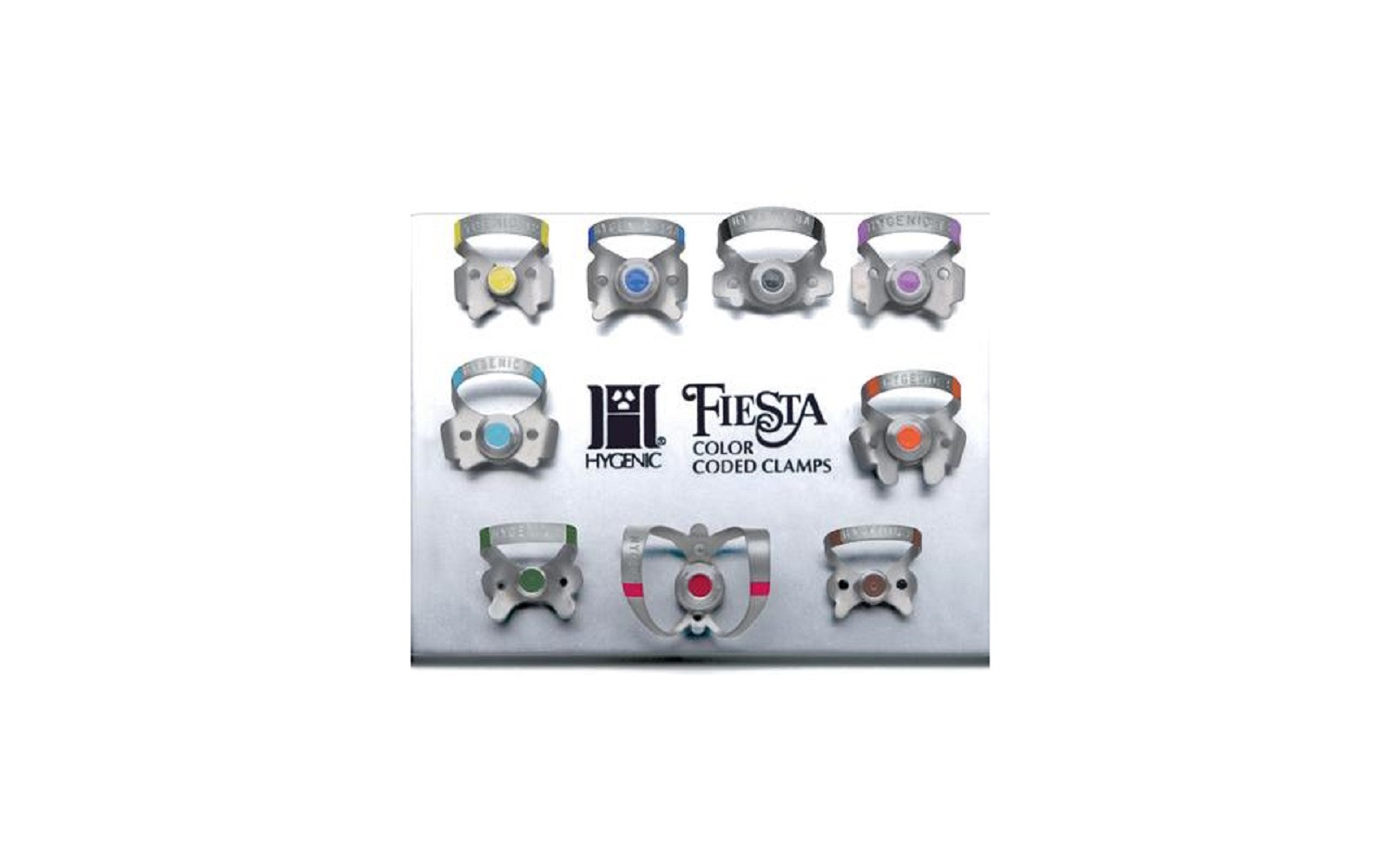
Top 10 Rubber Dam Clamps for Root Canals
Compare winged, wingless, Brinker, and serrated rubber dam clamps from Hu-Friedy, Coltene, and Kulzer for root-canal isolation.
Read article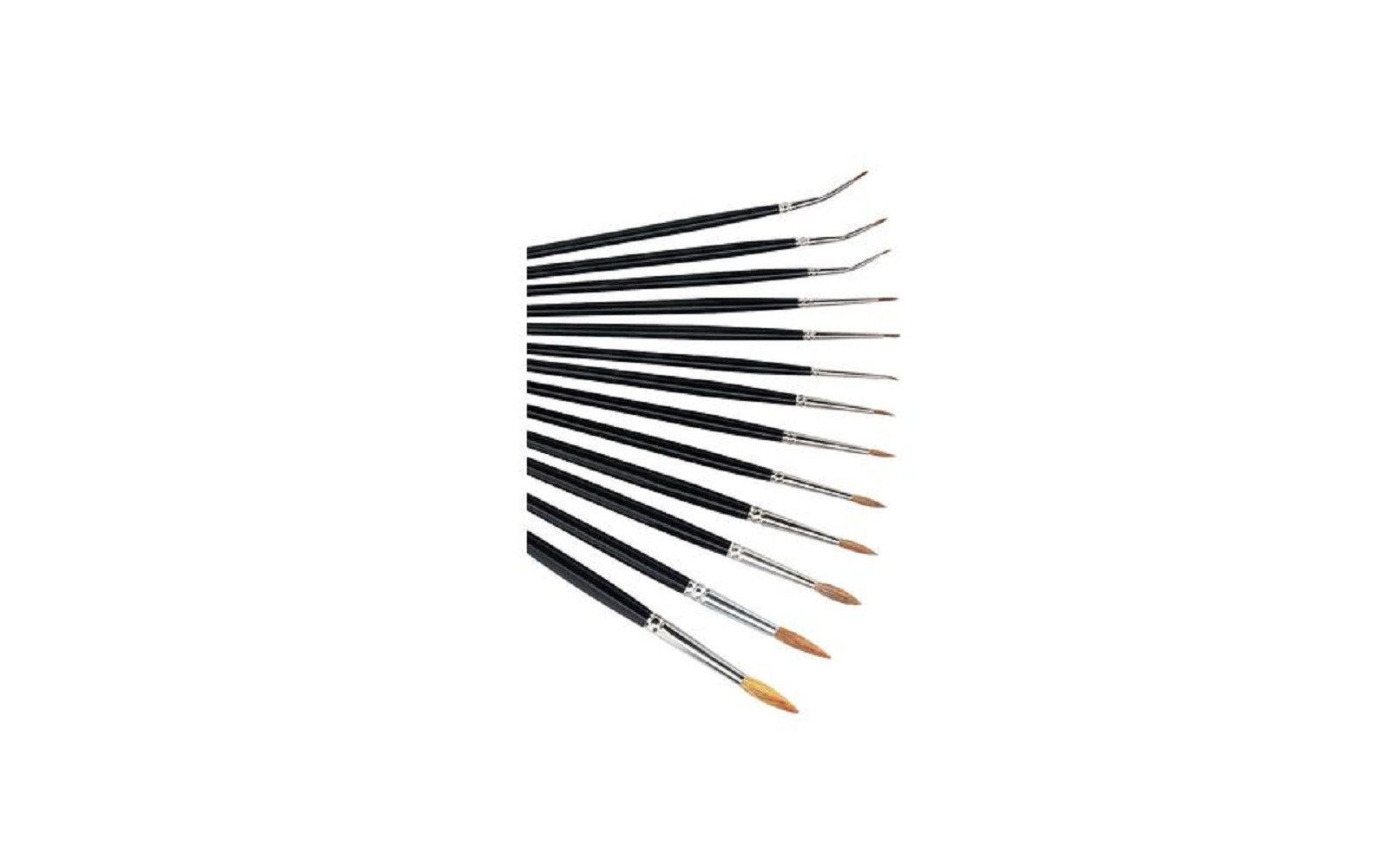
Top 10 Porcelain Brushes for Dental Labs
Compare Kolinsky, red sable, and synthetic porcelain brushes from Renfert, Dixon, and Patterson for build-up, stain, and glaze.
Read article
Top 10 Bottle Cleaners for Dentists
Compare the best Bottle Cleaners for Dentists — our researched Top 10 ranking of the leading brands and options to help you choose the right fit for your practice.
Read article
7 Dental Websites to be Inspired by
Compare the best 7 Dental Websites to be Inspired by, ranked on performance, features, and value to help you choose the right fit for your practice.
Read article