
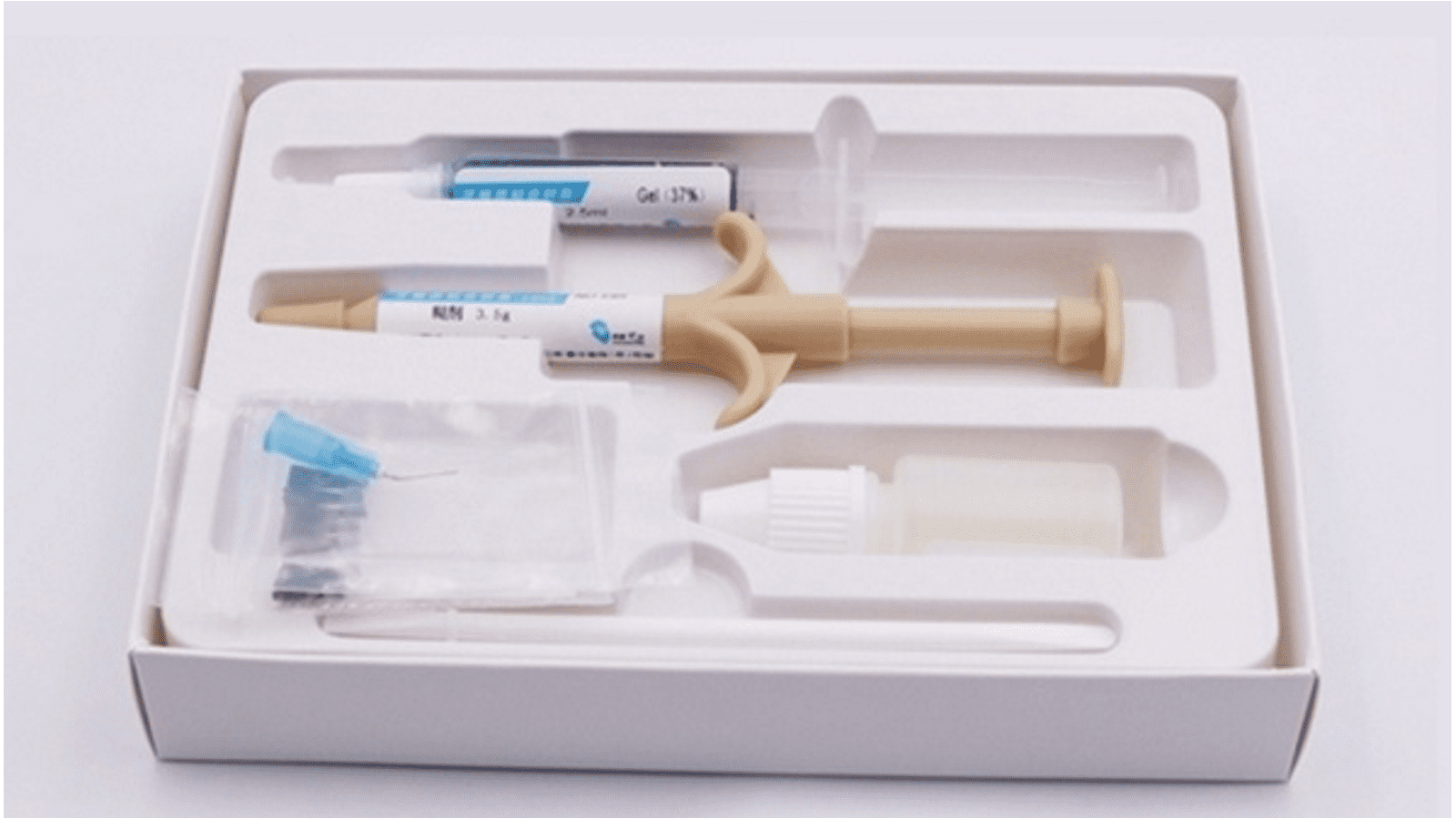
Top 5 Dental Bonding Material.
Scotchbond Universal, Single Bond 2, OptiBond Solo Plus, Clearfil SE Bond, and iBond, split by etch step.
How to Choose a Dental Adhesive
These five bottles were already on the page. They are not five versions of one adhesive. Two are total-etch and need a separate phosphoric acid step: 3M Adper Single Bond 2 and Kerr OptiBond Solo Plus. Kuraray Clearfil SE Bond is a two-bottle self-etch (primer, then bond). Kulzer iBond Self Etch is one bottle that the listing says etches, primes, and bonds together. Scotchbond Universal is the one bottle 3M lists for direct and indirect work, with MDP and silane in the copy. The old introduction’s bond-strength ranges in megapascals are not repeated. They were not measurements of these five bottles.
Dealer prices and star counts from the old tables are omitted. Awards named in the old copy are omitted too. What remains is the etch step, the number of bottles, and the substrates the listing actually names.
Buying criteria that change the bond, not the brochure
- Where the phosphoric acid lives — Single Bond 2 and OptiBond Solo Plus do not etch. The acid is a separate syringe; times belong to that etchant, not to the bond bottle. Clearfil SE Bond’s listing has no etch-and-rinse step. iBond’s listing folds etch into the one bottle. Scotchbond Universal is the bottle where you still choose, from the current instructions, whether to etch enamel only, etch the whole prep, or skip the etch.
- One bottle versus primer then bond — SE Bond is primer (6 ml in the listed kit) and bond (5 ml), light-cured. The old comparison table called it one step. The product copy calls it two-step self-etch. Follow the two bottles. iBond, Single Bond 2, OptiBond Solo Plus, and Scotchbond Universal are each a single adhesive liquid on this page.
- Substrate — Scotchbond’s listing names metal, silica-based ceramic, and zirconia because of MDP and silane, plus veneers, root desensitization, and intraoral repair. SE Bond’s listing names direct fillings, sealing before an indirect restoration, hypersensitivity, and repair of porcelain, hybrid ceramic, or composite. A total-etch bottle used on zirconia, with no primer the instructions name, is a guess.
- Light cure is the mode these five describe — the old introduction mixed adhesive generations with self-cure and dual-cure cements. These listings are light-cured adhesives. A 10-second cure, which is the Scotchbond protocol printed here (20-second scrub, 5-second air, 10-second light), is only as good as the curing light. Opaque indirect work that needs a dual-cure resin is a resin cement decision, not a thicker coat of iBond.
| Adhesive | Maker | Etch on this listing | What the copy specifies | Watch-out |
|---|---|---|---|---|
| Scotchbond Universal | 3M | Universal bottle; etch mode is a choice | Ethanol/water, MDP, silane; 20 s scrub, 5 s air, 10 s light | Metal, silica ceramic, and zirconia are named. The etch mode is not printed as one default. |
| Adper Single Bond 2 | 3M | Total-etch, acid separate | Ethanol/water, silica nanofiller, 5 nm particles | Skipping the etch because a universal bottle allows it will not work with this bottle. |
| OptiBond Solo Plus | Kerr | Total-etch, acid separate | 0.4-micron filler at 15% | Filled adhesive pools in line angles. Shrinkage of the composite is still the composite’s. |
| Clearfil SE Bond | Kuraray | Two-step self-etch; no phosphoric step listed | Water-based primer 6 ml and bond 5 ml in the standard kit | The old table’s “one step” line disagrees with the two-bottle copy. |
| iBond Self Etch | Kulzer | Etch, prime, and bond in one bottle | Glossy surface as the visual cue of a seal | Shear-bond numbers in the old copy are not reused. One bottle is also the bottle you contaminate. |
1. Scotchbond Universal — 3M

3M Scotchbond Universal, listed here under the 3M ESPE name, is an ethanol-and-water adhesive that the copy says contains MDP and silane. That is why the page names metal, silica-based ceramic, and zirconia, along with direct and indirect bonding, veneers, root-surface desensitization, and intraoral repair. The application printed on the page is a 20-second scrub, 5 seconds of air, and 10 seconds of light.
The manufacturer line may now read Solventum on the bottle. The protocol above is the one this page states. A universal adhesive still needs an etch decision. Phosphoric acid on enamel, on the whole prep, or not at all, is in the current instructions, not in the word “universal.” The 10-second cure assumes a light that actually reaches the initiator. Pair it with the curing light your composite already requires.
Who it is for: Practices that want one 3M bottle for direct composite and for the indirect and repair uses this listing names, and that will pick the etch mode from the instructions rather than from habit.
Tradeoff: One bottle does not remove technique. A short scrub, a wet pool left in a corner, or a 10-second cure with a dying light is an under-cured adhesive with a glossy surface. Silane in the bottle does not replace the surface treatment a ceramic repair instruction still requires. This is not Adper Single Bond 2, which is total-etch only.
2. Adper Single Bond 2 — 3M

Adper Single Bond 2 is 3M’s light-activated total-etch adhesive on this page: ethanol and water, with silica nanofiller. The copy says five-nanometer particles keep the filler from clustering. Indications listed are direct light-cure restorations and indirect restorations after light curing.
Total-etch means the phosphoric acid step already happened, and the dentin is still in the condition that bottle expects. The etchant page is where etch time lives. Single Bond 2 will not etch enamel by itself. Using it the way you use Scotchbond Universal in a no-etch mode is a different adhesive than the one you squeezed.
Who it is for: Direct and light-cured indirect bonding when the office already etches with phosphoric acid and wants 3M’s filled total-etch single bottle.
Tradeoff: Over-dried dentin after the rinse is the classic total-etch miss, and this page does not give a wetness protocol to invent one from. Nanofiller is a handling claim, not a bond-strength number. The bottle is light-cure. It is not a dual-cure cement under a metal crown.
3. OptiBond Solo Plus — Kerr

Kerr OptiBond Solo Plus is the other total-etch adhesive here. The listing specifies a 0.4-micron filler loaded at 15 percent, and it says that filler reinforces penetration into dentin and protects against microleakage. The comparison table also names intraoral repair of composite and porcelain. The body copy emphasizes direct restorative bonding of dentin and enamel under composite.
A 15 percent filled adhesive is physically thicker than an unfilled film. It can pool at line angles and in the corner of a box. The listing says the filler reduces polymerization shrinkage. Shrinkage of the restoration is still mostly the composite you place on top. Do not skip incremental placement, or a proper cure, because the bond bottle is filled.
Who it is for: Total-etch users who want Kerr’s filled Solo Plus specifically, including the repair uses the table names, and who will etch as a separate step.
Tradeoff: Air-thin the pool. A thick filled layer can look bonded and still leave a soft line. Porcelain repair still needs the surface the Kerr instructions name. This bottle does not contain the self-etch primer that Clearfil SE Bond ships as a second bottle.
4. Clearfil SE Bond — Kuraray

Kuraray Clearfil SE Bond is a light-cure, two-step self-etch: a water-based primer and a separate bonding agent. The standard kit on this page is 6 ml of primer and 5 ml of bond. The value kit is three of each. The copy says this removes the separate phosphoric-acid etch and rinse, and it names an “Outer Case” so you dispense with a finger. Indications listed: direct composite, cavity sealing before an indirect restoration, hypersensitive or exposed root surfaces, and intraoral repair of porcelain, hybrid ceramic, or composite.
The old feature table said the system “combines enamel and dentine in one step” and does not need shaking. The product section is the accurate one: two bottles, primer then bond. If you add phosphoric acid on enamel, that is an extra step this listing does not include. Confirm it in the current instructions before you improvise a selective etch.
Who it is for: Practices that want Kuraray’s primer-plus-bond self-etch for the indications above, and that will keep the two bottles in order.
Tradeoff: Primer left in the bond bottle contaminates the bond. The Outer Case is a dispensing convenience, not a measuring device. No etch-and-rinse also means uncut enamel is still uncut enamel. This page does not publish a bond strength to justify skipping enamel preparation the instructions still require. SE Bond is not iBond: iBond is the single-bottle all-in-one.
5. iBond Self Etch — Kulzer

Kulzer iBond Self Etch is the all-in-one on this list. The copy says one step etches, primes, and bonds, and that a homogenous layer leaves a glossy surface you can see. That gloss is the visual cue the listing gives you. Direct composite and bonding to enamel and dentin are the uses named.
The old copy compared shear numbers with Clearfil S3, Adper Prompt, and Hybrid Bond, including a 24.0 MPa figure. Those numbers and those other products are not reused. They were not a protocol. One bottle is faster than SE Bond’s two steps, and it is also the bottle the applicator goes back into.
Who it is for: A single-bottle self-etch when you want Kulzer’s iBond and you will treat the glossy film as a check, not as a measurement.
Tradeoff: Gloss shows a film. It does not show that enamel was prepared or that the light cured the bottom of a deep box. All-in-one acidity and the composite you place next still have to match the instructions. Do not use this bottle as a dual-cure resin cement under an opaque restoration.
Frequently Asked Questions
Is Scotchbond Universal the same as self-etch?
The listing calls it a universal adhesive with MDP and silane, and it prints a 20-second scrub and a 10-second cure. It does not print one etch mode as the only mode. Single Bond 2 and OptiBond Solo Plus are the total-etch bottles. SE Bond and iBond are the self-etch listings, and they are not the same as each other: two bottles versus one.
Do I still need phosphoric acid?
For Single Bond 2 and OptiBond Solo Plus, yes. The acid is not in the bottle. For SE Bond, the listing does not include an etch-and-rinse step. For iBond, etch is part of the one-bottle claim. For Scotchbond Universal, read the current etch options instead of inheriting them from a different bottle.
Why are there no prices or megapascal scores?
The old tables mixed Net32 prices that did not even agree for Clearfil SE Bond ($87.25 in one place, $117.84 for bond-only in another) with generation-wide MPa ranges. Those figures are not a buying specification. Kit volumes that were explicit — SE Bond’s 6 ml primer and 5 ml bond — stay.
Can I use these under a crown instead of resin cement?
These five are described as light-cured adhesives. A dual-cure or self-cure cement under an opaque crown is a different material. Use the resin cement list for that decision, and cure the adhesive with a light that matches the adhesive you actually placed.
Read next
Etch, cure, and the restorative that sits on the adhesive:
Related articles
Keep exploring related topics from Dental Country.
Top 10 Glass Ionomer Restoratives
Glass ionomer restoratives compared: Fuji II LC, EQUIA Forte, packable Fuji IX, and Ketac Silver cermet.
Read article
Top 5 Core Buildup Materials in Dentistry
Core buildups compared honestly: dual-cure LuxaCore and Clearfil versus cermet and light-cure composites.
Read article
Top 10 Bottle Cleaners for Dentists
Compare the best Bottle Cleaners for Dentists — our researched Top 10 ranking of the leading brands and options to help you choose the right fit for your practice.
Read article
7 Dental Websites to be Inspired by
Compare the best 7 Dental Websites to be Inspired by, ranked on performance, features, and value to help you choose the right fit for your practice.
Read article