
Flowable Composites: SDR flow+, Filtek, Tetric EvoFlow
Compare 10 flowable composites: SDR flow+ as a 4 mm base, Beautifil Flow Plus as a Giomer, and shade-matched liners, with sources.

Reviewed by Dr. Sean Myran, DMDDoctor of Dental Medicine, University of Pennsylvania
How we rank explains how these product lists are ordered.
How to Choose a Flowable Composite
“Flowable” covers several quite different materials. On this list, one product is a bulk-fill base (SureFil SDR flow+), two are designed to be the final restoration rather than a liner (Beautifil Flow Plus and, as a stiffer material, GrandioSO Heavy Flow), and the rest are conventional flowables for wetting a box, lining a cavity or filling a small prep, placed and cured in normal increments. If you pick “the most popular flowable” without that distinction, you can end up placing a 4 mm posterior base with a syringe that was never indicated for it.
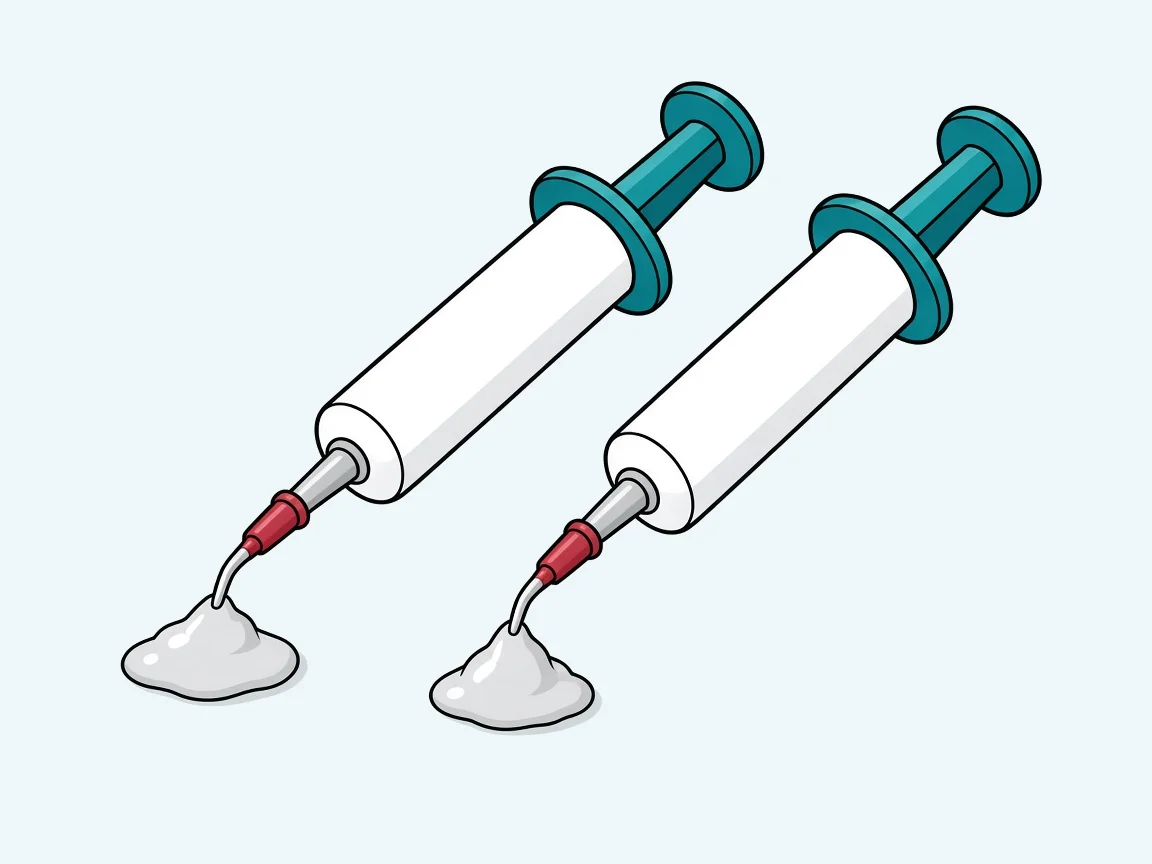
Dentsply Sirona’s SDR flow+ instructions are specific. It’s a fluoride-containing, radiopaque, light-cured flowable that can be placed in 4 mm increments, self-levels, and is designed as a base under a methacrylate universal or posterior composite that replaces the occlusal enamel. It’s also indicated as a stand-alone filling where there’s no occlusal contact, including Class III and V. None of the other syringes here share that 4 mm indication.
What actually changes the outcome
- Bulk-fill base or conventional flowable. SDR flow+ is the only product here indicated for 4 mm increments. Place and cure everything else according to its own instructions, which for a traditional flowable means thinner increments.
- Whether it flows or holds its shape. SDR self-levels by design. GrandioSO Heavy Flow and Beautifil Flow Plus F00 do the opposite and hold their shape, which makes a heavy-flow syringe a poor Class II box liner if you need the material to find the margin.
- Final restoration or liner. Beautifil Flow Plus is a Giomer restorative (S-PRG filler, with fluoride release and recharge according to Shofu), sold in a sculptable F00 and a lower-viscosity F03. Filtek Supreme Flowable, Herculite Ultra Flow and Venus Diamond Flow are shade companions to their packable lines.
- The shade system you already use. A flowable only matches the composite it was designed alongside. Filtek flowable doesn’t share a shade guide with Venus Diamond, and TPH Spectra ST flow is Dentsply Sirona’s current companion to Spectra ST universal.
- Not every flowable releases fluoride. SDR flow+ is described as fluoride-containing, and Shofu says Beautifil’s Giomer filler releases and recharges fluoride. Patterson’s listings say the house-brand flowable contains fluoride as ytterbium trifluoride, which is not a release-and-recharge claim. Don’t assume the other products release fluoride because an old catalog grid said so.
| Material | Maker | Job | Handling | Increment | Watch-out |
|---|---|---|---|---|---|
| Patterson Flowable | Patterson | Radiopaque liner, sealant, and conservative Class I–V | Low- or regular-viscosity 2 g syringe | 2 mm or less | Not a 4 mm bulk-fill. Not for pulp capping or use with eugenol. |
| SDR flow+ | Dentsply Sirona | Bulk-fill base; stand-alone only off the occlusion | Self-leveling | Up to 4 mm | Cap the occlusal enamel with a universal composite |
| Filtek Supreme Flowable | 3M | Esthetic small restorations and liners | Nanocomposite; 3M’s flow-on-demand handling | Conventional | Not a 4 mm bulk-fill |
| Tetric EvoFlow | Ivoclar | Liner, Class V, small cavities | Flowable syringe in the Tetric family | Conventional | Not Tetric’s bulk-fill flowable |
| Beautifil Flow Plus | Shofu | Can be the final restoration | Giomer; F00 holds its shape, F03 flows | Conventional light-cure | Check which viscosity is in the syringe |
| GrandioSO Heavy Flow | VOCO | Small restorations that mustn’t slump | Highly filled heavy flow | Conventional | Too stiff to self-level into a box |
| Herculite XRV Ultra Flow | Kerr | Shade-matched liner and small Class V | Nanohybrid flowable | Conventional | Matches the Herculite shade system specifically |
| Venus Diamond Flow | Kulzer | Cervical and small cavities; liner under Venus Diamond | Nanohybrid flowable | Conventional | Shade match depends on using the Venus system |
| TPH Spectra ST flow | Dentsply Sirona | Current Spectra ST flowable | Flow on demand; stays put until instrumented | Conventional | Not for occlusal stress-bearing Class II, and not a 4 mm bulk-fill |
| Clearfil Majesty Flow | Kuraray | Anterior and posterior flowable restorative | Highly filled; less runny than a thin liner | Conventional | Light-cure only; not a dual-cure core |
Pair a flowable with the packable you already use: universal composites · glass ionomer restoratives
1. Patterson® Flowable Composite

Patterson Flowable Composite is a radiopaque, light-cured flowable. Patterson’s current listings are 2 g syringes in two viscosities. The low-viscosity page calls that version more fluid, for small cavities, and ideal as a liner or base. The regular-viscosity page calls that version thixotropic. Both pages say the composite is injected into the preparation, flows on demand, does not string, is Vita shaded, and contains fluoride as the radiopaque additive ytterbium trifluoride (YbF3). The photograph on this page is captioned as a 1 g refill. Order from the current listing, which is a 2 g syringe.
The low-viscosity page lists shades 2XB, A1, A2, A3, A3.5 and I. It gives composition as 48% wt (72% vol) multifunctional methacrylic ester and 52% wt (28% vol) inorganic filler (0.2–1 micron), with flexural strength 120 MPa, compressive strength 245 MPa and radiopacity 250% Al. The regular-viscosity page uses 44% wt (68% vol) multifunctional methacrylic ester and 56% wt (32% vol) inorganic filler, and lists flexural strength 128 MPa, compressive strength 420 MPa and radiopacity 265% Al.
The instructions, dated November 2022 and manufactured for Patterson Dental Supply, say to place the composite in increments of 2 mm or less and to light-cure each increment for a minimum of 20 seconds with a high-power LED (460–480 nm). Those steps name Class V restorations, pit and fissure sealants, and conservative Class I, II, III and IV restorations. For a deep cavity, the instructions say to place an appropriate liner or cement at the deepest point. They contraindicate pulp capping, use with eugenol-containing materials, and use in patients with a known sensitivity to acrylics. A separate section covers cementing porcelain, ceramic or composite veneers only when the restoration is translucent enough for the curing light to pass through. That 2 mm limit is why this syringe does not share SDR flow+’s 4 mm increment. The instructions do not mention fluoride.
Who it is for: Offices ordering through Patterson that want this house-brand syringe for a liner, a sealant, or a conservative restoration cured in 2 mm increments.
Tradeoff: Low viscosity and regular viscosity are different syringes, with different strength and filler figures, so match the listing you order. It is not indicated for pulp capping, and it is not a 4 mm bulk-fill. It does not share the Filtek or Venus shade system.
Sources: Patterson Flowable Composite low-viscosity listing; Patterson Flowable Composite regular-viscosity listing; Patterson Flowable Composite instructions.
2. SureFil® SDR® flow+ — Dentsply Sirona

Dentsply Sirona SureFil SDR flow+ is a one-component, fluoride-containing, radiopaque, light-cured composite made with the company’s stress-decreasing resin. Its instructions allow 4 mm increments and describe a self-leveling consistency that adapts to the cavity. As a Class I or II base, it’s meant to be covered with a methacrylate universal or posterior composite that replaces the occlusal and facial enamel. It’s also indicated as a liner, a pit-and-fissure sealant, a conservative Class I, a core buildup, and for Class III and V restorations, including stand-alone use where there’s no occlusal contact.
That’s a very different material from an esthetic flowable. The universal shade is a dentin replacement, while A1, A2 and A3 let you leave Class III and V restorations uncapped. The Compula tip in this listing is meant to stay in the material while you inject, so the base self-levels without trapping bubbles. It’s chemically compatible with conventional methacrylate adhesives and with capping composites from other brands as well as Dentsply’s own.
Who it is for: Posterior-heavy practices that want a 4 mm flowable base under capped Class I and II restorations, and a single syringe that also handles Class V.
Tradeoff: Leave the occlusal enamel to the packable, since SDR isn’t a high-polish enamel replacement on a biting surface. Cure each 4 mm increment with the light and time in the current instructions, not a 10-second habit from another composite. The fluoride content doesn’t replace the adhesive.
Sources: Dentsply Sirona SDR flow+ instructions.
3. Filtek™ Supreme Flowable — 3M

3M Filtek Supreme Flowable is the light-cured nanocomposite syringe that matches the Filtek Supreme restorative family. Solventum’s product page lists it in 12 shades and describes a syringe for precise placement with virtually no bubbles or run-on, which is a different handling claim from SDR’s self-leveling. The refill is two 2 g syringes, which Solventum says can be warmed to 70°C (158°F) for up to an hour, up to 25 times. It’s a conventional esthetic flowable for small restorations, liners, repairs and sealant-type uses, not a 4 mm bulk base.
The reason to stock it is shade and polish next to Filtek Supreme. If Filtek is your packable, use the matching flowable so the cervical and occlusal shades agree. It’s radiopaque so you can see it on a bitewing, but that doesn’t make it a bulk-fill.
Who it is for: Practices standardized on Filtek Supreme that need the matching flowable for liners and small anterior and pit repairs.
Tradeoff: Despite the flow-on-demand handling, it has a conventional depth of cure, so don’t fill a 4 mm proximal box with it when SDR is on backorder. 3M’s oral care business is now Solventum, though the syringe may still say Filtek. Match the shade guide to the Filtek generation you actually use.
Sources: Solventum Filtek Supreme Flowable product page.
4. Tetric EvoFlow® — Ivoclar

Ivoclar Tetric EvoFlow is the light-curing, radiopaque (250% Al) flowable in the Tetric direct-restorative family, sold here as a 2 g syringe refill. Ivoclar indicates it for anterior Class III–V and posterior Class I, II and V, including an initial layer, small restorations, undercut blockout, extended fissure sealing and composite repair. In practice it’s the liner and small-cavity material, often used as the adaptive first layer under a Tetric sculptable composite. It isn’t Ivoclar’s bulk-fill flowable, which is a separate product line (Tetric PowerFlow and the bulk-fill restoratives), so don’t give EvoFlow a 4 mm increment just because of the Tetric name.
Ivoclar pairs this syringe with Tetric Prime, Tetric PowerFill or IPS Empress Direct. Stay within that shade system if you want an invisible margin, because another brand’s flowable may bond fine but still show a line. The flowable isn’t self-adhesive, so follow the instructions for Ivoclar’s adhesive for this family.
Who it is for: Ivoclar offices that want a conventional flowable matched to Tetric for liners and small restorations, and that stock a separate product for bulk-fill bases.
Tradeoff: It’s easy to confuse with Tetric’s bulk-fill syringes on a crowded shelf, so label the drawer. The instructions limit each layer to 2 mm, or 1.5 mm for dentin shades and Bleach XL. It isn’t a dual-cure core material for a post space.
Sources: Tetric EvoFlow instructions; Ivoclar Tetric EvoFlow refill page.
5. BEAUTIFIL® Flow Plus — Shofu

Shofu Beautifil Flow Plus is a light-cured, radiopaque Giomer restorative. Shofu’s S-PRG filler is the basis for its fluoride release and recharge claim, and the material is designed to be a restoration, not only a liner. It comes in two viscosities with opposite uses: F00 barely flows and can build and hold a shape, while F03 flows slightly and wets a margin. Both have enough body that Shofu markets them for direct restorations rather than as a runny base. For deep cavities, Shofu recommends increments of no more than 2 mm.
That puts it in a different category from Patterson’s house flowable. You can line a box with F03, or restore a cervical or small occlusal lesion with F00 without capping it in another packable, following Shofu’s shade and increment guidance. Check the viscosity code on the 2.2 g syringe in this listing, since “Flow Plus” alone doesn’t tell you which one you received.
Who it is for: Practices that want a fluoride-releasing Giomer they can leave as the final surface, especially in Class V and small restorations, and that stock F00 and F03 for their different jobs.
Tradeoff: It’s light-cure only, so it won’t cure at the bottom of a deep core or post space. On this site’s core list, that job goes to LuxaCore or Clearfil DC Core Plus. The Giomer fluoride doesn’t make up for a contaminated margin. F00 won’t self-level into an undermined box, so use F03 or SDR there.
Sources: Shofu Beautifil Flow Plus syringe instructions.
6. GrandioSO® Heavy Flow — VOCO

VOCO GrandioSO Heavy Flow is at the stiff end of the flowable category. VOCO describes it as a radiopaque flowable with 82% w/w inorganic filler in a methacrylate matrix, for situations that need more stability. In practice, “heavy flow” means it stays where you put it instead of running to the gingival margin. VOCO indicates it for small Class I–V restorations, lining, undercut blockout and repair. It isn’t a self-leveling Class II base.
The high filler content is the tradeoff: more body, and enough strength to serve as the filling in a small cavity, but less ability to wet a sharp line angle on its own. If the cavity needs a material that seeks out the margins, use SDR or a low-viscosity flowable, and keep Heavy Flow for places where you want composite that won’t sag before curing.
Who it is for: Clinicians who dislike runny flowables and want a highly filled syringe for small, precise restorations and for blocking out undercuts cleanly.
Tradeoff: It won’t do SDR’s job. VOCO’s US instructions say to place and cure in separate layers when the filling is thicker than 2 mm. Pushing a heavy-flow material into a deep box and hoping it adapts risks a void at the gingival margin.
Sources: VOCO GrandioSO Heavy Flow instructions.
7. Herculite® XRV Ultra Flow — Kerr

Kerr Herculite XRV Ultra Flow is the current name for the nanohybrid flowable that matches the Herculite shade system. Envista’s September 2026 notice says the English name changed from Herculite Ultra Flow and the product itself is unchanged. The 2 g syringes with tips are a conventional light-cured flowable for liners, small Class I and V restorations, and repairs within that shade system. Kerr’s “smart placement” description refers to handling: the material’s surface tension drops under pressure so it adapts, and then it holds its position until you cure. It isn’t a 4 mm bulk-fill.
Stock it if your packable is Herculite Ultra and you want cervical shades that match. It won’t replace a Giomer if fluoride recharge is why you were considering Beautifil, and it won’t replace SDR under a large posterior composite.
Who it is for: Kerr Herculite users who need the matching flowable for liners and small tooth-colored repairs.
Tradeoff: The syringe tip doesn’t change the depth of cure, and backfilling a post space with it won’t give you a proper core. If you no longer use a Herculite packable, the shade match is no longer a reason to keep it.
Sources: Kerr Herculite XRV Ultra Flow page; Envista notice of the September 2026 English-name change.
8. Venus® Diamond Flow — Kulzer

Kulzer Venus Diamond Flow is the light-curing, radiopaque nanohybrid flowable that accompanies Venus Diamond. Kulzer indicates it for adhesively bonded anterior and posterior restorations, including occlusal surfaces, lining, fissure sealing and small repairs. In practice it’s most useful for smaller cavities, cervical fillings and as a liner under Venus Diamond. The 1.8 g syringe is a conventional flowable, so it suits cases where you want the Venus shade at a lower viscosity, not a 4 mm dentin replacement.
Its versatility as either a liner or a small restoration only holds within its curing limits. Cervical lesions are where it shines day to day, because access is easy and the shade matches Venus Diamond occlusal work. A posterior box still needs either a self-leveling bulk-fill base or a careful incremental fill.
Who it is for: Kulzer offices matching liners and Class V restorations to Venus Diamond.
Tradeoff: Kulzer limits each layer to 2 mm (1 mm for the baseliner shade) and contraindicates placing it on dentin within 1 mm of the pulp. If Venus Diamond isn’t your packable, the shade-match argument falls away. The flowable isn’t self-adhesive.
Sources: Venus Diamond Flow instructions.
9. TPH Spectra® ST flow — Dentsply Sirona
Dentsply Sirona’s Esthet-X brand shop currently shows no products, and the Esthet-X flow page says the distributor can’t fulfill it. TPH Spectra ST flow is now the light-cured flowable in that family. Dentsply describes flow-on-demand handling that stays put until you work it with an instrument, SphereTEC filler, and five CLOUD shades designed to cover the VITA range and match TPH Spectra ST universal composite. It comes in both Compula tips and syringes.
The technique guide indicates it for traditional flowable uses in anterior and posterior teeth: direct restorations except occlusal stress-bearing Class II cavities, repair of defects, pit-and-fissure sealants, and cementation of light-transmissible indirect restorations. That doesn’t include SDR flow+’s 4 mm base indication. If you’re matching an older Esthet-X restoration, check the shade against the tooth rather than assuming a Spectra ST CLOUD shade corresponds to the old Esthet-X shade.
Who it is for: Practices using TPH Spectra ST universal composite that want the matching flowable for liners, small repairs and non-stress-bearing cavities.
Tradeoff: Dentsply excludes occlusal stress-bearing Class II cavities, so don’t use it as a 4 mm posterior base. On this page, that’s SDR flow+.
Sources: Dentsply Sirona TPH Spectra ST flow page; Dentsply Sirona Esthet-X brand shop (no products listed).
10. Clearfil Majesty™ Flow — Kuraray

Kuraray Clearfil Majesty Flow is Kuraray’s universal light-cured flowable for anterior and posterior restorations, sold here as a 3.2 g syringe with tips. Kuraray indicates it for direct Class I–III and Class V restorations, cervical caries and root erosion, as a cavity base or liner, and for intraoral repair of fractured crowns, bridges and composites. It’s a separate product from Clearfil Majesty ES Flow. Kuraray highlights a high filler load for a flowable, radiopacity and bubble-free delivery. It handles more like GrandioSO Heavy Flow than a watery liner: it can serve as the restoration in a small cavity and is less likely to run off a cervical margin.
Pair it with a Clearfil adhesive. It doesn’t share PANAVIA’s self-adhesive cement chemistry, and it won’t cure at the bottom of a core the way Clearfil DC Core Plus does. The high filler gives it body, but it isn’t a 4 mm bulk-fill.
Who it is for: Kuraray users who want one highly filled flowable for small anterior and posterior restorations, and a liner that stays in place while they sculpt over it.
Tradeoff: It’s still placed and light-cured in increments. For a deep Class II base, use a bulk-fill indicated for 4 mm and then cap it. For a post and core, use a dual-cure core composite. Kuraray doesn’t give this syringe a 4 mm bulk-fill indication.
Sources: Kuraray Clearfil Majesty Flow FAQ.
Frequently Asked Questions
Can I fill a 4 mm Class II with any flowable on this list?
No. SureFil SDR flow+ is the only product here whose instructions describe a 4 mm increment, and even then the occlusal enamel is capped with a universal or posterior composite. The other flowables are conventional light-cured materials, so follow each one’s increment and curing time.
Which flowable can be the final restoration?
Beautifil Flow Plus is designed as a Giomer restorative, with a sculptable F00 and a more flowable F03. GrandioSO Heavy Flow and Clearfil Majesty Flow are highly filled flowables used for small restorations, not just as liners. SDR flow+ can stand alone in non-occlusal uses such as Class III and V. Patterson’s instructions include conservative Class I–IV restorations in increments of 2 mm or less, which is not SDR’s 4 mm occlusal bulk-fill. A shade-matched flowable still follows its own increment.
Do all flowables release fluoride?
No. Dentsply Sirona’s instructions describe SDR flow+ as fluoride-containing, and Shofu says Beautifil Flow Plus’s S-PRG Giomer filler releases and recharges fluoride. Patterson’s low-viscosity and regular-viscosity listings say the composite contains fluoride as ytterbium trifluoride (YbF3). Those listings do not call that fluoride release or recharge, and the Patterson instructions do not mention fluoride. Don’t assume the other products on this list release fluoride unless their own instructions say so.
How do I match a flowable to my packable composite?
Use the flowable from the same restorative family: Filtek Supreme Flowable with Filtek Supreme, Herculite Ultra Flow with Herculite Ultra, Venus Diamond Flow with Venus Diamond, and Tetric EvoFlow with Tetric. A different brand can still bond, but it won’t share the shade guide.
Read next
More on restorative materials:
- Universal dental composites
- Glass ionomer restoratives
- Composite filling materials
- Indirect composites
- Core buildup materials
What changed: Nov 2026: added a comparison table, manufacturer sources, and price ranges. Rewrote the product notes in plain language and removed repeated reviewer notes.
Related articles
Keep exploring related topics from Dental Country.
Glass Ionomer Luting Cements: FujiCEM, RelyX Luting
Compare 10 glass ionomer luting cements, including RelyX Luting Plus and FujiCEM Evolve, by delivery, ceramic use, and sources.
Read article
Resin Cements: Variolink, RelyX Unicem, Panavia SA
Compare 10 resin cements, including adhesive Variolink Esthetic and self-adhesive RelyX Unicem 2 and PANAVIA SA Cement Universal.
Read article
Temporary Cements: TempBond, TempGrip, NexTemp
Temporary cements for provisionals: eugenol zinc oxide, noneugenol zinc oxide, and clear dual-cure resin.
Read article
Dental Floss for Patients: Waxed, Glide and SuperFloss
Dental floss to stock: waxed nylon, PTFE, woven strands, pre-cut appliance floss, and single-use packets.
Read article