
Top 10 Resin-Based Dental Cements.
Adhesive vs self-adhesive resin cements: Variolink, RelyX, PANAVIA, and NX3 by bonding steps, cure, and cleanup.
How to Choose a Resin Cement
Resin cements on this list split into two protocols. Adhesive cements (Variolink Esthetic DC, NX3, RelyX Ultimate, Multilink Automix) need a bonding agent or primer on the tooth and a separate primer on the restoration. Self-adhesive cements (RelyX Unicem 2, Calibra Universal, PANAVIA SA Cement Universal, Maxcem Elite, SpeedCEM Plus) are designed to go on without that extra bonding step. Item 9 is not a cement at all — it is the tooth primer that makes Multilink Automix work.
Pick the protocol from the prep and the ceramic, not from a ranking. A retentive zirconia crown can sit with an MDP-containing self-adhesive cement. A thin glass-ceramic veneer, or any prep with little retention, belongs with an adhesive system and a dry field. Ivoclar’s Variolink Esthetic instructions say not to use it when a dry working field cannot be established. SpeedCEM Plus is more moisture-tolerant, and Ivoclar also says its dentin bond is lower than Multilink used with Multilink Primer, because a self-adhesive cement does not form the same hybrid layer.
Buying criteria that actually change the outcome
- Adhesive vs self-adhesive — adhesive systems when retention is poor, the restoration is glass-ceramic, or the IFU names a bonding agent. Self-adhesive when the prep is retentive and you want fewer bottles.
- Cure mode vs opacity — dual-cure (or a strong self-cure) for zirconia, metal, and thick crowns where light will not reach. A light-cure-only esthetic cement is for thin, translucent restorations; this page’s Variolink listing is the dual-cure DC, not the LC.
- Monomer and the intaglio — MDP-containing self-adhesive cements (PANAVIA SA Cement Universal, SpeedCEM Plus) are the ones marketed for zirconia and base metal without a separate primer. You still air-abrade zirconia. Glass-ceramic still needs the surface treatment that cement’s IFU names.
- Shade stability — amine co-initiators are the usual reason a translucent cement drifts gray. Variolink Esthetic is amine-free (Ivocerin). Kerr describes NX3’s initiator the same way. That matters under a thin e.max veneer more than under a zirconia molar.
- Cleanup window — tack-cure or a short chemical gel, then remove excess before it goes hard under the contact. A cement that is “easy to clean” in a brochure is still a problem if the team waits until it is set.
| Cement | Maker | Bonding steps | Cure | Best use | Watch-out |
|---|---|---|---|---|---|
| Variolink Esthetic DC | Ivoclar | Adhesive (Adhese Universal + Monobond Plus) | Dual-cure | Glass-ceramic, lithium disilicate, composite; opaque restorations if the adhesive is dual-cured or light-cured first | Dry field required. Not a self-adhesive cement. |
| RelyX Unicem 2 | 3M | Self-adhesive | Dual-cure automix | Retentive crowns, inlays, onlays, posts | Not the veneer protocol. Some adhesive bridges still call for enamel etch. |
| NX3 dual-cure | Kerr | Adhesive universal cement | Dual-cure automix (light-cure NX3 is a different SKU) | Indirect restorations when you want Kerr’s amine-free color-stability claim | Do not skip the adhesive and treat it like Maxcem. |
| RelyX Ultimate | 3M | Adhesive, paired with Scotchbond Universal | Dual-cure | Glass-ceramic and other cases where you want a higher bond than Unicem | Extra bonding steps. It is not Unicem in a different box. |
| Multilink Automix | Ivoclar | Adhesive with Multilink Primer A/B; Monobond Plus on the restoration | Self-cure, optional light | Metal, zirconia, ceramic, composite, posts | The primer is sold separately (item 9). Ordering only the syringe is an incomplete kit. |
| Calibra Universal | Dentsply Sirona | Self-adhesive | Dual-cure automix | Crowns and bridges when you want no separate bonding agent | A self-adhesive crown cement is the wrong protocol for a non-retentive veneer. |
| PANAVIA SA Cement Universal | Kuraray | Self-adhesive; original MDP plus LCSi silane monomer | Dual-cure automix or handmix | Zirconia, metal, and glass-ceramic without a separate primer | Still air-abrade zirconia. Optional Clearfil Universal Bond Quick can raise the tooth bond; it is not required for the basic cementation. |
| Maxcem Elite | Kerr | Self-etch / self-adhesive | Dual-cure | One-step cement for ceramic, metal, zirconia, CAD/CAM crowns | If the prep is non-retentive, switch to NX3 or another adhesive cement. |
| Multilink Primer A/B | Ivoclar | Self-etch tooth primer, not a cement | Self-cure primer | The dentin/enamel side of Multilink Automix | Will not lute a crown by itself. |
| SpeedCEM Plus | Ivoclar | Self-adhesive MDP cement; no primer on zirconia or base metal | Self-cure with a light-cure option | Retentive zirconia and metal, implant abutments, lithium disilicate crowns thicker than 1.5 mm | Ivoclar’s own data: dentin bond is lower than Multilink plus primer. Needs retention. |
Related luting choices: glass-ionomer luting cements · conventional cements · temporary cements
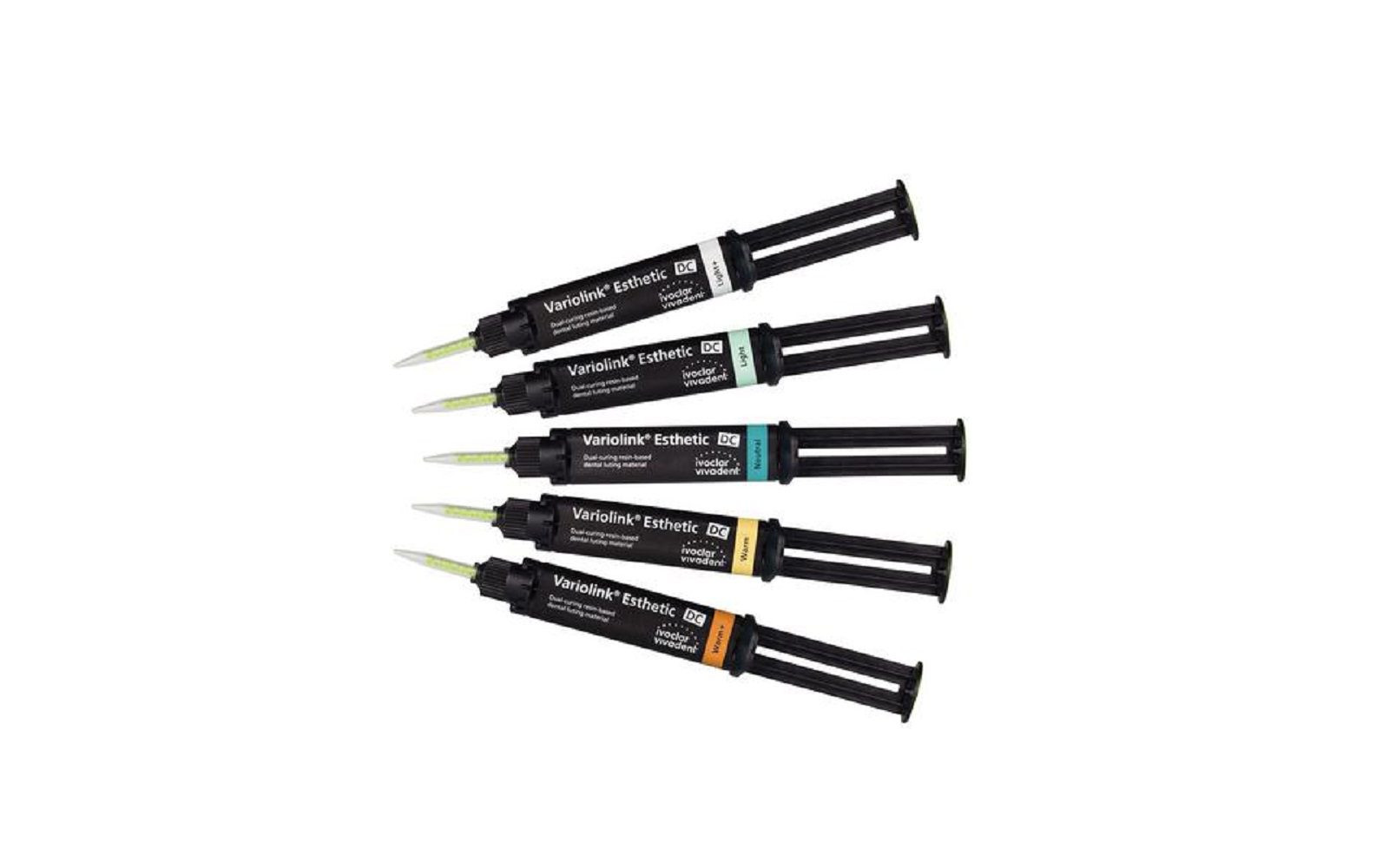
1. Variolink® Esthetic DC — Ivoclar

Ivoclar Variolink Esthetic DC is an adhesive, dual-cure luting composite. The instructions cover permanent cementation of glass-ceramic, lithium-disilicate, and composite restorations (inlays, onlays, partial crowns, crowns, bridges), plus opaque oxide-ceramic or metal restorations when the adhesive is dual-curing or is light-cured before seating, and endodontic posts with a dual-curing adhesive. Ivoclar lists radiopacity at 300% aluminum for the DC.
The shade story is the reason it sits at the top of an esthetic-cement list. Variolink Esthetic is amine-free: the Ivocerin initiator replaces the tertiary-amine co-initiators that discolor translucent cements. The same Effect shades exist in the light-cure LC and the dual-cure DC, including a White Opaque for discolored preps. Excess removal is part of the published handling claim, along with a consistency that is both flowable and stable enough to seat.
Who it is for: Dentists cementing lithium disilicate and other glass-ceramics when shade has to stay put, and who already isolate well enough for a real adhesive protocol.
Tradeoff: This is not a one-bottle self-adhesive. You need the matching adhesive (Adhese Universal in Ivoclar’s system) and Monobond Plus on the intaglio. If you cannot keep the prep dry, the IFU says not to use it. The LC version is only for thin, translucent restorations; thick or opaque work needs this DC, with the adhesive light-cured first when the cement will set only by self-cure.
2. RelyX™ Unicem 2 Automix — 3M

3M Oral Care RelyX Unicem 2 is the self-adhesive resin cement in this pair of RelyX products. The automix syringe is meant for permanent cementation without a separate etch, primer, or bonding agent on routine retentive restorations: ceramic and composite inlays and onlays, crowns and bridges, and posts. It is dual-cure, so it still sets under a zirconia or metal crown where the light is weak.
That simplicity is the product. Unicem 2 is the cement you reach for when the prep has walls and you do not want a five-bottle adhesive sequence between try-in and cleanup. It is the wrong mental model for a veneer or a short, overtapered prep, where an adhesive cement (RelyX Ultimate on this list, or Variolink Esthetic) is the system 3M and Ivoclar actually describe.
Who it is for: Offices that want one automix syringe for retentive everyday crowns and do not want to stock a separate tooth adhesive for those cases.
Tradeoff: Self-adhesive does not mean “bonds like a total-etch veneer cement.” Maryland-style and other low-retention bridges are where 3M’s own Unicem literature still talks about enamel etching. The oral-care line is now sold under Solventum; the box you order may say 3M RelyX either way. Confirm the current IFU before you drop the bonding agent your assistant is used to using.
3. NX3 Dual-Cure Automix — Kerr

Kerr NX3 is an adhesive resin cement, not a self-adhesive one. This listing is the dual-cure automix syringe. Kerr also sells a light-cure NX3 for thin, translucent veneers; do not assume the dual-cure refill in the photo is the veneer-only paste. Kerr’s published reason to choose NX3 over older adhesive cements is an amine-free initiator system aimed at color stability.
“Universal” in the name means the cement is meant to sit on top of Kerr’s adhesive approach (total-etch, self-etch, or selective-etch, depending on the bonding agent you pair with it), not that you can skip bonding. Used that way, it covers the indirect restorations an adhesive cement is for: glass-ceramic, composite, and metal, including cases where you want a light-cure option for the margin and a self-cure under the bulk.
Who it is for: Practices already in the OptiBond / Kerr adhesive family who want a dual-cure esthetic cement and care about long-term shade under translucent ceramics.
Tradeoff: If what you wanted was a one-step cement, that product on this list is Maxcem Elite, and it will not behave like NX3. Gel-phase cleanup only works if someone is actually watching the clock. A dual-cure paste left under a veneer that could have taken the light-cure NX3 is a shade decision, not a convenience win.
4. RelyX™ Ultimate — 3M

3M Oral Care RelyX Ultimate is the adhesive counterpart to Unicem 2. 3M designed it to be used with Scotchbond Universal Adhesive, not as a self-adhesive paste you squeeze in and walk away from. It is dual-cure, so the same syringe can cement glass-ceramic restorations where you want a higher bond and still set under ceramic that blocks some of the light.
The clinical split inside one brand is the useful part. Unicem 2 when the prep is retentive and speed matters. Ultimate when you are willing to place Scotchbond Universal (and the restoration primer that ceramic requires) because the prep is short, the ceramic is glass-based, or you simply want the adhesive protocol 3M published for this cement. Mixing the two habits — Ultimate with no adhesive, or Unicem with a random bonding agent — is how bonds fail.
Who it is for: Dentists who already use Scotchbond Universal and want 3M’s adhesive resin cement rather than the self-adhesive Unicem syringe.
Tradeoff: More steps than Unicem 2, on purpose. Ultimate does not contain the “no primer on glass-ceramic” story Kuraray tells for PANAVIA SA Cement Universal; follow the Scotchbond and ceramic-primer instructions for the substrate in the chair. Shelf inventory of both RelyX cements only helps if the cassette labels which one is which.
5. Multilink® Automix — Ivoclar

Ivoclar Multilink Automix is a self-curing luting composite with an optional light cure, used with Multilink Primer A and B on the tooth. Ivoclar indicates it for permanent adhesive cementation of silicate and oxide ceramics, metal and metal-ceramic, and composite: inlays, onlays, crowns, bridges, and posts. Monobond Plus is the restoration primer in the current system, including zirconia, glass-ceramic, and metal.
The primer is why this cement’s dentin bond is in a different category from SpeedCEM Plus. Ivoclar’s SpeedCEM documentation says so directly: a self-adhesive cement does not build the hybrid layer that Multilink Primer does, so dentin bond values are lower. Multilink is the Ivoclar cement you choose when the prep needs that bond and you will actually mix Primer A with Primer B and apply it.
Who it is for: Offices cementing a mix of zirconia, metal-ceramic, and glass-ceramic who want one adhesive automix system and will keep the primer bottles next to the syringe.
Tradeoff: The syringe refill on this ranking does not include the primer. Item 9 is that primer, sold as its own line item — which is convenient for reorders and a trap if someone thinks it is another cement. Self-cure is the safety net under opaque zirconia; light cure is optional support, not a substitute for the primer.
6. Calibra® Universal — Dentsply Sirona

Dentsply Sirona Calibra Universal, in the automix syringe this list ranks, is a self-adhesive dual-cure resin cement. The product name is the protocol: no separate bonding agent for the indications Dentsply Sirona clears it for, which are the usual indirect restorations a self-adhesive crown cement covers — crowns, bridges, inlays, onlays, and posts — rather than a veneer technique that depends on a light-cure esthetic paste.
It belongs in the same drawer decision as Unicem 2 and Maxcem Elite. You are buying fewer steps and a dual-cure set under zirconia or metal. You are not buying Variolink’s amine-free shade system or PANAVIA’s “no separate primer on lithium disilicate” monomer story. If your lab is sending mostly retentive zirconia and PFM, Calibra Universal is a coherent everyday cement. If the schedule is anterior glass-ceramic, look back at the adhesive cements.
Who it is for: Dentsply-leaning practices that want a self-adhesive automix for retentive indirect work and already know they will not use it for veneers.
Tradeoff: Self-adhesive cleanup is still time-sensitive, and a dual-cure cement will set in the contact if the tack-and-floss step is late. Do not add a random bonding agent “just in case” unless that combination is in the Calibra IFU — leftover adhesive chemistry is a common way to turn a simple cement into an unpredictable one.
7. PANAVIA™ SA Cement Universal — Kuraray

Kuraray Noritake PANAVIA SA Cement Universal is a dual-cure self-adhesive resin cement built around two monomers Kuraray actually names: the original MDP, which bonds to tooth structure, metal, and metal oxides such as zirconia, and the LCSi silane monomer, which is why they say glass-ceramic and composite can be cemented without a separate primer. Automix and handmix both exist. Shades in the automix literature include Universal (A2), White, and Translucent.
The handling claim that shows up on every Kuraray page for this cement is excess cleanup, plus room-temperature storage. The protocol is still not “skip surface prep.” Zirconia and composite intaglios are air-abraded; silica-based ceramics are etched with hydrofluoric acid in Kuraray’s own flowchart, and then the cement’s built-in silane is what replaces the extra primer bottle. A separate Clearfil Universal Bond Quick step is optional when you want a higher bond to the tooth.
Who it is for: Practices that cement zirconia one hour and lithium disilicate the next and want a single self-adhesive paste that does not add a ceramic primer for either, provided the intaglio is still conditioned.
Tradeoff: “No primer” is about the restorative surface primer, not about a dirty or un-sandblasted zirconia crown. Working time is short once the paste is warm (Kuraray’s chart is on the order of a minute for automix at room temperature, less after it hits the tooth). Handmix buys a longer mix window and adds a mixing error. This is still a self-adhesive cement — a non-retentive veneer is a different procedure.
8. Maxcem Elite™ — Kerr

Kerr Maxcem Elite is the self-etch, self-adhesive resin cement in Kerr’s lineup, sold here as shade-specific automix refills. It is the one-step cement for indirect restorations — ceramic, composite, metal, and zirconia — when you do not want NX3’s bonding-agent sequence. Dual-cure lets it set under opaque crowns.
Keep it mentally separate from NX3 even though both say Kerr on the box. Maxcem Elite is the speed cement. NX3 is the adhesive esthetic cement. Assistants who grab “the Kerr cement” without reading the cartridge will eventually lute a veneer with the self-adhesive paste or, worse, add OptiBond under Maxcem because the last crown used NX3.
Who it is for: Offices that want Kerr’s one-step automix for retentive crowns and CAD/CAM restorations, and who already use NX3 when the case actually needs an adhesive protocol.
Tradeoff: Self-adhesive cements are intolerant of a contaminated prep and of a non-retentive prep. Maxcem will not gain NX3’s amine-free veneer indication because you left it on the tooth longer. Shade refills multiply inventory; stock the two shades you actually seat, not the whole card.
9. Multilink® Primer A/B — Ivoclar

This ranking slot is Ivoclar Multilink Primer, the self-etching, self-curing tooth primer for Multilink Automix. Primer A and Primer B are mixed and applied to enamel and dentin. They are not a luting cement, they do not go inside the crown as the cement, and they do not replace Monobond Plus on zirconia, metal, or glass-ceramic.
Ivoclar’s system uses the primer to seal dentin and create the hybrid layer that SpeedCEM Plus deliberately skips. That is why a Multilink syringe without these two bottles is an incomplete adhesive cement, and why a shelf tag that says “Multilink” can mean either the cement (item 5) or this primer. The radiopacity and the bond you remember from Multilink cases come from the cement-plus-primer combination, not from the primer alone.
Who it is for: Practices that already standardized on Multilink Automix and are reordering the primer, or that found a syringe in the drawer and no Primer A/B next to it.
Tradeoff: Do not cement a restoration with primer and no luting composite. Do not use Multilink Primer under SpeedCEM Plus or another manufacturer’s self-adhesive cement unless that IFU says to — this primer belongs to the Multilink system. Self-etch does not mean you can apply it to a saliva-soaked prep and expect the hybrid layer Ivoclar describes.
10. SpeedCEM® Plus — Ivoclar

Ivoclar SpeedCEM Plus is a self-adhesive resin cement with a phosphoric-acid MDP monomer, primarily self-curing, with a light-cure option. Ivoclar indicates it for retentive oxide-ceramic (zirconia) crowns, bridges, and posts; metal and metal-ceramic; lithium-disilicate crowns and bridges on retentive preps, including lithium-disilicate crowns with walls thicker than 1.5 mm; fiber-reinforced composite posts; and retentive crowns and bridges on implant abutments. No separate dentin bonding agent is required. No additional primer is required on zirconium oxide or non-precious metal.
The MDP bond to zirconia and base metal is the point of the short protocol. Ivoclar also publishes the limit: because there is no hybrid layer, dentin bond strength is lower than Multilink Automix used with Multilink Primer. Moisture tolerance is a stated benefit — bond values on dry and moist dentin — which is a different claim from Variolink’s dry-field requirement. Opaque zirconia is where the strong self-cure matters, because you may get little light through the restoration.
Who it is for: Practices seating a high volume of retentive zirconia and metal restorations, including implant crowns with retention, who want Ivoclar’s short self-adhesive protocol.
Tradeoff: Adequate retention is in the indication, not a footnote. A short, overtapered prep should go to Multilink, not to a faster syringe. Lithium disilicate thinner than the IFU allows is a Variolink Esthetic case. Sandblast zirconia; do not “clean” it with phosphoric acid, which blocks the MDP bond Ivoclar is counting on.
Frequently Asked Questions
Do I need a bonding agent with a self-adhesive resin cement?
Not for the indications the manufacturer wrote the self-adhesive cement for. RelyX Unicem 2, Calibra Universal, Maxcem Elite, PANAVIA SA Cement Universal, and SpeedCEM Plus are all designed to lute without a separate tooth adhesive. Adding a random bonding agent can help only when that cement’s instructions say so — Kuraray’s optional Clearfil Universal Bond Quick step is one example — and it can contaminate the interface when they do not.
Which of these cements is appropriate for a zirconia crown?
For a retentive zirconia crown, SpeedCEM Plus and PANAVIA SA Cement Universal are the self-adhesive options on this list that publish an MDP bond without a separate zirconia primer. RelyX Unicem 2 and Calibra Universal are also self-adhesive dual-cure crown cements. Multilink Automix and Variolink Esthetic DC can cement zirconia too, but they are adhesive systems: primer on the tooth and the correct ceramic primer, or a dual-cure adhesive. Air-abrade the intaglio either way.
Why is Multilink Primer on a cement list?
Because the original catalog ranking treated it as its own product. It is the self-etch primer for Multilink Automix, not a cement. Keep it next to the Multilink syringe. Do not order it when the operatory is out of luting composite.
Does an amine-free cement stay the shade I saw at try-in?
Amine-free initiators (Ivocerin in Variolink Esthetic; Kerr’s claim for NX3) are there to avoid the gray shift amines cause in translucent cements. They do not correct an opaque White shade, a contaminated prep, or a try-in paste left in the crown. Use the try-in paste from that system, clean it out, and then cement.
Read next
Stay on luting and core materials:
Related articles
Keep exploring related topics from Dental Country.
The Top 15 Dental Chairs in the World
Compare 15 dental chair brands for 2026 — A-dec, Planmeca, Midmark, and more — by ergonomics, service, and cost.
Read article
Top 10 Flowable Dental Composites
Flowable composite buying guide: SDR flow+ 4 mm bases versus Giomer, heavy-flow, and shade-matched liners.
Read article
Top 10 Bottle Cleaners for Dentists
Compare the best Bottle Cleaners for Dentists — our researched Top 10 ranking of the leading brands and options to help you choose the right fit for your practice.
Read article
7 Dental Websites to be Inspired by
Compare the best 7 Dental Websites to be Inspired by, ranked on performance, features, and value to help you choose the right fit for your practice.
Read article